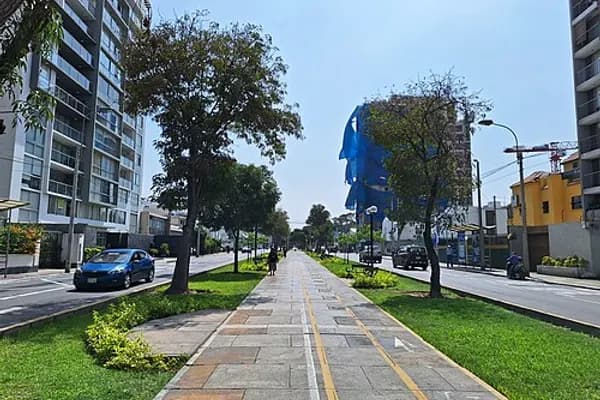
About the neighborhood
District of Lima, Peru
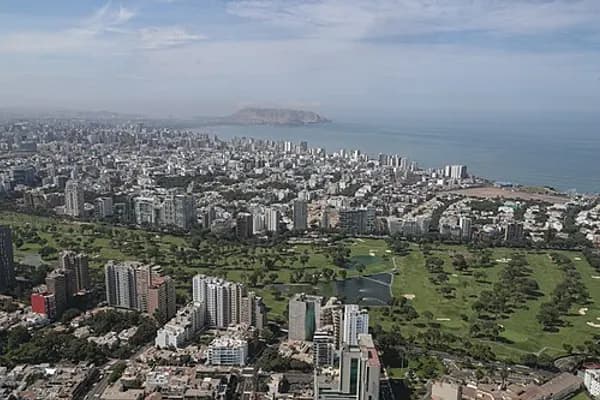
San Isidro is an upscale district of the Lima Province in Peru. It is located in the west center of the city, it has a few meters of coastline. Officially created on April 24, 1931, San Isidro, along with Orrantia and Country Club neighborhoods, was separated from Miraflores.
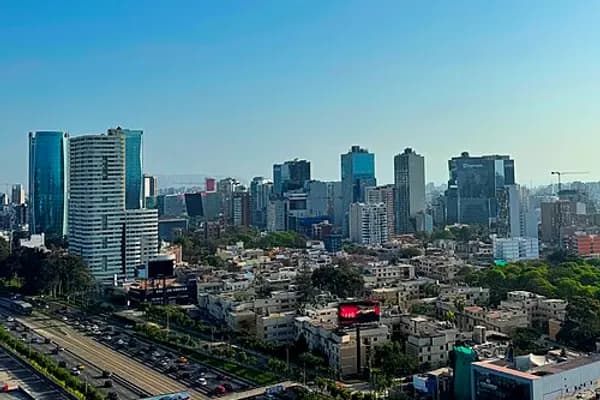
San Isidro has become a major financial quarter in recent years, as many banks and businesses left downtown Lima to set up their headquarters in modern office blocks. It is inhabited by mostly upper middle and upper-class families.
History
During the Viceroyalty of Peru, when the first land distribution was made, the Huallas region was awarded to Nicolás de Ribera y Laredo, founder of the City of Kings (Lima) and the Lima City Council .
In 1560, Antonio de Ribera, attorney general, mayor, and field marshal to Gonzalo Pizarro , brought the first olive trees that gave rise to the El Olivar Grove . This estate, before taking the name of its owner, the Count of San Isidro , who acquired it in 1777, bore the names of its previous owners, including Martín Morón, Pedro de Olavarrieta, Tomás de Zumarán, and Antonio del Villar. Its last colonial owner was Isidro de Cortázar y Abarca , Count of San Isidro and the first ordinary mayor of Lima .
In 1853, it passed into the hands of José Gregorio Paz Soldán , and finally, into the hands of the Moreyra and Paz Soldán family.
In 1920, the San Isidro Limited Urban Development Company was formed, entrusting the urbanization project to the sculptor and urban planner, Manuel Piqueras Cotolí, who conceived a varied and irregular plan with the aim of creating a picturesque neighborhood. He also hoped it would present an architectural appearance of some unity and character.
San Isidro has become one of the most dynamic districts, undergoing a process of urban development during the 1980s and 1990s, which turned it into the financial center of the city of Lima.
In 1997 the city was the site of the Japanese Embassy hostage Crisis
In March 2004, the 'Promenade of Nations'—a promenade lined with national flags—was inaugurated at Pershing Avenue.
Geography
The district has a total land area of 9.36km. Its administrative center is located at 109 meters above sea level.
Boundaries
North: Jesús María, Lince and La Victoria.
East: San Borja
South: Surquillo and Miraflores,
West: The Pacific Ocean and Magdalena del Mar.
For more than fifty years, its western border has been disputed with neighboring Magdalena del Mar. A judge ordered the councils of both districts to deposit the money of the affected areas' taxpayers in the National Bank of Peru until this long-standing conflict is resolved.
Demographics
According to a 2002 estimate by the INEI, the district has 68,438 inhabitants and a population density of 6,165.6 persons/km. In 1999, there were 20,598 households in the district.
Culture
San Isidro prides itself on being home to many Peruvian artists. A few museums, as well as the Wak'a Wallamarka, a pre-Inca burying temple which dates back to the 4th century where concerts and exhibitions are held occasionally, showing the cultural heritage of the district.
Notable residents of San Isidro have include painter Fernando de Szyszlo, former presidents Pedro Pablo Kuczynski and Martín Vizcarra, and other politicians such as Javier Pérez de Cuéllar, José Antonio García Belaúnde, and Francisco Tudela, among others.
Landmarks
The second and third largest buildings in the country, the Hotel Westin Libertador and Begonias Tower respectively, are located next to each other, the latter belonging to the Grupo Brescia conglomerate. Other tall buildings, such as the T Tower, are also present in the district.
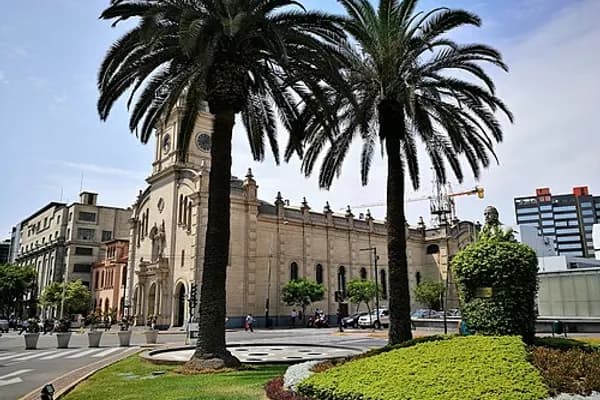
There are 15 Catholic Churches, synagogues and temples of other religions.
Lima's most important avenues (Javier Prado and Paseo de la República), intersect in the district.
The district serves as the financial centre of the country with a total of 21 bank headquarters and 50 agencies.
Monuments to Peruvian heroes and other world personalities (Gandhi, John Paul II, etc.)
58 embassies and consulates are located in the district, including those of Algeria, Australia, Austria, Bolivia, Chile, China, Colombia, Costa Rica, Cuba, Czech Republic, Dominican Republic, Ecuador, Egypt, El Salvador, Finland, France, Greece, Honduras, Hungary, India, Indonesia, Israel, Jamaica (honorary), Malaysia, Mexico, Morocco, Nicaragua, North Korea, Panama, Portugal, Romania, Russia, Saudi Arabia, Serbia, Slovenia (honorary), Spain, Switzerland, Thailand, Turkey, Ukraine and Uruguay.
Gallery
References
External links
(in Spanish) Municipalidad de San Isidro – San Isidro District Council official website
(in Spanish) PUCP – Centro Cultural – Cultural Center of the Pontifical Catholic University of Peru
Encyclopedic content adapted from the Wikipedia article on San Isidro, used under CC BY-SA 4.0.
What makes San Isidro special
San Isidro stands out among Lima’s neighborhoods for its distinctive character: lima's leafy business district. Ranked #3 in Lima, it offers the kind of experience that defines a great city trip — a place where the streets themselves tell a story and every block rewards curiosity.
Best for
Our take on San Isidro
San Isidro is one of the strongest neighborhoods in Lima, and it consistently appears in our editors' personal favorites lists. It may not always get the same attention as the city's most famous district, but among travelers who know Lima well, San Isidro is often the first recommendation.
What makes San Isidro worth the visit is the texture of daily life here. It is a neighborhood that functions for the people who live in it — not just for the visitors who pass through. The shops serve local needs, the restaurants feed local appetites, and the streets have a rhythm that reflects genuine community rather than tourism infrastructure. That is the quality our editors prize most, and San Isidro has it in abundance.
Our editors recommend budgeting at least half a day here — enough time to walk the main streets, sit down for coffee, and discover the side streets where San Isidro's real character lives.
Living in San Isidro
San Isidro is connected to the rest of Lima by public transit, and most visitors find it straightforward to reach from the city center or airport. Once you arrive, the neighborhood is best explored on foot — the scale is human and the streets reward wandering.
Day-to-day life in San Isidro has the rhythm of a genuine residential neighborhood. You will find grocery stores, pharmacies, cafés with morning regulars, and the kind of small independent shops that only survive where locals support them. For visitors, this means the infrastructure you need — good coffee, a decent meal, a quiet place to sit — is always within a short walk.
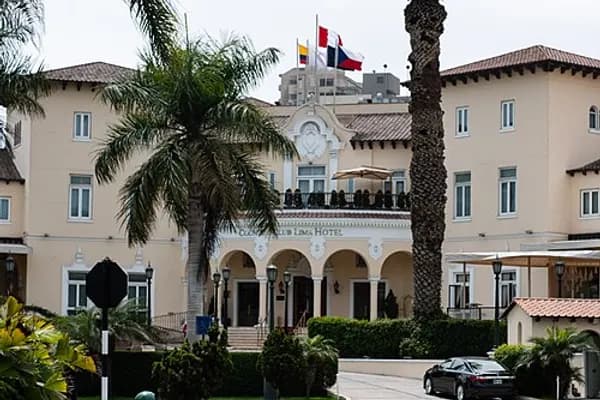
Accommodation in San Isidro ranges from boutique hotels to short-term rentals. We generally recommend staying within the neighborhood itself rather than commuting from a hotel elsewhere in Lima — the experience of waking up inside a great neighborhood is fundamentally different from visiting one as a day trip.
What locals say about San Isidro
Long-term residents of San Isidro tend to describe their neighborhood with a mix of pride and protectiveness. Like any district with genuine character, San Isidro inspires loyalty — the kind of place people move to and never quite leave, or leave and spend years trying to get back to.
What locals appreciate most about San Isidro is its consistency — the feeling that the neighborhood works the same way on a Tuesday morning as it does on a Saturday night. It is not a place that performs for visitors and then goes quiet. The rhythm is genuine, the community is real, and the daily experience of living here is what draws people and keeps them.
Compared to the more famous districts in Lima, San Isidro has maintained a lower profile, which many residents consider an advantage. The neighborhood evolves gradually rather than being reshaped by sudden attention, and the result is a community that still feels organic rather than curated.
Visitor tips
- San Isidro is located in Lima, Peru. The neighborhood is accessible by public transport, taxi, or rideshare from most parts of the city.
- Morning is often the best time to explore — the streets are quieter, the light is better for photography, and cafes are at their most welcoming.
- Wear comfortable walking shoes — the best way to experience San Isidro is on foot, wandering the side streets and discovering what lies around each corner.
- Save the neighborhood's location on your phone before you arrive. Offline maps are especially useful for navigating the smaller side streets.