About the neighborhood
World Heritage Site in Peru
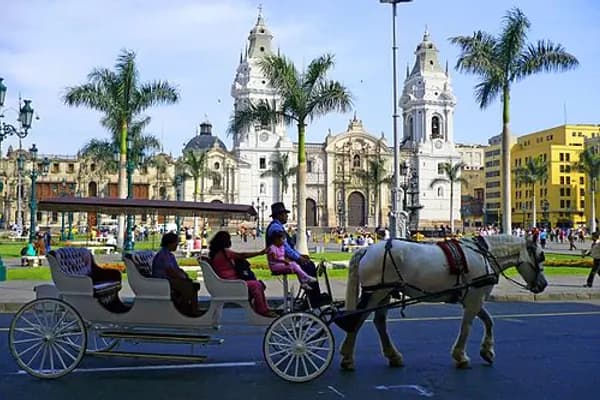
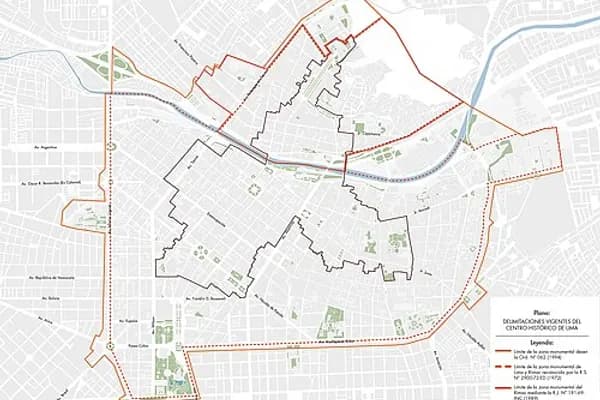
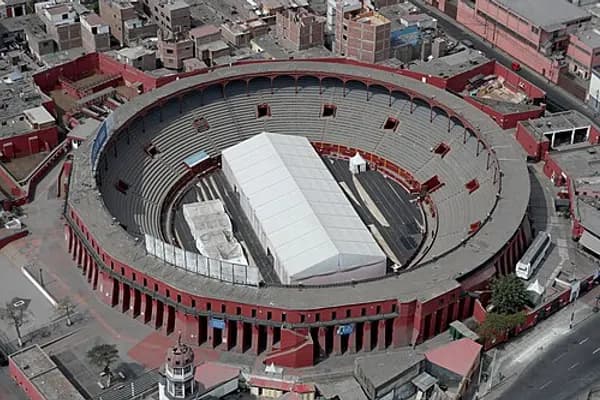
The Historic Centre of Lima (Spanish: Centro histórico de Lima) is the historic city centre of the city of Lima, the capital of Peru. Located in the city's districts of Lima and Rímac, both in the Rímac Valley, it consists of two areas: the first is the Monumental Zone established by the Peruvian government in 1972, and the second one—contained within the first one—is the World Heritage Site established by UNESCO in 1988, whose buildings are marked with the organisation's black-and-white shield.
Founded on 18 January 1535, by Conquistador Francisco Pizarro, the city served as the political, administrative, religious and economic capital of the Viceroyalty of Peru, as well as the most important city of Spanish South America. The evangelisation process at the end of the 16th century allowed the arrival of several religious orders and the construction of churches and convents. The University of San Marcos, the so-called "Dean University of the Americas", was founded on 12 May 1551, and began its functions on 2 January 1553 in the Convent of Santo Domingo.
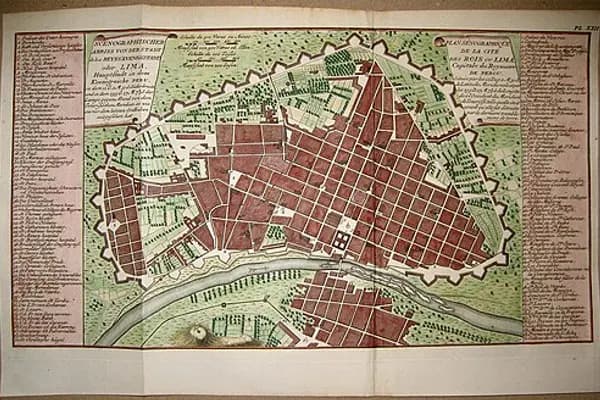
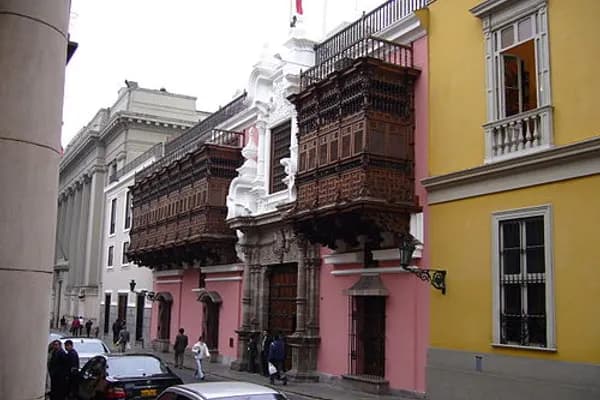
Originally contained by the now-demolished city walls that surrounded it, the Cercado de Lima features numerous architectural monuments that have survived the serious damage caused by a number of different earthquakes over the centuries, such as the Convent of San Francisco, the largest of its kind in this part of the world. Many of the buildings are joint creations of artisans, local artists, architects and master builders from the Old Continent. It is among the most important tourist destinations in Peru.
History
The city of Lima, the capital of Peru, was founded by Francisco Pizarro on 18 January 1535, and given the name City of the Kings. Nevertheless, with time its original name persisted, which may come from one of two sources: Either the Aymara language lima-limaq (meaning "yellow flower"), or the Spanish pronunciation of the Quechuan word rimaq (meaning "talker", and actually written and pronounced limaq in the nearby Quechua I languages). It is worth nothing that the same Quechuan word is also the source of the name given to the river that feeds the city, the Rímac River. Early maps of Peru show the two names displayed jointly.
Under the Viceroyalty of Peru, the authority of the viceroy as a representative of the Spanish monarchy was particularly important, since its appointment supposed an important ascent and the successful culmination of a race in the colonial administration. The entrances to Lima of the new viceroys were specially lavish. For the occasion, the streets were paved with silver bars from the gates of the city to the Palace of the Viceroy.
The (formerly walled) city's streets were named individually until 1862, when the city adopted the naming project of Mariano Bolognesi, an idea first proposed by Manuel Atanasio Fuentes in 1857. South of the river, what would become known as Union Street was chosen as a divisional axis for the roads that intersected with it, which would be renamed depending on whether they were to the east or west of the street, and would be connected under the name of jirón (instead of the traditional calle). The new names that were chosen were those of the country's administrative divisions: Those that ran parallel to the Rímac River would be named after the country's departments, while those who ran perpendicular to it would be named after the country's provinces. In reality, this rule was not strictly followed, with some streets instead taking the name of rivers, or prominent people.
Monumental Zone (1972)
On 28 December 1972, the government of Peru designated the old towns of Lima and Rímac districts as Monumental Zones which form part of the Cultural heritage of Peru through Supreme Decree Nº 2900-72-ED. The latter was then expanded on 26 April 1989, through another decree (R.J. Nº 191-69-INC). In 1994, both the Monumental Zone of Lima and the Monumental Zone of Rímac were then included in a single area designated by Ordinance Nº 062-94-MML of the Metropolitan Municipality of Lima, which approved the administrative policy of the city's historic centre. In 1998, the first Master Plan for the city was organised, being applied until 2010.
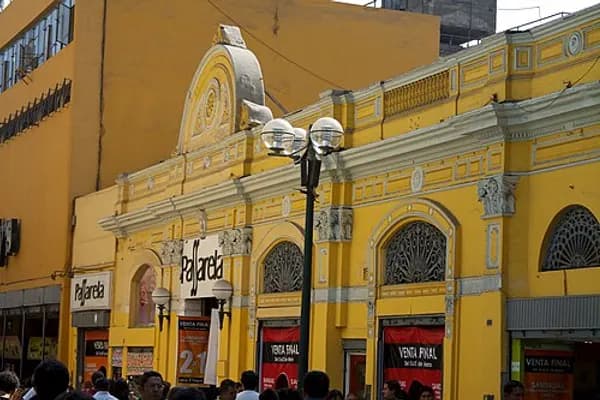
During the 1980s, local textile company Barrington sponsored the placement of custom street signs featuring the traditional names of several streets in the city's historic centre, as well as a brief description of the name. These succeeded yellow plaques featuring only the names placed during the late 19th century and early 20th century, some of which were recovered in 2018 as part of restoration efforts made by government agency PROLIMA to restore the original colours of buildings' façades. In 2021, coinciding with the Bicentennial of the Independence of Peru, new yellow plaques were placed around the city, which also include each street's former name alongside its description, alongside steel signs featuring their block numbers, as well as informative totem signs.
World Heritage Site (1988)
In 1988, UNESCO declared the historic centre of Lima a World Heritage Site for its originality and high concentration of historic monuments constructed during the viceregal era, with its boundaries being significantly modified in 1991. In 2023, it was expanded with two exclaves to include the Quinta and Molino de Presa and the Ancient Reduction of Santiago Apostle of Cercado.
Recent history
Starting in 2010, Peruvian real estate company Arte Express was granted ownership of a number of buildings in the area, which were restored until the company's dissolution in 2022. In 2021, as part of renovation works made in preparation for the bicentennial celebrations of that year, the Metropolitan Municipality of Lima installed 206 different QR codes across different landmarks of the centre that, when scanned, open a video that details the selected building's history.
On 18 January 2024, the city's 489th anniversary, president Dina Boluarte announced a "special regime" that targets the area in order to allow restoration and repair works to take place. On 17 January 2025, the municipal authorities relaunched Lima, Ciudad de los Reyes, a patronage aimed at the promotion of the restoration of the city's cultural heritage sites.
List of sites
The World Heritage Site, divided into three zones, features a number of landmarks.
Historic Centre of Lima
The main zone is that of the Historic Centre of Lima (266.17 ha; buffer zone: 806.71 ha), which features the following:
Ancient Reduction of Santiago Apostle of Cercado
The Ancient Reduction of Santiago Apostle of Cercado (10.2 ha) was added to the World Heritage Site in 2023.
Quinta and Molino de Presa
The Quinta and Molino de Presa (1.62 ha) were added to the World Heritage Site in 2023.
See also
Historic Centre of Callao
Tourism in Peru
Iperú
Notes
References
Bibliography
Bonilla Di Tolla, Enrique (2009). Lima y el Callao: Guía de Arquitectura y Paisaje (PDF) (in Spanish). Junta de Andalucía.
Bromley Seminario, Juan (2019). Las viejas calles de Lima (PDF) (in Spanish). Lima: Metropolitan Municipality of Lima. Archived from the original (PDF) on 11 August 2021. Retrieved 10 May 2024.
Relación de Monumentos Históricos del Perú (PDF) (in Spanish). Lima: Instituto Nacional de Cultura. 1999.
Centro Histórico de Lima: patrimonio humano y cultural en riesgo (PDF) (in Spanish). Lima: World Monuments Fund, Centro de Investigación, Documentación y Asesoría Poblacional (CIDAP), Embajada de España en Perú (AECID). 2011. ISBN978-9972-855-04-7.
External links
Wikimedia Commons has media related to Historic Centre of Lima.
Religion in the City of the Kings of Peru Spanish
360° view of Lima Main Square
Encyclopedic content adapted from the Wikipedia article on Centro Histórico, used under CC BY-SA 4.0.
What makes Centro Histórico special
Centro Histórico stands out among Lima’s neighborhoods for its distinctive character: colonial lima, unesco-listed. Ranked #4 in Lima, it offers the kind of experience that defines a great city trip — a place where the streets themselves tell a story and every block rewards curiosity.
Best for
Our take on Centro Histórico
Centro Histórico occupies a distinctive place in Lima's neighborhood landscape. It is the kind of district that rewards travelers who venture beyond the obvious choices — quieter than the tourist-facing areas, richer in local character, and full of the small details that make a city trip memorable.
What makes Centro Histórico worth the visit is the texture of daily life here. It is a neighborhood that functions for the people who live in it — not just for the visitors who pass through. The shops serve local needs, the restaurants feed local appetites, and the streets have a rhythm that reflects genuine community rather than tourism infrastructure. That is the quality our editors prize most, and Centro Histórico has it in abundance.
Our editors recommend budgeting at least half a day here — enough time to walk the main streets, sit down for coffee, and discover the side streets where Centro Histórico's real character lives.
Living in Centro Histórico
Centro Histórico is connected to the rest of Lima by public transit, and most visitors find it straightforward to reach from the city center or airport. Once you arrive, the neighborhood is best explored on foot — the scale is human and the streets reward wandering.
Day-to-day life in Centro Histórico has the rhythm of a genuine residential neighborhood. You will find grocery stores, pharmacies, cafés with morning regulars, and the kind of small independent shops that only survive where locals support them. For visitors, this means the infrastructure you need — good coffee, a decent meal, a quiet place to sit — is always within a short walk.
Accommodation in Centro Histórico ranges from boutique hotels to short-term rentals. We generally recommend staying within the neighborhood itself rather than commuting from a hotel elsewhere in Lima — the experience of waking up inside a great neighborhood is fundamentally different from visiting one as a day trip.
What locals say about Centro Histórico
Long-term residents of Centro Histórico tend to describe their neighborhood with a mix of pride and protectiveness. Like any district with genuine character, Centro Histórico inspires loyalty — the kind of place people move to and never quite leave, or leave and spend years trying to get back to.
What locals appreciate most about Centro Histórico is its consistency — the feeling that the neighborhood works the same way on a Tuesday morning as it does on a Saturday night. It is not a place that performs for visitors and then goes quiet. The rhythm is genuine, the community is real, and the daily experience of living here is what draws people and keeps them.
Compared to the more famous districts in Lima, Centro Histórico has maintained a lower profile, which many residents consider an advantage. The neighborhood evolves gradually rather than being reshaped by sudden attention, and the result is a community that still feels organic rather than curated.
Visitor tips
- Centro Histórico is located in Lima, Peru. The neighborhood is accessible by public transport, taxi, or rideshare from most parts of the city.
- Morning is often the best time to explore — the streets are quieter, the light is better for photography, and cafes are at their most welcoming.
- Wear comfortable walking shoes — the best way to experience Centro Histórico is on foot, wandering the side streets and discovering what lies around each corner.
- Save the neighborhood's location on your phone before you arrive. Offline maps are especially useful for navigating the smaller side streets.