About the neighborhood
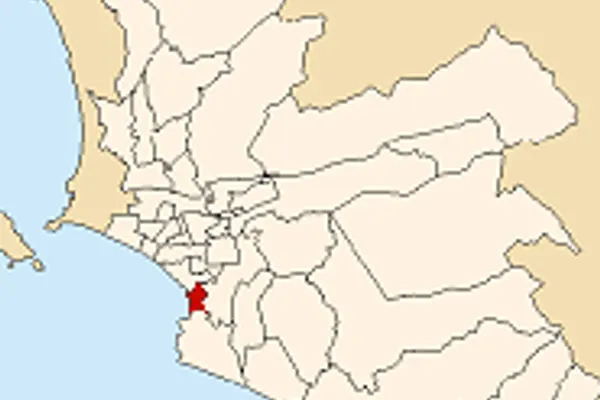
District of Lima, Peru
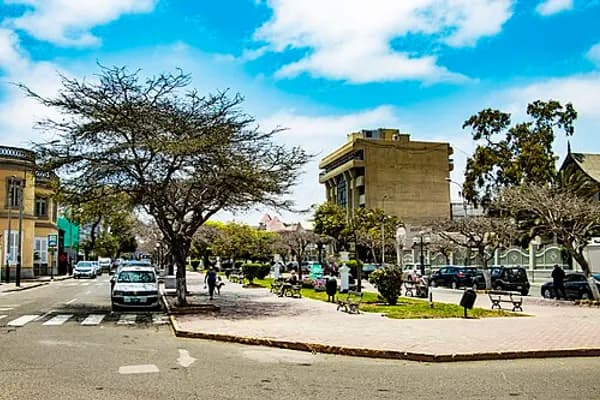
Barranco is a district of Lima, Peru. A seaside district of the city, it is considered a bohemian and artistic centre, being the home and working place of many of Peru's leading artists, musicians, designers and photographers. Its beaches are among the most popular within the worldwide surfing community, and a marina completed in 2008 provides state-of-the-art services for its yacht club.
The Monumental Zone of Barranco (Spanish: Zona Monumental de Barranco) is the designation under which most of the district is administered under a special regime that protects the monumental heritage located in the district. The area, alongside its monuments, forms part of the cultural heritage of Peru.
Etymology
The name Barranco is Spanish for "ravine". Barranco has two ravines; one in the north where Armendariz Avenue is situated between Miraflores District and Barranco, and one near the central part, the Bajada de los Baños.
History
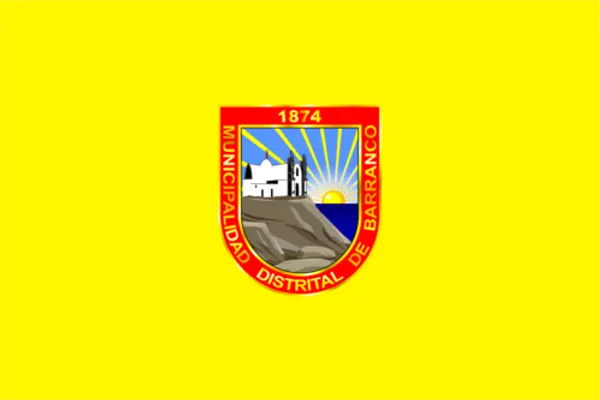
San José de Surco was founded on 26 October 1874, with the Hermitage of Barranco chosen as its capital. The hermitage's location is traditionally considered the origin of the district, with an 18th-century legend claiming that two Indian fishermen who had become lost at sea managed to find their way to the shore through a light cast by a cross located on the site.
In the 19th century, it was a very fashionable beach resort for the local upper-class (also known as the aristocracy), alongside neighbouring Chorrillos.
During the 2010s and 2020s, many high rises and other projects began to be built in Barranco as a result of urban renewal, replacing a number of the district's traditional buildings.
Politics
Barranco is under the jurisdiction of its own district municipality, as well as that of the Metropolitan Municipality of Lima.
List of mayors
Since 2023, the incumbent mayor is Jessica Vargas.
Subdivisions
The district's central area is a designated Monumental Zone since 1972.
Barranco is the site of a lone populated centre that is coterminous with the district:
Twin cities
As of 2025, Barranco is twinned with the following places:
Oakland County, Michigan
Jun, Granada
Geography
Climate
The cliffs of Chorrillos shield Barranco from colder and more humid winds coming from the South. As a result, Barranco has a micro-climate that is warmer and drier than many of the other districts of Lima, which are generally more humid, especially between May and October.
Culture
Landmarks
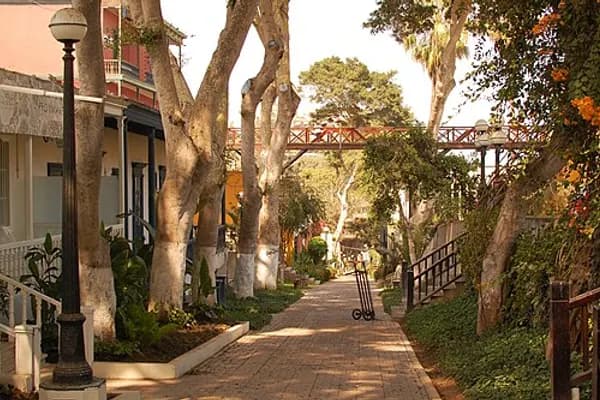
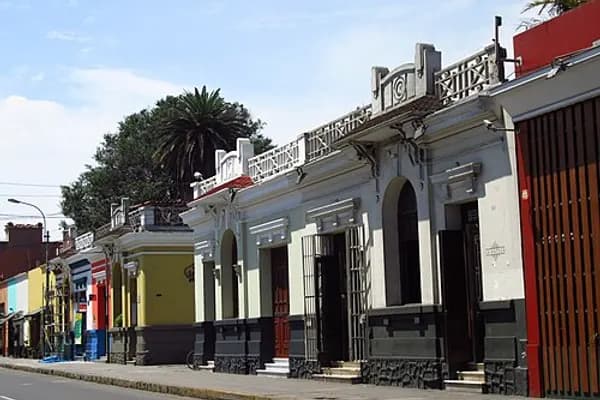
The Monumental Zone of Barranco is the designation under which a large part of the district has been administered since 1972, in which a number of buildings have been granted UNESCO's blue shield since 2024. Barranco has many houses in the colonial and Republican style (called "casonas"), flower-filled parks and streets, and appealing beachfront areas. A number of high-rise buildings have been constructed in areas surrounding the district's historic quarter, near the district's limits with Miraflores and Santiago de Surco.
It addition to the landmarks above, Barranco also has a number of beaches (Los Yuyos, Las Cascadas, Los Pavos, Barranquito, and Las Sombrillas). A marina opened in 2008.
Transport
The district's Pedro de Osma Avenue is served by a scenic tramway route, once part of the broader system that once serviced the whole city and its surroundings. Francisco Bolognesi Avenue is served by a route of the Metropolitano bus system.
Notable people
Maria Isabel Sanchez-Concha (1889–1977), pioneer film maker.
See also
Administrative divisions of Peru
References
External links
Media related to Barranco at Wikimedia Commons
Barranco travel guide from Wikivoyage
12°8′30″S 77°1′0″W / 12.14167°S 77.01667°W / -12.14167; -77.01667
Encyclopedic content adapted from the Wikipedia article on Barranco, used under CC BY-SA 4.0.
What makes Barranco special
Barranco stands out among Lima’s neighborhoods for its distinctive character: lima's bohemian, arty corner. Ranked #2 in Lima, it offers the kind of experience that defines a great city trip — a place where the streets themselves tell a story and every block rewards curiosity.
Best for
Our take on Barranco
Barranco is one of the strongest neighborhoods in Lima, and it consistently appears in our editors' personal favorites lists. It may not always get the same attention as the city's most famous district, but among travelers who know Lima well, Barranco is often the first recommendation.
What makes Barranco exceptional is the density of its cultural life. Art galleries, independent bookshops, small theaters, and creative studios are woven into the fabric of the neighborhood rather than clustered in a single zone. You encounter culture here by accident, which is how the best cultural experiences always happen.
Our editors recommend budgeting at least half a day here — enough time to walk the main streets, sit down for coffee, and discover the side streets where Barranco's real character lives.
Living in Barranco
Barranco is connected to the rest of Lima by public transit, and most visitors find it straightforward to reach from the city center or airport. Once you arrive, the neighborhood is best explored on foot — the scale is human and the streets reward wandering.
Day-to-day life in Barranco has the rhythm of a genuine residential neighborhood. You will find grocery stores, pharmacies, cafés with morning regulars, and the kind of small independent shops that only survive where locals support them. For visitors, this means the infrastructure you need — good coffee, a decent meal, a quiet place to sit — is always within a short walk.
Accommodation in Barranco ranges from boutique hotels to short-term rentals. We generally recommend staying within the neighborhood itself rather than commuting from a hotel elsewhere in Lima — the experience of waking up inside a great neighborhood is fundamentally different from visiting one as a day trip.
What locals say about Barranco
Long-term residents of Barranco tend to describe their neighborhood with a mix of pride and protectiveness. Like any district with genuine character, Barranco inspires loyalty — the kind of place people move to and never quite leave, or leave and spend years trying to get back to.
The creative community in Barranco is genuine, not aspirational. Residents include working artists, writers, musicians, and designers who chose the neighborhood because it supported their work — affordable studio space, a community that values craft, and enough foot traffic to sustain independent galleries and shops.
Like any neighborhood that has earned attention, Barranco is navigating the tension between popularity and preservation. Rents have risen, new businesses have arrived, and long-time residents occasionally grumble that the neighborhood is not what it was. But the fundamentals — the walkability, the food, the community — remain strong, and most locals we speak to believe the neighborhood is still gaining more than it is losing.
Visitor tips
- Barranco is located in Lima, Peru. The neighborhood is accessible by public transport, taxi, or rideshare from most parts of the city.
- Morning is often the best time to explore — the streets are quieter, the light is better for photography, and cafes are at their most welcoming.
- Wear comfortable walking shoes — the best way to experience Barranco is on foot, wandering the side streets and discovering what lies around each corner.
- Save the neighborhood's location on your phone before you arrive. Offline maps are especially useful for navigating the smaller side streets.