About the neighborhood
District of Lima, Peru
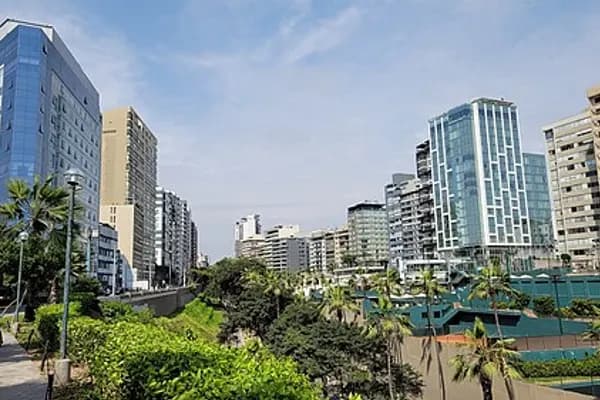
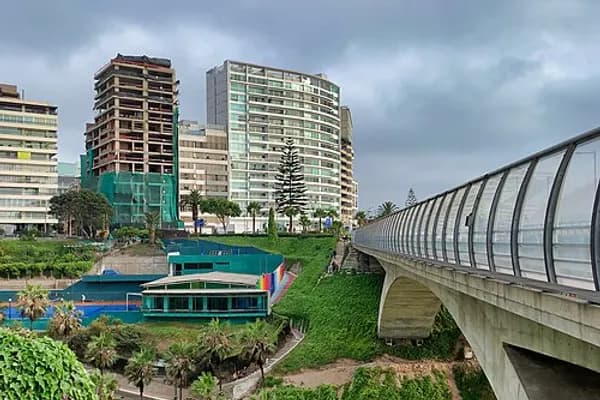
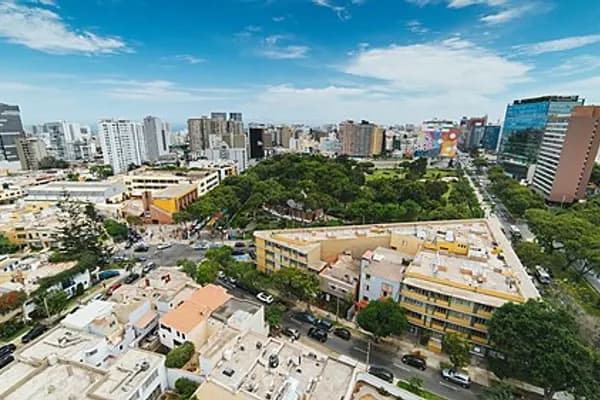
Miraflores (Spanish: miɾaˈfloɾes) is a district of Lima, Peru. A residential and upscale shopping district, it is one of the wealthiest districts that make up the city of Lima, located to the south of the city's historic downtown area, as well as one of its main tourist destinations. The area also hosts office buildings and flat-roofed multi-coloured housing.
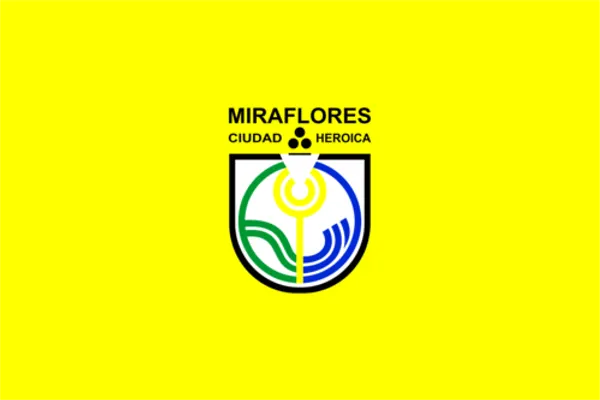
It was first established as a district on January 2, 1857. As a result of the January 1881 Battle of Miraflores fought during the War of the Pacific, Miraflores is called Ciudad Heroica ("Heroic City").
Etymology
The city, founded as San Miguel de Miraflores, acquired its present name (lit.'look at the flowers') because of the nearly year-round bougainvillea bloom, even in the mid-16th century, when it was still an Inca village.
History
Prior to the arrival of the Spanish, Miraflores was one of the locations inhabited by members of the ancient Lima culture, which preceded the Inca Empire. The Huaca Pucllana (formerly Hispanicized as Juliana) serves as its only remaining remnant in the district, originally much larger in size.
Once Spanish rule was established, the area became part of the district of Magdalena Vieja. Established as San Miguel de Miraflores, it takes its name from the Miraflores Charterhouse, having become a district on January 2, 1857 under the presidency of Ramón Castilla and containing a number of estates (Armendáriz, Balconcillo, Barboncito, La Palma, Conde San Isidro, Lince, Limatambo, Santa Cruz and Chacarilla), as well as the lands at Leuro and Ocharán.
Miraflores was the site of encounters between José de San Martín and Viceroy Pezuela that took place during the Peruvian War of Independence, on September 24, 1820. During the War of the Pacific, the district was the site of the eponymous battle, where two thousand people died as a result and the district was sacked and burned by the Chilean Army. In 1898, it was limited to the north by the lands of the Surquillo estate, to the west by Bellavista street, to the east by the railroad tracks that reached Lima and to the south by the first blocks of Larco and Porta streets.
As the city of Lima grew, Miraflores was absorbed into its metropolitan area during the early 20th century. Prior to the 1920s, its territory included the current districts of La Victoria (1920), San Isidro (1931), Lince (1936), part of Santiago de Surco (1944), Surquillo (1949), San Luis (1968) and San Borja (1983).
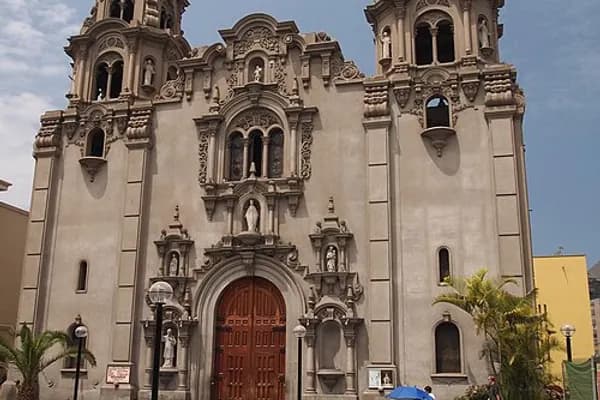
During the 1940s, the Iglesia Matriz Virgen Milagrosa was built next to the district's central park, replacing the original San Miguel de Miraflores Church.
On July 16, 1992, during the era of terrorism, a street in the district was targeted in a terrorist attack perpetrated by the Shining Path, which led to a crackdown on Peruvian insurgent groups, culminating in the group's leader being captured on September of the same year. The Tarata bombing was one of the largest attacks in the country and occurred near Avenida Larco. A monument was constructed in the site of the attack.
Politics
Miraflores is under the jurisdiction of its own district municipality, as well as that of the Metropolitan Municipality of Lima.
List of mayors
Since 2023, the incumbent mayor is Carlos Canales.
1866: Francisco de la Cruz Marmolefo.
1881: Guillermo Scheel.
1881: Tomás Carbajal.
1882-1883: Occupation of Lima.
1884-1886: Pedro F. Denegri.
1886-1889: Henry Fox Revett Baker.
1889: Carlos Sotomayor.
1889-1890: Javier Conroy
1891-1893: José A. Larco.
1893-1895: Eleodoro Romero.
1895-1897: Javier Conroy.
1897-1903: Augusto Angulo.
1903-1908: Henry Fox Revett Baker.
1908-1909: Leonidas Cáceres Menacho.
1910: Belisario Suárez.
1910-1912: Juan A. Figari.
1912-1913: Francisco Tudela y Varela.
1913: Luis Gonzáles del Riego.
1913-1915: Francisco Tudela y Varela.
1915-1917: Genaro Castro Iglesias.
1918: Jorge A. Bucley.
1918-1919: Luis Gonzáles del Riego.
1919-1920: Alfredo Álvarez Calderón.
1920-1922: Nicolás Salazar Orfila.
1922-1924: Luis Arias Schreiber.
1924-1925: Sebastián Salinas Cossío.
1925-1927: Manuel B. Sayán Palacios.
1927: Alejandro J. Figari.
1927-1929: Guillermo Correa Elías.
1930-1933: Luis Gallo Porras.
1934-1937: Eduardo Villena Rey.
1937-1938: Emilio Fort.
1938-1939: Eduardo Villena Rey.
1940-1942: Daniel Russo.
1942-1944: Carlos Alzamora.
1945-1946: Guillermo Ureta del Solar.
1946-1947: Alicia Cox de Larco
1948-1949: Julio César Gonzáles La Hoz.
1950-1951: Emilio Hart Terré.
1952-1955: Ivan H. Blume.
1956: Augusto Leguía Ross.
1956: Ernesto Araujo Álvarez Reyna.
1957: Juan Bautista Isola.
1957-1959: Carlos Alzamora Traverso.
1959-1961: Emilio Rodríguez Larraín.
1961-1963: Emilio Rodríguez Larraín
1964-1966: Mario Cabrejos Quiñonez.
1967: Juan José Vega.
1967-1969: Rafael Sánchez Aizcorbe.
1970-1976: Ernesto Aramburú Menchaca.
1976: Santos Hinostroza.
1976-1977: Carlos Arca Betancourt.
1977-1978: Guillermo Schwarztman.
1978-1979: César de Cárdenas Rovaretto.
1979: Carlos Drago Garibaldi.
1979: Julio Balbuena Camino.
1979-1980: Guillermo López Mavila.
1980: Carlos Cobilich Portocarrero.
1980: Luis Dorich Torres.
1981-1983: Jorge Rodríguez Larraín Pendergast.
1984-1986: Luis Bedoya de Vivanco.
1987-1989: Luis Bedoya de Vivanco.
1990-1992: Alberto Andrade Carmona.
1993-1995: Alberto Andrade Carmona.
1996-1998: Fernando Andrade Carmona.
1999-2001: Luis Bedoya de Vivanco.
2001-2002: German Kruguer
2002-2006: Fernando Andrade Carmona.
2007-2010: Manuel Masías Oyanguren.
2011-2018: Jorge Muñoz Wells
2019-2022: Luis Alfonso Molina Arles
2023-present: Carlos Canales
Subdivisions
As of 2017, the district is divided into 50 neighborhoods (Spanish: urbanizaciones)
Twin cities
Las Condes, Chile
Pensacola, FL, since 1964, through the efforts of Captain Harold Grow
Santa Barbara, CA, since March 2023
Shibuya District, Tokyo, Japan, since 8 July 2024
Geography
The district has a total land area of 9.62km. Its administrative center is located 79 meters above sea level.
Boundaries
North: San Isidro and Surquillo
East: Surquillo and Santiago de Surco
South: Barranco and Santiago de Surco
West: Pacific Ocean
Climate
Miraflores has a marine climate, characterized by mild, humid, and comfortable conditions. Temperatures oscillate from 13°C (55°F) to 18°C (64°F) in winter, and from 20°C (68°F) to 30°C (86°F) in summer. Low clouds are frequent, especially during winter, when morning drizzles are not uncommon. Heavy rain is almost unseen.
Demographics
According to the 2017 national census done by the INEI, the district has 99,337 inhabitants and a population density of 10,326 persons per km (26,744 persons per sq mile). Miraflores has a high Human Development Index at 0.986 and the lowest population living below the poverty line in Lima at 1.80%. Along with its northern neighbor, San Isidro, Miraflores is inhabited primarily by upper-class residents and is consistently listed as one of the most expensive districts in the country.
Education
Miraflores had 128 private schools and 12 public schools in 2010.
Culture
The district has a pre-Inca mud-brick temple called the Huaca Pucllana, one of a number of archeological sites found in Lima.
Landmarks
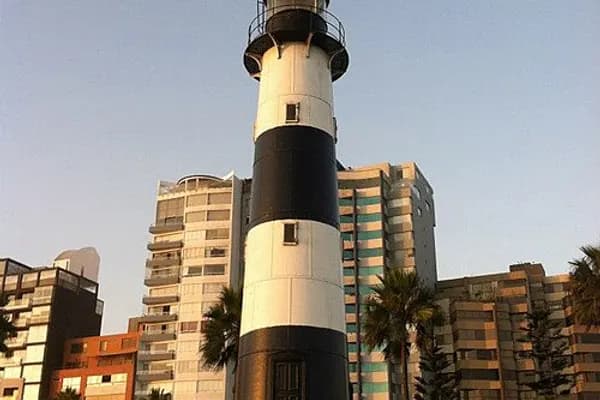
Miraflores is home to a number of important locations, including buildings that have since been declared part of the cultural heritage of Peru.
See also
Peru portal
List of upscale shopping districts
References
External links
Wikivoyage has a travel guide for Miraflores.
(in Spanish) Municipalidad de Miraflores – Miraflores District Council official website
Encyclopedic content adapted from the Wikipedia article on Miraflores, used under CC BY-SA 4.0.