About the neighborhood
District of San Juan, Puerto Rico
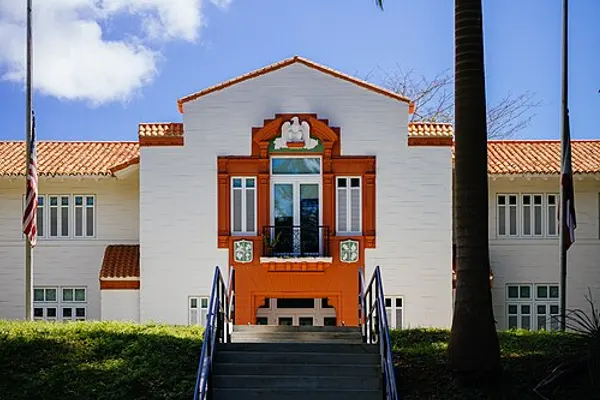
Río Piedras (Spanish pronunciation: ˈrio ˈpjeðɾas) (Spanish for ''stones river'') is a highly urbanized commercial and residential district in San Juan, the capital municipality of Puerto Rico. Adjacent to the Hato Rey business center and concentrated in the barrios of Pueblo, Universidad, Hato Rey Sur, El Cinco, and Monacillo Urbano, it is about 4 to 7 miles (6.4 to 11.3km) from the Old San Juan historic quarter, Condado and Isla Verde resort areas, and SJU airport. It has been the home of the main campus of the University of Puerto Rico since 1903, earning the popular name of Ciudad Universitaria (college town). The largest health institution in the archipelago, the Centro Médico de Puerto Rico (Puerto Rico Medical Center), is also located within its limits. Named after the river that flows through it, the Río Piedras (''stones river''), the district was the downtown center of a former municipality with the same name that was merged into San Juan in 1951.
Name
The district is named Río Piedras (''stones river'') after the Piedras River, which is within its territorial limits. Río Piedras was also the name of the former municipality (1823–1950) for which the district was the downtown and historic center before it was merged with the adjacent municipality of San Juan in 1951.
History
The area where Río Piedras is located today was previously settled by the Taíno, and archaeological sites have been uncovered nearby in Carolina. The town was founded as El Roble and was officially recognized by Spanish Governor Juan de Rivera in 1714. It was settled on the intersection of the Piedras River and the Juan Méndez Creek (part of the Puerto Nuevo River basin). The town eventually adopted the name of that river, Pueblo de Nuestra Señora del Pilar de Río Piedras, and was proclaimed a municipality in 1823, when the city hall and plaza (main town square) were built.
During the nineteenth century, most of its territory was used for agricultural and livestock-raising purposes. Sugar cane, cotton and coffee were some of the goods produced during this era at the municipality. A road connecting Río Piedras to San Juan was built during this time, along with the first church, Iglesia Nuestra Señora del Pilar, at the site of the modern town plaza. The Camino Real, precursor to the Carretera Central, connected Río Piedras with Caguas and to southern Puerto Rico, was also built before the end of the century. Its location along the Camino Real between the walled city of San Juan and the rest of the island turned Río Piedras into a commercial hub and junction between the Spanish colonial government and the rest of Puerto Rico.
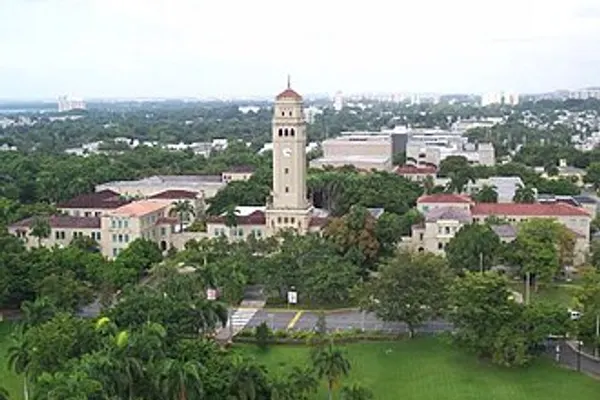
The University of Puerto Rico was founded in Río Piedras on May 12, 1903 with funds diverted from the former Escuela Normal Industrial (Normal Industrial School). The University of Puerto Rico, Río Piedras Campus, today one of the largest universities in Puerto Rico. The university was a central part of the commercial and residential development of Río Piedras. The University Botanical Gardens are also located in Río Piedras.
Incorporation into San Juan
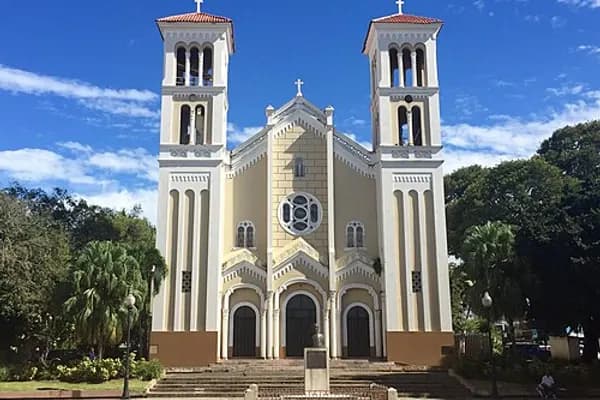
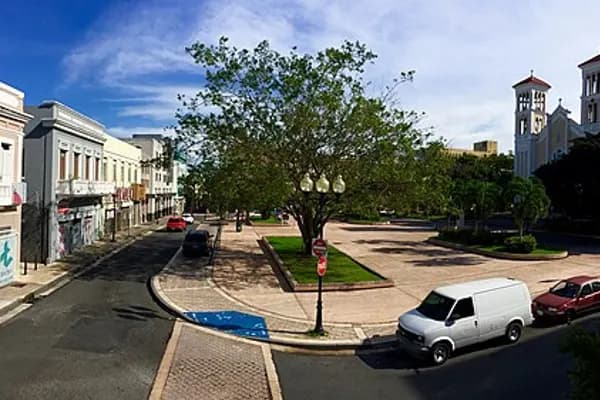
The municipality of Río Piedras became part of the capital city of San Juan on July 1, 1951, after the approval of Project 177 by the House of Representatives of Puerto Rico. Following the annexation of Río Piedras, the city of San Juan, quadrupled its former size, becoming the largest city in Puerto Rico. With a population of 143,989 in 1950, Río Piedras was the most populous municipality in Puerto Rico before its consolidation with San Juan. The last mayor of the municipality of Río Piedras was Ángeles Méndez de López Corver. The former downtown area of the municipality is today part of the barrio (district) of Pueblo in San Juan, more popularly known as Río Piedras Antiguo (Old Río Piedras) and Río Piedras Pueblo (downtown Río Piedras), and it still preserves its former city hall, town square or plaza, and its cathedral, Catedral de San Juan Bautista.
Paseo de Diego
In July 1980, it was revealed by then Mayor Hernán Padilla, that Calle De Diego, one of the roads with the greatest commercial movement and traffic congestion in Río Piedras, would be converted into a Pedestrian Walkway in the following year. Padilla indicated that the construction of the Pedestrian Walkway, which would extend from the street Ferrocarril to Ponce de Leon Avenue, including a portion of Calle del Carmen, would cost around $1.5million.
On December 5, 1981, the first phase of Paseo De Diego, built by Redondo Construction at a cost of $1,100,000, would be delivered to the Mayor of San Juan before December 18, the date of its official inauguration, four months before the original expected completion time. This would be possible despite the fact that the project had been carried out with the public passing through and shops open. It would have two ornamental fountains, four clocks, attractive light fixtures, and 42 trees that would complement the appearance of Paseo De Diego, which had all the details of a mall, but outdoors. It would officially inaugurate on December 18, of that year.
On November 5, 1983, located on the Paseo de Diego, a 90,000 square foot shopping center Plaza de Diego Mall, would inaugurate with three levels. The first two levels would count with 13 stores, and the third would count with 13 food establishments. It would be developed by Plaza de Diego Shopping Center, Inc., and designed by Huyke, Colón y Asociados.
Symbols
Flag
The flag of Río Piedras consists of a yellow cloth with a wavy blue stripe. The stripe has small white stones crossing it, and symbolizes the river that gave its name to the former town. The yellow background represents the sun, progress, and the future.
Geography and climate
The region is mostly flat due to its location in the Northern Coastal Plains of the island. The highest regions are located at the south, mainly in the Caimito and Cupey barrios. The Río Piedras (or Piedras River) which gives name to the area crosses the region.
Cityscape
Barrios
By 1948, Río Piedras had the following 12 urban barrios:
Buen Consejo
Capetillo
El Cinco
Gobernador Piñero
Hato Rey Central
Hato Rey Norte
Hato Rey Sur
Oriente
Río Piedras Antiguo
Sabana Llana Norte
Sabana Llana Sur
Universidad
Buen Consejo, Capetillo, and Río Piedras Antiguo made up the original urban area of the municipality of Río Piedras.
The rural zone, 42% of Río Piedras in 1948, were the following six barrios:
Caimito
Cupey
Monacillo
Quebrada Arenas
Sabana Llana Rural
Tortugo
Demographics
Tourism
Tourism spots in Río Piedras include:
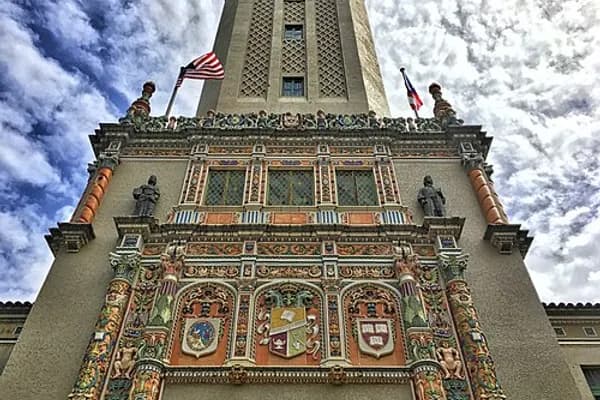
The Río Piedras campus of the University of Puerto Rico (and its theater, bell tower and museums)
Casa de Cultura Ruth Hernández Torres, which is a cultural center
Heladería Georgetti, an iconic ice-cream shop
El Churro Bar, popular Mexican taqueria and bar
Plaza del Mercado de Río Piedras, the historic marketplace building in downtown Río Piedras
El Boricua, a popular gathering place for locals and tourists alike
Government
Río Piedras first mayor was Juan de la Cruz in 1814. The last mayor of the municipality of Río Piedras was Ángeles Méndez de López Corver.
The Puerto Rico Department of Corrections and Rehabilitation operates the Hogar Intermedio para Mujeres in Río Piedras, which opened in 1996.
Education
Río Piedras is perhaps more known for being the site of the main campus of the University of Puerto Rico. Located in downtown Río Piedras, the university has more than 20,000 students enrolled and a faculty of more than 1,000.
Other universities located in what was known as Río Piedras are the Polytechnic University of Puerto Rico and the Interamerican University of Puerto Rico, Metropolitan Campus.
Río Piedras also has several public and private schools distributed through several regions. Public education is handled by the Puerto Rico Department of Education.
Transportation
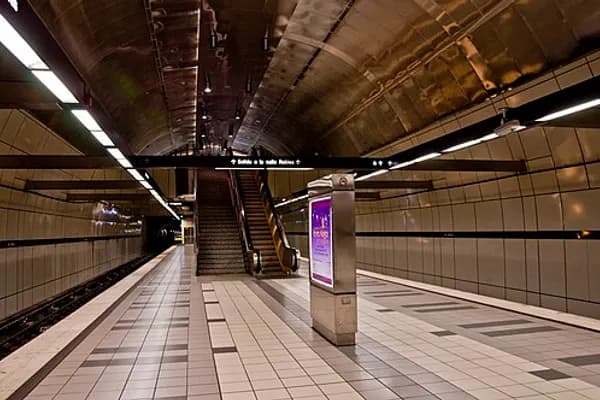
Río Piedras is served by the Tren Urbano metro system with stations at the University of Puerto Rico and Río Piedras in downtown Río Piedras. Even though these two stations are considered the current stations at Río Piedras, most of the stops of the train in the municipality of San Juan are located in areas that were part of the municipality of Río Piedras prior to 1951.
Culture
At the heart of Río Piedras lies the Avenida José de Diego, a one-kilometer pedestrianized street with stores and shops. The Río Piedras Plaza del Mercado (the old marketplace) is the largest of its kind on the island and features a series of shops that offer goods and services, and it is also popular with students of the university.
Ponce de León Avenue is popular with bookstores and small theaters and with students, faculty, and intellectuals in the community.
Notable people
Paul Bamba, boxer
Luis Torres Díaz, Chemist, Lived in the city.
La India, Salsa singer
Tito Nieves, Salsa singer
Joaquin Phoenix, Actor
Frank H. Wadsworth
Chayanne, Latin pop singer
Ramón Rodríguez, Actor known for Will Trent
Dickie Thon, professional baseball player.
Myke Towers, Reggaeton singer and rapper.
Gallery
See also
Puerto Rico portal
University of Puerto Rico, Río Piedras Campus
Vilma Reyes
Humberto Vidal explosion
List of communities in Puerto Rico
References
External links
Río Piedras, Puerto Rico – AreciboWeb (in Spanish)
Media from Commons
Travel guides from Wikivoyage
Data from Wikidata
Encyclopedic content adapted from the Wikipedia article on Río Piedras, used under CC BY-SA 4.0.
What makes Río Piedras special
Río Piedras stands out among San Juan’s neighborhoods for its distinctive character: university san juan. Ranked #5 in San Juan, it offers the kind of experience that defines a great city trip — a place where the streets themselves tell a story and every block rewards curiosity.
Best for
Our take on Río Piedras
Río Piedras occupies a distinctive place in San Juan's neighborhood landscape. It is the kind of district that rewards travelers who venture beyond the obvious choices — quieter than the tourist-facing areas, richer in local character, and full of the small details that make a city trip memorable.
What makes Río Piedras worth the visit is the texture of daily life here. It is a neighborhood that functions for the people who live in it — not just for the visitors who pass through. The shops serve local needs, the restaurants feed local appetites, and the streets have a rhythm that reflects genuine community rather than tourism infrastructure. That is the quality our editors prize most, and Río Piedras has it in abundance.
Our editors recommend budgeting at least half a day here — enough time to walk the main streets, sit down for coffee, and discover the side streets where Río Piedras's real character lives.
Living in Río Piedras
Río Piedras is connected to the rest of San Juan by public transit, and most visitors find it straightforward to reach from the city center or airport. Once you arrive, the neighborhood is best explored on foot — the scale is human and the streets reward wandering.
Day-to-day life in Río Piedras has the rhythm of a genuine residential neighborhood. You will find grocery stores, pharmacies, cafés with morning regulars, and the kind of small independent shops that only survive where locals support them. For visitors, this means the infrastructure you need — good coffee, a decent meal, a quiet place to sit — is always within a short walk.
Accommodation in Río Piedras ranges from boutique hotels to short-term rentals. We generally recommend staying within the neighborhood itself rather than commuting from a hotel elsewhere in San Juan — the experience of waking up inside a great neighborhood is fundamentally different from visiting one as a day trip.
What locals say about Río Piedras
Long-term residents of Río Piedras tend to describe their neighborhood with a mix of pride and protectiveness. Like any district with genuine character, Río Piedras inspires loyalty — the kind of place people move to and never quite leave, or leave and spend years trying to get back to.
What locals appreciate most about Río Piedras is its consistency — the feeling that the neighborhood works the same way on a Tuesday morning as it does on a Saturday night. It is not a place that performs for visitors and then goes quiet. The rhythm is genuine, the community is real, and the daily experience of living here is what draws people and keeps them.
Compared to the more famous districts in San Juan, Río Piedras has maintained a lower profile, which many residents consider an advantage. The neighborhood evolves gradually rather than being reshaped by sudden attention, and the result is a community that still feels organic rather than curated.
Visitor tips
- Río Piedras is located in San Juan, Puerto Rico. The neighborhood is accessible by public transport, taxi, or rideshare from most parts of the city.
- Morning is often the best time to explore — the streets are quieter, the light is better for photography, and cafes are at their most welcoming.
- Wear comfortable walking shoes — the best way to experience Río Piedras is on foot, wandering the side streets and discovering what lies around each corner.
- Save the neighborhood's location on your phone before you arrive. Offline maps are especially useful for navigating the smaller side streets.