About the neighborhood
Subbarrio of Santurce in San Juan, Puerto Rico
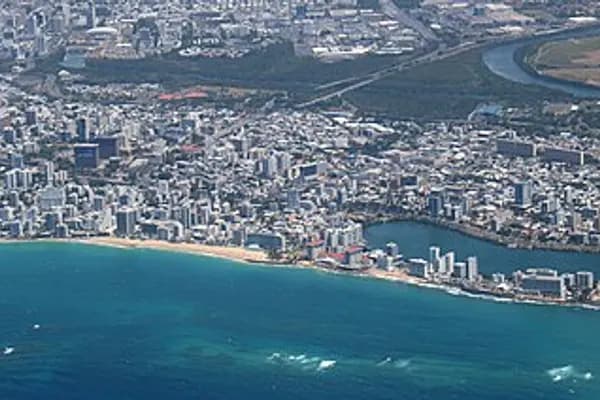
Condado (Spanish for ''county'') is a highly urbanized beachfront resort, commercial, and residential district with various upscale hotels, restaurants, boutique shops, and condos in the barrio of Santurce in San Juan, the capital municipality of Puerto Rico. Located about 2 to 6 miles (3.2 to 9.7km) from the Old San Juan historic quarter, Isla Verde resort area, Hato Rey business center, and SJU airport, the district is centered around Ashford Avenue, which extends east–west for about 1.77 miles (2.85km) from the Parque and Ocean Park residential areas to Dos Hermanos Bridge in San Juan Islet, where Old San Juan is situated. It is named after Count Pablo Ubarri, who built the San Juan Tramway, the first passenger steam and electric tramway in the main island operating from Old San Juan through Santurce to the Río Piedras district, in 1880.
Vacant until the turn of the 20th century, the real estate development of Condado began with the construction of the Ashford Presbyterian Community Hospital in 1904 by Grace Williams Atkins, Casa Mora (Moor House) in 1909 and Dos Hermanos Bridge in 1910 by Hernand and Sosthenes Behn, "Condado" passenger electric tramway in 1911 by Porto Rico Railway, Light & Power Co. (PRRL&P), Ashford House in 1912 by Bailey Ashford, and Vanderbilt Hotel in 1919 by Frederick Vanderbilt.
Location
Condado is an upscale neighborhood located on the beach. It is located 2 miles (3.2km) east of the historic district of Old San Juan, which is situated on San Juan Islet. It is one of 40 subbarrios of Santurce. The land area measures 203.81 acres (82.48ha) with a resident population of 6,170 according to the 2000 United States census.
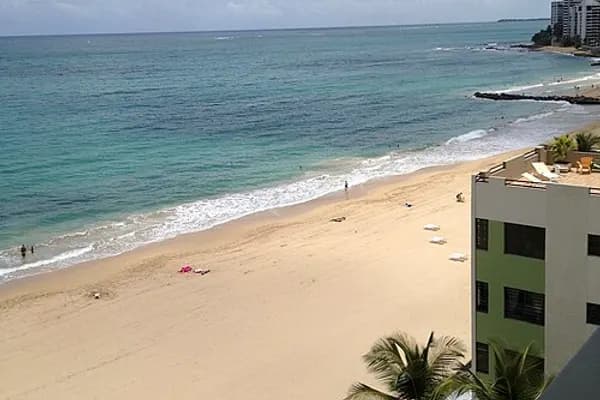
The eastern border is marked by De Diego Avenue and its straight extension towards the Atlantic coast. On the south, the subbarrio is bounded by Wilson Street, Aldea Street, Baldorioty de Castro Expressway, Piccioni Street and Delcasse Street, and by the Condado Lagoon (from east to west). At the westernmost point is the Dos Hermanos Bridge, where Ashford Avenue ends and leads into Old San Juan. In the north are the beaches of the Atlantic Ocean next to hotels and other attractions such as nightclubs, casinos, shops and restaurants. Condado is one of the island's primary tourist destinations.
History
20th century
Condado began its process of urbanization in 1908 by two American industrialists, Hernan and Sosthenes, also known as the Behn Brothers. The quarter became a typical streetcar suburb to the traditional urban center of Old San Juan. Its growth and development was mostly shaped by a transportation influenced suburbanization developed on a grid plan.
The neighborhood experienced an economic boom in the first decades of the 20th century when some of the wealthiest families built their homes in the area. The Vanderbilts built a summer home in 1919 which today has been converted into the luxurious Condado Vanderbilt Hotel. The Behn Brothers also built their home in Condado and to their memory, Puente Dos Hermanos (or "Two Brothers Bridge" in English) is named in their honor as founders of Puerto Rico Telephone and the new electric tramway line that linked the county to Old San Juan.
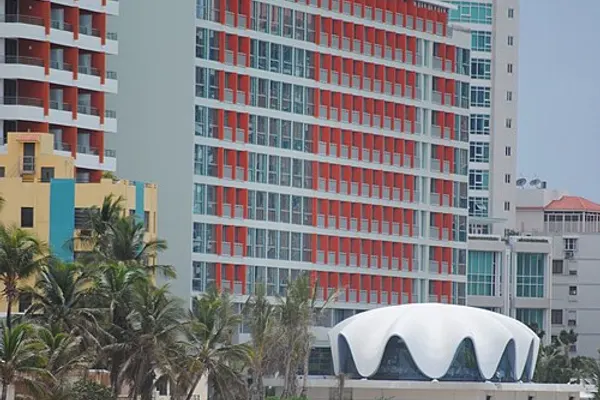
The 1950s-60s era saw another boom in Condado, with the rapid industrialization of Puerto Rico, this flamboyant locale was becoming a popular tourist destination. Large hotels like the Caribe Hilton Hotel and La Concha Resort were built as part of a government sponsorship program under the Operation Bootstrap brand. A convention center was built to host activities while many families began to move in during the development of high-end and high-rise apartment buildings. In fact, Ashford Avenue was named after another well-known Condado resident Dr. Bailey Ashford. It runs through the subbarrio and leads toward the Puente Dos Hermanos.
21st century
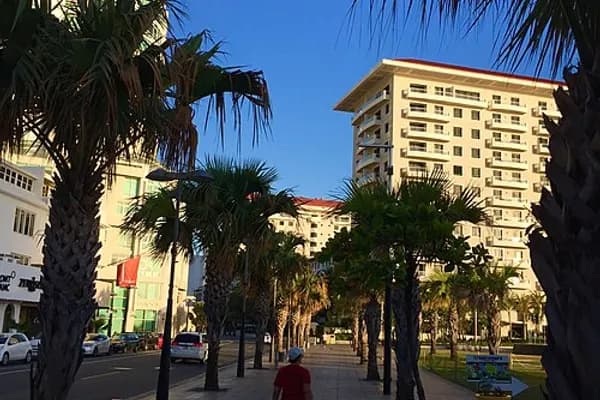
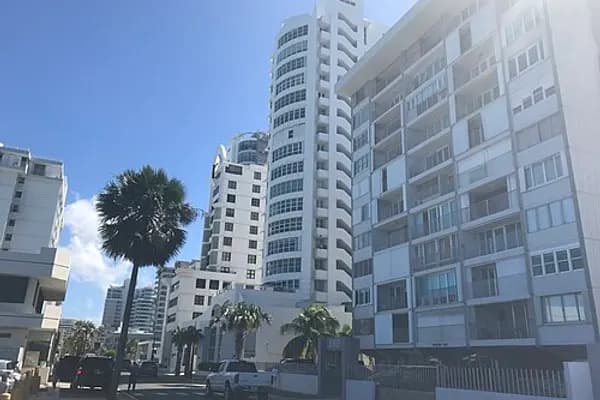
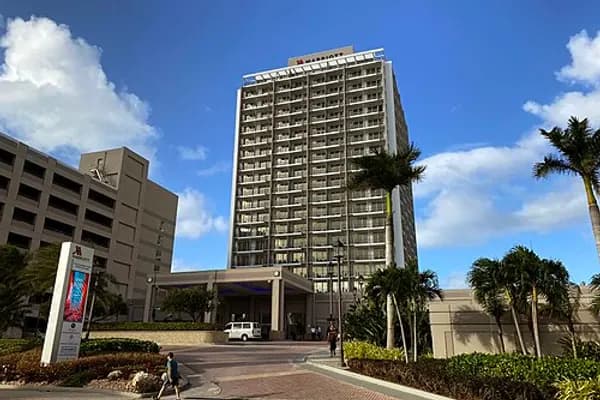
Condado looks quite different from what it did at the turn of the century. Some of the luxurious homes which still remain nestled between the high-rise condominiums have been converted into small inns, shops, museums or restaurants. Dr. Bailey Ashford's home has been remodeled and there are plans to turn it into a museum. Condado's main public space is La Ventana al Mar, designed by architect and urbanist Andrés Mignucci. The park is flanked by two of Condado's landmark hotels: to the west by the Condado Vanderbilt Hotel (1919), designed by Warren and Whitmore, and to the east by the La Concha Hotel (1957), designed by Toro Ferrer. One of the first schools constructed by the United States is in Condado. Designed by Antonin Nechodoma, it was designated as a historic site in November 2020 by the Puerto Rico Planning Board.
In recent years, the Condado district has become associated with wealth and status. Properties are scarce, hard to come by and extremely expensive. It is sometimes called the “Manhattan of Puerto Rico” and properties tend to hover in the millions of dollars. It is one of the most desirable places to live on the island and as such commands a premium.
Demographics
In 2010, Condado had a population of 4,908 and a population density of 15,832.3 persons per square mile.
Infrastructure
Public transportation
Condado is served by the Puerto Rico Metropolitan Bus Authority with two bus routes: T21 and D53.
Gallery
See also
Puerto Rico portal
Condado Beach
List of communities in Puerto Rico
References
External links
Media related to Condado (Santurce) at Wikimedia Commons
Encyclopedic content adapted from the Wikipedia article on Condado, used under CC BY-SA 4.0.
What makes Condado special
Condado stands out among San Juan’s neighborhoods for its distinctive character: san juan's beachfront strip. Ranked #3 in San Juan, it offers the kind of experience that defines a great city trip — a place where the streets themselves tell a story and every block rewards curiosity.
Best for
Our take on Condado
Condado is one of the strongest neighborhoods in San Juan, and it consistently appears in our editors' personal favorites lists. It may not always get the same attention as the city's most famous district, but among travelers who know San Juan well, Condado is often the first recommendation.
The waterfront presence in Condado shapes everything about the neighborhood's character — the light, the air, the pace of life, the kind of restaurants that thrive here. But what elevates it beyond a simple beach district is the depth of the neighborhood behind the waterfront: the residential streets, the local markets, the café culture that exists independent of the views.
Our editors recommend budgeting at least half a day here — enough time to walk the main streets, sit down for coffee, and discover the side streets where Condado's real character lives.
Living in Condado
Condado is connected to the rest of San Juan by public transit, and most visitors find it straightforward to reach from the city center or airport. Once you arrive, the neighborhood is best explored on foot — the scale is human and the streets reward wandering.
Day-to-day life in Condado has the rhythm of a genuine residential neighborhood. You will find grocery stores, pharmacies, cafés with morning regulars, and the kind of small independent shops that only survive where locals support them. For visitors, this means the infrastructure you need — good coffee, a decent meal, a quiet place to sit — is always within a short walk.
Accommodation in Condado ranges from boutique hotels to short-term rentals. We generally recommend staying within the neighborhood itself rather than commuting from a hotel elsewhere in San Juan — the experience of waking up inside a great neighborhood is fundamentally different from visiting one as a day trip.
What locals say about Condado
Long-term residents of Condado tend to describe their neighborhood with a mix of pride and protectiveness. Like any district with genuine character, Condado inspires loyalty — the kind of place people move to and never quite leave, or leave and spend years trying to get back to.
What locals appreciate most about Condado is its consistency — the feeling that the neighborhood works the same way on a Tuesday morning as it does on a Saturday night. It is not a place that performs for visitors and then goes quiet. The rhythm is genuine, the community is real, and the daily experience of living here is what draws people and keeps them.
Compared to the more famous districts in San Juan, Condado has maintained a lower profile, which many residents consider an advantage. The neighborhood evolves gradually rather than being reshaped by sudden attention, and the result is a community that still feels organic rather than curated.
Visitor tips
- Condado is located in San Juan, Puerto Rico. The neighborhood is accessible by public transport, taxi, or rideshare from most parts of the city.
- Morning is often the best time to explore — the streets are quieter, the light is better for photography, and cafes are at their most welcoming.
- Wear comfortable walking shoes — the best way to experience Condado is on foot, wandering the side streets and discovering what lies around each corner.
- Save the neighborhood's location on your phone before you arrive. Offline maps are especially useful for navigating the smaller side streets.