About the neighborhood
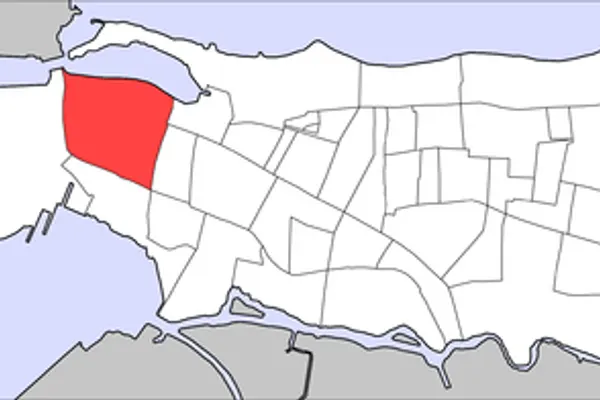
Subbarrio of Santurce in San Juan, Puerto Rico
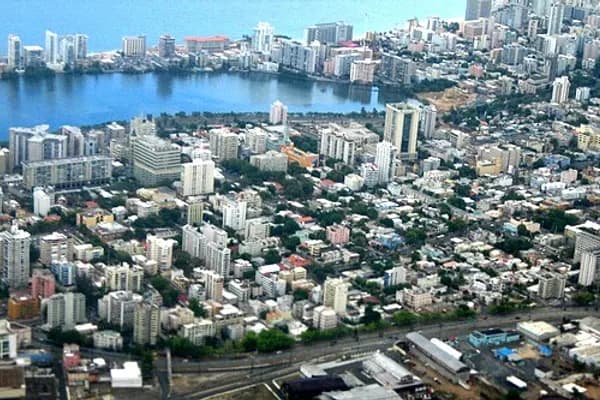
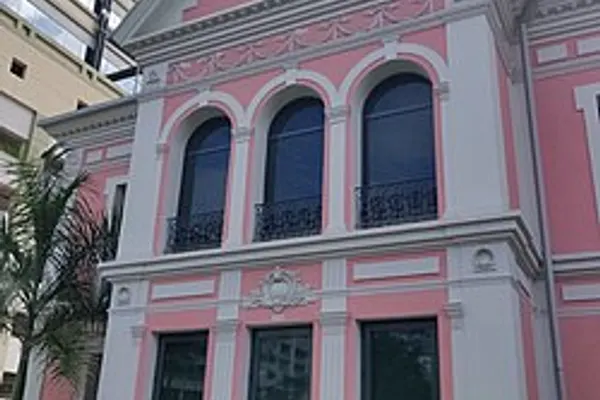
Miramar is one of the forty subbarrios of Santurce, San Juan, Puerto Rico. The neighborhood has many historic Spanish Revival-style homes with patios and gardens, and it was listed on the Puerto Rico Register of Historic Sites and Zones in 2007 for its historical and architectural value.
History
The neighborhood is under the legal jurisdiction of Santurce in the municipality of San Juan, Puerto Rico. It first appears in the 16th century as a spring that fed water to the Spanish outpost of Old San Juan. During the Battle of San Juan (17 April – 2 May 1797), the town of Miramar was the site of the British ill-fated British assault on the Spanish colonial port city of San Juan de Puerto Rico during the 1796–1808 Anglo-Spanish War.
In the 17th century a wide public street, the Central Highway, (today Ponce de León Avenue) was built that ran through the spring. Commerce flourished since goods that arrived at the port of San Juan had to pass Miramar on their way to the rest of the island. Today two set of bridges known as San Antonio and Dos Hermanos connects the adjoining areas of Old San Juan and Condado. Its land area measures 0.24 sq. miles (0.62km), and has a resident population of 5,440 according to the 2000 United States census.
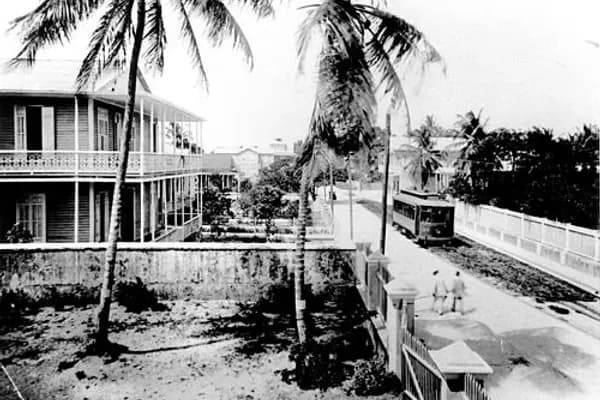
Miramar, since its beginnings had large wooden plantation-style homes with expansive land lots. In the 1950s well known architects from the time period built extravagant homes in Miramar that are still preserved.
Miramar is home to several structures registered at the National Register of Historic Places, such as Casa Aboy-Lompré, a cultural center that was declared a historic building in the year 1989, focusing on the preservation and creation of photographic art. Another example is the Our Lady of Lourdes Chapel, declared a historic building in the year 1984.
Location
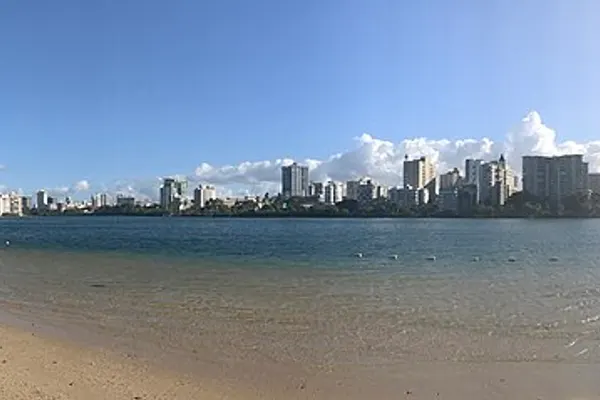
Miramar is situated on the northwestern part of Santurce, adjacent to Isla Grande where the Puerto Rico Convention Center is located to the west. Baldorioty de Castro Boulevard and Condado Lagoon are to the north, Alto del Cabro barrios and Gandul are to the east, and Hoare Street is to the south of Miramar.
Demographics
In 2000, Miramar had a population of 5,540.
In 2010, Miramar had a population of 4,412 and a population density of 18,383.3 persons per square mile.
Neighborhood
Miramar is an exclusive residential neighbourhood where primarily middle to upper-class families reside, characterized by quiet streets lined with large, mature shade trees. There are still a handful of historical residences with the charm and atmosphere from the bygone era including several Prairie School architectural style buildings by internationally renowned architect Antonin Nechodoma. Miramar's rich architectural legacy is now protected by law as it was designated an historical district of Puerto Rico. The government of Puerto Rico has passed a law declaring Miramar a Historic Town.
Miramar's Residents Association has had two legal triumphs in the court system that have helped define zoning laws and development sustainability.
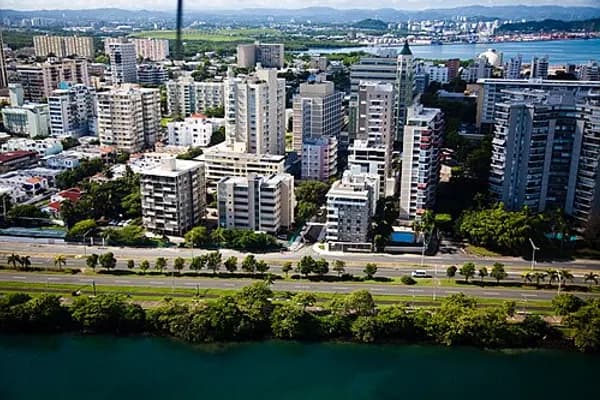
The Justice Department of Puerto Rico (which can be seen in the picture, third condo from right to left, dark colored] is located in Miramar, and had plans to expand their facilities. Expropriation processes were begun for adjacent lots. The Association took the matter to court and simultaneously began lobbying in the Puerto Rico Legislature. Their endeavors resulted in the passing of a law declaring the historic value of the area, and officially declaring Miramar a historic district. Thus, the courts ruled such zoning laws pertaining to historic districts prohibited the proposed expansion plans. To this day, the adjacent lots are empty, but the department has abandoned their proposed expansion.
The second victory for the Residents was in the halting of construction of a four-lane expressway that was begun on the south part of Miramar. The proposed plans were considered to be an abuse of the environment (hundred-year-old trees would have been cut down), the highway would not meet noise emission levels in regular traffic hours (as established by law for historic districts), and various condos and houses would become isolated from the rest of the town. In an unexpected move, in 2010 Mayor Jorge Santini proposed that instead of building the highway, a green concept should be pursued and a light rail program called SaTour was to be built. The plan is part of the San Juan Walkable City proposed plan, which is intended to connect Miramar to the Train system already in place called Tren Urbano. When completed, Miramar will have a direct access through train with Hato Rey, Guaynabo, and Bayamón.
Miramar is home to the coeducational Catholic parochial school Academia del Perpetuo Socorro, the Puerto Rico Convention Center, the Isla Grande Airport, the Cruise ship Pan-American Cruise Pier, the luxurious yacht harbor of Club Nautico, and the Puerto Rico Conservatory of Music.
Miramar is located two miles from Old San Juan, three miles from shopping mecca Condado, and four miles from the international airport Luis Muñoz Marín.
Historical Battles
On 1797 Miramar witnessed the English Royal Navy under the reign of George III of the United Kingdom and led by the mighty Abercromby shell of the Fortín de San Gerónimo in Old San Juan.
Gallery
See also
Puerto Rico portal
List of communities in Puerto Rico
References
External links
Media related to Miramar (Santurce) at Wikimedia Commons
Encyclopedic content adapted from the Wikipedia article on Miramar, used under CC BY-SA 4.0.
What makes Miramar special
Miramar stands out among San Juan’s neighborhoods for its distinctive character: quiet upscale san juan. Ranked #4 in San Juan, it offers the kind of experience that defines a great city trip — a place where the streets themselves tell a story and every block rewards curiosity.
Best for
Our take on Miramar
Miramar occupies a distinctive place in San Juan's neighborhood landscape. It is the kind of district that rewards travelers who venture beyond the obvious choices — quieter than the tourist-facing areas, richer in local character, and full of the small details that make a city trip memorable.
What makes Miramar worth the visit is the texture of daily life here. It is a neighborhood that functions for the people who live in it — not just for the visitors who pass through. The shops serve local needs, the restaurants feed local appetites, and the streets have a rhythm that reflects genuine community rather than tourism infrastructure. That is the quality our editors prize most, and Miramar has it in abundance.
Our editors recommend budgeting at least half a day here — enough time to walk the main streets, sit down for coffee, and discover the side streets where Miramar's real character lives.
Living in Miramar
Miramar is connected to the rest of San Juan by public transit, and most visitors find it straightforward to reach from the city center or airport. Once you arrive, the neighborhood is best explored on foot — the scale is human and the streets reward wandering.
This is a neighborhood with strong residential roots, which means the infrastructure of daily life is well-established: grocery stores, pharmacies, parks, playgrounds, and the kind of quiet side streets where children play and neighbors greet each other. For visitors, this translates into a feeling of safety and belonging that more tourist-oriented districts rarely provide.
Accommodation in Miramar ranges from boutique hotels to short-term rentals. We generally recommend staying within the neighborhood itself rather than commuting from a hotel elsewhere in San Juan — the experience of waking up inside a great neighborhood is fundamentally different from visiting one as a day trip.
What locals say about Miramar
Long-term residents of Miramar tend to describe their neighborhood with a mix of pride and protectiveness. Like any district with genuine character, Miramar inspires loyalty — the kind of place people move to and never quite leave, or leave and spend years trying to get back to.
What locals appreciate most about Miramar is its consistency — the feeling that the neighborhood works the same way on a Tuesday morning as it does on a Saturday night. It is not a place that performs for visitors and then goes quiet. The rhythm is genuine, the community is real, and the daily experience of living here is what draws people and keeps them.
Compared to the more famous districts in San Juan, Miramar has maintained a lower profile, which many residents consider an advantage. The neighborhood evolves gradually rather than being reshaped by sudden attention, and the result is a community that still feels organic rather than curated.
Visitor tips
- Miramar is located in San Juan, Puerto Rico. The neighborhood is accessible by public transport, taxi, or rideshare from most parts of the city.
- Morning is often the best time to explore — the streets are quieter, the light is better for photography, and cafes are at their most welcoming.
- Wear comfortable walking shoes — the best way to experience Miramar is on foot, wandering the side streets and discovering what lies around each corner.
- Save the neighborhood's location on your phone before you arrive. Offline maps are especially useful for navigating the smaller side streets.