About the neighborhood
Barrio in Buenos Aires, Argentina
La Boca (Spanish: la ˈβoka; "the Mouth", probably of the Matanza River) is a neighborhood (barrio) of Buenos Aires, the capital of Argentina.
Its location near the Port of Buenos Aires meant the neighbourhood became a melting pot of different cultures during the 20th century, when millions of immigrants from Europe and Asia arrived to Argentina. In particular, many of its settlers originated from the Italian region of Liguria. The neighbourhood became a cornerstone for porteño culture, being an important site during the early development of the tango.
Today, it is mostly known for being home to Boca Juniors, one of the two largest sports clubs in Argentina.
Geography
La Boca is located in the south-east of the city, near its old port. Another of the 48 barrios, Barracas, lies to the west; San Telmo and Puerto Madero are to the north. On the opposite (right) bank of the Matanza River to the south is the Dock Sud neighborhood of Avellaneda Partido (Buenos Aires Province), with the two areas connected by the Puente Nicolás Avellaneda.
History
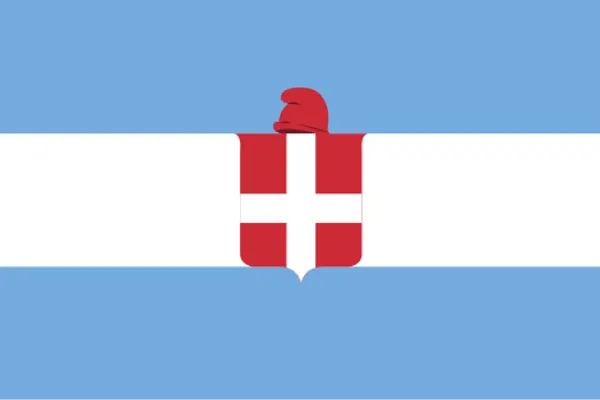
In 1882, after a lengthy general strike, La Boca seceded from Argentina, and the rebels raised the Genoese flag, which was immediately torn down personally by then President Julio Argentino Roca.
Among sports fans, Boca is best known for being the home of the world-renowned football club Boca Juniors. The club plays its home matches in Estadio Alberto J. Armando, popularly known as La Bombonera (Spanish for "the bonbon box").
La Boca was home to the garra, or a fighting spirit that was represented in the hard working, no nonsense people of the barrio and reflected by the most popular club Boca Juniors on the pitch. Throughout the first half of the 20th century, La Boca's citizenry was characterized for rejecting “art for arts sake” and adopting a workmanlike attitude to work and life, in contrast to the richer citizens to the north, often represented through their club River Plate. In 1907, La Boca became its own micronational republic. Their first attempt was short-lived, but two later attempts were more successful. The former lasted from 1923 to 1972 and the latter was established since 1986. Republic graffiti was still present in the barrio.
Another of Argentina's most popular clubs, River Plate, originally started in the La Boca. However, in 1938 the club relocated to the Núñez neighborhood on the northern edge of the city and became more identifiable with the Buenos Aires elite than the lower class citizens of La Boca. The land in and around La Boca was often controlled by the state or wealthy corporations in the first half of the 20th century, due to its location near the docks, making soccer pitches difficult to obtain for citizens.
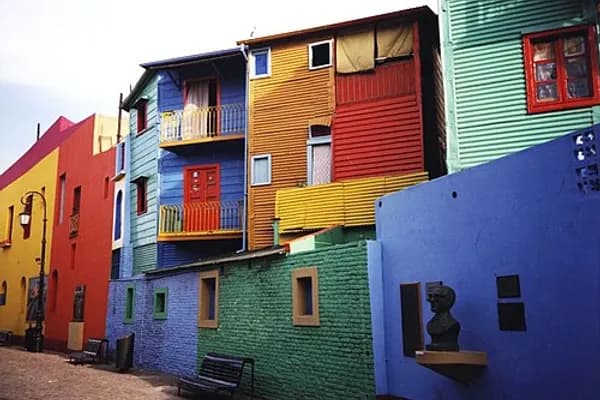
La Boca is a popular destination for tourists visiting Argentina, with its colourful houses and pedestrian street, the Caminito, where tango dancers perform and tango-related memorabilia is sold. Other attractions include the La Ribera theatre, many tango music clubs, and Italian taverns. The area visited by tourists is only a few blocks long and has been built up for tourism very actively over the last few years, with many market stalls and restaurants catering to tourists. Outside this tourist area, it is a fairly poor neighborhood that has had many regular occurrences of petty crimes reported.
It has also been a centre for radical politics, having elected the first socialist member of the Argentine Congress (Alfredo Palacios in 1935) and was home to many demonstrations during the crisis of 2001.
As of 2016, the health of over 1,000 La Boca citizens is threatened by the pollution of the Matanza-Riachuelo River (which contains high levels of arsenic and lead, due to centuries of unrestrained pollution).
Gallery
References
External links
Argentina portal
Wikimedia Commons has media related to La Boca, Buenos Aires.
Wikivoyage has a travel guide for Buenos Aires/La Boca & Barracas.
A Flags of the World article about flags used in La Boca
Caminito Street at La Boca neighbourhood
A Brief Look into the History of La Boca
34°38′08″S 58°21′53″W / 34.63556°S 58.36472°W / -34.63556; -58.36472
Encyclopedic content adapted from the Wikipedia article on La Boca, used under CC BY-SA 4.0.
What makes La Boca special
La Boca stands out among Buenos Aires’s neighborhoods for its distinctive character: painted houses and maradona's ghost. Ranked #5 in Buenos Aires, it offers the kind of experience that defines a great city trip — a place where the streets themselves tell a story and every block rewards curiosity.
Best for
Our take on La Boca
La Boca occupies a distinctive place in Buenos Aires's neighborhood landscape. It is the kind of district that rewards travelers who venture beyond the obvious choices — quieter than the tourist-facing areas, richer in local character, and full of the small details that make a city trip memorable.
What makes La Boca worth the visit is the texture of daily life here. It is a neighborhood that functions for the people who live in it — not just for the visitors who pass through. The shops serve local needs, the restaurants feed local appetites, and the streets have a rhythm that reflects genuine community rather than tourism infrastructure. That is the quality our editors prize most, and La Boca has it in abundance.
Our editors recommend budgeting at least half a day here — enough time to walk the main streets, sit down for coffee, and discover the side streets where La Boca's real character lives.
Living in La Boca
La Boca is connected to the rest of Buenos Aires by public transit, and most visitors find it straightforward to reach from the city center or airport. Once you arrive, the neighborhood is best explored on foot — the scale is human and the streets reward wandering.
Day-to-day life in La Boca has the rhythm of a genuine residential neighborhood. You will find grocery stores, pharmacies, cafés with morning regulars, and the kind of small independent shops that only survive where locals support them. For visitors, this means the infrastructure you need — good coffee, a decent meal, a quiet place to sit — is always within a short walk.
Accommodation in La Boca ranges from boutique hotels to short-term rentals. We generally recommend staying within the neighborhood itself rather than commuting from a hotel elsewhere in Buenos Aires — the experience of waking up inside a great neighborhood is fundamentally different from visiting one as a day trip.
What locals say about La Boca
Long-term residents of La Boca tend to describe their neighborhood with a mix of pride and protectiveness. Like any district with genuine character, La Boca inspires loyalty — the kind of place people move to and never quite leave, or leave and spend years trying to get back to.
What locals appreciate most about La Boca is its consistency — the feeling that the neighborhood works the same way on a Tuesday morning as it does on a Saturday night. It is not a place that performs for visitors and then goes quiet. The rhythm is genuine, the community is real, and the daily experience of living here is what draws people and keeps them.
Compared to the more famous districts in Buenos Aires, La Boca has maintained a lower profile, which many residents consider an advantage. The neighborhood evolves gradually rather than being reshaped by sudden attention, and the result is a community that still feels organic rather than curated.
Visitor tips
- La Boca is located in Buenos Aires, Argentina. The neighborhood is accessible by public transport, taxi, or rideshare from most parts of the city.
- Morning is often the best time to explore — the streets are quieter, the light is better for photography, and cafes are at their most welcoming.
- Wear comfortable walking shoes — the best way to experience La Boca is on foot, wandering the side streets and discovering what lies around each corner.
- Save the neighborhood's location on your phone before you arrive. Offline maps are especially useful for navigating the smaller side streets.