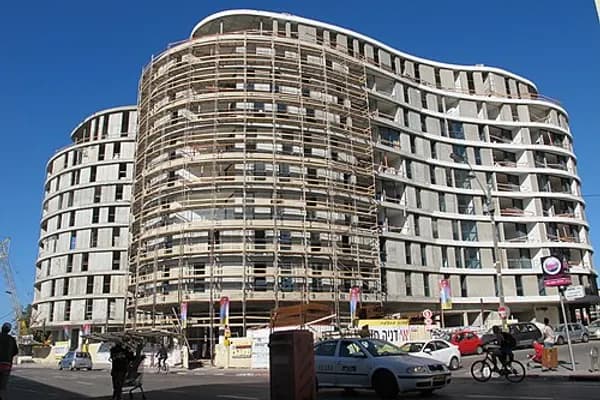
About the neighborhood
Neighborhood
Florentin (Hebrew: פלורנטין) is a neighborhood in the southern part of Tel Aviv, Israel, named after Solomon Florentinehe, a Thessalonian Jew from the Greek city of Thessaloniki who purchased the land in 1924. Development of the area was spurred by its proximity to the Jaffa–Jerusalem railway.
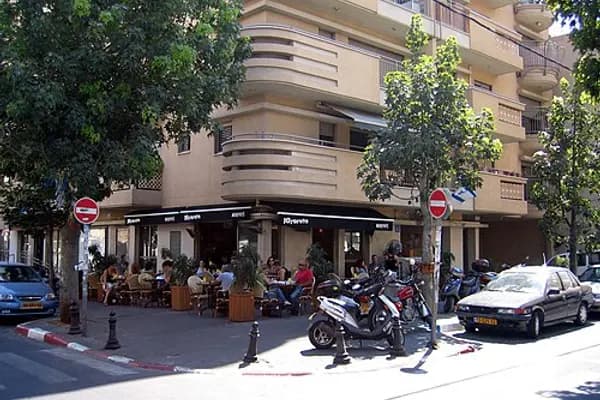
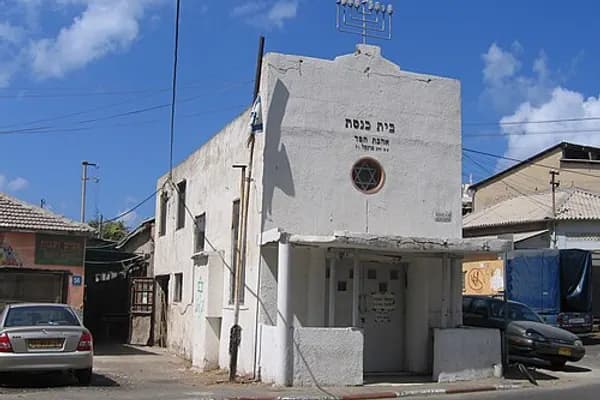
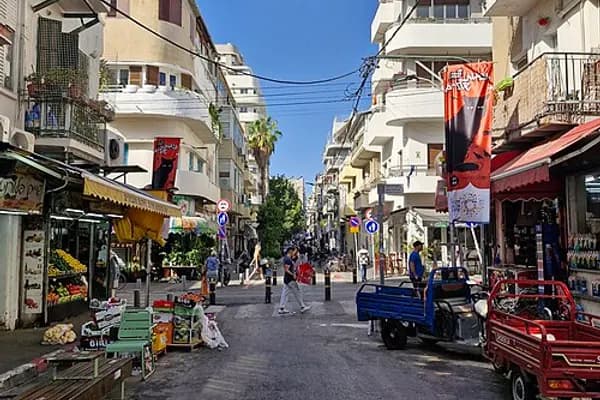
Florentin was initially populated primarily by poor Sephardic Jewish immigrants from North Africa, Bulgaria, Turkey, and Greece, as well as Mizrahi Bukharan Jews. As with much of south Tel Aviv, for many decades it suffered from urban decay and poverty. By the 1960s, the area had declined from a working-class area to a slum, as the original residents moved out. However, since the 1990s and 2000s, the area has attracted many younger residents and artists who were first attracted by its lower rents, and the neighborhood is now also associated with a bohemian lifestyle. Florentin now has numerous artists' workshops, cafes, restaurants, markets, and graffiti tours. The area is also an industrial zone and a garment district, where both Jewish and Arab wholesalers buy and sell clothing and furniture.
History
The land was purchased in the 1920s by the Salonika-Palestine Investment Company, founded in 1921 by Jews in Salonika to develop commercial relations with Jewish settlements in Palestine. After World War I , compounding the effects of the Great Thessaloniki Fire of 1917 in which the city's Jewish quarter was destroyed, along with 12,000 homes, leaving over 70,000 homeless people. In 1924, the Salonika-Palestine Company sent an envoy to Palestine to purchase land in Jaffa, south of Tel Aviv's Herzl Street, in an area bordering Neveh Tzedek and Ahuzat Bayit that was close to the Jaffa-Jerusalem railroad. Due to Ottoman land laws, building in the area was held up until 1933.
Florentin was initially populated primarily by Jewish immigrants from North Africa, Bulgaria, Turkey, and Bukhara. For decades, it was a low-income neighbourhood, suffering from urban decay. By the 1960s, the area had declined from working class to a slum. The original Florentin residents moved out, and it had become a home for the city's poorest residents and a flophouse for illegal workers, mainly from Gaza.
By the 1990s, many of the original buildings were semi-derelict. However, since the 1990s and 2000s, with the opening of many artists' workshops, and the decline of the traditional garment and furniture purchasing industries that had once sustained the area, it has become increasingly popular with artists and bohemians, who flocked to the area for its lower rents.
Florentin was the setting for a TV series in the broadcast between 1997-2001 called Florentin. The series helped to raise awareness of the existence of the neighborhood and to establish the previously neglected neighborhood in the Tel Aviv consciousness.
By the 2010s, Florentin now has numerous cafes, bars and graffiti tours. Today, the area is still also an industrial zone and a garment district, where both Jewish and Arab wholesalers buy and sell clothing and furniture.
Economy
In 1933, the Jaffa Municipality allowed shops and light industries to be opened on the ground floors of the new residential buildings, providing a source of income for the wave of immigrants settling in Palestine at the time. Today it is a combination of industrial zone, garment district, marketplace, and assembly point for foreign workers looking for jobs. An urban renewal campaign sponsored by the Tel Aviv municipality in the 1990s led to a revival of the area, which has become a popular night spot.
Art scene and street art
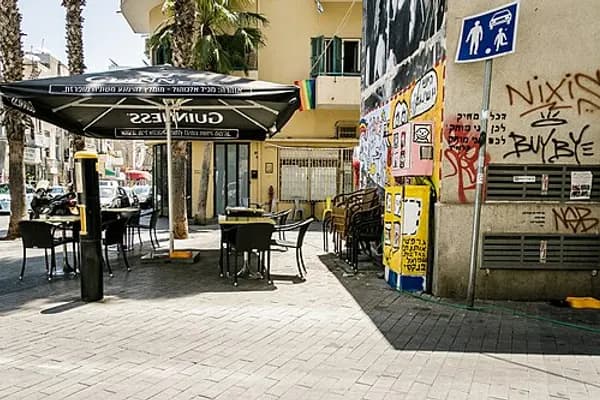
The area is known for its vibrant local art scene. The mix of garages and abandoned buildings attracted the wave of a bohemian community and opening of many workshops in the 1990s. Artists were attracted to and used the areas' crumbling walls as a canvas for murals.
Street art in Florentin often has strong political message. Local political conflicts between rival political groups have also taken place through graffiti battles on the walls of the neighbourhood.
Much of the graffiti is merely in text form, involving quotes of Hebrew poets, religious passages, and the dialogues taking place between various graffiti artists.
The graffiti has also brought opposition from local residents, and concerns about the declining standards of the graffiti itself as the area becomes more mainstream.
Street artists like Dede, Klone and Kis-Lev, and installation artists such as Sigalit Landau, made the working class neighborhood their home base. Famous works include a '27 Club' mural (27 Club graffiti in Tel Aviv) and a controversial depiction of Yitzhak Rabin's 1995 assassination.
Demography
The population nearly doubled from 3,900 to 7,000 people, of which today 21% are in the 35–44 age range, 33.7% are between the ages of 25 and 34, and children up to 17 years old make up 7% of the population.
Notable residents
Sigalit Landau (1969-), installation artist
Dede, graffiti artist
Nisim Aloni (1926–98), playwright and translator
Chaim Topol (1935-2023), actor, Oscar-nominated for his role as Tevye in Fiddler on the Roof, grew up in the neighborhood
Ethan & Hila Klein, creators of h3h3Productions started their channel while living in Florentin.
See also
Wikimedia Commons has media related to Florentin (Tel Aviv).
Neighborhoods of Tel Aviv
Art in Tel Aviv
History of Tel Aviv
References
Encyclopedic content adapted from the Wikipedia article on Florentin, used under CC BY-SA 4.0.
What makes Florentin special
Florentin stands out among Tel Aviv’s neighborhoods for its distinctive character: street art and the nightlife frontier. Ranked #2 in Tel Aviv, it offers the kind of experience that defines a great city trip — a place where the streets themselves tell a story and every block rewards curiosity.
Best for
Our take on Florentin
Florentin is one of the strongest neighborhoods in Tel Aviv, and it consistently appears in our editors' personal favorites lists. It may not always get the same attention as the city's most famous district, but among travelers who know Tel Aviv well, Florentin is often the first recommendation.
The energy of Florentin builds as the day goes on, peaking in the evening when the streets fill with locals heading to their regular spots. This is a neighborhood where the nightlife feels organic rather than manufactured — bars that have regulars, music venues where the crowd actually listens, late-night spots where the kitchen stays open because the community demands it.
Our editors recommend budgeting at least half a day here — enough time to walk the main streets, sit down for coffee, and discover the side streets where Florentin's real character lives.
Living in Florentin
Florentin is connected to the rest of Tel Aviv by public transit, and most visitors find it straightforward to reach from the city center or airport. Once you arrive, the neighborhood is best explored on foot — the scale is human and the streets reward wandering.
The neighborhood transitions through distinct phases during the day. Mornings are quiet — coffee shops and bakeries set the pace. Afternoons bring more energy as the retail and café scene picks up. Evenings are when Florentin truly comes alive, with restaurants and bars filling steadily from around 7 PM onward. If you are staying in the neighborhood, embrace the rhythm rather than fighting it.
Accommodation in Florentin ranges from boutique hotels to short-term rentals. We generally recommend staying within the neighborhood itself rather than commuting from a hotel elsewhere in Tel Aviv — the experience of waking up inside a great neighborhood is fundamentally different from visiting one as a day trip.
What locals say about Florentin
Long-term residents of Florentin tend to describe their neighborhood with a mix of pride and protectiveness. Like any district with genuine character, Florentin inspires loyalty — the kind of place people move to and never quite leave, or leave and spend years trying to get back to.
Residents value the neighborhood's evening energy but will quickly tell you that Florentin is more than its bars. The nightlife is an expression of the community, not a tourist attraction — locals know the bartenders by name, have their preferred corners, and treat the neighborhood's bars and restaurants as extensions of their living rooms.
Like any neighborhood that has earned attention, Florentin is navigating the tension between popularity and preservation. Rents have risen, new businesses have arrived, and long-time residents occasionally grumble that the neighborhood is not what it was. But the fundamentals — the walkability, the food, the community — remain strong, and most locals we speak to believe the neighborhood is still gaining more than it is losing.
Visitor tips
- Florentin is located in Tel Aviv, Israel. The neighborhood is accessible by public transport, taxi, or rideshare from most parts of the city.
- The neighborhood comes alive in the evening. Plan to arrive after sunset to experience the best of the local bar and dining scene.
- Wear comfortable walking shoes — the best way to experience Florentin is on foot, wandering the side streets and discovering what lies around each corner.