About the neighborhood
Ancient port and city in Tel Aviv, Israel
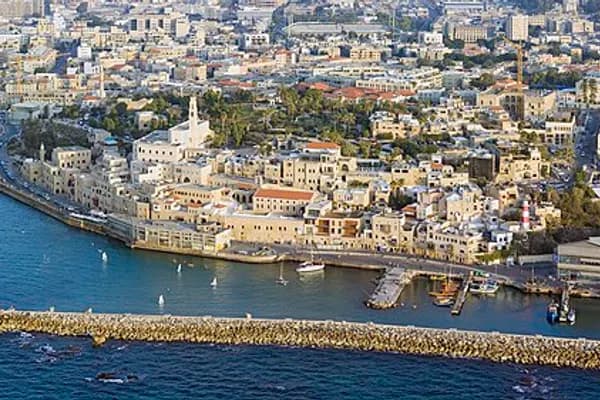
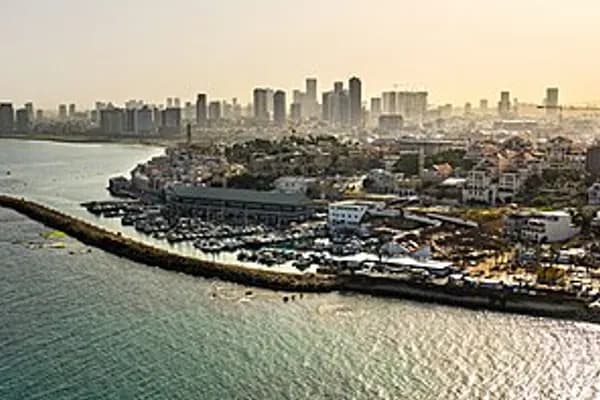
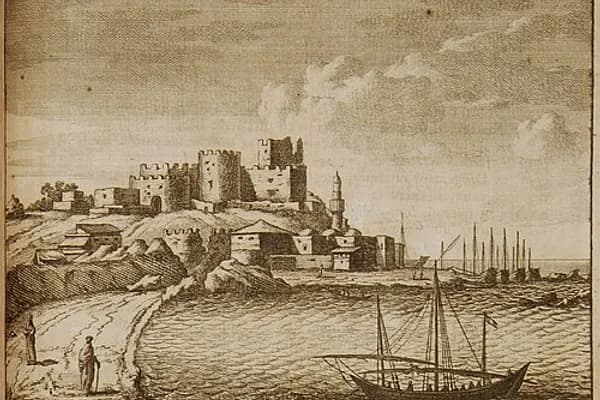
Jaffa (Hebrew: יָפוֹ, romanised:Yāfō, pronounced jaˈfo ; Arabic: يَافَا, romanised:Yāfā, pronounced ˈjaːfaː), also called Japho, Joppa or Joppe in English, is an ancient Levantine port city which is part of Tel Aviv-Yafo, Israel, located in its southern part. The city sits atop a naturally elevated outcrop on the Mediterranean coastline.
Excavations at Jaffa indicate that the city was settled as early as the Early Bronze Age. The city is referenced in several ancient Egyptian and Assyrian documents. Biblically, Jaffa is noted as one of the boundaries of the tribe of Dan and as a port through which Lebanese cedars were imported for the construction of the Temple in Jerusalem. Under Persian rule, Jaffa was given to the Phoenicians. The city features in the biblical story of Jonah and the Greek legend of Andromeda. Later, the city served as the major port of Hasmonean Judea. However, its importance declined during the Roman period due to the construction of Caesarea.
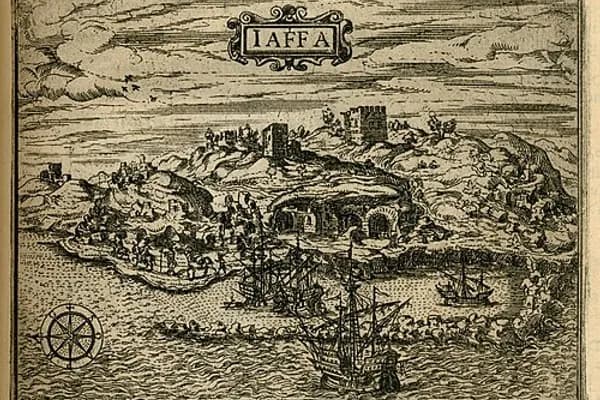
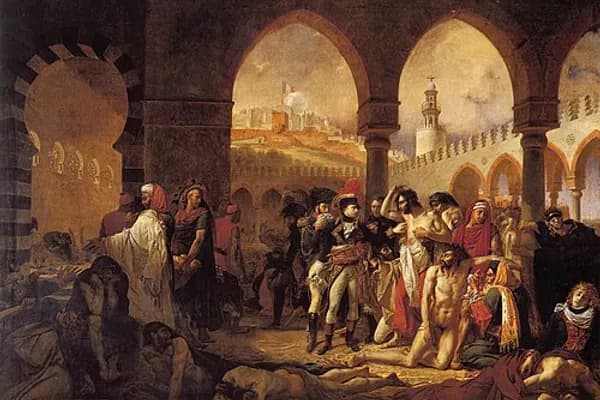
Jaffa was contested during the Crusades, when it presided over the County of Jaffa and Ascalon. It is associated with the 1192 Battle of Jaffa and subsequent Treaty of Jaffa, a truce between Richard the Lionheart and Saladin, as well as a later 1229 peace treaty. In 1799, Napoleon also sacked the town in the Siege of Jaffa, and in the First World War the British took the city in the 1917 Battle of Jaffa, and under their watch, as part of Mandatory Palestine, ethnic tensions culminated in the 1921 Jaffa riots.
As an Arab majority city in the Ottoman era, Jaffa became known starting from the 19th century for its expansive orchards and fruits, including its namesake Jaffa orange. It was also a Palestinian hub for journalism in Mandatory Palestine in the 20th century, where Falastin and Al-Difa' newspapers were established. After the 1948 Palestine War, most of its Arab population fled or were expelled, and the city became part of then newly established state of Israel, and was unified into a single municipality with Tel Aviv in 1950. Today, Jaffa is one of Israel's mixed cities, with approximately 37% of the city being Arab.
Etymology
The town was mentioned in Egyptian sources and the Amarna letters as Yapu. Mythology says that it is named for Yafet (Japheth), one of the sons of Noah, the one who built it after the Flood. The Hellenist tradition links the name to Iopeia, or Cassiopeia, mother of Andromeda. An outcropping of rocks near the harbour is reputed to have been the place where Andromeda was rescued by Perseus. Pliny the Elder associated the name with Iopa, daughter of Aeolus, god of the wind. The medieval Arab geographer al-Muqaddasi referred to it as Yaffa.
History
Ancient Jaffa was built on a 40 metres (130ft) high kurkar sandstone ridge, with a broad view of the coastline, giving it a strategic importance in military history. The tell of Jaffa, created through the accumulation of debris and landfill over the centuries, made the hill even higher.
Early Bronze Age
Jaffa was settled as early as the Early Bronze Age I period (4th millennium BCE). This is evidenced by numerous potsherds identified in excavations. The scarcity of material from this period is likely due to early remains being deeply buried beneath later occupational layers. While no direct archaeological have been found, some scholars have hypothesised that during the Early Bronze Age III (c. 2850–2400 BCE), Jaffa served as a natural harbour in the developing trade route between the Old Kingdom of Egypt and the city of Byblos (in present-day Lebanon).
Middle Bronze Age
The earliest remains of an actual settlement date to the 18th century BCE. Jaffa formed part of a broader pattern of settlements, comprising small villages, fortresses, and watchtowers, established in the central coastal plain during this period. These include sites such as Tel Aphek, Tel Gerisa, and Yavne-Yam. Excavations in Areas B–D on the northern slope of the mound revealed fortifications, including an earthen rampart that likely supported a mudbrick superstructure, which has not survived. Additional fortification elements, including traces of a gate dated to the 17th–16th centuries BCE, were uncovered in Area A on the eastern slope. These features are characteristic of Middle Bronze Age sites in the Levant. Middle Bronze Age Jaffa was relatively modest in scale, covering approximately three hectares, but nonetheless occupied a strategic position along maritime trade routes connecting the Levant, Egypt, and Cyprus. Evidence of this trade includes imported Middle Cypriot pottery types, such as Black-on-Red Ware and White-Painted Ware, as well as Egyptian Hyksos scarabs discovered at the site.
Late Bronze Age
Egyptian period
As late as the 15th century BCE Jaffa came under the imperial control of Egypt's New Kingdom. It is listed among the cities conquered by Thutmose III (r.c. 1479–1425 BCE) of the Eighteenth Dynasty, whose campaigns in the Levant are generally dated to the late 16th through early 15th centuries BCE. Jaffa likely served as a ḥtm-base—a fortified harbour used to monitor movement along the coast.
Jaffa is mentioned in Papyrus Harris 500, which contains a partially preserved tale known as The Taking of Joppa. The story recounts a Canaanite revolt against Egyptian rule. According to the account, the rebel leader left Jaffa—possibly to acquire supplies—and encountered the Egyptian general Djehuty, who killed him. Djehuty then tricked the remaining rebels by hiding 200 soldiers in sacks, which were transported into the city under the guise of goods. Once inside, the soldiers emerged and captured Jaffa, apparently without a fight. This tale bears a striking resemblance to the later Greek story of the Trojan Horse, as recounted by Homer, although it predates it by at least two centuries. The historicity of the story is questionable, considering its folkloristic character, but scholars have noted it may have conveyed historical memory, echoing Jaffa's importance to the Egyptian rule in the 15th century BCE.
Jaffa maintained its strategic importance as attested by the mid-14th century BCE Amarna letters. It served as residence for Egyptian officials and as the administrative centre of the central coastal plain. The site is mentioned under its Egyptian name Yapu, along its royal granaries. During that period, Amarna Letter EA 138 implied that the Pharaoh suggested Rib-Hadda, the king of Byblos to seek refuge in the residence of an Egyptian official named Api. A clay-inscribed letter from the 12th century BCE found at the "Governor's Palace" (Building 1104) at the nearby Tel Aphek, which served as a Royal-agricultural estate, recounts the supply of 12,000 to 15,000 litres of wheat to Jaffa. These were received by a man named Tur-šimati, likely an Egyptian official.
Archaeological investigations in Jaffa have revealed massive fortifications and a monumental gateway from this period, nicknamed "Ramesses Gate", as well as a temple titled the "Lion Temple". Numerous Egyptian artifacts such as scarabs were found, attesting to Egyptian cultural influences.
Iron Age
Iron II
In the Hebrew Bible, Jaffa is depicted as the northernmost Philistine city, bordering the Israelite territories – more specifically those of Tribe of Dan (hence the modern term "Gush Dan" for the centre of the coastal plain). The Israelites did not manage to take Jaffa from the Philistines.
Jaffa is mentioned four times in the Hebrew Bible: as the northernmost Philistine city by the coast, bordering the territory of the Tribe of Dan (Joshua 19:46); as port-of-entry for the cedars of Lebanon for Solomon's Temple (2 Chronicles 2:16); as the place whence the prophet Jonah embarked for Tarshish (Jonah 1:3); and again as port-of-entry for the cedars of Lebanon for the Second Temple of Jerusalem (Ezra 3:7).
Assyrian period
In the late 8th century BCE, Sennacherib, king of Assyria, recorded conquering Jaffa from its sovereign, the Philistine king of Ashkelon.
Persian period
After a period of Babylonian occupation, under Persian rule, Jaffa was governed by Phoenicians from Tyre.
Hellenistic period
Jaffa is not mentioned in Alexander the Great's coastal campaign, but during the Wars of the Diadochi, Antigonus Monophthalmus captured Jaffa in 315 BCE. Ptolemy I Soter later destroyed it in 312 BCE. Despite this, Jaffa was resettled and became a Ptolemaic mint site in the third century BCE. Archaeological evidence from this period includes a watchtower and numerous stamped amphora handles. Additionally, the city is mentioned in several Zeno papyri. The area was transferred to Seleucid control after the Battle of Paneas in 198 BCE. Together with the other primarily Phoenician-inhabited coastal plain cities of Gaza, Ascalon, Dor, and Acre, Jaffa became highly Hellenised during this period, becoming standard-bearers for the spread of Greek culture in the region.
According to 2 Maccabees 12:3–6, probably in the 163–162 BCE years during the Maccabean revolt, Jaffa's non-Jewish inhabitants invited its Jewish foreign residents onto boats, subsequently sinking them and drowning hundreds. In retaliation, Judas Maccabeus attacked Jaffa, setting the harbour on fire, destroying ships, and killing many inhabitants, though he did not attempt to hold the city. By 147–146 BCE, his brother Jonathan Apphus expelled the garrison of Seleucid king Demetrius II from Jaffa but did not conquer the city. In 143 BCE, Simon Thassi established a garrison in Jaffa, expelled the non-Jewish inhabitants to prevent them from collaborating with the Seleucid commander Tryphon, and fortified the city. During the operations of Antiochus VII Sidetes in Judaea, he demanded the surrender of Jaffa among other cities. Simon negotiated a settlement by agreeing to pay a smaller tribute. Simon's capture of Jaffa is earlier praised in 1 Maccabees because of the city's strategic importance as a port.
In the Hasmonean period, the city was fortified and served as the main port of Judaea. Under Hasmonean king Alexander Jannaeus (103–76 BCE), Jaffa was one of several coastal cities controlled by the Jews, including Straton's Tower, Apollonia, Iamnia, and Gaza. Archaeological evidence from this period is limited but includes remnants of walls, tombs from the early first century BCE, and hoards of coins. Incidents of piracy before the Roman conquest are mentioned by Josephus, who accused Aristobulus of instigating raids and acts of piracy. These claims are echoed by Diodorus and Strabo, though their reliability is debated, given the term leistai (pirates) was often used pejoratively in this period.
Roman period
Jaffa was annexed to Syria by Pompey but later restored to Judaea by Julius Caesar, reaffirming Jewish access to the sea through their traditional port. In 39 BCE, Herod captured Jaffa from Antigonus, though control fluctuated until Octavian returned it to Herod after the defeat of Antony and Cleopatra. After Herod's death, Jaffa, along with Strato's Tower (Caesarea), Sebaste, and Jerusalem, was assigned to Archelaus' ethnarchy in Judaea. The construction of Herod's superior harbour at Caesarea diminished Jaffa's regional importance.
Josephus's accounts indicate that Jaffa had city status, administering surrounding districts, reflecting continued regional significance. However, he adds that the harbour at Jaffa was inferior to that of Caesarea. The population of the city during this period was predominantly Jewish. Strabo, writing in the early 1st century CE, describes Jaffa as a location from which it is possible to see Jerusalem, the capital of the Jews, and writes that the Jews used it as their naval arsenal when they descended to the sea. Excavations suggest urban expansion during the Hellenistic period under Ptolemaic rule, followed by contraction under Seleucid and early Roman rule, and renewed expansion later in the Roman and Byzantine periods. Archaeological remains from the Roman period are mainly found near the harbour, including rich finds like terra sigillata, a bread or cheese stamp, and coins.
In the early stages of the First Jewish–Roman War in 66 CE, Cestius Gallus sent forces to Jaffa, where the city was destroyed and its inhabitants indiscriminately killed. Josephus writes that 8,400 inhabitants were massacred. Subsequently, the city was resettled by Jews expelled from neighbouring regions, who used it to disrupt maritime commerce between Egypt and Syria. As the Romans, led by Vespasian, approached Jaffa, those Jews fled to sea but were devastated by a storm, killing 4,200 people. Those who reached shore were killed by the Romans, who subsequently destroyed Jaffa again and stationed troops to prevent its reuse as a pirate base. In the 3rd century CE, Jaffa was known by the name Flavia Ioppe, potentially indicating an honorary designation under Flavian rule.
Byzantine period
Despite the devastation and loss of life during the revolt, Jaffa maintained a Jewish population. Inscriptions from the early 2nd century indicate Jewish involvement in local governance. Further evidence includes Jewish epitaphs dating from the 3rd to 6th centuries, some from members of the diaspora, along with references in Talmudic sources to scholars associated with Jaffa. Archaeological findings from the 2nd and 3rd centuries reveal structures destroyed by fire, possibly linked to regional unrest.
During the first centuries of Christianity, Jaffa was a fairly unimportant Roman and Byzantine locality, which only in the 5th century became a bishopric. The new religion arrived in Jaffa relatively late, not appearing in historical records until the Council of Ephesus in 431 CE. A very small number of its Greek or Latin bishops are known. Early Christian texts describe Jaffa as a modest settlement, with varying accounts of its prosperity and state of preservation.
Religious narratives
The New Testament account of Saint Peter bringing back to life the widow Dorcas (recorded in Acts of the Apostles, 9:36–42), takes place in Jaffa, then called in Greek Ἰόππη (Latinised as Joppa). Acts 10:10–23 relates that, while Peter was in Jaffa, he had a vision of a large sheet filled with "clean" and "unclean" animals being lowered from heaven, together with a message from the Holy Spirit telling him to accompany several messengers to Cornelius in Caesarea Maritima. Peter retells the story of his vision in Acts 11:4–17, explaining how he had come to preach Christianity to the gentiles.
Encyclopedic content adapted from the Wikipedia article on Jaffa, used under CC BY-SA 4.0.