About the neighborhood
Planning area in Central Region, Singapore
Tanglin is a planning area located within the Central Region of Singapore. Tanglin is located west of Newton, Orchard, River Valley and Singapore River, south of Novena, east of Bukit Timah, northeast of Queenstown and north of Bukit Merah.
Etymology and history
The name Tanglin is believed to be an anglicisation of Tang Leng, which was the Chinese name of the Scottish lawyer and newspaper editor William Napier's house that was located in the area. Tang Leng was said to be named after the area's Chinese name in Teochew dialect, 'Twa Tang Leng', which translates to 'great east hill peaks' in reference to the hills surrounding the area.
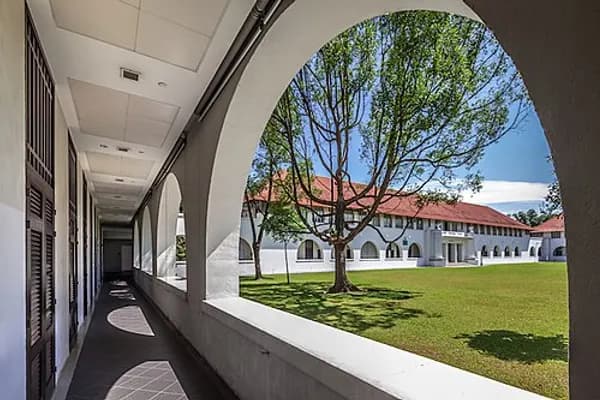
On 7 November 2006, the Singapore Land Authority (SLA) called for proposals to liven up the Dempsey Road area when it launched two new tenders for sites there. In doing so, it also announced that it has plans for the area up to 2015. Known as Tanglin Village, the former Central Manpower Base has now been transformed into a commercial plaza best accessed via car or taxi. The uniquely interesting barracks buildings have been well preserved and currently house a variety of retail establishments such as high end antique shops, restaurants, galleries and the like.
Geography
Tanglin planning area is bounded by Bukit Timah Road to the north, Farrer Road and Queensway to the west, Ridout Road, Kay Siang Road, Prince Charles Crescent, and Alexandra Canal to the south as well as Zion Road, Grange Road, Tanglin Road, Orange Grove Road, and Balmoral Road to the east.
There are four subzones within the planning area, Chatsworth, Nassim, Ridout and Tyersall.
Infrastructure
Transportation
Major roads in Tanglin include Napier Road and Holland Road, which are arterial roads that link the Orchard Road district to Bukit Timah and Queenstown. The namesake Tanglin Road link Chatsworth, Queenstown and Bukit Merah to Napier and Orchard. Along its northern and northwestern boundaries, major roads that link Tanglin to adjacent planning areas include Bukit Timah Road, Dunearn Road and Farrer Road.
Mass Rapid Transit rail connections include Farrer Road MRT station of the Circle line, Botanic Gardens MRT station, which is an interchange station between the Circle and Downtown line, as well as Stevens MRT station which is an interchange station between Downtown line and the Thomson–East Coast line. Other TEL stations include Napier, which is located at the foot of the Singapore Botanic Gardens and Orchard Boulevard, which is located at the border between Orchard and Tanglin planning areas.
Tourist attractions
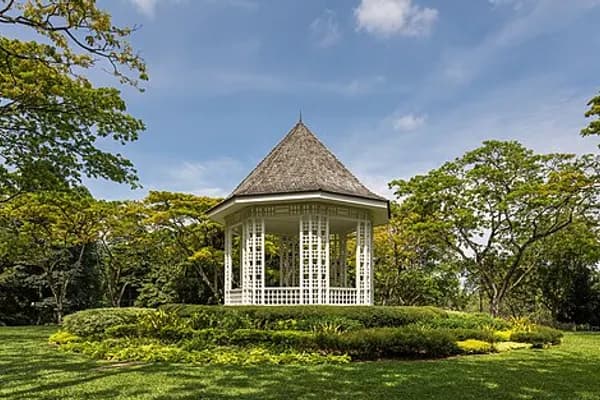
Tanglin is home to the Singapore Botanic Gardens, a UNESCO World Heritage Site which was established in 1859. It is the oldest garden in Singapore and it is located near the Orchard Road shopping belt. The Botanic Gardens can be accessed via two main entrances: Bukit Timah Gate at the northern end and Tanglin Gate at the southern end.
Other notable attractions include Dempsey Hill, a former British military barracks that has been redeveloped into a dining and lifestyle hub, featuring upscale restaurants, boutique shops, and galleries. Additionally, the Museum of Ice Cream (MOIC), which opened in 2021, is located at Loewen Road.
Embassies and international organisations
Tanglin is home to several embassies and high commissions. The embassies of Australia, Brunei, France, Indonesia, Israel, Japan, Malaysia, Myanmar, People's Republic of China, Russia, The Philippines, the United States and the United Kingdom are located in Tanglin. Tanglin also houses the headquarters of the Ministry of Foreign Affairs (MFA), Interpol's Singapore's office, and the British Council, which provides English language educational and cultural exchange programs. The official residence of the British High Commissioner, Eden Hall, is also located in Tanglin.
Education
Tanglin is home to several notable educational institutions. The Bukit Timah campus of the National University of Singapore (NUS) houses the Faculty of Law, Singapore's oldest law school, and the autonomous Lee Kuan Yew School of Public Policy. Located near the Singapore Botanic Gardens. Crescent Girls' School is the only government secondary school located in Tanglin.
Additionally, Tanglin has several international schools catering to the expatriate community, including:
Astor International School
EtonHouse International School Orchard
Invictus International School (Dempsey Campus)
Melbourne International School
Wise Oaks International School
Amenities
Healthcare
The main healthcare facility in Tanglin area is the Gleneagles Hospital, a private hospital located along Napier Road, next to Napier MRT station.
Commercial
Being in close proximity to the Orchard Road shopping belt, there are several shopping malls nearby such as Tanglin Mall, Tanglin Place, and Tudor Court which are located at Tanglin Road at the boundary between Orchard and Tanglin planning areas. Other shopping facilities include Cluny Court and Serene Centre, which are located at the northwestern tip of Tanglin.
Food
Zion Riverside Food Centre
Notable places
Former
Tanglin Circus Fountain, former water fountain built in the Tanglin Circus roundabout in front of the Omni Marco Polo Hotel in Tanglin.
Housing
Tanglin is one of the few residential districts in Singapore with very few Housing and Development Board (HDB) flats. Due to its prime location and high land value, the area primarily consists of private properties, including Good Class Bungalows (GCBs) and high-rise condominiums. Similar to Bukit Timah, Tanglin is home to many affluent residents and expatriates.
Notable Tanglin residents include Eduardo Saverin, co-founder of Facebook, who reportedly resides on Nassim Road, and billionaire restaurateur Zhang Yong, who owns a GCB on Gallop Road.
Notes and references
Notes
References
Sources
Victor R Savage, Brenda S A Yeoh (2003), Toponymics - A Study of Singapore Street Names, Eastern Universities Press, ISBN981-210-205-1
Encyclopedic content adapted from the Wikipedia article on Dempsey Hill, used under CC BY-SA 4.0.
What makes Dempsey Hill special
Dempsey Hill stands out among Singapore’s neighborhoods for its distinctive character: jungle, restaurants, hidden calm. Ranked #5 in Singapore, it offers the kind of experience that defines a great city trip — a place where the streets themselves tell a story and every block rewards curiosity.
Best for
Our take on Dempsey Hill
Dempsey Hill occupies a distinctive place in Singapore's neighborhood landscape. It is the kind of district that rewards travelers who venture beyond the obvious choices — quieter than the tourist-facing areas, richer in local character, and full of the small details that make a city trip memorable.
What strikes us most about Dempsey Hill is the depth of its food culture. This is not a neighborhood with a few good restaurants — it is a neighborhood where eating well is woven into daily life, where the corner places are as good as the destination spots, and where you could eat every meal for a week without repeating yourself or being disappointed.
Our editors recommend budgeting at least half a day here — enough time to walk the main streets, sit down for coffee, and discover the side streets where Dempsey Hill's real character lives.
Living in Dempsey Hill
Dempsey Hill is connected to the rest of Singapore by public transit, and most visitors find it straightforward to reach from the city center or airport. Once you arrive, the neighborhood is best explored on foot — the scale is human and the streets reward wandering.
Dining options range from quick, affordable local spots to more deliberate sit-down restaurants. The neighborhood supports a genuine food ecosystem — bakeries, grocery shops, specialty stores — which means you can eat well at every price point. Weekend mornings tend to be the most atmospheric time for a food-focused walk.
Accommodation in Dempsey Hill ranges from boutique hotels to short-term rentals. We generally recommend staying within the neighborhood itself rather than commuting from a hotel elsewhere in Singapore — the experience of waking up inside a great neighborhood is fundamentally different from visiting one as a day trip.
What locals say about Dempsey Hill
Long-term residents of Dempsey Hill tend to describe their neighborhood with a mix of pride and protectiveness. Like any district with genuine character, Dempsey Hill inspires loyalty — the kind of place people move to and never quite leave, or leave and spend years trying to get back to.
Ask a local what they love most, and the answer almost always starts with the food. Residents have strong opinions about which bakery is best, which café makes the best morning coffee, which restaurant they bring visiting friends to as proof that Dempsey Hill is the best neighborhood in Singapore. The food culture here is not performative — it is the backbone of community life.
Compared to the more famous districts in Singapore, Dempsey Hill has maintained a lower profile, which many residents consider an advantage. The neighborhood evolves gradually rather than being reshaped by sudden attention, and the result is a community that still feels organic rather than curated.
Visitor tips
- Dempsey Hill is located in Singapore, Singapore. The neighborhood is accessible by public transport, taxi, or rideshare from most parts of the city.
- For the best food experience, visit during lunchtime on weekdays when locals fill the restaurants, or explore weekend markets if available.
- Wear comfortable walking shoes — the best way to experience Dempsey Hill is on foot, wandering the side streets and discovering what lies around each corner.