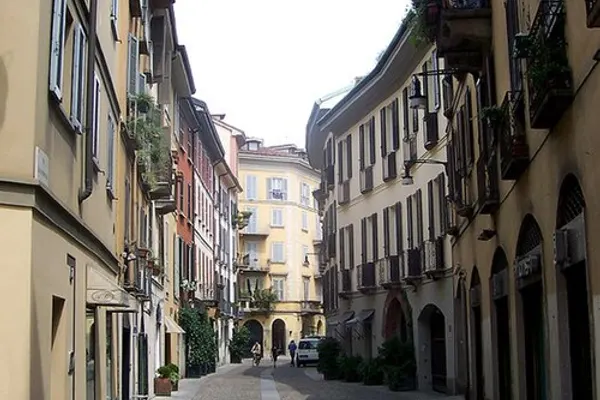
About the neighborhood
Quartiere of Milan in Lombardy, Italy
Brera thrives as Milan’s artistic heart, a district where creativity spills from the walls and into the vibrant streets. With a history that stretches back to the medieval era, this area, once a strategic clearing outside the city’s walls, has metamorphosed into a cultural epicenter. The etymology of its name—rooted in the ancient word for a broad, open land—captures the essence of its expansive artistic spirit, which continues to flourish today.
At the core of Brera lies the majestic Palazzo Brera, a marvel of architecture that houses not only the esteemed Brera Academy of Fine Arts but also the Brera Art Gallery. The gallery boasts a collection that rivals the best of Europe, featuring works from the likes of Caravaggio and Raphael, while the academy has nurtured generations of artists since its founding in 1776. This nexus of creativity has earned Brera the nickname "the Milanese Montmartre," a testament to its bohemian atmosphere where painters, sculptors, and dreamers mingle amongst the antique shops and bustling street markets.
The streets of Brera are a feast for the senses, lined with charming cafes and sophisticated dining spots that cater to both locals and visitors. Try a traditional aperitivo at one of the bars on Via Brera before wandering into the nearby botanical garden for a moment of tranquility amid the urban bustle. For those with a penchant for the esoteric, the area's fortune tellers add an intriguing layer to the district's character, where the past and present collide in unexpected ways.
Finally, the spirit of Brera is encapsulated in its literary contributions, notably the magazine "Brera," edited in the early 2000s by novelist Paolo Brera and others, which showcased the district’s artistic pulse through the words of prominent journalists and critics. Explore Brera, and you’ll find an area that is not just a canvas for artists but a living gallery that invites you to experience the rich tapestry of Milanese creativity.
Encyclopedic content adapted from the Wikipedia article on Brera, used under CC BY-SA 4.0.
What makes Brera special
Brera stands out among Milan’s neighborhoods for its distinctive character: milan's artistic quarter. It tops our ranking of the best neighborhoods in Milan, it offers the kind of experience that defines a great city trip — a place where the streets themselves tell a story and every block rewards curiosity.
Best for
Our take on Brera
Brera is the neighborhood we send friends to first when they visit Milan. It earns the top spot in our ranking not because it is the most famous district in the city, but because it delivers the most complete neighborhood experience — the kind of place where every block rewards curiosity and every return visit reveals something new.
What makes Brera exceptional is the density of its cultural life. Art galleries, independent bookshops, small theaters, and creative studios are woven into the fabric of the neighborhood rather than clustered in a single zone. You encounter culture here by accident, which is how the best cultural experiences always happen.
Our editors recommend budgeting at least half a day here — enough time to walk the main streets, sit down for coffee, and discover the side streets where Brera's real character lives.
Living in Brera
Brera is connected to the rest of Milan by public transit, and most visitors find it straightforward to reach from the city center or airport. Once you arrive, the neighborhood is best explored on foot — the scale is human and the streets reward wandering.
Day-to-day life in Brera has the rhythm of a genuine residential neighborhood. You will find grocery stores, pharmacies, cafés with morning regulars, and the kind of small independent shops that only survive where locals support them. For visitors, this means the infrastructure you need — good coffee, a decent meal, a quiet place to sit — is always within a short walk.
Accommodation in Brera ranges from boutique hotels to short-term rentals. We generally recommend staying within the neighborhood itself rather than commuting from a hotel elsewhere in Milan — the experience of waking up inside a great neighborhood is fundamentally different from visiting one as a day trip.
What locals say about Brera
Long-term residents of Brera tend to describe their neighborhood with a mix of pride and protectiveness. Like any district with genuine character, Brera inspires loyalty — the kind of place people move to and never quite leave, or leave and spend years trying to get back to.
The creative community in Brera is genuine, not aspirational. Residents include working artists, writers, musicians, and designers who chose the neighborhood because it supported their work — affordable studio space, a community that values craft, and enough foot traffic to sustain independent galleries and shops.
Like any neighborhood that has earned attention, Brera is navigating the tension between popularity and preservation. Rents have risen, new businesses have arrived, and long-time residents occasionally grumble that the neighborhood is not what it was. But the fundamentals — the walkability, the food, the community — remain strong, and most locals we speak to believe the neighborhood is still gaining more than it is losing.
Visitor tips
- Brera is located in Milan, Italy. The neighborhood is accessible by public transport, taxi, or rideshare from most parts of the city.
- Morning is often the best time to explore — the streets are quieter, the light is better for photography, and cafes are at their most welcoming.
- Wear comfortable walking shoes — the best way to experience Brera is on foot, wandering the side streets and discovering what lies around each corner.
- Save the neighborhood's location on your phone before you arrive. Offline maps are especially useful for navigating the smaller side streets.