About the neighborhood
Shopping street in Dongcheng District, Beijing, China
39°54′40.16″N 116°24′18.99″E / 39.9111556°N 116.4052750°E / 39.9111556; 116.4052750
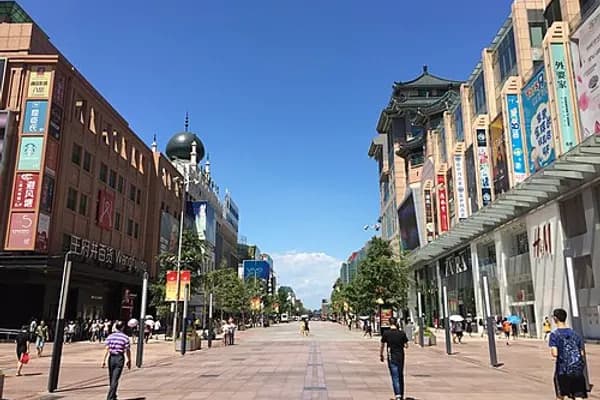
Wangfujing Street (Chinese 王府井大街; pinyin Wángfǔjǐng Dàjiē) is a shopping street in Beijing, China, located in Dongcheng District. The majority of the main area is pedestrianised. Since the middle of the Ming Dynasty there have been commercial activities in the area. In the Qing Dynasty, ten aristocratic estates and princess residence were built here, soon after when a well full of sweet water was discovered, thereby giving the street its name "Wangfu" (Prince's residence), "Jing" (Well). Many exotic foods are served on Wangfujing snack street.
Location
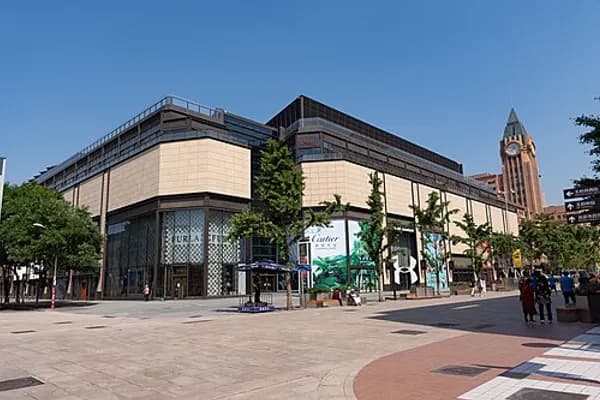
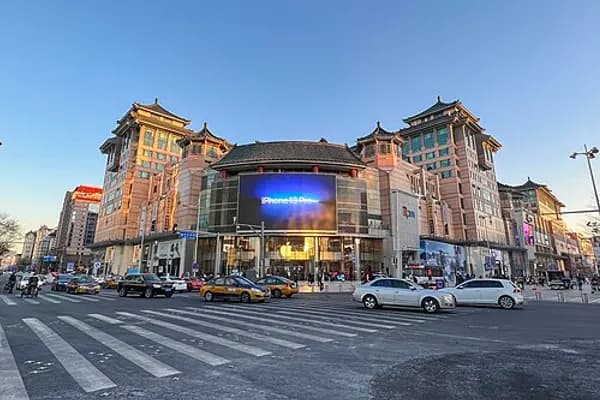
Wangfujing Street starts from Wangfujing South Entrance (王府井南口, Wángfǔjǐng Nánkǒu), where the Oriental Plaza, Beijing Hotel, and the Wangfujing metro station are located. The street then heads north, passing the Wangfujing Bookstore, the Beijing Department Store as well as the Beijing Foreign Languages Bookstore before ending at the Beijing apm and St. Joseph's Catholic Church.
History
The street was also previously known as Morrison Street in English, after the Australian journalist George Ernest Morrison. Wangfujing is also one of the traditional downtown areas of Beijing, along with Liulichang.
Until the late 1990s, the street was open to traffic. Modifications in 1999 and 2000 made much of Wangfujing Street pedestrian only (aside from the tour trolley). Now through traffic detours to the east of the street.
The 2011 Chinese pro-democracy protests were planned to take place in Wangfujing. Some violence occurred there between police and foreign journalists.
Stores
Wangfujing is now home to around 280 shops. Wangfujing malls include the Beijing Department Store, Beijing apm, Beijing Mall and The Malls at Oriental Plaza, and WF Central.
Food and snacks
Wangfujing Snack Street (王府井小吃街), located west of the Wangfujing main street (王府井大街), contains many restaurants and street food stalls. The food stalls serve a variety of common and exotic street food, including chuanr (meat kebabs, commonly made of lamb) and desserts, such as tanghulu or candied fruits on a stick.
Transport
The Wangfujing station of Beijing Subway Lines 1 and 8, is located at the intersection of Wangfujing Street and Chang'an Avenue.
See also
Beijing central business district
List of leading shopping streets and districts by city
References
External links
Wikimedia Commons has media related to Wangfujing.
Old brands of Beijing (in Chinese)
Wangfujing Website
Encyclopedic content adapted from the Wikipedia article on Wangfujing, used under CC BY-SA 4.0.
What makes Wangfujing special
Wangfujing stands out among Beijing’s neighborhoods for its distinctive character: beijing's historic shopping street. Ranked #4 in Beijing, it offers the kind of experience that defines a great city trip — a place where the streets themselves tell a story and every block rewards curiosity.
Best for
Our take on Wangfujing
Wangfujing occupies a distinctive place in Beijing's neighborhood landscape. It is the kind of district that rewards travelers who venture beyond the obvious choices — quieter than the tourist-facing areas, richer in local character, and full of the small details that make a city trip memorable.
Walking through Wangfujing is like reading a history book with your feet. The architecture tells the story of decades — sometimes centuries — of evolution, and the neighborhood has managed to preserve its historical character without becoming a museum piece. People still live here, still run businesses here, still argue about parking here. That living quality is what separates a great historic neighborhood from a pretty but lifeless one.
Our editors recommend budgeting at least half a day here — enough time to walk the main streets, sit down for coffee, and discover the side streets where Wangfujing's real character lives.
Living in Wangfujing
Wangfujing is connected to the rest of Beijing by public transit, and most visitors find it straightforward to reach from the city center or airport. Once you arrive, the neighborhood is best explored on foot — the scale is human and the streets reward wandering.
Day-to-day life in Wangfujing has the rhythm of a genuine residential neighborhood. You will find grocery stores, pharmacies, cafés with morning regulars, and the kind of small independent shops that only survive where locals support them. For visitors, this means the infrastructure you need — good coffee, a decent meal, a quiet place to sit — is always within a short walk.
Accommodation in Wangfujing ranges from boutique hotels to short-term rentals. We generally recommend staying within the neighborhood itself rather than commuting from a hotel elsewhere in Beijing — the experience of waking up inside a great neighborhood is fundamentally different from visiting one as a day trip.
What locals say about Wangfujing
Long-term residents of Wangfujing tend to describe their neighborhood with a mix of pride and protectiveness. Like any district with genuine character, Wangfujing inspires loyalty — the kind of place people move to and never quite leave, or leave and spend years trying to get back to.
Long-time residents speak about Wangfujing with a historian's eye — they know which buildings are original, which streets have been renamed, which family has run the corner shop for decades. This accumulated knowledge gives the neighborhood a depth that guidebooks cannot replicate. The best way to access it is simply to talk to people.
Compared to the more famous districts in Beijing, Wangfujing has maintained a lower profile, which many residents consider an advantage. The neighborhood evolves gradually rather than being reshaped by sudden attention, and the result is a community that still feels organic rather than curated.
Visitor tips
- Wangfujing is located in Beijing, China. The neighborhood is accessible by public transport, taxi, or rideshare from most parts of the city.
- Morning is often the best time to explore — the streets are quieter, the light is better for photography, and cafes are at their most welcoming.
- Wear comfortable walking shoes — the best way to experience Wangfujing is on foot, wandering the side streets and discovering what lies around each corner.
- Save the neighborhood's location on your phone before you arrive. Offline maps are especially useful for navigating the smaller side streets.