About the neighborhood
Capital city of China
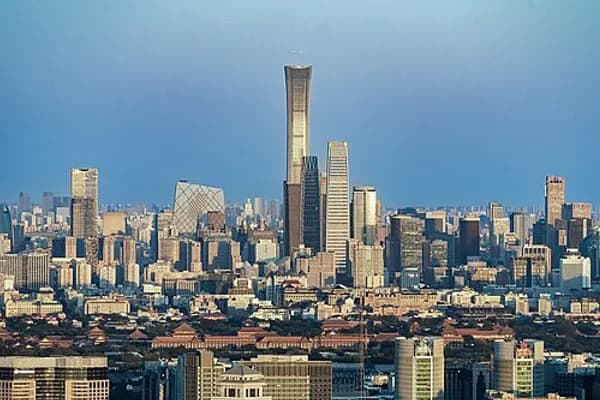
Beijing, previously romanized as Peking, is the capital city of China. With more than 22 million residents, it is the world's most populous national capital city, as well as China's second-largest city by urban area, after Shanghai. It is located in Northern China, and is governed as a municipality under the direct administration of the State Council with 16 urban districts. Beijing is mostly surrounded by Hebei Province and neighbors Tianjin to the southeast; together, the three divisions form the Jing-Jin-Ji cluster.
Beijing is a global city and one of the world's leading centers for culture, diplomacy, politics, finance, business and economics, education, research, language, tourism, media, sports, science and technology, transportation, and art. It is home to the headquarters of most of China's largest state-owned companies and houses the largest number of Fortune Global 500 companies in the world, as well as the world's four biggest financial institutions by total assets. It is also a major hub for the national highway, expressway, railway, and high-speed rail networks. For a decade before the COVID-19 pandemic, Beijing Capital International Airport was Asia's busiest airport (2009–2019) and the second-busiest airport in the world (2010–2019). In 2020, the Beijing subway was the fourth-busiest and second-longest in the world. Beijing Daxing International Airport, Beijing's second international airport, is the largest single-structure airport terminal in the world. The city has hosted numerous international and national sporting events, the most notable being the 2008 Summer Olympics and 2008 Summer Paralympics Games. In 2022, Beijing became the first city ever to host both the Summer and Winter Olympics, and also the Summer and Winter Paralympics.
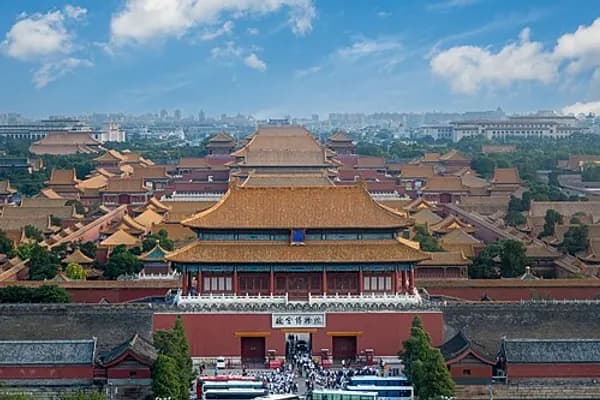
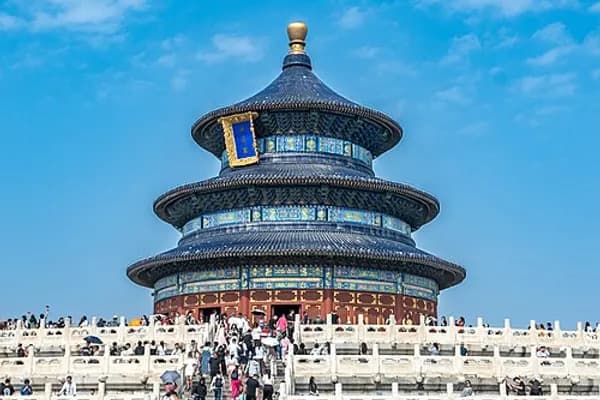
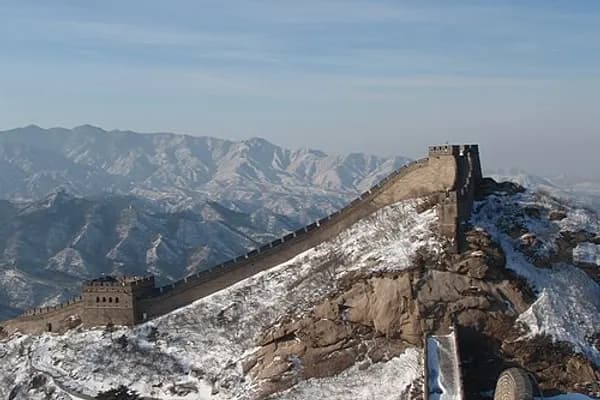
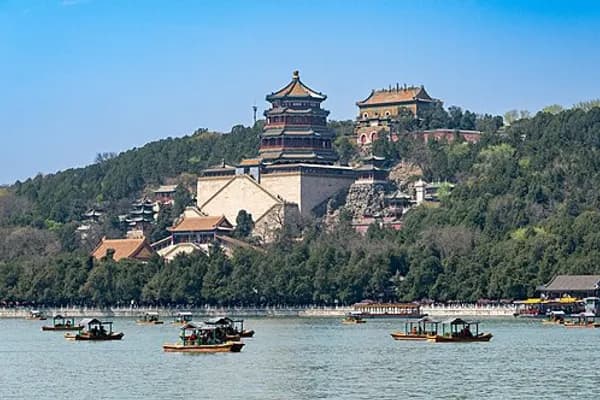
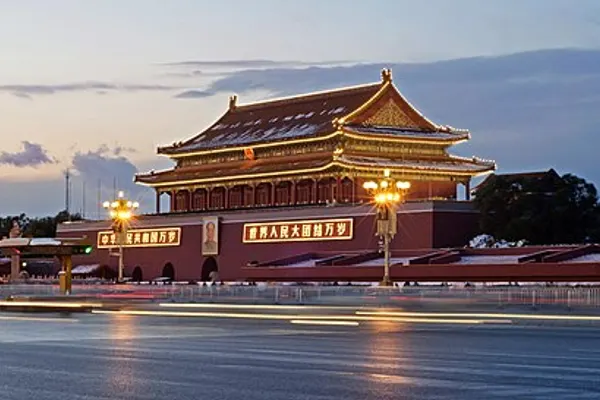
The architecture of Beijing contains elements of both traditional Chinese architecture with modern styles, with one side of the city being modernized and renovated, and the other half still offering traditional hutong districts. Beijing is one of the oldest cities in the world, with recorded history spanning over three millennia. As the last remaining one of the Four Great Ancient Capitals of China, Beijing has been the political center of the country for most of the past eight centuries, and was the largest city in the world by population for much of the second millennium AD. With mountains surrounding the inland city on three sides, in addition to the ancient city fortifications, Beijing was strategically poised and developed to be the residence of the emperor. The city is renowned for its opulent palaces, temples, parks, gardens, tombs, walls and gates. Beijing is considered one of the most well-known tourist destinations in the world. In 2018, Beijing was the second highest earning tourist city in the world after Shanghai. Beijing is home to many national monuments and museums and has eight UNESCO World Heritage Sites—the Forbidden City, Temple of Heaven, Summer Palace, Ming Tombs, Zhoukoudian Peking Man Site, Beijing Central Axis and parts of the Great Wall and the Grand Canal—all of which are popular tourist locations. Siheyuans, the city's traditional housing style, and hutongs, the narrow alleys between siheyuans, are major tourist attractions and are common in urban Beijing.
Beijing's public universities make up more than one-fifth of Double First-Class Construction universities, and many of them consistently rank among the best in the Asia-Pacific and the world, including Tsinghua University, Peking University and UCAS. Beijing CBD is a center for Beijing's economic expansion, with the ongoing or recently completed construction of multiple skyscrapers. Beijing's Zhongguancun area is a world leading center of scientific and technological innovation as well as entrepreneurship. Beijing has been ranked the city with the largest scientific research output by the Nature Index since the list's inception in 2016. Beijing hosts 176 foreign embassies as well as the headquarters of many organizations, including the Asian Infrastructure Investment Bank (AIIB), the Shanghai Cooperation Organisation (SCO), the Silk Road Fund, the Chinese Academy of Sciences, the Chinese Academy of Engineering, the Chinese Academy of Social Sciences, the Central Academy of Fine Arts, the Central Academy of Drama, the Central Conservatory of Music, and the Red Cross Society of China.
Etymology
Over the past 3,000 years, the city of Beijing has had numerous other names. The name Beijing, which means 'Northern Capital' (from the Chinese characters 北 běi for 'north' and 京 jīng for 'capital'), was applied to the city in 1403 during the Ming dynasty to distinguish the city from Nanjing (南京, 'Southern Capital'). The English spelling Beijing is based on the government's official romanization (adopted in the 1980s) of the two characters as they are pronounced in Standard Mandarin. An older English spelling, Peking, was used by Jesuit missionary Martino Martini in a popular atlas published in Amsterdam in 1655. Although Peking is no longer the common name for the city, some of the city's older locations and facilities, such as Beijing Capital International Airport, with the IATA code PEK, and Peking University, still retain the former romanization.
The single Chinese character abbreviation for Beijing is 京, which appears on automobile license plates in the city. The official Latin alphabet abbreviation for Beijing is "BJ".
History
Early history
The earliest traces of human habitation in the Peking municipality were found in the caves of Dragon Bone Hill near the village of Zhoukoudian in Fangshan District, where Peking Man lived. Homo erectus fossils from the caves date to 230,000 to 250,000 years ago. Paleolithic Homo sapiens also lived there more recently, about 27,000 years ago. Archaeologists have found neolithic settlements throughout the municipality, including in Wangfujing, located in central Peking.
The first walled city in Beijing was Jicheng, the capital city of the state of Ji which was built in 1045 BC. Within modern Beijing, Jicheng was located around the present Guang'anmen area in the south of Xicheng District. This settlement was later conquered by the state of Yan and made its capital.
Early Imperial China
After the First Emperor unified China in 221 BC, Jicheng became a prefectural capital and during the Three Kingdoms period, it was held by Gongsun Zan and Yuan Shao before falling to Cao Cao. The AD third-century Western Jin demoted the town, placing the prefectural seat in neighboring Zhuozhou. During the Sixteen Kingdoms period when northern China was conquered and divided by the Wu Hu, Jicheng was briefly the capital of the Xianbei Former Yan Kingdom.
After China was reunified by the Sui dynasty in 581, Jicheng, also known as Zhuojun, became the northern terminus of the Grand Canal. Under the Tang dynasty, Jicheng as Youzhou, served as a military frontier command center. During the An-Shi Rebellion and again amidst the turmoil of the late Tang, local military commanders founded their own short-lived Yan dynasties and called the city Yanjing, or the "Yan Capital". Also in the Tang dynasty, the city's name Jicheng was replaced by Youzhou or Yanjing. In 938, after the fall of the Later Tang dynasty, the Later Jin ceded the frontier territory including what is now Beijing to the Khitan Liao dynasty, which treated the city as Nanjing, or the "Southern Capital", one of four secondary capitals to complement its "Supreme Capital" Shangjing (modern Baarin Left Banner in Inner Mongolia). Some of the oldest surviving pagodas in Beijing date to the Liao period, including the Tianning Pagoda.
The Liao fell to the Jurchen Jin dynasty in 1122, which gave the city to the Song dynasty and then retook it in 1125 during its conquest of northern China. In 1153, the Jurchen Jin made Beijing their "Central Capital", or Zhongdu. The city was besieged by Genghis Khan's invading Mongolian army in 1213 and razed to the ground two years later. Two generations later, Kublai Khan ordered the construction of Dadu (or Daidu to the Mongols, commonly known as Khanbaliq), a new capital for his Yuan dynasty to the northeast of the Zhongdu ruins. The construction took from 1264 to 1293, but greatly enhanced the status of a city on the northern fringe of China proper. The city was centered on the Drum Tower slightly to the north of modern Beijing and stretched from the present-day Chang'an Avenue to the northern part of Line 10 subway. Remnants of the Yuan rammed earth wall still stand and are known as the Tucheng.
Ming dynasty
In 1368, soon after declaring the new Hongwu era of the Ming dynasty, the rebel leader Zhu Yuanzhang captured Dadu/Khanbaliq and razed the Yuan palaces to the ground. Since the Yuan continued to occupy Shangdu and Mongolia, Dadu was used to supply the Ming military garrisons in the area and renamed Beiping (Wade–Giles: Peip'ing, "Northern Peace"). Under the Hongwu Emperor's feudal policies, Beiping was given to his son Zhu Di, who was created "Prince of Yan".
The early death of Zhu Yuanzhang's heir led to a succession struggle upon his death, one that ended with the victory of Zhu Di and the declaration of the new Yongle era. Since his harsh treatment of the Ming capital Yingtian (modern Nanjing) alienated many there, he established his fief as a new co-capital. The city of Beiping became Beijing ("Northern Capital") or Shuntian in 1403. The construction of the new imperial residence, the Forbidden City, took from 1406 to 1420; this period was also responsible for several other of the modern city's major attractions, such as the Temple of Heaven and Tian'anmen. On 28October 1420, the city was officially designated the capital of the Ming dynasty in the same year that the Forbidden City was completed. Beijing became the empire's primary capital, and Yingtian, also called Nanjing ("Southern Capital"), became the co-capital. (A 1425 order by Zhu Di's son, the Hongxi Emperor, to return the primary capital to Nanjing was never carried out: he died, probably of a heart attack, the next month. He was buried, like almost every Ming emperor to follow him, in an elaborate necropolis to Beijing's north.)
By the 15th century, Beijing had essentially taken its current shape. The Ming city wall continued to serve until modern times, when it was pulled down and the 2nd Ring Road was built in its place. It is generally believed that Beijing was the largest city in the world for most of the 15th, 16th, 17th, and 18th centuries. The first known church was constructed by Catholics in 1652 at the former site of Matteo Ricci's chapel; the modern Nantang Cathedral was later built upon the same site.
The capture of Beijing by Li Zicheng's peasant army in 1644 ended the dynasty, but he and his Shun court abandoned the city without a fight when the Manchu army of Prince Dorgon arrived 40 days later.
Qing dynasty
Dorgon established the Qing dynasty as a direct successor of the Ming (delegitimising Li Zicheng and his followers) and Beijing became China's sole capital. The Qing emperors made some modifications to the Imperial residence but, in large part, the Ming buildings and the general layout remained unchanged. Facilities for Manchu worship were introduced, but the Qing also continued the traditional state rituals. Signage was bilingual or Chinese. This early Qing Beijing later formed the setting for the Chinese novel Dream of the Red Chamber. Northwest of the city, Qing emperors built several large palatial gardens including the Old Summer Palace and the Summer Palace.
During the Second Opium War, Anglo-French forces captured the outskirts of the city, looting and burning the Old Summer Palace in 1860. Under the Convention of Peking ending that war, Western powers for the first time secured the right to establish permanent diplomatic presences within the city. From 14 to 15August 1900 the Battle of Peking was fought. This battle was part of the Boxer Rebellion. The attempt by the Boxers to eradicate this presence, as well as Chinese Christian converts, led to Beijing's reoccupation by eight foreign powers. During the fighting, several important structures were destroyed, including the Hanlin Academy and the (new) Summer Palace. A peace agreement was concluded between the Eight-Nation Alliance and representatives of the Chinese government Li Hongzhang and Yikuang on 7September 1901. The treaty required China to pay an indemnity of US$335million (over US$4billion in current dollars) plus interest over a period of 39 years. Also required was the execution or exile of government supporters of the Boxers and the destruction of Chinese forts and other defenses in much of northern China. Ten days after the treaty was signed the foreign armies left Beijing, although legation guards would remain there until World War II.
With the treaty signed the Empress Dowager Cixi returned to Beijing from her "tour of inspection" on 7January 1902 and the rule of the Qing dynasty over China was restored, albeit much weakened by the defeat it had suffered in the Boxer Rebellion and by the indemnity and stipulations of the peace treaty. The Dowager died in 1908 and the dynasty imploded in 1911.
Republic of China
The fomenters of the Xinhai Revolution of 1911 sought to replace Qing rule with a republic and leaders like Sun Yat-sen originally intended to return the capital to Nanjing. After the Qing general Yuan Shikai forced the abdication of the last Qing emperor and ensured the success of the revolution, the revolutionaries accepted him as president of the new Republic of China. Yuan maintained his capital at Beijing and quickly consolidated power, declaring himself emperor in 1915. His death less than a year later left China under the control of the warlords commanding the regional armies. Following the success of the Kuomintang's Northern Expedition, the capital was formally moved to Nanjing in 1928. On 28June the same year, Beijing's name was returned to Beiping (written at the time as "Peiping").
On 7 July 1937, the 29th Army and the Japanese army in China exchanged fire at the Marco Polo Bridge near the Wanping Fortress southwest of the city. The Marco Polo Bridge Incident triggered the Second Sino-Japanese War, World War II as it is known in China. During the war, Beijing fell to Japan on 29July 1937 and was made the seat of the Provisional Government of the Republic of China, a puppet state that ruled the ethnic-Chinese portions of Japanese-occupied northern China. This government was later merged into the larger Wang Jingwei government based in Nanjing.
People's Republic of China
Encyclopedic content adapted from the Wikipedia article on Gulou, used under CC BY-SA 4.0.