About the neighborhood
Area of the Chaoyang District, Beijing
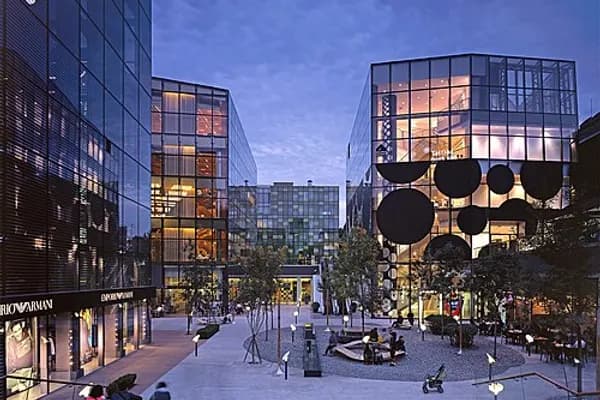
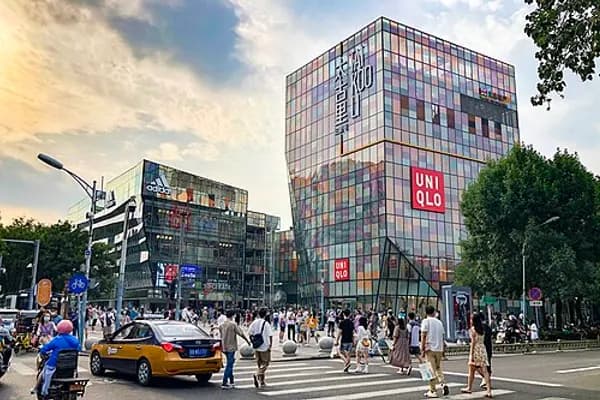
Sanlitun (Chinese 三里屯; pinyin Sānlǐtún; lit. 'three li village') or Sanlitun Bar Street (Chinese 三里屯酒吧街) is an area in Sanlitun Subdistrict, Chaoyang District, Beijing containing many bars, restaurants, and stores. It is a popular destination for shopping, dining, and entertainment. The area has been under almost constant regeneration since the late 20th century as part of a citywide project of economic regrowth. It currently houses many bars and clubs popular with both locals and foreigners as well as international brand-name stores such as Uniqlo, Apple, Nike, Adidas, KFC and Nathan's Famous. It is notable for housing the largest Adidas store in the world.
History
Prior to 1949, the Beijing Legation Quarter was the center of diplomatic activity in the capital. After the foundation of the People's Republic of China, the government wanted to move the diplomatic district outside the inner city. Sanlitun was chosen as the area where foreign legations and embassies were to be reallocated in the late 1950s. The area was called Sanlitun to designate its location from Dongzhimen gate (东直门), with tun meaning 'locality' and san li meanings 'three li' (a li is 0.5km), so that the name means "locality 1.5km away (from Dongzhimen Gate)".
Sanlitun began to grow when, along with the reform and opening up, bars serving expatriates and later locals began to open. International hotels introduced the first bars, but in the 1990s, standalone establishments appeared. Accounts differ over which was the first bar in Sanlitun, with one author crediting the Cat Cafe in 1995 while another names Frank's Place, which opened in 1990.
The first supermarket in Beijing opened in Sanlitun in November 1982. This supermarket has an area about 300 square meters, selling a variety of products.
The first bar on North Sanlitun Rd opened in 1995. After nearly 30 years, Sanlitun houses about 70% of bars in Beijing.
South Sanlitun Rd used to have stores selling auto parts. After the construction of the Bar Street, those stores are demolished.
Sanlitun Village opened in 2008, giving the area many new shops, restaurants, bars and a multiplex cinema. In 2013, Sanlitun Village changed its name to Taikoo Li Sanlitun.
Sanlitun saw significant new construction as part of preparations for the 2008 Summer Olympics. In April 2008, as part of an ongoing operation to clean up the city, a major drug bust occurred in Sanlitun and many arrests were made. A total of four bars and clubs were effectively closed, including a notorious bar known as Pure Girl for its cheap alcohol and availability of drugs, both its bartender and manager were executed for distribution of drugs. However, it has since reopened a year later with new management. The police operation was widely criticized for its violence and absence of proper due process. A number of drug dealers as well as a barman are believed to have received the death penalty as a result of this operation.
The Uniqlo in Taikoo Li Sanlitun gained international attention after it was the site of a July 2015 sex tape that was filmed inside one of the store's fitting rooms. Uniqlo denied any involvement in the video.
In an August 2015 incident near the Uniqlo, a Chinese woman was killed and her French husband was wounded in an attack by a sword-wielding man.
On 25 December 2015, following the November 2015 Paris attacks by ISIS, several foreign embassies in Beijing warned of possible threats against Westerners in the Sanlitun shopping district on or around Christmas Day, urging their citizens to "exercise heightened vigilance."
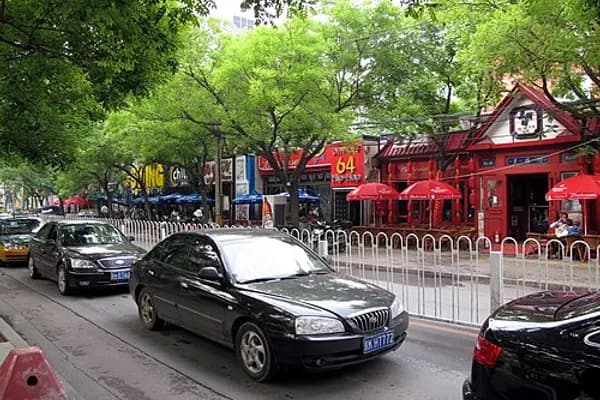
A popular destination for foreigners and young people was the "dirty street" of hole-in-the-wall restaurants and bars at the center of Sanlitun. However, the street was cleaned up in 2017.
As a landmark of Beijing, Sanlitun becomes a popular place to be chosen as the setting in many films and TV series. The films and TV series include Mr. Six, Love Is Not Blind, and A Little Reunion.
Popular Spots
Main subareas
Taikoo Li Sanlitun (Chinese: 三里屯太古里)
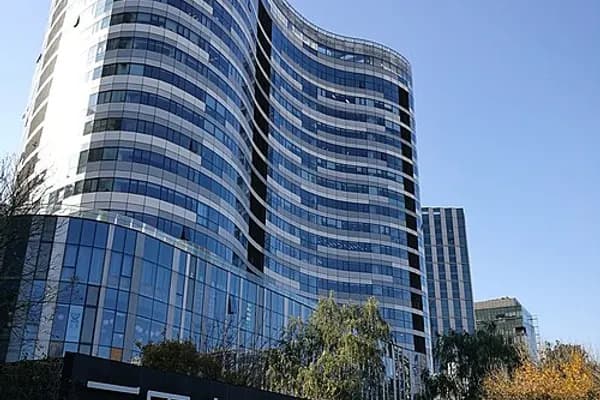
Sanlitun SOHO (Chinese: 三里屯 SOHO)
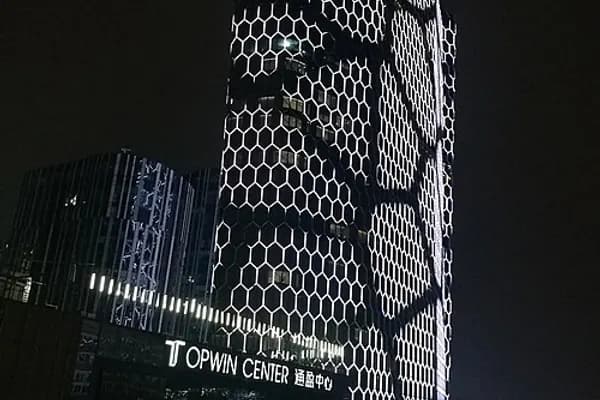
Topwin Center (Chinese: 通盈中心)
Pacific Century Place (Chinese: 盈科中心)
Hongjie Mansion (Chinese: 中国红街)
Nali Patio (Chinese: 那里花园) is a multistory Mediterranean-style building built around the 2008 Olympics. It houses many bars and restaurants.
Sanlitun Bar Street (Chinese: 三里屯酒吧街) houses over 80 bars and tea bars on the side of Sanlitun Rd.
3.3 Mansion (Chinese: 3.3大厦)
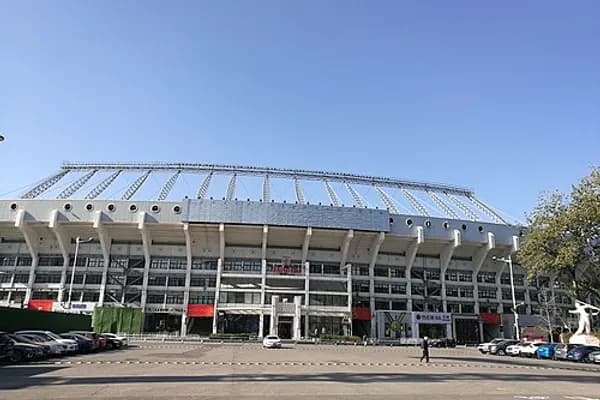
Beijing Workers' Stadium (Chinese: 北京工人体育场) is a stadium constructed in 1959 for the 10th anniversary of the People's Republic of China. It is the home to Beijing Sinobo Guoan F.C. now.
Popular places
Sanlian Taofen Bookstore is a 24-hour bookstore opened in 2018. It not only sells books and souvenirs but also provides drinks for people to stay and to work.
Shiba Inu café is a café famous for having dogs that people can play and take picture with.
Economy
The headquarters of Caixin is in the Sanlitun SOHO (三里屯SOHO).
Education
International schools
Source:
British School of Beijing Sanlitun Campus
Pakistan Embassy College Beijing
Accredited Italian Kindergarten in Beijing (Italian: Scuola Italiana Paritaria d’Infanzia a Pechino), formerly the Accredited Italian Embassy School of Beijing (Italian: Scuola Italiana Paritaria d'Ambasciata di Pechino, Chinese 意大利使馆学校) - It is located on the grounds of the Sanlitun Diplomatic Residence Compound (三里屯外交公寓). It opened in 2015, making it the first Italian international school in East Asia. It operates in cooperation with Reggio Children. It previously had a primary school section. In 2020, due to a decline in enrollment, it became a kindergarten only. It is now known as the Scuola Italiana Paritaria d’Infanzia a Pechino in Italian, while its Chinese name remained the same. The English name is now .
Ivy Academy – The Ivy Group
Chinese local schools
Beijing Union University (Electromechanical College)
Beijing No.80 High School
Beijing Sanlitun No.1 Middle School
Beijing Chaoyang Experimental Primary School
Baijiazhuang Primary School
Transportation
Subway
Workers' Stadium station, served by subway lines 3 and 17
Tuanjiehu station, served by subway lines 3 and 10
By bus
Source:
Take No.3, No.110, No.113, No.115, No.117, No.118, No.120 to Gongrentiyuchang Station
Take No.113, No.115, No.431, No.701, No.16, No.34 to Sanlitun Station
Take No.113, No.115, No.117, No.431, No.701, No.16 to Changhongqiaoxi Station
See also
Sanlitun Subdistrict
References
External links
Wikimedia Commons has media related to Sanlitun.
Official website of Taikoo Li Sanlitun
Nightlife in Sanlitun
Landmarks 798 Art Zone
Chaoyang Park
China–Japan Friendship Hospital
China Railway Museum
China World Trade Center
CMG Headquarters (CCTV Building)
Digital Beijing Building
Embassy of the United Kingdom
Embassy of the United States
Fairmont
INDIGO
Kempinski Hotel Beijing Lufthansa Center
Olympic Forest Park
Olympic Green National Aquatics Center (Water Cube)
National Indoor Stadium
National Stadium (Bird's Nest)
Olympic Tower
2008 Summer Olympic Village
China National Convention Center
China Science and Technology Museum
Digital Beijing Building
Ling Long Pagoda
National Speed Skating Oval
National Tennis Center
Olympic Green Archery Field (Closed)
Olympic Green Hockey Field (Closed)
Panjiayuan Antique Market
Ritan Park
Silk Street
Taikoo Li Sanlitun
Temple of the Eastern Peak
Workers' Stadium former stadium
Yintai Centre
TransportThis list is incomplete.
Encyclopedic content adapted from the Wikipedia article on Sanlitun, used under CC BY-SA 4.0.
What makes Sanlitun special
Sanlitun stands out among Beijing’s neighborhoods for its distinctive character: beijing's nightlife and shopping core. Ranked #2 in Beijing, it offers the kind of experience that defines a great city trip — a place where the streets themselves tell a story and every block rewards curiosity.
Best for
Our take on Sanlitun
Sanlitun is one of the strongest neighborhoods in Beijing, and it consistently appears in our editors' personal favorites lists. It may not always get the same attention as the city's most famous district, but among travelers who know Beijing well, Sanlitun is often the first recommendation.
The energy of Sanlitun builds as the day goes on, peaking in the evening when the streets fill with locals heading to their regular spots. This is a neighborhood where the nightlife feels organic rather than manufactured — bars that have regulars, music venues where the crowd actually listens, late-night spots where the kitchen stays open because the community demands it.
Our editors recommend budgeting at least half a day here — enough time to walk the main streets, sit down for coffee, and discover the side streets where Sanlitun's real character lives.
Living in Sanlitun
Sanlitun is connected to the rest of Beijing by public transit, and most visitors find it straightforward to reach from the city center or airport. Once you arrive, the neighborhood is best explored on foot — the scale is human and the streets reward wandering.
The neighborhood transitions through distinct phases during the day. Mornings are quiet — coffee shops and bakeries set the pace. Afternoons bring more energy as the retail and café scene picks up. Evenings are when Sanlitun truly comes alive, with restaurants and bars filling steadily from around 7 PM onward. If you are staying in the neighborhood, embrace the rhythm rather than fighting it.
Accommodation in Sanlitun ranges from boutique hotels to short-term rentals. We generally recommend staying within the neighborhood itself rather than commuting from a hotel elsewhere in Beijing — the experience of waking up inside a great neighborhood is fundamentally different from visiting one as a day trip.
What locals say about Sanlitun
Long-term residents of Sanlitun tend to describe their neighborhood with a mix of pride and protectiveness. Like any district with genuine character, Sanlitun inspires loyalty — the kind of place people move to and never quite leave, or leave and spend years trying to get back to.
Residents value the neighborhood's evening energy but will quickly tell you that Sanlitun is more than its bars. The nightlife is an expression of the community, not a tourist attraction — locals know the bartenders by name, have their preferred corners, and treat the neighborhood's bars and restaurants as extensions of their living rooms.
Like any neighborhood that has earned attention, Sanlitun is navigating the tension between popularity and preservation. Rents have risen, new businesses have arrived, and long-time residents occasionally grumble that the neighborhood is not what it was. But the fundamentals — the walkability, the food, the community — remain strong, and most locals we speak to believe the neighborhood is still gaining more than it is losing.
Visitor tips
- Sanlitun is located in Beijing, China. The neighborhood is accessible by public transport, taxi, or rideshare from most parts of the city.
- The neighborhood comes alive in the evening. Plan to arrive after sunset to experience the best of the local bar and dining scene.
- Wear comfortable walking shoes — the best way to experience Sanlitun is on foot, wandering the side streets and discovering what lies around each corner.
- Save the neighborhood's location on your phone before you arrive. Offline maps are especially useful for navigating the smaller side streets.