About the neighborhood
Town in Jiangsu, China
31°9′35.00″N 120°42′54.00″E / 31.1597222°N 120.7150000°E / 31.1597222; 120.7150000
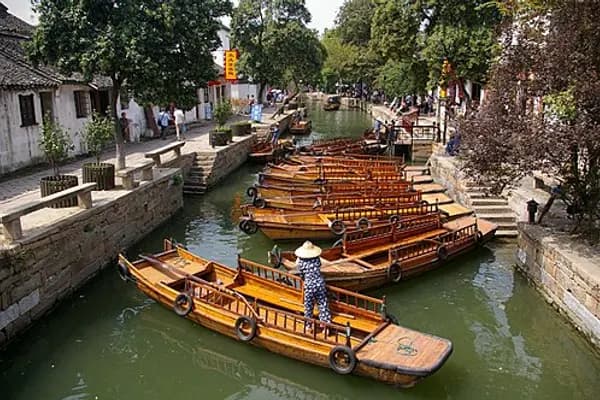
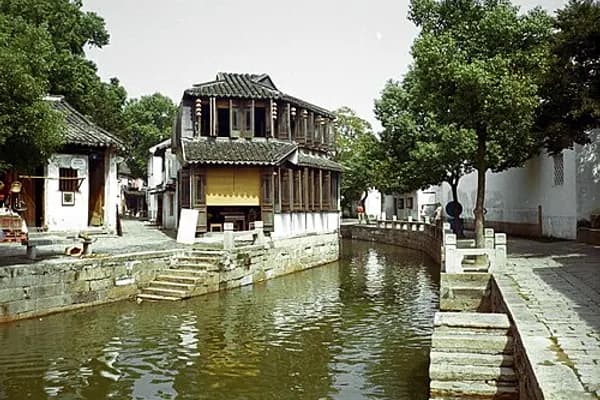
Tongli, alternately Tong-Li (Chinese 同里; pinyin Tónglǐ; Wu, Wugniu: Don li, Wu Chinese pronunciation: doŋ li) is a town in Wujiang district, on the outskirts of Suzhou, Jiangsu province. It is known for a system of canals, it has been given the nickname "Venice of the East". The place retains many of the features of an ancient Wu region town.
Tongli is half an hour away from Suzhou city and about two hours from Shanghai by buses. The town is also accessible by Suzhou Metro (Line 4).
Attractions
The Retreat & Reflection Garden
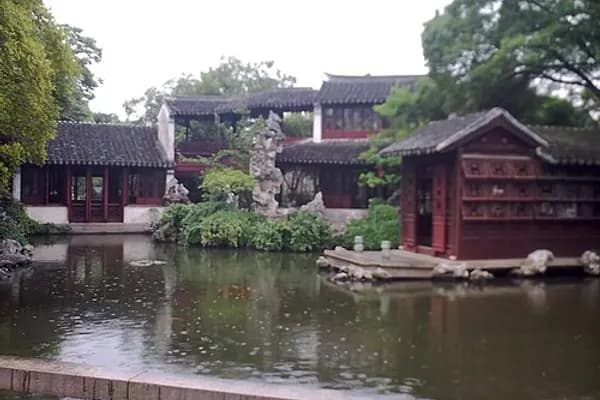
One of the most notable attractions is the Retreat & Reflection Garden (退思园). It was designed by the artist Yuanlong for Ren Lansheng and built in 1885–1887. In 2001, the Retreat & Reflection Garden was recognized with other classical Suzhou gardens as a UNESCO World Heritage Site.
Luoxing Zhou
It is an island on the lake. There are Buddhism, Taoism and Confucianism in this place. Its scenery is very beautiful. During the Spring Festival, people will go there to strike the bell to pray.
The Pearl Tower
It is a not real tower and it is just a model made up of pearls. Also, it's the name of a famous drama. It is in this place that the moving story between Fangqin and Chen Cui’e happened. Fangqin's father was banished by the court. So he came to his aunt to ask for help, but when his aunt heard of the bad news of Fang's she despised the poor and refused to help him. But his cousin was very kind and gave the Pearl Tower secretly to Fangqin. So latterly, Fangqin became the Zhuangyuan.
Three Bridges
There are 55 bridges in the town of Tongli. The most famous are the three bridges. They are Taiping, Jili, and Changqing Bridges. They all represent blessing. When getting married, the birth of a child, celebrating birthday, people will walk across the three bridges to pray for the health and happiness.
Other information
Jiayin Hall is also of note, and is the former home of Liu Yazi, an early 20th-century actor known for his collection of gauze caps.
See also
Retreat & Reflection Garden
References
External links
Wikimedia Commons has media related to Tongli.
Wikimedia Commons has media related to Canals in Tongli.
Chinese government page on "The Township of Tong Li"
Mick Travels - Tong Li
Subway connecting Suzhou to Tongli is running
Encyclopedic content adapted from the Wikipedia article on Tongli, used under CC BY-SA 4.0.
What makes Tongli special
Tongli stands out among Suzhou’s neighborhoods for its distinctive character: suzhou's water-village neighbour. Ranked #5 in Suzhou, it offers the kind of experience that defines a great city trip — a place where the streets themselves tell a story and every block rewards curiosity.
Best for
Our take on Tongli
Tongli occupies a distinctive place in Suzhou's neighborhood landscape. It is the kind of district that rewards travelers who venture beyond the obvious choices — quieter than the tourist-facing areas, richer in local character, and full of the small details that make a city trip memorable.
What makes Tongli worth the visit is the texture of daily life here. It is a neighborhood that functions for the people who live in it — not just for the visitors who pass through. The shops serve local needs, the restaurants feed local appetites, and the streets have a rhythm that reflects genuine community rather than tourism infrastructure. That is the quality our editors prize most, and Tongli has it in abundance.
Our editors recommend budgeting at least half a day here — enough time to walk the main streets, sit down for coffee, and discover the side streets where Tongli's real character lives.
Living in Tongli
Tongli is connected to the rest of Suzhou by public transit, and most visitors find it straightforward to reach from the city center or airport. Once you arrive, the neighborhood is best explored on foot — the scale is human and the streets reward wandering.
Day-to-day life in Tongli has the rhythm of a genuine residential neighborhood. You will find grocery stores, pharmacies, cafés with morning regulars, and the kind of small independent shops that only survive where locals support them. For visitors, this means the infrastructure you need — good coffee, a decent meal, a quiet place to sit — is always within a short walk.
Accommodation in Tongli ranges from boutique hotels to short-term rentals. We generally recommend staying within the neighborhood itself rather than commuting from a hotel elsewhere in Suzhou — the experience of waking up inside a great neighborhood is fundamentally different from visiting one as a day trip.
What locals say about Tongli
Long-term residents of Tongli tend to describe their neighborhood with a mix of pride and protectiveness. Like any district with genuine character, Tongli inspires loyalty — the kind of place people move to and never quite leave, or leave and spend years trying to get back to.
What locals appreciate most about Tongli is its consistency — the feeling that the neighborhood works the same way on a Tuesday morning as it does on a Saturday night. It is not a place that performs for visitors and then goes quiet. The rhythm is genuine, the community is real, and the daily experience of living here is what draws people and keeps them.
Compared to the more famous districts in Suzhou, Tongli has maintained a lower profile, which many residents consider an advantage. The neighborhood evolves gradually rather than being reshaped by sudden attention, and the result is a community that still feels organic rather than curated.
Visitor tips
- Tongli is located in Suzhou, China. The neighborhood is accessible by public transport, taxi, or rideshare from most parts of the city.
- Morning is often the best time to explore — the streets are quieter, the light is better for photography, and cafes are at their most welcoming.
- Wear comfortable walking shoes — the best way to experience Tongli is on foot, wandering the side streets and discovering what lies around each corner.
- Save the neighborhood's location on your phone before you arrive. Offline maps are especially useful for navigating the smaller side streets.