About the neighborhood
Local street in China
Guanqian Street (Chinese 观前街; pinyin guàn qián jiē; Suzhou Wu, Wugniu: Kuoe zie ka, Wu Chinese pronunciation: kuø zɪ kɑ) is a street in Suzhou, Jiangsu Province, China. The street is located in Suzhou city centre, an area covering 0.52 square kilometres, the commercial part of the city.
History
It is an old street consisting of a Grand Taoist Building group, which has a long history of more than 1300years. The Temple of the Lord has nine rooms and its name is Sanqing Temple. Besides, there are about ten temples along the street. The street is named for a temple—Xuanmiao Temple, which is on the street, because it is in front of the temple. This street has existed since 1930 and has been renovated many times since then. In June 1982, the street was designated by the municipal authority as a “walking street” and a new night market was established. The street has been honoured as one of the Four Most Famous Walking Streets in China (other three: Nanjing's Fuzimiao, Shanghai's Cheng Huang Miao and Beijing's Tianqiao).
Development
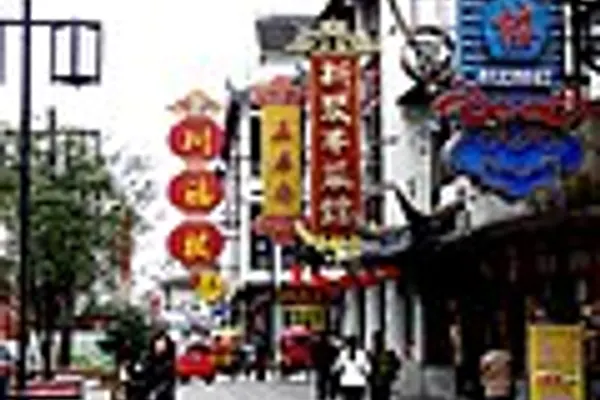
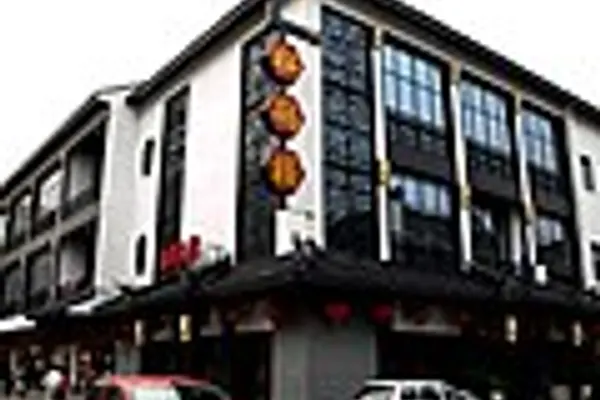
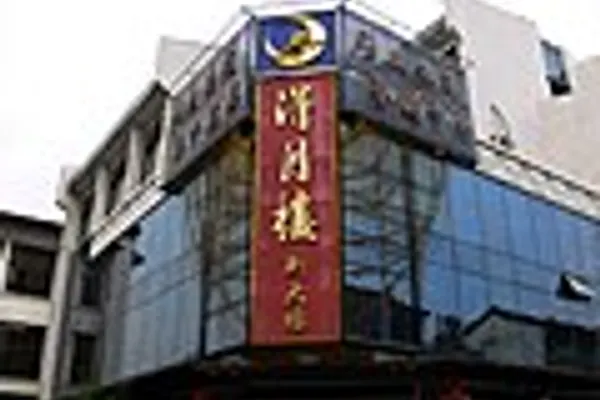
Lying in the city center of Suzhou, the main theme of the street involves eating, shopping and entertaining. There are hundreds of shops, restaurants, bars, stores and clubs in old fashioned structures surrounded by colorful signs and neon lights along the street. The location of this 150-year-old street lying in front of the Xuanmiao Taoist temple explains its name, which means "before a temple". The street running 760 metres long, consists of the eastern, middle and western sections. The eastern part is filled with nice ancient buildings of historical significance. The middle is mainly the temple and fashionable shops occupy the western part. Strolling on Guanqian Street is a favorite pastime of the locals. Now, the restored street attracts not only Suzhou people but also visitors, as it is an attraction blending business, culture, religion and food delights.
Century-old shops
There are many features of the street, including the famous century-old shops such as Huangtianyuan, Sanwanchang, Caizhizhai and so on, which gain an international reputation. It is precisely the existence of these century-old shops that make the Guanqian Street not only become a typical commercial street, but also illustrate the culture of Suzhou. Tourists at home and broad are attracted by these century-old shops because there is variety of Jiangnan dishes available in those century-old shops. Meanwhile, some of the shops have a long history of more than 100years, which gives the tourists deep impressions and many of the tourists visiting Guanqian street just come to enjoy the delicious food.
Scenic spots
Xuanmiao Temple
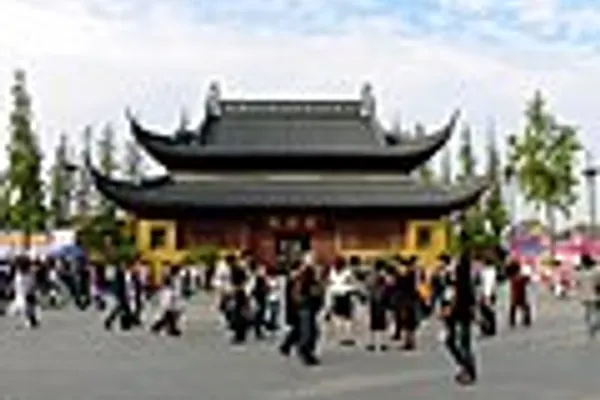
The Guanqian street is named after the Xuanmiao Temple which is located on the street. It is a prominent Taoist temple with a long history dating back to 276 and it was founded in the Western Jin dynasty. Its original name is Zhenqingdao Yard. In 1264, it was renamed Xuanmiao Temple. At the beginning of the Qing dynasty, in order to avoid naming taboo associated with the Kangxi Emperor's personal name, it was renamed again. An old laneway leads to the gate of the temple while the Guanqian pedestrian street lies just ahead of it.
Gallery
References
Encyclopedic content adapted from the Wikipedia article on Guanqian Street, used under CC BY-SA 4.0.
What makes Guanqian Street special
Guanqian Street stands out among Suzhou’s neighborhoods for its distinctive character: suzhou's central pedestrian core. Ranked #3 in Suzhou, it offers the kind of experience that defines a great city trip — a place where the streets themselves tell a story and every block rewards curiosity.
Best for
Our take on Guanqian Street
Guanqian Street is one of the strongest neighborhoods in Suzhou, and it consistently appears in our editors' personal favorites lists. It may not always get the same attention as the city's most famous district, but among travelers who know Suzhou well, Guanqian Street is often the first recommendation.
What makes Guanqian Street worth the visit is the texture of daily life here. It is a neighborhood that functions for the people who live in it — not just for the visitors who pass through. The shops serve local needs, the restaurants feed local appetites, and the streets have a rhythm that reflects genuine community rather than tourism infrastructure. That is the quality our editors prize most, and Guanqian Street has it in abundance.
Our editors recommend budgeting at least half a day here — enough time to walk the main streets, sit down for coffee, and discover the side streets where Guanqian Street's real character lives.
Living in Guanqian Street
Guanqian Street is connected to the rest of Suzhou by public transit, and most visitors find it straightforward to reach from the city center or airport. Once you arrive, the neighborhood is best explored on foot — the scale is human and the streets reward wandering.
Day-to-day life in Guanqian Street has the rhythm of a genuine residential neighborhood. You will find grocery stores, pharmacies, cafés with morning regulars, and the kind of small independent shops that only survive where locals support them. For visitors, this means the infrastructure you need — good coffee, a decent meal, a quiet place to sit — is always within a short walk.
Accommodation in Guanqian Street ranges from boutique hotels to short-term rentals. We generally recommend staying within the neighborhood itself rather than commuting from a hotel elsewhere in Suzhou — the experience of waking up inside a great neighborhood is fundamentally different from visiting one as a day trip.
What locals say about Guanqian Street
Long-term residents of Guanqian Street tend to describe their neighborhood with a mix of pride and protectiveness. Like any district with genuine character, Guanqian Street inspires loyalty — the kind of place people move to and never quite leave, or leave and spend years trying to get back to.
What locals appreciate most about Guanqian Street is its consistency — the feeling that the neighborhood works the same way on a Tuesday morning as it does on a Saturday night. It is not a place that performs for visitors and then goes quiet. The rhythm is genuine, the community is real, and the daily experience of living here is what draws people and keeps them.
Compared to the more famous districts in Suzhou, Guanqian Street has maintained a lower profile, which many residents consider an advantage. The neighborhood evolves gradually rather than being reshaped by sudden attention, and the result is a community that still feels organic rather than curated.
Visitor tips
- Guanqian Street is located in Suzhou, China. The neighborhood is accessible by public transport, taxi, or rideshare from most parts of the city.
- Morning is often the best time to explore — the streets are quieter, the light is better for photography, and cafes are at their most welcoming.
- Wear comfortable walking shoes — the best way to experience Guanqian Street is on foot, wandering the side streets and discovering what lies around each corner.