About the neighborhood
Neighborhood in Tehran province, Iran
Tajrish (Persian: تجريش, pronounced tædʒˈɾiːʃ) is a neighbourhood of Tehran, capital of Iran. Administratively it is in Shemiranat County, Tehran province and serves as the capital of the county. At one time a village, it was later absorbed into the city of Tehran.
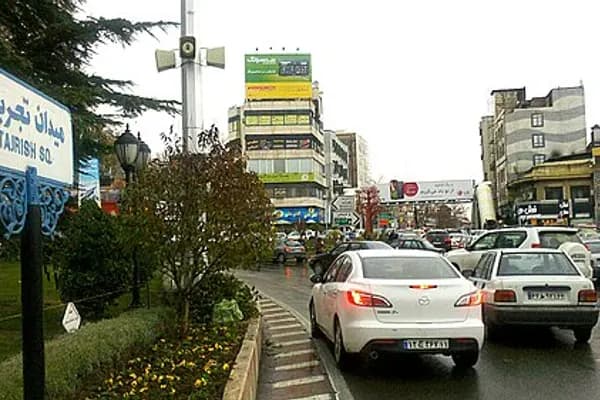
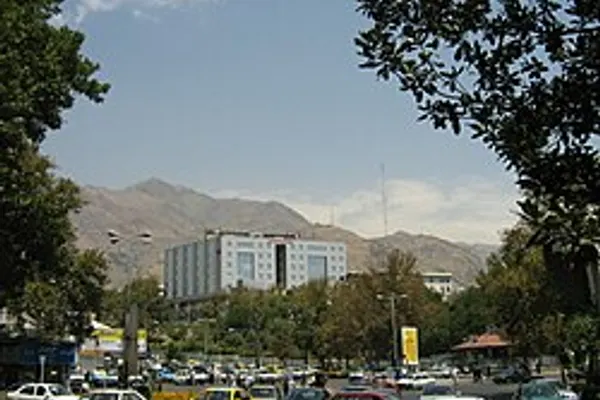
The Tajrish neighbourhood is located along the northern edge of Tehran. During the last few decades, it has become popular with the wealthy by virtue of its low levels of pollution. As of 2006, the neighborhood had 86,000 inhabitants. W Tajrish Square itself is known as Sar-e Pol-e Tajrish (سر پل تجریش), "at the Tajrish Bridge". This square is actually a vast bridge on top of a qanat river. In older times the locals used to call this bridge Gowgal, meaning "(The Bridge) of the Cowherd".
History
The location of the neighbourhood was once an ancient village, and in 1788, the Qajar dynasty chose this as their capital. It is known for its mountainous landscape. The area was often used as a summer retreat by city residents.
Until the 1920s, Tajrish and neighbouring Shemiranat were a collection of small villages along Tehran's city border. The area was relatively disconnected from Tehran's urban area with the exception of Old Shemiran Road, currently known as Shariati Avenue. During the Pahlavi era, with the construction of Pahlavi Street (now named Valiasr Street) in the 1930s and Modarres Highway, then known as Shahanshahi Boulevard, the Northern suburbs became accessible from downtown and extension became possible.
Demographics
Population
The population of the city of Tajrish in 1335 was 26,525 and in the census of 1365 was about 40,000. In the 1996 census, due to Tajrish being connected to the city of Tehran and being located in the Greater Tehran area, its population was mentioned along with the population of Tehran.
Dialect
Tajrishi is also a dialect of Persian, which is nowadays almost extinct and has been replaced by standard Persian. The etymology of the word Tajrish itself is unknown.
Iranian linguist Habib Borjian, after examining all the available material concerning this dialect opines that it is a dialect of the Persian and writes: "Tajrishi shows no divergence from the Persid group, despite minor variation with respect to modern standard Persian. It is in verb morphology that we do find in Tajrishi a massive Caspian overlay, imposed on the dialect by means of age-old socio-economic ties with the districts to its north in the Alborz chain. We may thus characterize Tajrishi and other Shemirāni dialects as Persian with a significant Caspian imprint. Surprisingly enough, we find no trace of a Northwestern Iranian substratum in the dialect of Tajrish, nor do we find it in the scanty material available to us about the other extinct vernaculars of Shemirān ... This situation can only attest to an early Persianization of Rey and its adjoining settlements."
Geography
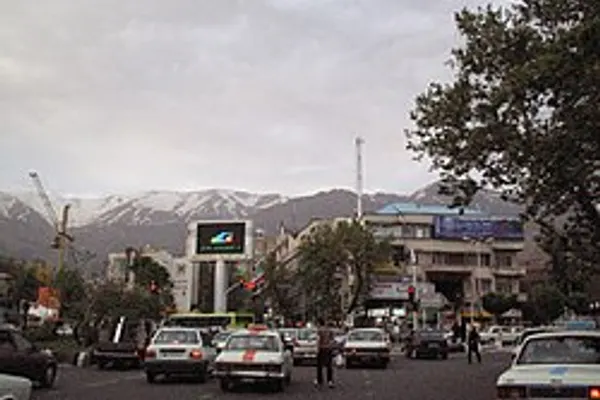
Tajrish is located at the foot of the Alborz mountain range and Tajrish Square is located at an altitude of 1600 meters above sea level. Tajrish's climate is temperate and cold. The maximum temperature in summer is 36 degrees and the minimum in winter is -20 degrees. There have been aqueducts in Tajrish and some of them still flow. Among them are Imamzadeh Saleh aqueduct, Mohammadieh aqueduct, Maghsoudbak aqueduct along Darband river, Sarpol Tajrish aqueduct and Kahrizak aqueduct which was manifested in the lower support of Tajrish.
Overview
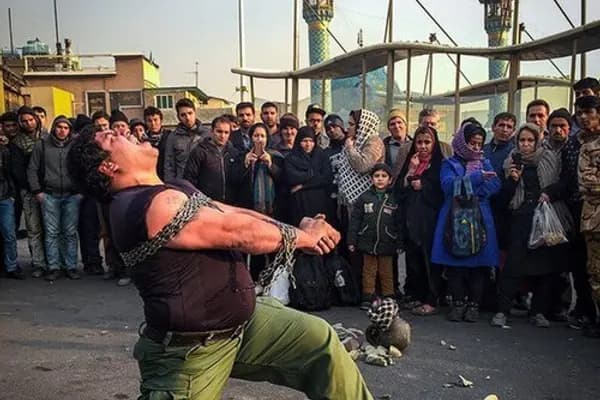
Tajrish Square is one of the busiest parts of Tehran, with bus terminals, cab terminals. It is the location of shopping malls and of street performers, and where people gather to celebrate holidays.
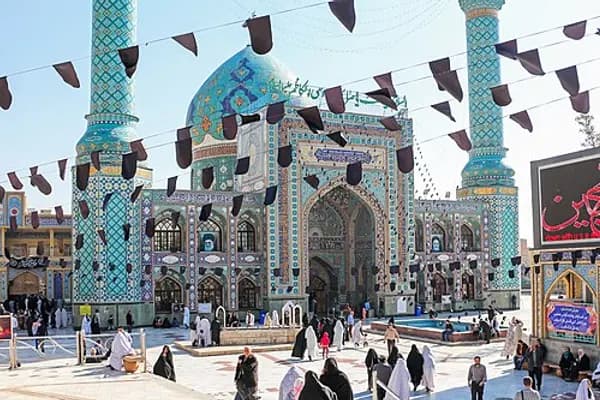
Tourist spots in Tajrish are the bazaar and a mausoleum called Imamzadeh Saleh. A number of Shia Islam religious sites are located here, including the mausoleum, a shrine called Imamzadeh Qassemfa, and a few Takyehs or religious buildings (such as Takyeh Borzog, Takyeh Pa'in, Tajrish Tekyehfa).
The square is where Valiasr Street terminates. Valiasr is the longest street in Tehran. It is also one of the busiest transportation hubs in Tehran. Many suburbs are accessible from this square. Tajrish is at the junction of streets that lead to Sa'dabad Palace, Velenjak, Asad Abad, Zafaraniyeh, Elahieh, and Niavaran as well as many of the other places in northern Tehran. A metro station, the northern terminus of line one (the red line) is located here.
Tajrish Bazaar
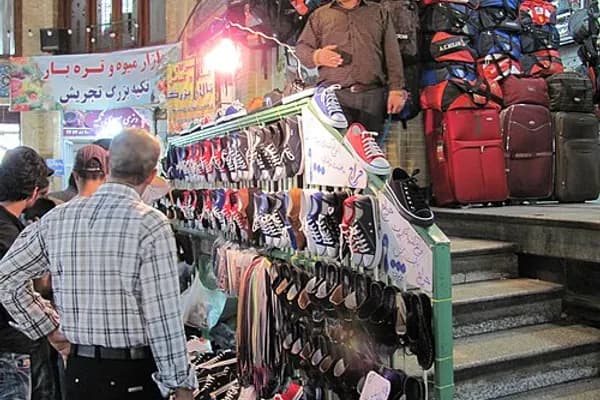
Tehran has two bazaars, the Tajrish Bazaar is located in the north and the Grand Bazaar is located in the south of the city. The bazaar was developed in the 18th-century (although some sources state early 19th-century), and was associated with the village of Shemiranat and the Qajar dynasty. The location of the Tajrish Bazaar is bound by Panzandeh-e Kordad Street, Molavi Street, Mostafa Khomeini Street, and Khayyam Street.
Tajrish Bazaar has been built according to architectural style which resembles the Grand Bazaar in downtown Tehran. Some of its arches have been destroyed due to construction of multi-story buildings and its traditional identity has been threatened by irregularity of window shops and external view of new stores. Tajrish Bazaar includes a roofed passageway through which people pass en route to either paying pilgrimage the Emamzadeh Saleh or to the bazaar for purchasing goods.
Gallery
See also
Media related to Tajrish at Wikimedia Commons
Notes
References
Landmarks Azadi Tower
Bahman Cultural Center
Tabiat Bridge
Carpet Museum of Iran
Dizin
Ebn-e Babooyeh
Golestan Palace
Grand Bazaar, Tehran
Iranian Crown Jewels
Malik National Museum of Iran
Milad Tower
National Museum of Iran
Niavaran Complex
Pearl Palace
Sa'dabad Complex
Shebeli Tower
Shemshak (ski resort)
Bibi Shahr Banu Shrine
Tangeh Savashi
Tehran Museum of Contemporary Art
Toopkhaneh
Tughrul Tower
Reza Abbasi Museum
St. Thaddeus and Bartholomew Church
St. George Church
Populated places List of cities, towns and villages in Tehran province
^* indicates that this formerly independent city is now absorbed into Tehran. AftabKan
Encyclopedic content adapted from the Wikipedia article on Tajrish, used under CC BY-SA 4.0.
What makes Tajrish special
Tajrish stands out among Tehran’s neighborhoods for its distinctive character: northern tehran's ancient bazaar. It tops our ranking of the best neighborhoods in Tehran, it offers the kind of experience that defines a great city trip — a place where the streets themselves tell a story and every block rewards curiosity.
Best for
Our take on Tajrish
Tajrish is the neighborhood we send friends to first when they visit Tehran. It earns the top spot in our ranking not because it is the most famous district in the city, but because it delivers the most complete neighborhood experience — the kind of place where every block rewards curiosity and every return visit reveals something new.
Walking through Tajrish is like reading a history book with your feet. The architecture tells the story of decades — sometimes centuries — of evolution, and the neighborhood has managed to preserve its historical character without becoming a museum piece. People still live here, still run businesses here, still argue about parking here. That living quality is what separates a great historic neighborhood from a pretty but lifeless one.
Our editors recommend budgeting at least half a day here — enough time to walk the main streets, sit down for coffee, and discover the side streets where Tajrish's real character lives.
Living in Tajrish
Tajrish is connected to the rest of Tehran by public transit, and most visitors find it straightforward to reach from the city center or airport. Once you arrive, the neighborhood is best explored on foot — the scale is human and the streets reward wandering.
Day-to-day life in Tajrish has the rhythm of a genuine residential neighborhood. You will find grocery stores, pharmacies, cafés with morning regulars, and the kind of small independent shops that only survive where locals support them. For visitors, this means the infrastructure you need — good coffee, a decent meal, a quiet place to sit — is always within a short walk.
Accommodation in Tajrish ranges from boutique hotels to short-term rentals. We generally recommend staying within the neighborhood itself rather than commuting from a hotel elsewhere in Tehran — the experience of waking up inside a great neighborhood is fundamentally different from visiting one as a day trip.
What locals say about Tajrish
Long-term residents of Tajrish tend to describe their neighborhood with a mix of pride and protectiveness. Like any district with genuine character, Tajrish inspires loyalty — the kind of place people move to and never quite leave, or leave and spend years trying to get back to.
What locals appreciate most about Tajrish is its consistency — the feeling that the neighborhood works the same way on a Tuesday morning as it does on a Saturday night. It is not a place that performs for visitors and then goes quiet. The rhythm is genuine, the community is real, and the daily experience of living here is what draws people and keeps them.
Like any neighborhood that has earned attention, Tajrish is navigating the tension between popularity and preservation. Rents have risen, new businesses have arrived, and long-time residents occasionally grumble that the neighborhood is not what it was. But the fundamentals — the walkability, the food, the community — remain strong, and most locals we speak to believe the neighborhood is still gaining more than it is losing.
Visitor tips
- Tajrish is located in Tehran, Iran. The neighborhood is accessible by public transport, taxi, or rideshare from most parts of the city.
- Morning is often the best time to explore — the streets are quieter, the light is better for photography, and cafes are at their most welcoming.
- Wear comfortable walking shoes — the best way to experience Tajrish is on foot, wandering the side streets and discovering what lies around each corner.
- Save the neighborhood's location on your phone before you arrive. Offline maps are especially useful for navigating the smaller side streets.