About the neighborhood
Suburb / Commune in Carthage, Tunis Governorate, Tunisia
Sidi Bou Saïd (سيدي بو سعيد Sīdi Bū Sʻīd) is a town in northern Tunisia, located about 20 km northeast of the capital, Tunis.
Named after the religious figure Abu Said al-Baji, it was formerly known as Jbel el-Menar. The town is a popular tourist destination, celebrated for its distinctive blue-and-white architecture. It is accessible via the TGM train line, which runs from Tunis to La Marsa.
The village was added to Tunisia's UNESCO Tentative List for World Heritage inscription in April 2024 under the title "Village de Sidi Bou Saïd: Harmonie architecturale et spirituelle en Méditerranée", recognizing its architectural harmony, spiritual heritage, and Mediterranean coastal character.
History
Abu Said Ibn Khalaf Yahya al-Tamimi al-Beji arrived in the village of Jabal el-Menar and established a sanctuary there in the 12th or 13th century AD. After his death in 1231, he was buried at the site. In the 18th century, wealthy citizens of the Beylik of Tunis built residences in Sidi Bou Said.
During the 1920s, Rodolphe d'Erlanger popularized the town’s blue-and-white color scheme. His former residence, Ennejma Ezzahra, is now a museum featuring musical instruments and hosting concerts of classical and Arabic music.
Recent challenges
In January 2026, Sidi Bou Saïd experienced its heaviest rainfall in over 70 years (nearly 300 mm in 48 hours in some reports), triggering landslides and cracks on the fragile hillside. Authorities evacuated several properties, restricted heavy vehicles, and initiated stabilization efforts, with President Kais Saied visiting affected areas to assess damage and emphasize long-term preservation. Experts attribute the increased risk to the town's precarious geology combined with urban pressures and climate change.
Notable people
Sidi Bou Said has long attracted artists and intellectuals. Notable residents or visitors include the occultist Aleister Crowley and painters Paul Klee, Gustave-Henri Jossot, August Macke, and Louis Moillet. Tunisian artists associated with the École de Tunis, such as Yahia Turki, Brahim Dhahak, and Ammar Farhat, have also been linked to the town.
French philosopher Michel Foucault lived in Sidi Bou Said while teaching at Tunis University, and author André Gide owned a house in the town.
Former Tunisian President Beji Caid Essebsi was born in Sidi Bou Said, as was film director Moufida Tlatli. Fashion designer Azzedine Alaïa maintained a residence in the town, which is now an art gallery.
French singer Patrick Bruel referenced Sidi Bou Said and the Café des Délices in his song Au Café des Délices from the 1999 album Juste Avant.
Attractions and tourism
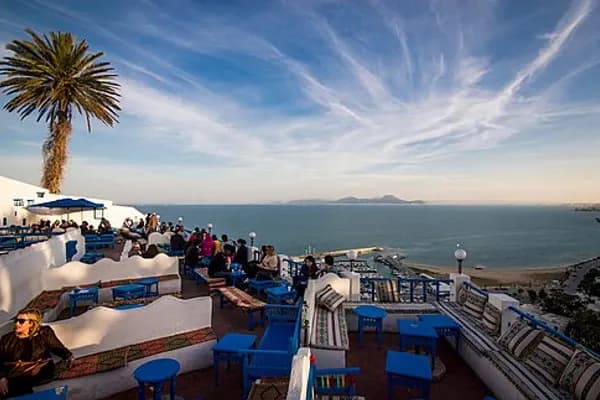
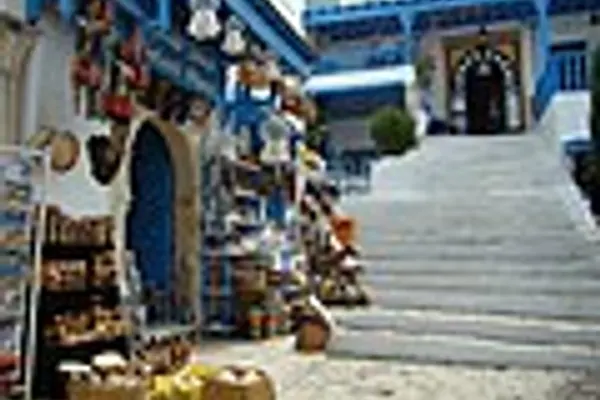
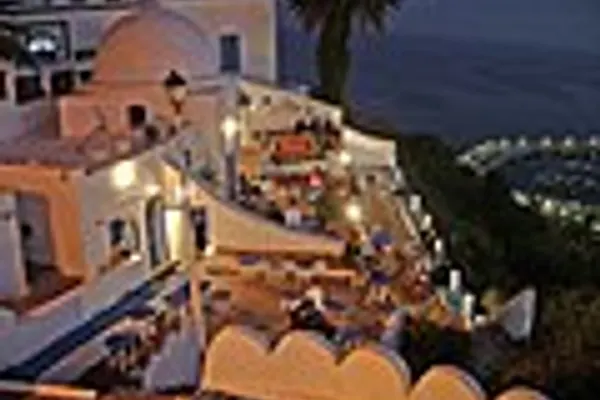
Sidi Bou Saïd remains one of Tunisia's most visited destinations, drawing crowds for its photogenic blue-and-white streets, bougainvillea-covered walls, and panoramic views over the Gulf of Tunis and Mediterranean Sea.
Key attractions include:
Café des Nattes (Place des Nattes), a historic café famous for mint tea served with pine nuts.
Café des Délices, perched on the cliffside with sweeping sea views.
Dar Ennejma Ezzahra (Palace of Baron d'Erlanger), a museum and concert venue showcasing Arab and Mediterranean music, with a collection of historic instruments.
Dar El Annabi, a preserved traditional Tunisian house museum illustrating local domestic life and architecture.
Numerous art galleries (such as Galerie A. Gorgi) featuring contemporary Tunisian works, artisan shops selling crafts, and nearby access to Carthage archaeological sites.
The town is easily reached by TGM train and complements day trips from Tunis, with tourism contributing significantly to the local economy despite occasional environmental pressures.
Gallery
References
External links
Wikimedia Commons has media related to Sidi Bou Saïd.
[Wikivoyage inline|Sidi Bou Said]
Official commune site (if active): commune-sidibousaid.gov.tn (check for latest local info)
[Tourism Tunisia page on Sidi Bou Said]
Encyclopedic content adapted from the Wikipedia article on Sidi Bou Said, used under CC BY-SA 4.0.
What makes Sidi Bou Said special
Sidi Bou Said stands out among Tunis’s neighborhoods for its distinctive character: tunis' blue-and-white cliffside village. Ranked #3 in Tunis, it offers the kind of experience that defines a great city trip — a place where the streets themselves tell a story and every block rewards curiosity.
Best for
Our take on Sidi Bou Said
Sidi Bou Said is one of the strongest neighborhoods in Tunis, and it consistently appears in our editors' personal favorites lists. It may not always get the same attention as the city's most famous district, but among travelers who know Tunis well, Sidi Bou Said is often the first recommendation.
What makes Sidi Bou Said worth the visit is the texture of daily life here. It is a neighborhood that functions for the people who live in it — not just for the visitors who pass through. The shops serve local needs, the restaurants feed local appetites, and the streets have a rhythm that reflects genuine community rather than tourism infrastructure. That is the quality our editors prize most, and Sidi Bou Said has it in abundance.
Our editors recommend budgeting at least half a day here — enough time to walk the main streets, sit down for coffee, and discover the side streets where Sidi Bou Said's real character lives.
Living in Sidi Bou Said
Sidi Bou Said is connected to the rest of Tunis by public transit, and most visitors find it straightforward to reach from the city center or airport. Once you arrive, the neighborhood is best explored on foot — the scale is human and the streets reward wandering.
Day-to-day life in Sidi Bou Said has the rhythm of a genuine residential neighborhood. You will find grocery stores, pharmacies, cafés with morning regulars, and the kind of small independent shops that only survive where locals support them. For visitors, this means the infrastructure you need — good coffee, a decent meal, a quiet place to sit — is always within a short walk.
Accommodation in Sidi Bou Said ranges from boutique hotels to short-term rentals. We generally recommend staying within the neighborhood itself rather than commuting from a hotel elsewhere in Tunis — the experience of waking up inside a great neighborhood is fundamentally different from visiting one as a day trip.
What locals say about Sidi Bou Said
Long-term residents of Sidi Bou Said tend to describe their neighborhood with a mix of pride and protectiveness. Like any district with genuine character, Sidi Bou Said inspires loyalty — the kind of place people move to and never quite leave, or leave and spend years trying to get back to.
What locals appreciate most about Sidi Bou Said is its consistency — the feeling that the neighborhood works the same way on a Tuesday morning as it does on a Saturday night. It is not a place that performs for visitors and then goes quiet. The rhythm is genuine, the community is real, and the daily experience of living here is what draws people and keeps them.
Compared to the more famous districts in Tunis, Sidi Bou Said has maintained a lower profile, which many residents consider an advantage. The neighborhood evolves gradually rather than being reshaped by sudden attention, and the result is a community that still feels organic rather than curated.
Visitor tips
- Sidi Bou Said is located in Tunis, Tunisia. The neighborhood is accessible by public transport, taxi, or rideshare from most parts of the city.
- Morning is often the best time to explore — the streets are quieter, the light is better for photography, and cafes are at their most welcoming.
- Wear comfortable walking shoes — the best way to experience Sidi Bou Said is on foot, wandering the side streets and discovering what lies around each corner.
- Save the neighborhood's location on your phone before you arrive. Offline maps are especially useful for navigating the smaller side streets.