About the neighborhood
Place in Tunis Governorate, Tunisia
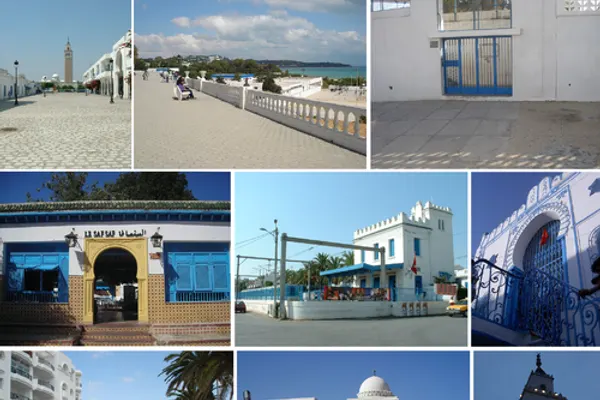
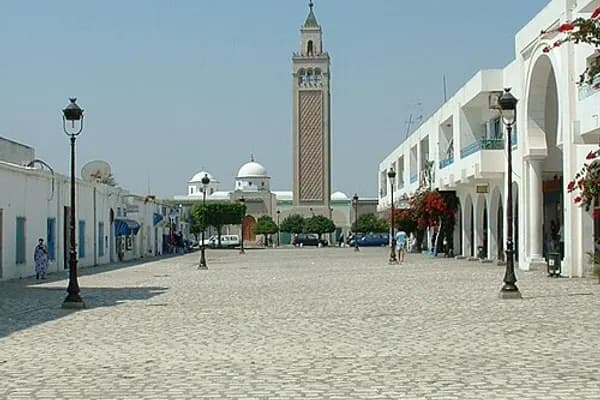
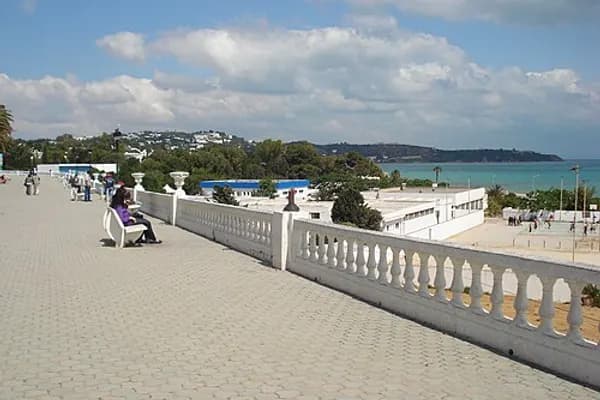
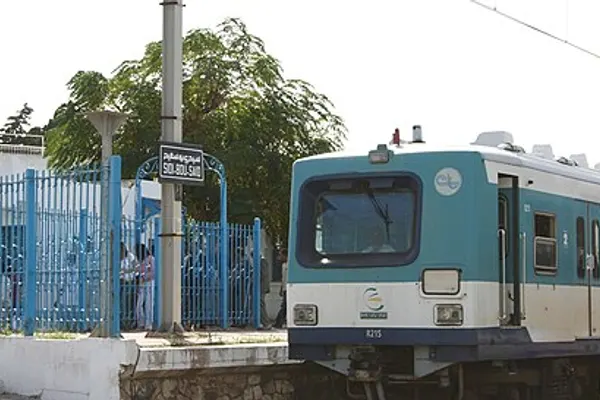
La Marsa (Tunisian Arabic: المرسى Il Marṣā) is a coastal city located in the northeastern part of Tunisia, situated along the Mediterranean Sea. It is part of the Tunis Governorate and has a population of around 100,000 people. The city is known for its beaches, upscale residential areas, and lively atmosphere, with numerous restaurants, cafes, and shops. It is connected to Tunis by the TGM railway. Gammarth is adjacent to El Marsa further up the coast.
History
Ancient Carthage was a Semitic civilization centered on the Phoenician city-state of Carthage, located in North Africa on the Gulf of Tunis, outside what is now Tunis, Tunisia. It was founded in 814 BC. Originally a dependency of the Phoenician state of Tyre, Carthage gained independence around 650 BC and established a hegemony over other Phoenician settlements throughout the Mediterranean, North Africa and what is now Spain which lasted until the end of the 3rd century BC. At the height of the city's prominence, its political influence extended over most of the western Mediterranean and it was one of the major trade hubs.
For much of its history, Carthage was in a constant state of struggle with the Greeks on Sicily and the Roman Republic, which led to a series of armed conflicts known as the Sicilian Wars and Punic Wars. They also had conflicts with the Berbers, the indigenous inhabitants of the entire area where Carthage was built. In 146 BC, after the third and final Punic War, Carthage was destroyed and then occupied by Roman forces. Nearly all of the other Phoenician city-states and former Carthaginian dependencies fell into Roman hands from then on.
The Dar al-Taj Palace was a favourite residence of the Beys of Tunis, but was destroyed in the years after the Tunisian independence.
Attractions
Abdalliya Palace is one of the most lavish creations of the Hafsid dynasty sultans. Built in the early sixteenth century by one of their last sovereign, Abu Abdallah Mohamed, this palace stands on the ancient port site of El Marsa. This place of remembrance and history is one of the few monuments Hafsid Tunisia. It is the oldest evidence of Muslim architecture Palatine remained in good state of conservation of the Maghreb.
Education
La Marsa houses the following French international schools:
Lycée Gustave Flaubert
École Paul-Verlaine
They are a part of the Etablissement Régional De La Marsa (ELRM) which has 7 schools in Tunisia as members.
La Marsa also houses five primary schools:
École primaire Habib Bourguiba
École primaire Nahj el Ward
École primaire Taieb El Mhiri
École primaire El Tabbek
École primaire El Riadh
La Marsa also houses 3 middle schools:
Collège fadhel ben achour
Collège tayeb mhiri
Collège Rmila
Taïeb Mhiri School is a secondary school in La Marsa.
Transport
Tunis-Goulette-Marsa (TGM) is a 19km 1,435mm (4ft8+12in) standard gauge light rail line linking the capital Tunis with El Marsa via La Goulette.
The TGM was the first railway in Tunisia and inaugurated in 1872. Since 1905 it has been known as the TGM. It is part of the transportation system of the Tunis area, and together with the light rail of Tunis (Le métro léger de Tunis) managed by the Société des transports de Tunis (Transtu). Transtu was founded in 2003 by joining the Société du métro léger de Tunis (SMLT, founded 1981) and the Société nationale de transports (SNT, founded 1963).
Transports that passes through the N9 Highway:
The bus line N°20 from Tunis Passage to La Marsa El Riadh, managed by the Société des transports de Tunis (Transtu)
The bus line TCV from Tunis Passage to La Marsa Sidi Abdelaziz managed by a private company (Transport En Commun De Voyageur)
The collective taxi (Taxi jama3i) is the fastest way to go to La Marsa from Tunis
Sport
AS Marsa
Avenir Sportif de El Marsa (Arabic: المستقبل الرياضي بالمرسى, often referred to as ASM) is a football club from El Marsa in Tunisia. Founded in 1939, the team plays in green and yellow colours. Their ground is Stade Abdelaziz Chtioui, which has a capacity of 6,000. When the club was founded its name was Club Musulman (Muslim Club).
Stade Abdelaziz Chtioui
Stade Abdelaziz Chtioui (Arabic: ملعب عبدالعزيز شتوي) is a football stadium in El Marsa, Tunisia. It is currently used by football team Avenir Sportif de El Marsa commonly called the AS Marsa. The stadium holds 6,000 people.
References
External links
View of El Marsa
Lexicorient
La Goulette - Carthage - El Marsa
Media related to La Marsa at Wikimedia Commons
La Marsa travel guide from Wikivoyage
Encyclopedic content adapted from the Wikipedia article on La Marsa, used under CC BY-SA 4.0.
What makes La Marsa special
La Marsa stands out among Tunis’s neighborhoods for its distinctive character: tunis' seaside suburb. Ranked #5 in Tunis, it offers the kind of experience that defines a great city trip — a place where the streets themselves tell a story and every block rewards curiosity.
Best for
Our take on La Marsa
La Marsa occupies a distinctive place in Tunis's neighborhood landscape. It is the kind of district that rewards travelers who venture beyond the obvious choices — quieter than the tourist-facing areas, richer in local character, and full of the small details that make a city trip memorable.
The waterfront presence in La Marsa shapes everything about the neighborhood's character — the light, the air, the pace of life, the kind of restaurants that thrive here. But what elevates it beyond a simple beach district is the depth of the neighborhood behind the waterfront: the residential streets, the local markets, the café culture that exists independent of the views.
Our editors recommend budgeting at least half a day here — enough time to walk the main streets, sit down for coffee, and discover the side streets where La Marsa's real character lives.
Living in La Marsa
La Marsa is connected to the rest of Tunis by public transit, and most visitors find it straightforward to reach from the city center or airport. Once you arrive, the neighborhood is best explored on foot — the scale is human and the streets reward wandering.
Day-to-day life in La Marsa has the rhythm of a genuine residential neighborhood. You will find grocery stores, pharmacies, cafés with morning regulars, and the kind of small independent shops that only survive where locals support them. For visitors, this means the infrastructure you need — good coffee, a decent meal, a quiet place to sit — is always within a short walk.
Accommodation in La Marsa ranges from boutique hotels to short-term rentals. We generally recommend staying within the neighborhood itself rather than commuting from a hotel elsewhere in Tunis — the experience of waking up inside a great neighborhood is fundamentally different from visiting one as a day trip.
What locals say about La Marsa
Long-term residents of La Marsa tend to describe their neighborhood with a mix of pride and protectiveness. Like any district with genuine character, La Marsa inspires loyalty — the kind of place people move to and never quite leave, or leave and spend years trying to get back to.
What locals appreciate most about La Marsa is its consistency — the feeling that the neighborhood works the same way on a Tuesday morning as it does on a Saturday night. It is not a place that performs for visitors and then goes quiet. The rhythm is genuine, the community is real, and the daily experience of living here is what draws people and keeps them.
Compared to the more famous districts in Tunis, La Marsa has maintained a lower profile, which many residents consider an advantage. The neighborhood evolves gradually rather than being reshaped by sudden attention, and the result is a community that still feels organic rather than curated.
Visitor tips
- La Marsa is located in Tunis, Tunisia. The neighborhood is accessible by public transport, taxi, or rideshare from most parts of the city.
- Morning is often the best time to explore — the streets are quieter, the light is better for photography, and cafes are at their most welcoming.
- Wear comfortable walking shoes — the best way to experience La Marsa is on foot, wandering the side streets and discovering what lies around each corner.
- Save the neighborhood's location on your phone before you arrive. Offline maps are especially useful for navigating the smaller side streets.