About the neighborhood
Neighborhood of Seville, Spain
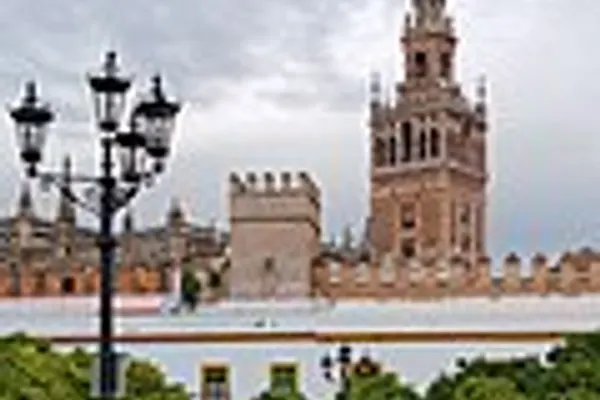
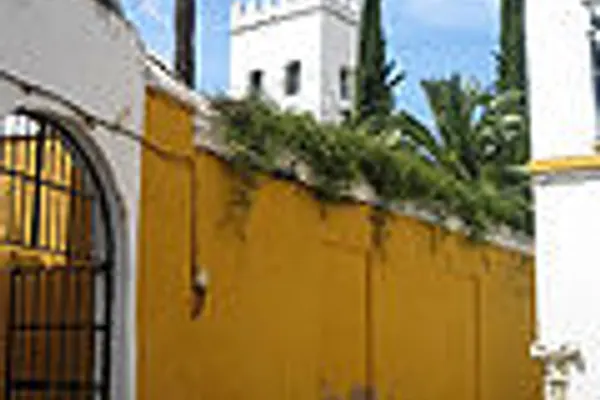
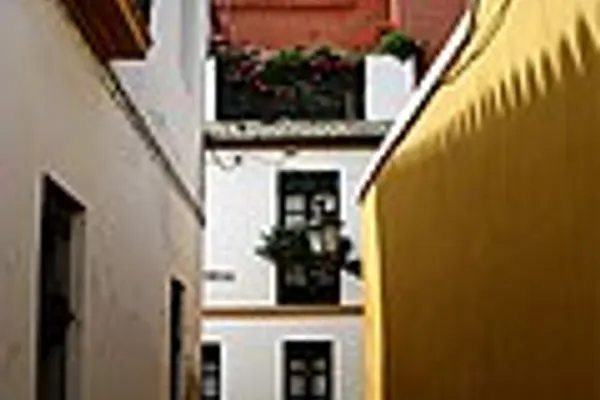
Santa Cruz, is the primary tourist neighborhood of Seville, Spain, and the former Jewish quarter of the medieval city. Santa Cruz is bordered by the Jardines de Murillo, the Real Alcázar, Calle Mateos Gago, and Calle Santa María La Blanca/San José. The neighbourhood is the location of many of Seville's oldest churches and is home to the Cathedral of Seville, including the converted minaret of the old Moorish mosque Giralda.
History
Santa Cruz was Seville's old judería (Jewish quarter): when Ferdinand III of Castile conquered the city from Muslim rule, he concentrated the city's Jewish population—second in the Iberian Peninsula only to that of Toledo—in this single neighborhood. After the Alhambra Decree of 1492 expelled the Jews from Spain, the neighborhood went downhill. In the 18th century, the neighborhood underwent a major process of urban renewal, including the conversion of a former synagogue into the current Church of Saint Bartholomew.
Just outside the neighborhood is the Iglesia de Santa María de las Nieves ("Church of Saint Mary of the Snows"), better known as the Iglesia de Santa María la Blanca ("Saint Mary the White"), a converted 14th century Mudéjar synagogue.
Origin of the name
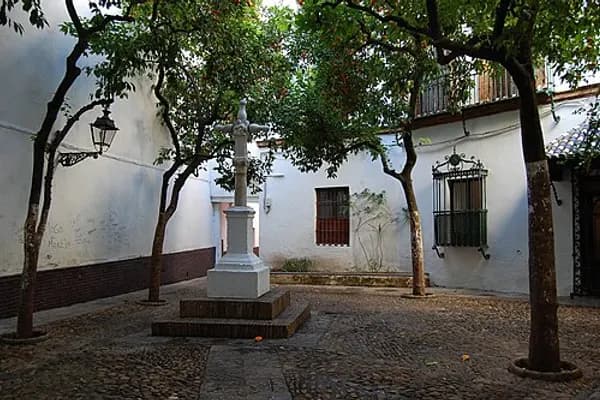
The present-day Plaza de Santa Cruz was once the site of the Iglesia de Santa Cruz (Church of the Holy Cross), a parish church that gave its name to the neighborhood. The church in Mudéjar style was constructed over the ruins of a synagogue, incorporating the floor of that older building. During the Napoleonic Wars the church was demolished as part of an urban renewal scheme, the old floor remained as the present plaza. The parish was moved to the monastery of the Clérigos del Espíritu Santo ("clerics of the Holy Spirit"), now the current Iglesia de Santa Cruz in Calle Mateos Gago (Mateos Gago Street). The present church houses a painting of the Last Supper by 17th century painter (and Santa Cruz resident) Bartolomé Esteban Murillo; Murillo was buried in the demolished parish church where the plaza now stands.
References
37°23′06″N 5°59′25″W / 37.38500°N 5.99028°W / 37.38500; -5.99028
Encyclopedic content adapted from the Wikipedia article on Santa Cruz, used under CC BY-SA 4.0.
What makes Santa Cruz special
Santa Cruz stands out among Seville’s neighborhoods for its distinctive character: seville's old jewish quarter. It tops our ranking of the best neighborhoods in Seville, it offers the kind of experience that defines a great city trip — a place where the streets themselves tell a story and every block rewards curiosity.
Best for
Our take on Santa Cruz
Santa Cruz is the neighborhood we send friends to first when they visit Seville. It earns the top spot in our ranking not because it is the most famous district in the city, but because it delivers the most complete neighborhood experience — the kind of place where every block rewards curiosity and every return visit reveals something new.
What makes Santa Cruz exceptional is the density of its cultural life. Art galleries, independent bookshops, small theaters, and creative studios are woven into the fabric of the neighborhood rather than clustered in a single zone. You encounter culture here by accident, which is how the best cultural experiences always happen.
Our editors recommend budgeting at least half a day here — enough time to walk the main streets, sit down for coffee, and discover the side streets where Santa Cruz's real character lives.
Living in Santa Cruz
Santa Cruz is connected to the rest of Seville by public transit, and most visitors find it straightforward to reach from the city center or airport. Once you arrive, the neighborhood is best explored on foot — the scale is human and the streets reward wandering.
Day-to-day life in Santa Cruz has the rhythm of a genuine residential neighborhood. You will find grocery stores, pharmacies, cafés with morning regulars, and the kind of small independent shops that only survive where locals support them. For visitors, this means the infrastructure you need — good coffee, a decent meal, a quiet place to sit — is always within a short walk.
Accommodation in Santa Cruz ranges from boutique hotels to short-term rentals. We generally recommend staying within the neighborhood itself rather than commuting from a hotel elsewhere in Seville — the experience of waking up inside a great neighborhood is fundamentally different from visiting one as a day trip.
What locals say about Santa Cruz
Long-term residents of Santa Cruz tend to describe their neighborhood with a mix of pride and protectiveness. Like any district with genuine character, Santa Cruz inspires loyalty — the kind of place people move to and never quite leave, or leave and spend years trying to get back to.
The creative community in Santa Cruz is genuine, not aspirational. Residents include working artists, writers, musicians, and designers who chose the neighborhood because it supported their work — affordable studio space, a community that values craft, and enough foot traffic to sustain independent galleries and shops.
Like any neighborhood that has earned attention, Santa Cruz is navigating the tension between popularity and preservation. Rents have risen, new businesses have arrived, and long-time residents occasionally grumble that the neighborhood is not what it was. But the fundamentals — the walkability, the food, the community — remain strong, and most locals we speak to believe the neighborhood is still gaining more than it is losing.
Visitor tips
- Santa Cruz is located in Seville, Spain. The neighborhood is accessible by public transport, taxi, or rideshare from most parts of the city.
- Morning is often the best time to explore — the streets are quieter, the light is better for photography, and cafes are at their most welcoming.
- Wear comfortable walking shoes — the best way to experience Santa Cruz is on foot, wandering the side streets and discovering what lies around each corner.
- Save the neighborhood's location on your phone before you arrive. Offline maps are especially useful for navigating the smaller side streets.