About the neighborhood
District of Seville, Andalusia, Spain
Macarena is one of the eleven districts into which the city of Seville, capital of the autonomous community of Andalucía, Spain, is divided for administrative purposes. It is located in the north of the city, bordered to the south by the Casco Antiguo and San Pablo-Santa Justa suburbs, to the east and north by Norte and to the west by Triana. It covers the area between the Guadalquivir River and the Carmona Highway and from the SE-30 ring-road in the north to the Ronda del Casco Antiguo. It contains smaller neighbourhoods such as León XIII, Miraflores, and the Polígono Norte as well as the Miraflores park along the SE-30. The district contains the Andalucian Parliament (former Hospital de las Cinco Llagas), the Torre de los Perdigones in the park of the same name, and the Hospital Universitario Virgen Macarena.
Etymology of the toponym Macarena
The origin of the toponym Macarena is disputed. While some authorities think that it is derived from Arabic, others maintain that it is from Latin. If it is from Latin, Macarena would be derived from the male name Macarius. It is supposed that a patrician named Macarius would have been an important Roman landowner in this area. Alternatively, it is known that during Muslim rule, the still existing city-wall gate Puerta de la Macarena was named Bab-al-Makrin, which could be related with to the current denomination Macarena.
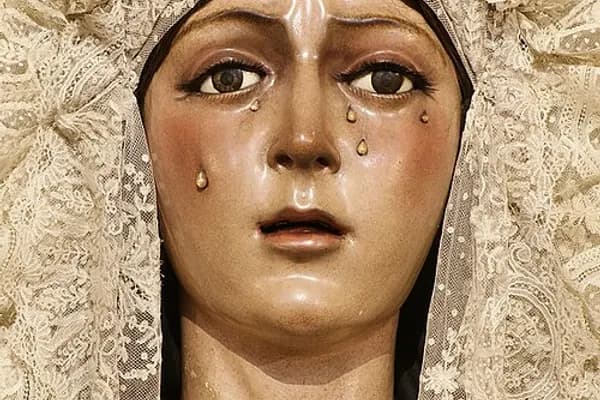
The neighbourhood of La Macarena lends its name to the sculpture of Virgin of Hope of Macarena, sometimes known simply as La Macarena. Many Sevillian women are named after this statue. This gave rise to the name of Los del Río's Spanish-language song "Macarena".
Monuments and landmarks
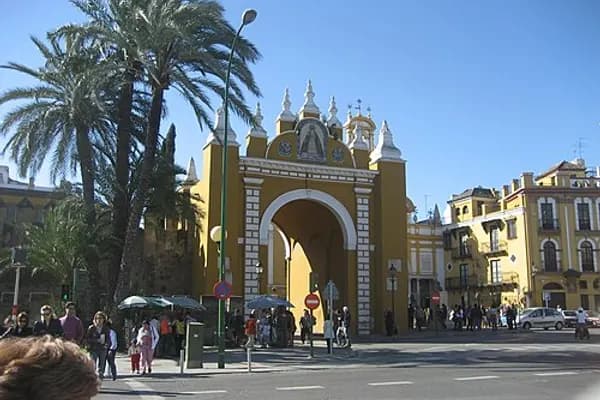
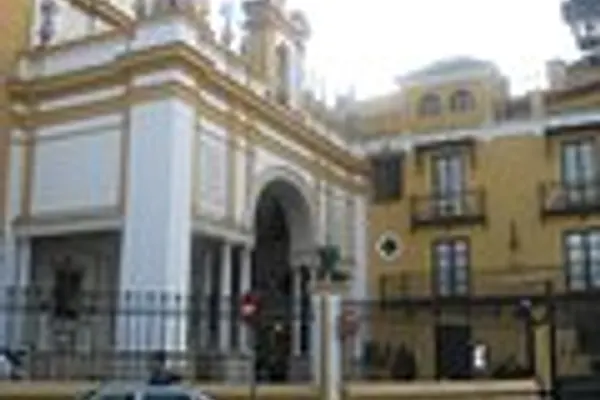
The neighborhood is known for housing the Basilica of Nuestra Señora de la Esperanza Macarena (Our Lady of Hope of Macarena), seat of the homonymous Holy Week brotherhood. The procession in the early morning of Good Friday is one of the largest, most popular, and fervent in the whole of Spain. The wooden statue of Our Lady of Hope Macarena dates from the 17th century. The Neobaroque Basilica was built by Aurelio Gómez Millán in the 20th century. Next to the church is placed the Museum and Treasure of La Macarena, where the huge artistic and sentimental patrimony of the brotherhood is exposed, working as a complete explanation about the famous Holy Week processions of Seville.
The largest remaining portion of the Almohad city walls is to be found in La Macarena neighbourhood. It spans two of the old city gates, from the monumental Puerta de la Macarena (Macarena gate) in the west, next to the Basilica, to the Puerta de Cordoba (Córdoba gate) in the east, and annex to San Hermenegildo church.
The Parliament of Andalusia is housed in the old building of the Hospital de las Cinco Llagas (literally, Hospital of the Five Holy Wounds). Dated from 16th century, it is one of the best examples of Andalusian Mannerism.
The Torre de los Perdigones (literally, Tower of the Pellets), placed in Los Perdigones gardens next to the Guadalquivir river, is the last remain of a foundry building from the late 19th century. Since 2007 it contains a panoramic room-sized camera obscura.
In the nearby Feria street is located the oldest marketplace of Seville, the Mercado de la Feria. The building dates from 18th century and the greengrocer's, butcher's and fishmonger's stalls constitute a traditional and picturesque scene of Seville daily life.
Transport
One can get to and from La Macarena by bus. The TUSSAM C3/C4 lines are circular, running clockwise and counter clockwise all along the periphery of the historical center, and have many stops in the neighborhood. Lines C1/C2 are also circular, and connect La Macarena with outer neighbourhoods, such as Nervión, La Cartuja and Los Remedios.
Gallery
References
Wikimedia Commons has media related to Macarena District.
37°24′15″N 5°59′25″W / 37.40417°N 5.99028°W / 37.40417; -5.99028
Encyclopedic content adapted from the Wikipedia article on Macarena, used under CC BY-SA 4.0.
What makes Macarena special
Macarena stands out among Seville’s neighborhoods for its distinctive character: authentic seville, north of the centre. Ranked #4 in Seville, it offers the kind of experience that defines a great city trip — a place where the streets themselves tell a story and every block rewards curiosity.
Best for
Our take on Macarena
Macarena occupies a distinctive place in Seville's neighborhood landscape. It is the kind of district that rewards travelers who venture beyond the obvious choices — quieter than the tourist-facing areas, richer in local character, and full of the small details that make a city trip memorable.
What makes Macarena worth the visit is the texture of daily life here. It is a neighborhood that functions for the people who live in it — not just for the visitors who pass through. The shops serve local needs, the restaurants feed local appetites, and the streets have a rhythm that reflects genuine community rather than tourism infrastructure. That is the quality our editors prize most, and Macarena has it in abundance.
Our editors recommend budgeting at least half a day here — enough time to walk the main streets, sit down for coffee, and discover the side streets where Macarena's real character lives.
Living in Macarena
Macarena is connected to the rest of Seville by public transit, and most visitors find it straightforward to reach from the city center or airport. Once you arrive, the neighborhood is best explored on foot — the scale is human and the streets reward wandering.
Day-to-day life in Macarena has the rhythm of a genuine residential neighborhood. You will find grocery stores, pharmacies, cafés with morning regulars, and the kind of small independent shops that only survive where locals support them. For visitors, this means the infrastructure you need — good coffee, a decent meal, a quiet place to sit — is always within a short walk.
Accommodation in Macarena ranges from boutique hotels to short-term rentals. We generally recommend staying within the neighborhood itself rather than commuting from a hotel elsewhere in Seville — the experience of waking up inside a great neighborhood is fundamentally different from visiting one as a day trip.
What locals say about Macarena
Long-term residents of Macarena tend to describe their neighborhood with a mix of pride and protectiveness. Like any district with genuine character, Macarena inspires loyalty — the kind of place people move to and never quite leave, or leave and spend years trying to get back to.
What locals appreciate most about Macarena is its consistency — the feeling that the neighborhood works the same way on a Tuesday morning as it does on a Saturday night. It is not a place that performs for visitors and then goes quiet. The rhythm is genuine, the community is real, and the daily experience of living here is what draws people and keeps them.
Compared to the more famous districts in Seville, Macarena has maintained a lower profile, which many residents consider an advantage. The neighborhood evolves gradually rather than being reshaped by sudden attention, and the result is a community that still feels organic rather than curated.
Visitor tips
- Macarena is located in Seville, Spain. The neighborhood is accessible by public transport, taxi, or rideshare from most parts of the city.
- Morning is often the best time to explore — the streets are quieter, the light is better for photography, and cafes are at their most welcoming.
- Wear comfortable walking shoes — the best way to experience Macarena is on foot, wandering the side streets and discovering what lies around each corner.
- Save the neighborhood's location on your phone before you arrive. Offline maps are especially useful for navigating the smaller side streets.