About the neighborhood
Garden square in Seville, Spain
The Alameda de Hércules (Hercules mall), or simply La Alameda, is a garden square or mall in Seville, southern Spain. Built in 1574, it was originally a promenaded public garden, named after the eight rows of white poplar trees (álamos in Spanish) that fill its central part. Located in the northern half of the city's casco antiguo (historic center), between the Guadalquivir River and the Macarena neighbourhood, it was the oldest public garden in Spain and Europe.
History
Before its urban transformation, the Alameda square was a fragment of the easternmost branch of the Guadalquivir River. It crossed the city center via Alameda towards Plaza Nueva, eventually ending in the El Arenal neighbourhood. After it was cut off by a dam in 1383, the river basin turned into a swampy pond fed by the aquifer and frequent rises of the river.
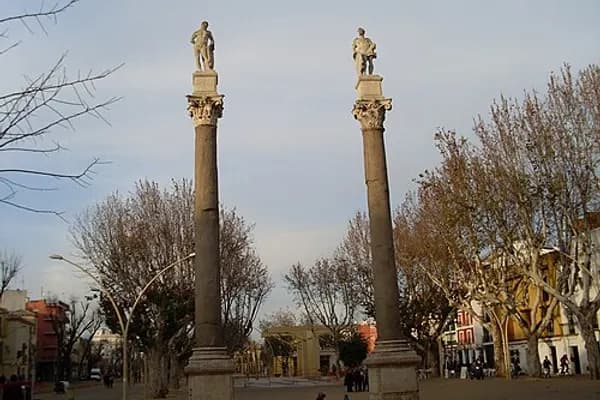
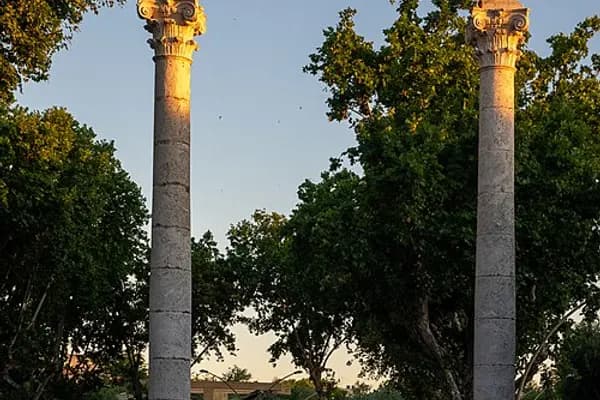
In 1574, the Count of Barajas further drained the water, building irrigation channels and fountains, and planting lines of waterside white poplar trees. Four columns were placed to mark off a promenade through the trees. In the beginning it was planned to take four columns from the remains of the Roman temple of Mármoles street, believed to be dedicated to Hercules. However, when moving the third column it fell apart, leaving the work temporarily unfinished. Consequently, the two columns at the southern end of the square are from the original Roman temple, whereas the northern columns are modern reproductions. As the culmination of this project, two sculptures were placed atop the two southern columns: Hercules (mythological founder of Seville) and Julius Caesar (referred to as the restorer of the city during Roman rule). In the second half of the eighteenth century, two additional statues of lions with shields, representing Seville and Spain, were placed on the northern columns.
In the late 19th century, the Alameda was a meeting place of the upper-classes, with many elegant theaters and kiosks. However, after the Spanish Civil War, the Alameda began to suffer a progressive deterioration, and became one of the poorest neighbourhoods of Seville, troubled by prostitution and drugs. According to data from 1989, the area housed up to 35 brothels.
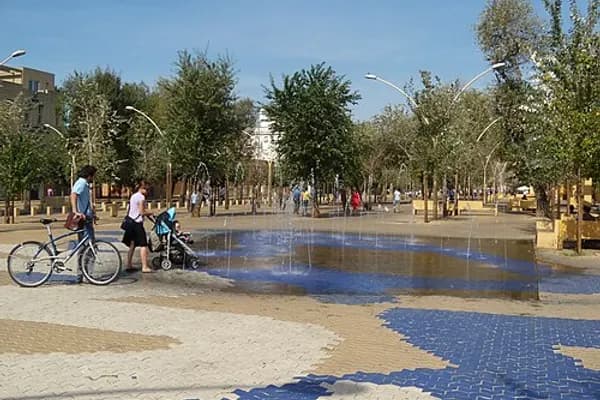
A slow recovery began during the early 21st century, then public redevelopment funded by the city council totally renewed La Alameda in 2006-2008. Road traffic was limited, and a number of kiosks, benches and fountains installed. The promenade was also restored with the planting of many white poplar and European hackberry trees. La Alameda is now one of the main nightlife centers of Seville.
Despite flood-control infrastructure built in the earlier transformation of the square during the 16th and 17th centuries, La Alameda remained as one of the most floodable areas of the city until the second half of the 20th century. Accordingly, during the Great Plague of 1649 it was reported that the Alameda was so flooded that people crossed the square on boats. Recently engineered changes in the river-channel system of the Guadalquivir river, as well as the installation of a huge underground cistern to retain stormwater, have improved drainage and prevented new flooding events in the area.
Monuments and buildings
Apart from the Roman columns that head the promenade, some other notable features are located in La Alameda.
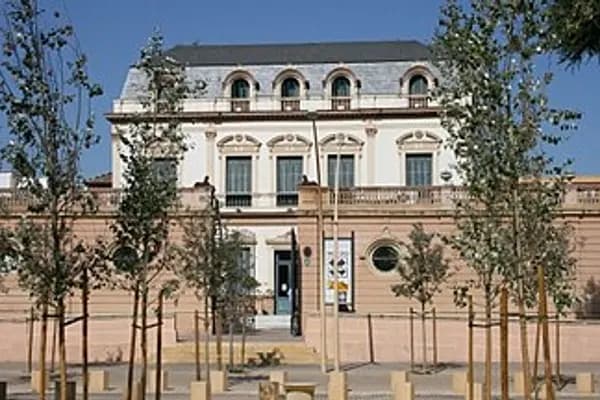
On its western side is found the Casa de las Sirenas (literally, "mermaid's house") a 19th-century French-inspiration palace that is used today as a civic center hosting expositions, workshops, classes, and cultural activities for the neighbourhood.
Placed at the northern end, the chapel of Nuestra Señora del Carmen y Cruz del Rodeo is an important landmark in the neighbourhood. It was an important source of inspiration for José Zorrilla's play Don Juan Tenorio, since here is the convent where the saintly Doña Inés was cloistered.
Also quite close to the Alameda on the street dedicated to the restorer of La Alameda, the Count of Barajas (Conde de Barajas), is the house where the romantic writer Gustavo Adolfo Bécquer was born.
Nightlife
The neighborhood is now known as a key nightlife center of Seville for its vibrant alternative and diverse atmosphere. The entertainment options in La Alameda range from Heavy Metal or Funk music performances to live Flamenco. Apart from disco-pubs, many Nouvelle Cuisine and traditional restaurants, tapas and cocktail bars, cafés and Arab-style tearooms are found in and around the promenade. La Alameda is also the gay-friendly quarter of Seville, with gay pubs and discotèques spotting the area.
References
Sources
Léon Vela, José (2000). La Alameda de Hércules y el centro urbano de Sevilla: hacia un reequilibrio del casco antiguo. Seville: University of Seville. ISBN84-472-0584-3.
Albardonendo Freire, Antonio José (2002). El urbanismo de Sevilla durante el reinado de Felipe II. Seville: Guadalquivir. pp.191–208.
External links
Wikimedia Commons has media related to Alameda de Hércules.
37°23′55.77″N 5°59′38.88″W / 37.3988250°N 5.9941333°W / 37.3988250; -5.9941333
Ayuntamiento de Sevilla
Columnas
Conocer la Alameda de Hércules
Website for Alameda de Hércules
Encyclopedic content adapted from the Wikipedia article on Alameda, used under CC BY-SA 4.0.
What makes Alameda special
Alameda stands out among Seville’s neighborhoods for its distinctive character: seville's bohemian square. Ranked #3 in Seville, it offers the kind of experience that defines a great city trip — a place where the streets themselves tell a story and every block rewards curiosity.
Best for
Our take on Alameda
Alameda is one of the strongest neighborhoods in Seville, and it consistently appears in our editors' personal favorites lists. It may not always get the same attention as the city's most famous district, but among travelers who know Seville well, Alameda is often the first recommendation.
What makes Alameda worth the visit is the texture of daily life here. It is a neighborhood that functions for the people who live in it — not just for the visitors who pass through. The shops serve local needs, the restaurants feed local appetites, and the streets have a rhythm that reflects genuine community rather than tourism infrastructure. That is the quality our editors prize most, and Alameda has it in abundance.
Our editors recommend budgeting at least half a day here — enough time to walk the main streets, sit down for coffee, and discover the side streets where Alameda's real character lives.
Living in Alameda
Alameda is connected to the rest of Seville by public transit, and most visitors find it straightforward to reach from the city center or airport. Once you arrive, the neighborhood is best explored on foot — the scale is human and the streets reward wandering.
Day-to-day life in Alameda has the rhythm of a genuine residential neighborhood. You will find grocery stores, pharmacies, cafés with morning regulars, and the kind of small independent shops that only survive where locals support them. For visitors, this means the infrastructure you need — good coffee, a decent meal, a quiet place to sit — is always within a short walk.
Accommodation in Alameda ranges from boutique hotels to short-term rentals. We generally recommend staying within the neighborhood itself rather than commuting from a hotel elsewhere in Seville — the experience of waking up inside a great neighborhood is fundamentally different from visiting one as a day trip.
What locals say about Alameda
Long-term residents of Alameda tend to describe their neighborhood with a mix of pride and protectiveness. Like any district with genuine character, Alameda inspires loyalty — the kind of place people move to and never quite leave, or leave and spend years trying to get back to.
What locals appreciate most about Alameda is its consistency — the feeling that the neighborhood works the same way on a Tuesday morning as it does on a Saturday night. It is not a place that performs for visitors and then goes quiet. The rhythm is genuine, the community is real, and the daily experience of living here is what draws people and keeps them.
Compared to the more famous districts in Seville, Alameda has maintained a lower profile, which many residents consider an advantage. The neighborhood evolves gradually rather than being reshaped by sudden attention, and the result is a community that still feels organic rather than curated.
Visitor tips
- Alameda is located in Seville, Spain. The neighborhood is accessible by public transport, taxi, or rideshare from most parts of the city.
- Morning is often the best time to explore — the streets are quieter, the light is better for photography, and cafes are at their most welcoming.
- Wear comfortable walking shoes — the best way to experience Alameda is on foot, wandering the side streets and discovering what lies around each corner.
- Save the neighborhood's location on your phone before you arrive. Offline maps are especially useful for navigating the smaller side streets.