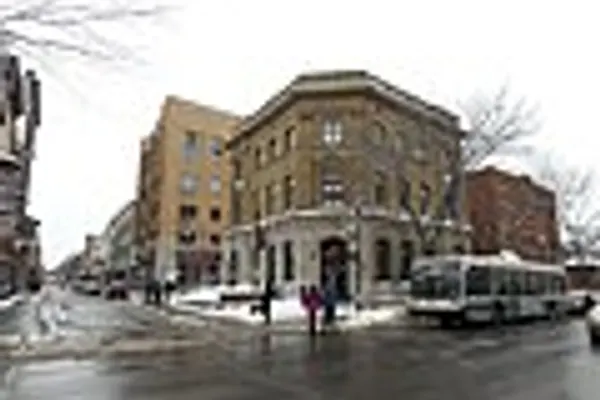
About the neighborhood
Neighbourhood in Quebec City, Canada
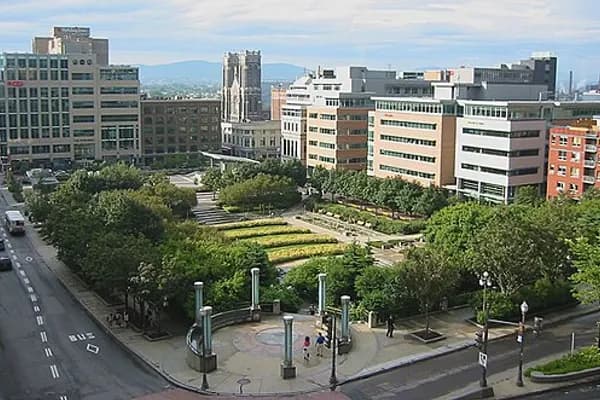
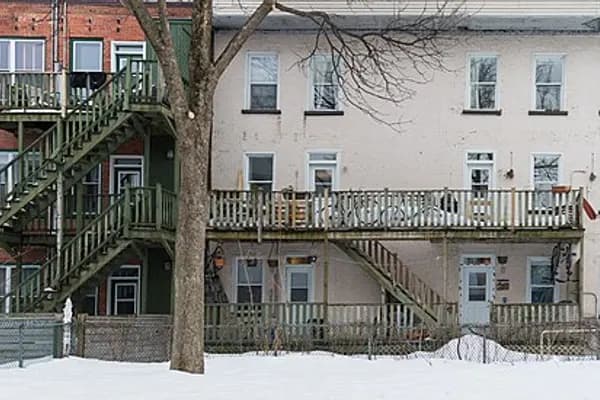
Saint-Roch (French pronunciation: sɛ̃ ʁɔk ) is a downtown neighbourhood in the borough of La Cité in Quebec City, Quebec, Canada. It is the central business district. Once a working-class quarter, some of its parts have been gentrified in recent years.
History
Saint-Roch was first settled in 1620 by the Recollects, who built a small church dedicated to Saint Roch. Today the Église Saint-Roch is the largest in Quebec City. Later, a few houses were built near what is now the Gare du Palais. In the first half of the 19th century, Saint-Roch was a shipbuilding site. Later, the district saw the development of retail and manufacturing activity. From the mid-19th century to the 1960s, rue Saint-Joseph was the main commercial street in Quebec City. Part of the street was covered with a roof of concrete and plexiglass in 1974. The decision to progressively demolish the roof (and thus the mall) was taken in the 1990s, and the destruction was completed in 2007.
During the second half of the 20th century, the district fell into decline and was considered the most deprived in the city. However, Since 2000, $380 million have been invested in the district to renovate and reconstruct most of the buildings in rue Saint-Joseph.
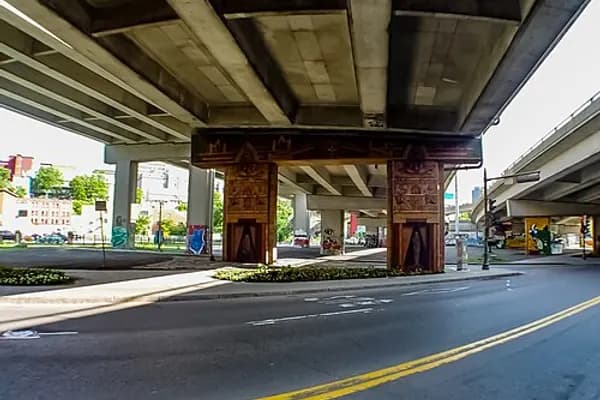
Many working-class residential buildings, representing one tenth of the area of Saint-Roch, were demolished in 1972 to make way for an overpass of highway 440 (Dufferin-Montmorency segment), as a way to accommodate the post-Second World War suburban expansion and automobile use. The empty lot on which the concrete pillars were built was used for public art, and later for illegal graffiti and authorized large-scale trompe-l'œil murals. This unofficial area was called Îlot Fleurie (fr), because of nearby Fleurie street. It was also a socializing place for protesters during the 2001 Summit of the Americas, as well as where the Cirque du Soleil free show Les Chemins invisibles was held in the summers between 2010 and 2012.
Gallery
References
46°49′00″N 71°13′40″W / 46.81667°N 71.22778°W / 46.81667; -71.22778
Encyclopedic content adapted from the Wikipedia article on Saint-Roch, used under CC BY-SA 4.0.
What makes Saint-Roch special
Saint-Roch stands out among Quebec City’s neighborhoods for its distinctive character: quebec city's reborn industrial quarter. Ranked #2 in Quebec City, it offers the kind of experience that defines a great city trip — a place where the streets themselves tell a story and every block rewards curiosity.
Best for
Our take on Saint-Roch
Saint-Roch is one of the strongest neighborhoods in Quebec City, and it consistently appears in our editors' personal favorites lists. It may not always get the same attention as the city's most famous district, but among travelers who know Quebec City well, Saint-Roch is often the first recommendation.
What makes Saint-Roch exceptional is the density of its cultural life. Art galleries, independent bookshops, small theaters, and creative studios are woven into the fabric of the neighborhood rather than clustered in a single zone. You encounter culture here by accident, which is how the best cultural experiences always happen.
Our editors recommend budgeting at least half a day here — enough time to walk the main streets, sit down for coffee, and discover the side streets where Saint-Roch's real character lives.
Living in Saint-Roch
Saint-Roch is connected to the rest of Quebec City by public transit, and most visitors find it straightforward to reach from the city center or airport. Once you arrive, the neighborhood is best explored on foot — the scale is human and the streets reward wandering.
Day-to-day life in Saint-Roch has the rhythm of a genuine residential neighborhood. You will find grocery stores, pharmacies, cafés with morning regulars, and the kind of small independent shops that only survive where locals support them. For visitors, this means the infrastructure you need — good coffee, a decent meal, a quiet place to sit — is always within a short walk.
Accommodation in Saint-Roch ranges from boutique hotels to short-term rentals. We generally recommend staying within the neighborhood itself rather than commuting from a hotel elsewhere in Quebec City — the experience of waking up inside a great neighborhood is fundamentally different from visiting one as a day trip.
What locals say about Saint-Roch
Long-term residents of Saint-Roch tend to describe their neighborhood with a mix of pride and protectiveness. Like any district with genuine character, Saint-Roch inspires loyalty — the kind of place people move to and never quite leave, or leave and spend years trying to get back to.
The creative community in Saint-Roch is genuine, not aspirational. Residents include working artists, writers, musicians, and designers who chose the neighborhood because it supported their work — affordable studio space, a community that values craft, and enough foot traffic to sustain independent galleries and shops.
Like any neighborhood that has earned attention, Saint-Roch is navigating the tension between popularity and preservation. Rents have risen, new businesses have arrived, and long-time residents occasionally grumble that the neighborhood is not what it was. But the fundamentals — the walkability, the food, the community — remain strong, and most locals we speak to believe the neighborhood is still gaining more than it is losing.
Visitor tips
- Saint-Roch is located in Quebec City, Canada. The neighborhood is accessible by public transport, taxi, or rideshare from most parts of the city.
- Morning is often the best time to explore — the streets are quieter, the light is better for photography, and cafes are at their most welcoming.
- Wear comfortable walking shoes — the best way to experience Saint-Roch is on foot, wandering the side streets and discovering what lies around each corner.
- Save the neighborhood's location on your phone before you arrive. Offline maps are especially useful for navigating the smaller side streets.