About the neighborhood
Château in Strasbourg, France
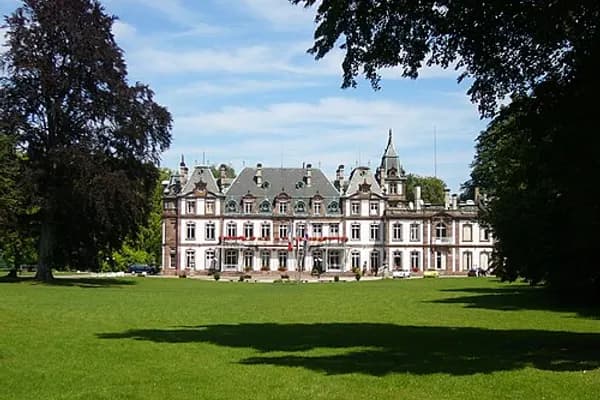
Château de Pourtalès (or Château de Robertsau) is a château situated in the Robertsau district of Strasbourg, France. It's dated to the 18th century and named after the Pourtalès family.
History
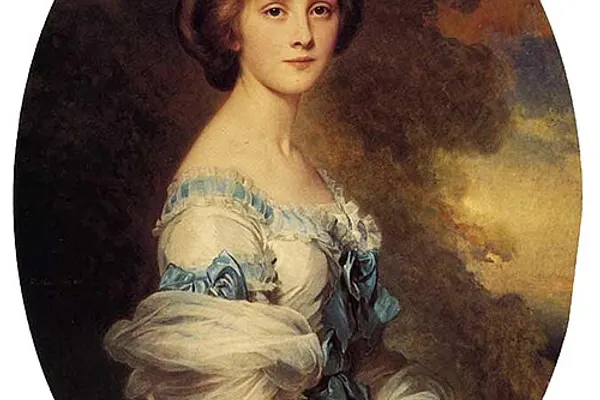
The Château de Pourtalès was built around 1750 as a small manor house in the Robertsau neighborhood by Joseph Guérault, then contractor of the works of the king in charge of the construction of the fortifications of Strasbourg. In 1802, Baron Paul-Athanase Renouard de Bussierre, who was from a wealthy industrial family from Strasbourg, bought the house and expanded the manor into a gracious Château. Between 1870 and 1914, the château was the residence of Comtesse Mélanie de Pourtalès (née de Bussière) and her husband, Count Edmond de Pourtalès (a son of the Swiss banker and art collector, Count James-Alexandre de Pourtalès). Comtesse Mélanie, a renowned French salonnière and Lady-in-waiting to Empress Eugénie, was the only surviving child of Baron Alfred Renouard de Bussière, head of the Royal Mint of Paris.
During the Franco-Prussian War of 1870, the château suffered fire damage. Prominent guests of the château included European aristocracy and members of the arts, including Albert Schweitzer, Franz Liszt, Napoléon III and his wife, the Empress Eugénie, the Princes of Belgium and Russia, Ludwig I of Bavaria, the Grand Duke of Baden and the Princess Metternich.
After Comtesse Mélanie's death in 1914, the château was inherited by her youngest daughter, Agnès de Pourtalès, who was married to Henri, Marquis de Löys-Chandieu (who had been engaged to Victoria Sackville-West before her marriage to Baron Sackville).
During World War I, it was occupied by the Germans, and later liberated by the Americans. The owners of the château in 1939 closed the property and during World War II, it was confiscated by the Germans and used to house high-ranking officers before it was occupied by Allied Forces for a short period following the war. After the War, it was the site an Eastern European University for a short time, but was closed again following the construction of the Berlin Wall.
In 1972, the nearly falling down château was bought by Dr. Walter Leibrecht, the founder of Schiller International University, to house students of the university. For more than 25 years, Schiller's students resided in the château.
Hotel Château de Pourtalès
In 2009, the Château de Pourtalès was converted to a hotel and has housed many Members of the European Parliament during the session.
References
External links
Wikimedia Commons has media related to Château de Pourtalès.
Château de Pourtalès website
48°36′30″N 7°48′00″E / 48.60833°N 7.80000°E / 48.60833; 7.80000
Encyclopedic content adapted from the Wikipedia article on Robertsau, used under CC BY-SA 4.0.
What makes Robertsau special
Robertsau stands out among Strasbourg’s neighborhoods for its distinctive character: strasbourg's leafy diplomatic district. Ranked #5 in Strasbourg, it offers the kind of experience that defines a great city trip — a place where the streets themselves tell a story and every block rewards curiosity.
Best for
Our take on Robertsau
Robertsau occupies a distinctive place in Strasbourg's neighborhood landscape. It is the kind of district that rewards travelers who venture beyond the obvious choices — quieter than the tourist-facing areas, richer in local character, and full of the small details that make a city trip memorable.
What makes Robertsau worth the visit is the texture of daily life here. It is a neighborhood that functions for the people who live in it — not just for the visitors who pass through. The shops serve local needs, the restaurants feed local appetites, and the streets have a rhythm that reflects genuine community rather than tourism infrastructure. That is the quality our editors prize most, and Robertsau has it in abundance.
Our editors recommend budgeting at least half a day here — enough time to walk the main streets, sit down for coffee, and discover the side streets where Robertsau's real character lives.
Living in Robertsau
Robertsau is connected to the rest of Strasbourg by public transit, and most visitors find it straightforward to reach from the city center or airport. Once you arrive, the neighborhood is best explored on foot — the scale is human and the streets reward wandering.
Day-to-day life in Robertsau has the rhythm of a genuine residential neighborhood. You will find grocery stores, pharmacies, cafés with morning regulars, and the kind of small independent shops that only survive where locals support them. For visitors, this means the infrastructure you need — good coffee, a decent meal, a quiet place to sit — is always within a short walk.
Accommodation in Robertsau ranges from boutique hotels to short-term rentals. We generally recommend staying within the neighborhood itself rather than commuting from a hotel elsewhere in Strasbourg — the experience of waking up inside a great neighborhood is fundamentally different from visiting one as a day trip.
What locals say about Robertsau
Long-term residents of Robertsau tend to describe their neighborhood with a mix of pride and protectiveness. Like any district with genuine character, Robertsau inspires loyalty — the kind of place people move to and never quite leave, or leave and spend years trying to get back to.
What locals appreciate most about Robertsau is its consistency — the feeling that the neighborhood works the same way on a Tuesday morning as it does on a Saturday night. It is not a place that performs for visitors and then goes quiet. The rhythm is genuine, the community is real, and the daily experience of living here is what draws people and keeps them.
Compared to the more famous districts in Strasbourg, Robertsau has maintained a lower profile, which many residents consider an advantage. The neighborhood evolves gradually rather than being reshaped by sudden attention, and the result is a community that still feels organic rather than curated.
Visitor tips
- Robertsau is located in Strasbourg, France. The neighborhood is accessible by public transport, taxi, or rideshare from most parts of the city.
- Morning is often the best time to explore — the streets are quieter, the light is better for photography, and cafes are at their most welcoming.
- Wear comfortable walking shoes — the best way to experience Robertsau is on foot, wandering the side streets and discovering what lies around each corner.
- Save the neighborhood's location on your phone before you arrive. Offline maps are especially useful for navigating the smaller side streets.