About the neighborhood
Island in Copenhagen, Denmark
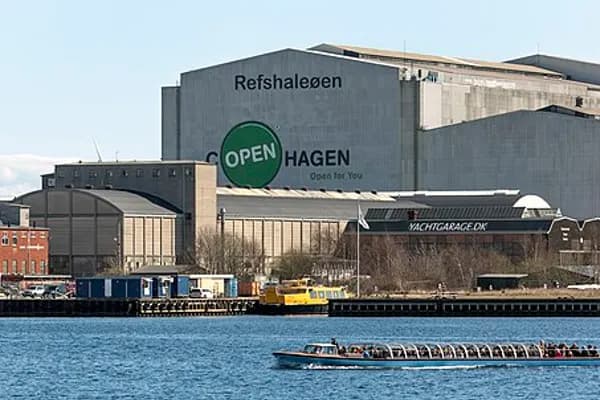
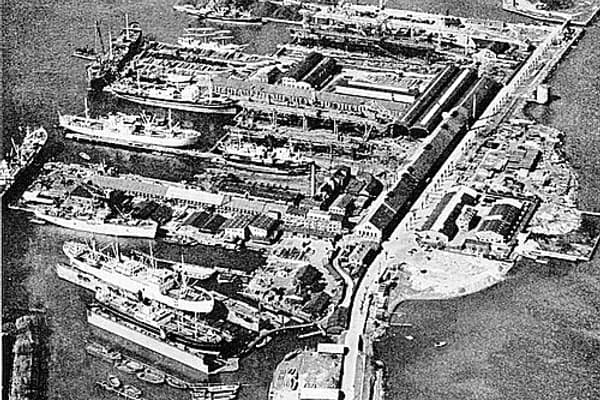
Refshaleøen is a former industrial site in the harbor of Copenhagen, Denmark, originally on a separate island but now annexed to the larger island of Amager. For more than a hundred years, it was home to the shipyard Burmeister & Wain, which closed in 1996.
History
In 1624, a block house was built on the original island, then much smaller, to guard the entrance to Copenhagen harbor together with St. Ann's Fortress (now Kastellet) on the coast just north of city. Reclamation increased the size of the island considerably in the 1870s when the port's waterways were made deeper. Burmeister & Wain established a shipyard on the island in 1871. At its height, the shipyard employed 8,000 people, and so appears as an icon of Danish industrial history.
Current use
Since the shipyard's bankruptcy in 1996, the area has undergone significant changes. The abandoned buildings are now home to a mixture of creative entrepreneurs, small craft, flea markets, storage facilities and cultural and recreational uses.
The residents include the theater Asterions Hus; the restaurant AMASS, opened by Mathew Orlando, former head chef at Noma; the art gallery YARD; and the creative community Skabelonloftet.
Since April 2011 there are again boats at the old shipyard, as Copenhagen Yacht Services opened the first Danish yacht garage on the island - an indoor marina for motorboats on the American model.
The volunteer spaceflight organization Copenhagen Suborbitals also operates on the former island.
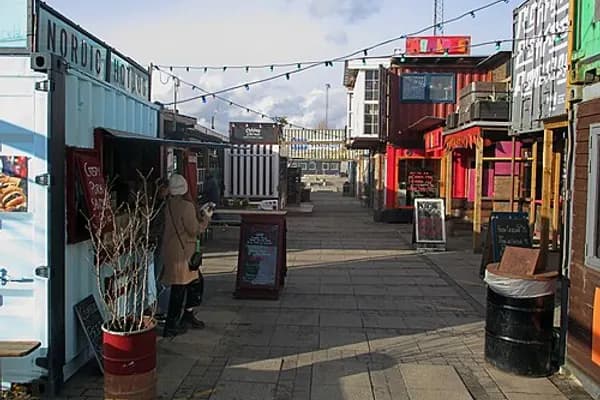
Since May 2018 Refshaleøen is the location of Northern Europe's largest street food market Reffen with 40 different restaurants and food startups selected every three years.
Redevelopment
Refshaleøen is today owned by the property company Ejendomsselskabet Refshaleøen A/S, owned by the four pension funds Sampension, PKA, PFA and Lønmodtagernes Dyrtidsfond. The site's surface area is approx. 500,000 m. In 2013, it entered into a collaboration with the energy company SE Big Blue and the Energy Academy on the island of Samsø, planning a climate-friendly neighbourhood.
Events
Refshaleøen is frequently used as a venue for events and festivals. Since 2010, the area has played host to the heavy metal festival Copenhell annually in June, the Final Party of the Copenhagen Distortion festival week, the electronic music festival EDM 2013, Scandinavian Reggae Festival, MAD Symposium, Refshaleøen Music Festival and Asteroiden theatre festival.
On 2 September 2013, Danmarks Radio (DR) announced that the Eurovision Song Contest 2014 would take place at B&W Hallerne. The surrounding area was transformed into Eurovision Island, an Olympic Park-style complex which housed amenities and the press centre for the entirety of the contest. Barbadian singer-songwriter Rihanna performed on the island in 2016 during her Anti World Tour.
See also
Trekroner Fort
Prøvestenen
References
External links
Wikimedia Commons has media related to Refshaleøen.
Official website
Source
National selectionsRelated topics Category
55°41′31″N 12°37′01″E / 55.692°N 12.617°E / 55.692; 12.617
Encyclopedic content adapted from the Wikipedia article on Refshaleøen, used under CC BY-SA 4.0.
What makes Refshaleøen special
Refshaleøen stands out among Copenhagen’s neighborhoods for its distinctive character: copenhagen's waterfront future. Ranked #4 in Copenhagen, it offers the kind of experience that defines a great city trip — a place where the streets themselves tell a story and every block rewards curiosity.
Best for
Our take on Refshaleøen
Refshaleøen occupies a distinctive place in Copenhagen's neighborhood landscape. It is the kind of district that rewards travelers who venture beyond the obvious choices — quieter than the tourist-facing areas, richer in local character, and full of the small details that make a city trip memorable.
The waterfront presence in Refshaleøen shapes everything about the neighborhood's character — the light, the air, the pace of life, the kind of restaurants that thrive here. But what elevates it beyond a simple beach district is the depth of the neighborhood behind the waterfront: the residential streets, the local markets, the café culture that exists independent of the views.
Our editors recommend budgeting at least half a day here — enough time to walk the main streets, sit down for coffee, and discover the side streets where Refshaleøen's real character lives.
Living in Refshaleøen
Refshaleøen is connected to the rest of Copenhagen by public transit, and most visitors find it straightforward to reach from the city center or airport. Once you arrive, the neighborhood is best explored on foot — the scale is human and the streets reward wandering.
Day-to-day life in Refshaleøen has the rhythm of a genuine residential neighborhood. You will find grocery stores, pharmacies, cafés with morning regulars, and the kind of small independent shops that only survive where locals support them. For visitors, this means the infrastructure you need — good coffee, a decent meal, a quiet place to sit — is always within a short walk.
Accommodation in Refshaleøen ranges from boutique hotels to short-term rentals. We generally recommend staying within the neighborhood itself rather than commuting from a hotel elsewhere in Copenhagen — the experience of waking up inside a great neighborhood is fundamentally different from visiting one as a day trip.
What locals say about Refshaleøen
Long-term residents of Refshaleøen tend to describe their neighborhood with a mix of pride and protectiveness. Like any district with genuine character, Refshaleøen inspires loyalty — the kind of place people move to and never quite leave, or leave and spend years trying to get back to.
What locals appreciate most about Refshaleøen is its consistency — the feeling that the neighborhood works the same way on a Tuesday morning as it does on a Saturday night. It is not a place that performs for visitors and then goes quiet. The rhythm is genuine, the community is real, and the daily experience of living here is what draws people and keeps them.
Compared to the more famous districts in Copenhagen, Refshaleøen has maintained a lower profile, which many residents consider an advantage. The neighborhood evolves gradually rather than being reshaped by sudden attention, and the result is a community that still feels organic rather than curated.
Visitor tips
- Refshaleøen is located in Copenhagen, Denmark. The neighborhood is accessible by public transport, taxi, or rideshare from most parts of the city.
- Morning is often the best time to explore — the streets are quieter, the light is better for photography, and cafes are at their most welcoming.
- Wear comfortable walking shoes — the best way to experience Refshaleøen is on foot, wandering the side streets and discovering what lies around each corner.
- Save the neighborhood's location on your phone before you arrive. Offline maps are especially useful for navigating the smaller side streets.