About the neighborhood
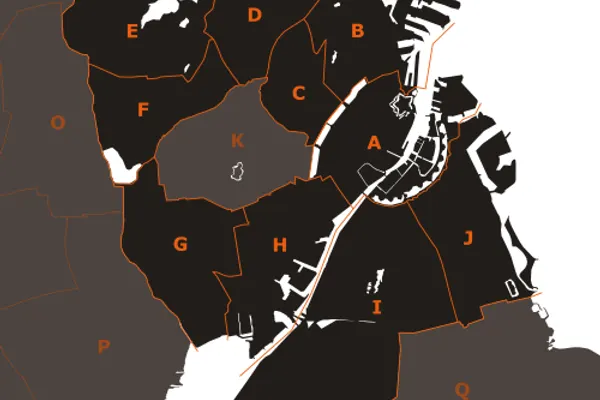
District of Copenhagen, Denmark
Beneath the surface of Copenhagen’s urban landscape, Nørrebro stands out as a tapestry of contrasts, where historic whispers intertwine with the pulse of modern multiculturalism. This district, once the pastoral fringe of the city, was transformed in the mid-19th century when the city’s expansion policies unleashed a wave of construction. Suddenly, what was once countryside erupted with an influx of workers eager to carve out new lives. Now, it’s home to around 72,000 residents, a vibrant mix that embodies the city's cosmopolitan spirit.
At the heart of Nørrebro, Nørrebrogade stretches like a vein, pulsating with life and diversity. It's touted as one of the busiest cycling streets in the world, a testament to the city’s commitment to sustainable transport and the lifestyle of its denizens. Here, you’ll find an eclectic array of shops and eateries that span the globe—Turkish kebab houses rub elbows with trendy cafés serving Nordic brunch staples and artisanal bakeries. Venture slightly off the main thoroughfare, and you’ll stumble upon the historic Assistens Cemetery, not merely a resting place for luminaries like Søren Kierkegaard and H.C. Andersen, but also a serene green space where locals gather to unwind amidst gravestones and nature.
The neighborhood’s character is as layered as its demographics. Nearly one in six residents holds a non-Danish passport, and the streets hum with conversations in a multitude of languages. This cultural mélange is palpable, especially during the summer months when vibrant street festivals and pop-up markets breathe even more life into the area. It’s a place where traditional Danish hygge meets the dynamic energy of global influences—one moment you might be sipping a locally brewed craft beer, and the next, savoring a spicy Thai curry, all within a few blocks.
Recognized as one of the coolest neighborhoods in the world by a Time Out poll, Nørrebro is not just a destination; it’s an experience. Whether you’re wandering its lively streets, soaking in its rich history, or indulging in its culinary offerings, you'll find that Nørrebro isn't just a part of Copenhagen—it’s a compelling world of its own, beckoning visitors to explore its many layers.
Encyclopedic content adapted from the Wikipedia article on Nørrebro, used under CC BY-SA 4.0.
What makes Nørrebro special
Nørrebro stands out among Copenhagen’s neighborhoods for its distinctive character: copenhagen's most cosmopolitan district. It tops our ranking of the best neighborhoods in Copenhagen, it offers the kind of experience that defines a great city trip — a place where the streets themselves tell a story and every block rewards curiosity.
Best for
Our take on Nørrebro
Nørrebro is the neighborhood we send friends to first when they visit Copenhagen. It earns the top spot in our ranking not because it is the most famous district in the city, but because it delivers the most complete neighborhood experience — the kind of place where every block rewards curiosity and every return visit reveals something new.
What makes Nørrebro worth the visit is the texture of daily life here. It is a neighborhood that functions for the people who live in it — not just for the visitors who pass through. The shops serve local needs, the restaurants feed local appetites, and the streets have a rhythm that reflects genuine community rather than tourism infrastructure. That is the quality our editors prize most, and Nørrebro has it in abundance.
Our editors recommend budgeting at least half a day here — enough time to walk the main streets, sit down for coffee, and discover the side streets where Nørrebro's real character lives.
Living in Nørrebro
Nørrebro is connected to the rest of Copenhagen by public transit, and most visitors find it straightforward to reach from the city center or airport. Once you arrive, the neighborhood is best explored on foot — the scale is human and the streets reward wandering.
Day-to-day life in Nørrebro has the rhythm of a genuine residential neighborhood. You will find grocery stores, pharmacies, cafés with morning regulars, and the kind of small independent shops that only survive where locals support them. For visitors, this means the infrastructure you need — good coffee, a decent meal, a quiet place to sit — is always within a short walk.
Accommodation in Nørrebro ranges from boutique hotels to short-term rentals. We generally recommend staying within the neighborhood itself rather than commuting from a hotel elsewhere in Copenhagen — the experience of waking up inside a great neighborhood is fundamentally different from visiting one as a day trip.
What locals say about Nørrebro
Long-term residents of Nørrebro tend to describe their neighborhood with a mix of pride and protectiveness. Like any district with genuine character, Nørrebro inspires loyalty — the kind of place people move to and never quite leave, or leave and spend years trying to get back to.
What locals appreciate most about Nørrebro is its consistency — the feeling that the neighborhood works the same way on a Tuesday morning as it does on a Saturday night. It is not a place that performs for visitors and then goes quiet. The rhythm is genuine, the community is real, and the daily experience of living here is what draws people and keeps them.
Like any neighborhood that has earned attention, Nørrebro is navigating the tension between popularity and preservation. Rents have risen, new businesses have arrived, and long-time residents occasionally grumble that the neighborhood is not what it was. But the fundamentals — the walkability, the food, the community — remain strong, and most locals we speak to believe the neighborhood is still gaining more than it is losing.
Visitor tips
- Nørrebro is located in Copenhagen, Denmark. The neighborhood is accessible by public transport, taxi, or rideshare from most parts of the city.
- Morning is often the best time to explore — the streets are quieter, the light is better for photography, and cafes are at their most welcoming.
- Wear comfortable walking shoes — the best way to experience Nørrebro is on foot, wandering the side streets and discovering what lies around each corner.
- Save the neighborhood's location on your phone before you arrive. Offline maps are especially useful for navigating the smaller side streets.