About the neighborhood
Barrio in Montevideo Department, Uruguay
Punta Carretas is a barrio (neighbourhood or district) of Montevideo, Uruguay.
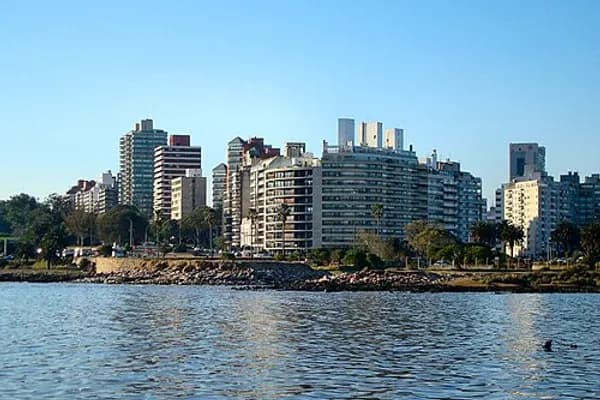
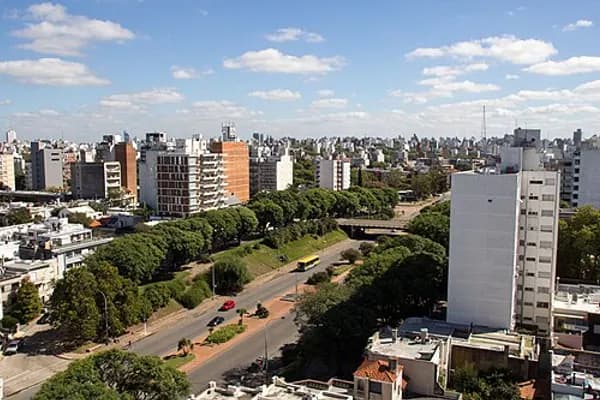
Politically located in the Municipality CH, it is an affluent neighborhood, with a high population density and a large number of high-rise apartment buildings. It is also an area with a large presence of exclusive private schools, international stores, haute cuisine restaurants and embassies.
Geography
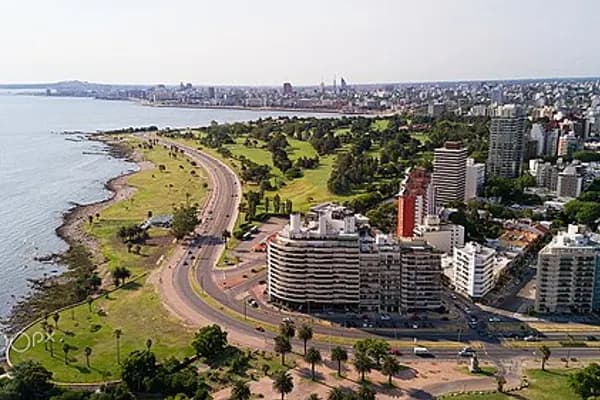
Punta Carretas borders Parque Rodó to the north and west, Pocitos to the east and northeast, and the coastline to the south. It is the southernmost neighborhood of the city.
The area is bounded by Artigas Boulevard, the Rambla to the south and west, Sarmiento Avenue to the north, and Calle Juan María Pérez to the east and northeast. Its main roads are José Ellauri and 21 de Septiembre avenues.
History
The area that the neighborhood currently occupies was named Punta Brava by sailors, due to a rock that stretches out underwater and caused several shipwrecks. Later, it was called Punta Carretas, due to the shape of said rock, which resembled a cart (Spanish: Carreta).
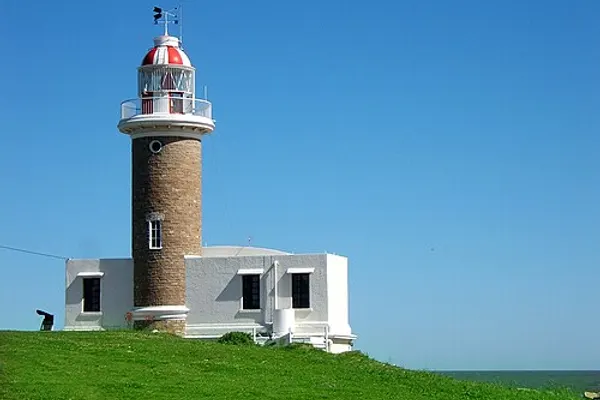
In the 1870s, the 21-meter Punta Brava Lighthouse was built, which during its early years was known as "La Farola". From August 1948 it worked on electricity.
Between 1880 and 1890 there was a hippodrome in the central area of the neighborhood, with a high-rise box with capacity for 1,500 people.
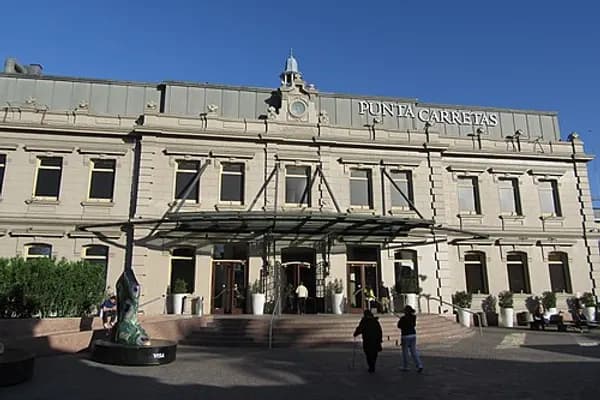
In 1915, a 400-cell prison was inaugurated to house common and high-risk prisoners, named Punta Carretas Penitentiary. In 1931 there was a jailbreak, in which a group of anarchists, including Miguel Arcángel Roscigna dug a tunnel from a business selling firewood and charcoal to the prison bathrooms so that the anarchist prisoners imprisoned for the assault on an currency exchange office in Centro, could escape. In September 1971, more than 110 prisoners from the far-left urban guerrilla group Tupamaros – National Liberation Movement escaped through a 40-meter tunnel.
Despite being an area close to the central business district of the city, for much of the first half of the 20th century it was sparsely populated, since it was associated with poor living conditions due to the existence of a large detention center. However, starting in the 50s, people began to inhabit its surroundings, which gave birth to the district of Punta Carretas.
After the end of the civil-military dictatorship, the prison was closed in 1986. In 1991 the building was bought by a real estate consortium that was in charge of remodeling it, and in 1994 the Punta Carretas Shopping mall was inaugurated. This brought in the opening of international chain hotels, haute cuisine restaurants, international clothing brands, new local business and high-rise apartments buildings to the area, which had positive impact on real estate prices, which turned the neighborhood into an upper-middle-class area of the city.
Landmarks
In the western zone is the Parque Rodó and the Club de Golf del Uruguay founded in 1922, on the land where a hippodrome operated in the last decades of the 19th century.
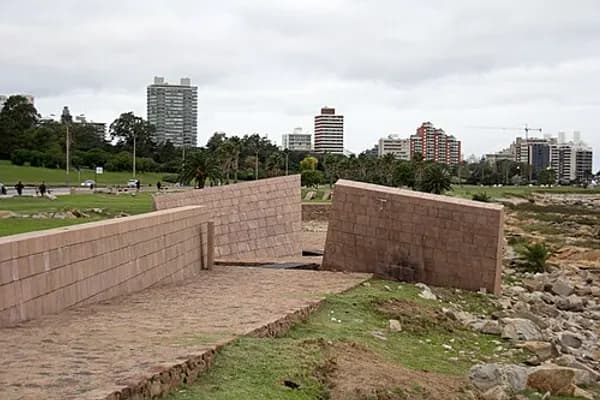
On the Rambla (seaside avenue) there are a large number of apartment buildings, as well as some monuments, such as a statue of Mahatma Gandhi, a Holocaust memorial –built in 1994– and the Pittamiglio Castle, a building built by Humberto Pittamiglio from 1911 until his death in 1966, which combines Renaissance styles, and has many characteristics of medieval architecture. In Punta Brava, the southernmost point of the neighborhood, stands the homonymous lighthouse.
In the central area is Avenida Ellauri, the main road in the neighborhood. Throughout its extension, most businesses are concentrated, as well as the Punta Carretas Shopping mall and the Villa Biarritz Park, a green space in the middle of a highly urbanized area with a high population density, and where a flea market is held.
On Artigas Boulevard stands a neoclassical palace that houses the headquarters of Parva Domus, a civil, recreational and cultural association created in 1878, which for entertainment purposes proclaims itself as a micronational republic. In addition, in the neighborhood is the Zorrilla Museum, which exhibits belongings and documents of the Uruguayan poet Juan Zorrilla de San Martín. Inaugurated in 1943, sculptures by his son, José Luis, are also on display.
Places of worship
Parish Church of Our Lady of the Sacred Heart, popularly known as "Iglesia de Punta Carretas" (Roman Catholic)
See also
Barrios of Montevideo
References
External links
Wikimedia Commons has media related to Punta Carretas.
Intendencia de Montevideo / Useful data / Punta Carretas
Intendencia de Montevideo / Parques y Plazas / Parque Rodó (about the park, not the barrio)
Revista Raices / Historia del barrio Punta Carretas y Parque Rodó
Encyclopedic content adapted from the Wikipedia article on Punta Carretas, used under CC BY-SA 4.0.
What makes Punta Carretas special
Punta Carretas stands out among Montevideo’s neighborhoods for its distinctive character: montevideo's leafy peninsula. Ranked #3 in Montevideo, it offers the kind of experience that defines a great city trip — a place where the streets themselves tell a story and every block rewards curiosity.
Best for
Our take on Punta Carretas
Punta Carretas is one of the strongest neighborhoods in Montevideo, and it consistently appears in our editors' personal favorites lists. It may not always get the same attention as the city's most famous district, but among travelers who know Montevideo well, Punta Carretas is often the first recommendation.
What makes Punta Carretas worth the visit is the texture of daily life here. It is a neighborhood that functions for the people who live in it — not just for the visitors who pass through. The shops serve local needs, the restaurants feed local appetites, and the streets have a rhythm that reflects genuine community rather than tourism infrastructure. That is the quality our editors prize most, and Punta Carretas has it in abundance.
Our editors recommend budgeting at least half a day here — enough time to walk the main streets, sit down for coffee, and discover the side streets where Punta Carretas's real character lives.
Living in Punta Carretas
Punta Carretas is connected to the rest of Montevideo by public transit, and most visitors find it straightforward to reach from the city center or airport. Once you arrive, the neighborhood is best explored on foot — the scale is human and the streets reward wandering.
Day-to-day life in Punta Carretas has the rhythm of a genuine residential neighborhood. You will find grocery stores, pharmacies, cafés with morning regulars, and the kind of small independent shops that only survive where locals support them. For visitors, this means the infrastructure you need — good coffee, a decent meal, a quiet place to sit — is always within a short walk.
Accommodation in Punta Carretas ranges from boutique hotels to short-term rentals. We generally recommend staying within the neighborhood itself rather than commuting from a hotel elsewhere in Montevideo — the experience of waking up inside a great neighborhood is fundamentally different from visiting one as a day trip.
What locals say about Punta Carretas
Long-term residents of Punta Carretas tend to describe their neighborhood with a mix of pride and protectiveness. Like any district with genuine character, Punta Carretas inspires loyalty — the kind of place people move to and never quite leave, or leave and spend years trying to get back to.
What locals appreciate most about Punta Carretas is its consistency — the feeling that the neighborhood works the same way on a Tuesday morning as it does on a Saturday night. It is not a place that performs for visitors and then goes quiet. The rhythm is genuine, the community is real, and the daily experience of living here is what draws people and keeps them.
Compared to the more famous districts in Montevideo, Punta Carretas has maintained a lower profile, which many residents consider an advantage. The neighborhood evolves gradually rather than being reshaped by sudden attention, and the result is a community that still feels organic rather than curated.
Visitor tips
- Punta Carretas is located in Montevideo, Uruguay. The neighborhood is accessible by public transport, taxi, or rideshare from most parts of the city.
- Morning is often the best time to explore — the streets are quieter, the light is better for photography, and cafes are at their most welcoming.
- Wear comfortable walking shoes — the best way to experience Punta Carretas is on foot, wandering the side streets and discovering what lies around each corner.
- Save the neighborhood's location on your phone before you arrive. Offline maps are especially useful for navigating the smaller side streets.