About the neighborhood
Barrio in Montevideo Department, Uruguay
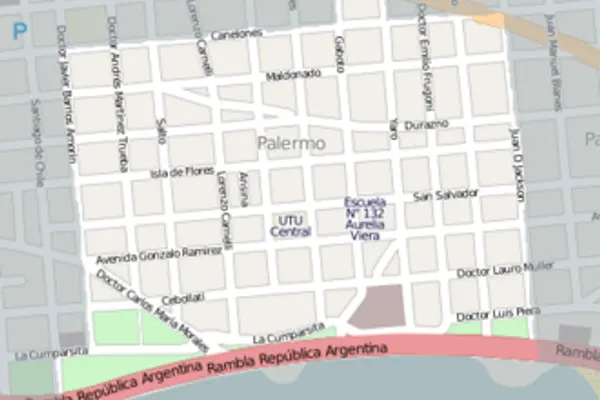
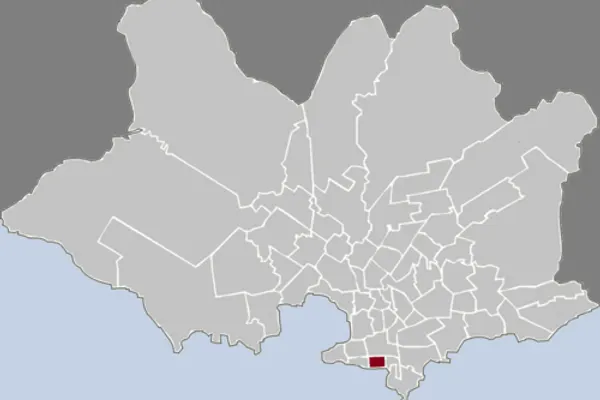
Palermo is a barrio (neighbourhood or district) of Montevideo, Uruguay. It borders Barrio Sur to the west, Cordón to the north and Parque Rodó to the east, while to the south it borders the coastline.
Politically located in Municipality B of Montevideo, it is together with Barrio Sur the center of the Uruguayan carnival and a melting pot of different cultures since the end of the 19th century. Named after the Italian city Palermo, it is the site of the headquarters of the Latin American Integration Association (ALADI) and the Embassy of the United States.
History
The neighborhood emerged in the second half of the 19th century with the expansion of the Barrio Sur towards the east of the Central Cemetery of Montevideo. It was an unattractive area due to the storms that hit it and the proximity to the cemetery, so low-income people settled there. The area began to be called Palermo in the 1860s due to the existence of a store owned by Sicilian immigrants, whose sign read: Almacén de Comestibles de la Nueva Ciudad de Palermo (Spanish for 'Grocery Store of the New City of Palermo').
In 1887, businessman Emilio Reus began to build Reus al Sur, a housing area that bears its name and which has a twin in the Villa Muñoz neighborhood, Reus al Norte. Throughout the second half of the 19th century and the first half of the 20th, a large number of immigrants from Europe settled in the neighborhood, mainly Italians and Spaniards, as well as Jews from different countries.
In addition to European immigrants, many Afro-Uruguayans who with the abolition of slavery in 1842 moved to the southern area of the city, living in collective housing known as conventillos. In these conventillos, the Afro population maintained their old traditions and rituals, such as making music with marching drums, originating to Candombe. Due to this, the neighborhood is the center of the Uruguayan Carnival festivities, since along its Isla de Flores street –which also runs through Barrio Sur– the Desfile de Llamadas is held annually, in which a large number of comparsas parade, emulating the slave marches during the colonial era.
At the beginning of the 20th century, there was a beach, but in the 1930s the Rambla Sur was built, so it was removed and its mass of water moved towards the current coastal limit. Much of the neighborhood is land reclaimed from the sea.
Landmarks
Palermo is characterized by the existence of old buildings, as well as narrow streets and sidewalks.
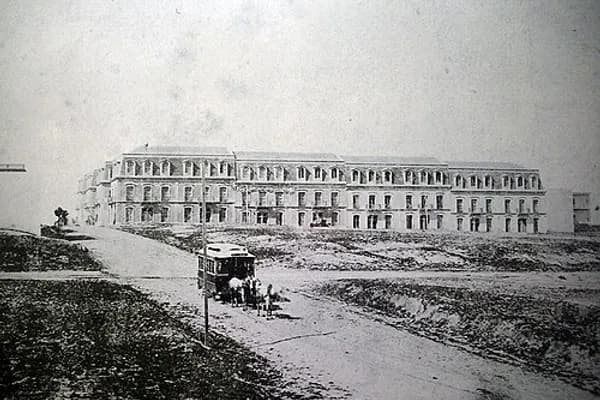
In the central area of the neighborhood stands the building of the University of Labor of Uruguay. Built in an eclectic style, it was a disciplinary center to educate young people with behavioral problems and juvenile delinquents. The headquarters of the Latin American Integration Association and the Cannabis Museum, opened in 2016, are also located in the area.
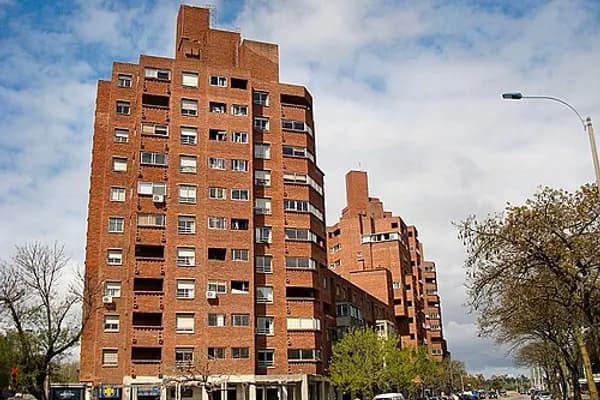
In the southern area near the coast is the Embassy of the United States and the Espacio Libre Alemania, a public square around which stands the Embassy of the Federal Republic of Germany, as well as the headquarters of the Postal Union of the Americas, Spain and Portugal (UPAEP) and the Uruguayan multinational PedidosYa. In addition, high-rise apartment buildings similar to Soviet Khrushchevkas were built along the coastline in the 1980s.
Places of worship
Church and convent of St. Anthony and St. Clare (Roman Catholic, Friars Minor Capuchin)
Parish Church of Our Lady of the Orchard and St. Joseph (Roman Catholic)
References
External links
Wikimedia Commons has media related to Palermo, Montevideo.
Intendencia de Montevideo / Historia del Sur y Palermo
Revista Raices / Historia del barrio Palermo
Encyclopedic content adapted from the Wikipedia article on Palermo, used under CC BY-SA 4.0.
What makes Palermo special
Palermo stands out among Montevideo’s neighborhoods for its distinctive character: montevideo's bohemian quarter. Ranked #4 in Montevideo, it offers the kind of experience that defines a great city trip — a place where the streets themselves tell a story and every block rewards curiosity.
Best for
Our take on Palermo
Palermo occupies a distinctive place in Montevideo's neighborhood landscape. It is the kind of district that rewards travelers who venture beyond the obvious choices — quieter than the tourist-facing areas, richer in local character, and full of the small details that make a city trip memorable.
What makes Palermo exceptional is the density of its cultural life. Art galleries, independent bookshops, small theaters, and creative studios are woven into the fabric of the neighborhood rather than clustered in a single zone. You encounter culture here by accident, which is how the best cultural experiences always happen.
Our editors recommend budgeting at least half a day here — enough time to walk the main streets, sit down for coffee, and discover the side streets where Palermo's real character lives.
Living in Palermo
Palermo is connected to the rest of Montevideo by public transit, and most visitors find it straightforward to reach from the city center or airport. Once you arrive, the neighborhood is best explored on foot — the scale is human and the streets reward wandering.
Day-to-day life in Palermo has the rhythm of a genuine residential neighborhood. You will find grocery stores, pharmacies, cafés with morning regulars, and the kind of small independent shops that only survive where locals support them. For visitors, this means the infrastructure you need — good coffee, a decent meal, a quiet place to sit — is always within a short walk.
Accommodation in Palermo ranges from boutique hotels to short-term rentals. We generally recommend staying within the neighborhood itself rather than commuting from a hotel elsewhere in Montevideo — the experience of waking up inside a great neighborhood is fundamentally different from visiting one as a day trip.
What locals say about Palermo
Long-term residents of Palermo tend to describe their neighborhood with a mix of pride and protectiveness. Like any district with genuine character, Palermo inspires loyalty — the kind of place people move to and never quite leave, or leave and spend years trying to get back to.
The creative community in Palermo is genuine, not aspirational. Residents include working artists, writers, musicians, and designers who chose the neighborhood because it supported their work — affordable studio space, a community that values craft, and enough foot traffic to sustain independent galleries and shops.
Compared to the more famous districts in Montevideo, Palermo has maintained a lower profile, which many residents consider an advantage. The neighborhood evolves gradually rather than being reshaped by sudden attention, and the result is a community that still feels organic rather than curated.
Visitor tips
- Palermo is located in Montevideo, Uruguay. The neighborhood is accessible by public transport, taxi, or rideshare from most parts of the city.
- Morning is often the best time to explore — the streets are quieter, the light is better for photography, and cafes are at their most welcoming.
- Wear comfortable walking shoes — the best way to experience Palermo is on foot, wandering the side streets and discovering what lies around each corner.
- Save the neighborhood's location on your phone before you arrive. Offline maps are especially useful for navigating the smaller side streets.