About the neighborhood
Borough of Dresden in Saxony, Germany
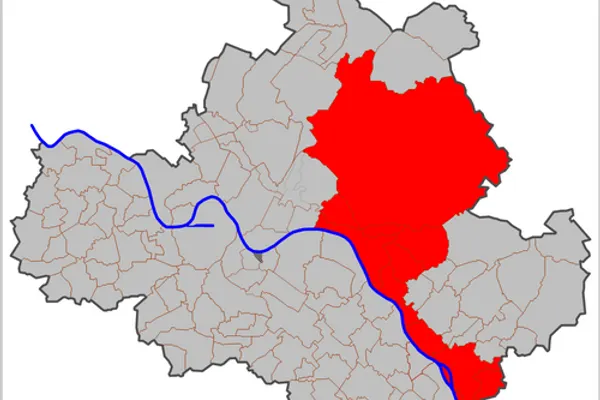
Loschwitz (German pronunciation: ˈlɔʃvɪts) is a borough (Stadtbezirk) of Dresden, Germany, incorporated in 1921. It consists of ten quarters (Stadtteile):
Loschwitz
Wachwitz
Bühlau
Weißer Hirsch
Rochwitz
Hosterwitz
Pillnitz
Niederpoyritz
Oberpoyritz
Söbrigen
Loschwitz is a villa quarter located at the slopes north of the Elbe river. At the top of the hillside is the quarter of Weißer Hirsch, named after a former inn erected in 1685 by the Saxon kapellmeister Christoph Bernhard, where in 1888 the naturopathic physician Heinrich Lahmann opened a sanatorium. The quarters of Wachwitz and Pillnitz are adjacent in the east and the Rosengarten park in the west. Loschwitz is connected with the borough of Blasewitz south of the Elbe by the Blue Wonder (Blaues Wunder) bridge. Furthermore, the borough encompasses large parts of the Dresden Heath, the city's forest.
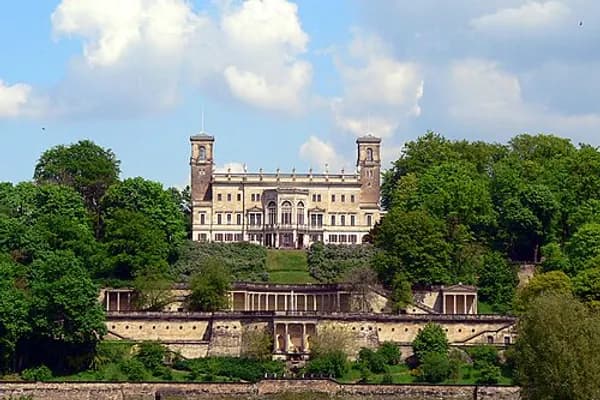
The old village of Loschwitz, a wine-growing area since the 11th century, was first mentioned in a 1227 deed. About 1660 Elector John George II of Saxony had several vineyards laid out at the hillside, that soon became a fashionable recreational and residential area for the Dresden nobility and wealthy bourgeois like the composer Heinrich Schütz or the goldsmith Johann Melchior Dinglinger. The author Christian Gottfried Körner had a cottage within the vineyards, where his guest Friedrich Schiller wrote the Ode to Joy in 1785. About 1800 James Ogilvy, 7th Earl of Findlater acquired large estates, where from 1850 the Elbschlösser (Elbe Castles) were erected: Albrechtsberg Palace and Villa Stockhausen (Lingnerschloss) of Prince Albert of Prussia as well as Eckberg Castle, finished in 1861.
The church is of especial architectural and historical interest, as is the churchyard, for the many burials of notable people. It was full by about 1800 and was replaced by Loschwitz Cemetery.
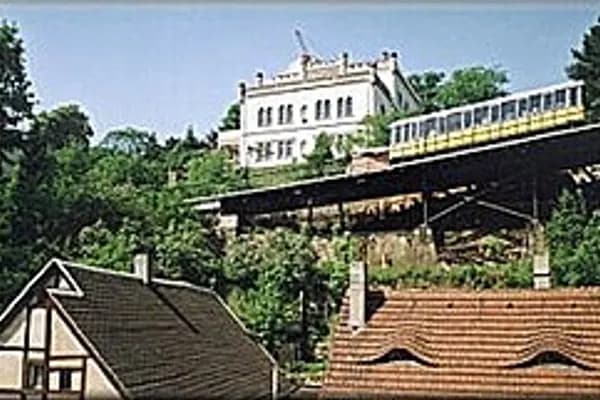
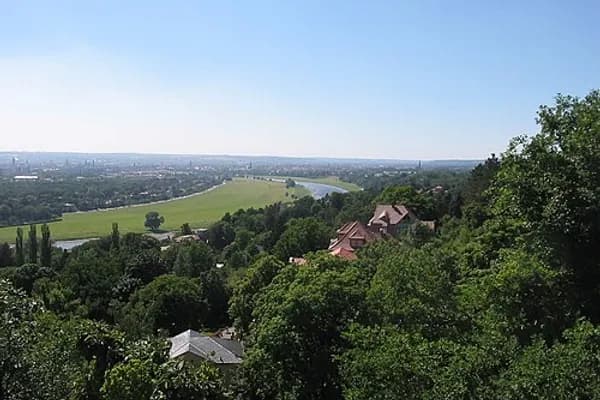
A popular place is the restaurant Luisenhof, built in 1895 and named after Crown Princess Luise of Saxony. The "Dresden balcony" offers a panoramic view of the city and the Elbe valley. Nearby is the Standseilbahn Dresden funicular railway as well as the Schwebebahn Dresden, the oldest suspension railway of the world, which both are still in use.
Nobility and rich citizens of Dresden used to live in Loschwitz such as Theodor Körner, Carl Maria von Weber and Gerhard von Kügelgen. A famous inhabitant of Weißer Hirsch was the inventor Manfred von Ardenne with his institute for scientific research. One of his neighbours was the retired officer Friedrich Paulus, commander in the Battle of Stalingrad, who died here in 1957. Also a number of famous people stayed in Loschwitz for a short time: Johann Wolfgang von Goethe, Heinrich von Kleist, Ernst Moritz Arndt, Novalis, Ludwig Tieck, Alexander and Wilhelm von Humboldt, Wolfgang Amadeus Mozart, Leopold Auer and Anton Graff. Between the 1920s and 1930s Loschwitz used to be the most expensive living area of all Europe.
This is evidenced in the surviving funicular railway, originally placed as an aid purely to residents in ascending the steep slopes of the river valley, and only recently having acquired novelty as a minor tourist attraction. Recently restored and operated by the local public transportation agency.
See also
Elbhangfest
References
External links
Dresdner-Stadtteile.de (About 100 Dresden city quarters, a private website in German)
Encyclopedic content adapted from the Wikipedia article on Loschwitz, used under CC BY-SA 4.0.
What makes Loschwitz special
Loschwitz stands out among Dresden’s neighborhoods for its distinctive character: dresden's elegant riverside village. Ranked #4 in Dresden, it offers the kind of experience that defines a great city trip — a place where the streets themselves tell a story and every block rewards curiosity.
Best for
Our take on Loschwitz
Loschwitz occupies a distinctive place in Dresden's neighborhood landscape. It is the kind of district that rewards travelers who venture beyond the obvious choices — quieter than the tourist-facing areas, richer in local character, and full of the small details that make a city trip memorable.
What makes Loschwitz worth the visit is the texture of daily life here. It is a neighborhood that functions for the people who live in it — not just for the visitors who pass through. The shops serve local needs, the restaurants feed local appetites, and the streets have a rhythm that reflects genuine community rather than tourism infrastructure. That is the quality our editors prize most, and Loschwitz has it in abundance.
Our editors recommend budgeting at least half a day here — enough time to walk the main streets, sit down for coffee, and discover the side streets where Loschwitz's real character lives.
Living in Loschwitz
Loschwitz is connected to the rest of Dresden by public transit, and most visitors find it straightforward to reach from the city center or airport. Once you arrive, the neighborhood is best explored on foot — the scale is human and the streets reward wandering.
Day-to-day life in Loschwitz has the rhythm of a genuine residential neighborhood. You will find grocery stores, pharmacies, cafés with morning regulars, and the kind of small independent shops that only survive where locals support them. For visitors, this means the infrastructure you need — good coffee, a decent meal, a quiet place to sit — is always within a short walk.
Accommodation in Loschwitz ranges from boutique hotels to short-term rentals. We generally recommend staying within the neighborhood itself rather than commuting from a hotel elsewhere in Dresden — the experience of waking up inside a great neighborhood is fundamentally different from visiting one as a day trip.
What locals say about Loschwitz
Long-term residents of Loschwitz tend to describe their neighborhood with a mix of pride and protectiveness. Like any district with genuine character, Loschwitz inspires loyalty — the kind of place people move to and never quite leave, or leave and spend years trying to get back to.
What locals appreciate most about Loschwitz is its consistency — the feeling that the neighborhood works the same way on a Tuesday morning as it does on a Saturday night. It is not a place that performs for visitors and then goes quiet. The rhythm is genuine, the community is real, and the daily experience of living here is what draws people and keeps them.
Compared to the more famous districts in Dresden, Loschwitz has maintained a lower profile, which many residents consider an advantage. The neighborhood evolves gradually rather than being reshaped by sudden attention, and the result is a community that still feels organic rather than curated.
Visitor tips
- Loschwitz is located in Dresden, Germany. The neighborhood is accessible by public transport, taxi, or rideshare from most parts of the city.
- Morning is often the best time to explore — the streets are quieter, the light is better for photography, and cafes are at their most welcoming.
- Wear comfortable walking shoes — the best way to experience Loschwitz is on foot, wandering the side streets and discovering what lies around each corner.
- Save the neighborhood's location on your phone before you arrive. Offline maps are especially useful for navigating the smaller side streets.