About the neighborhood
City and municipality in Jalisco, Mexico
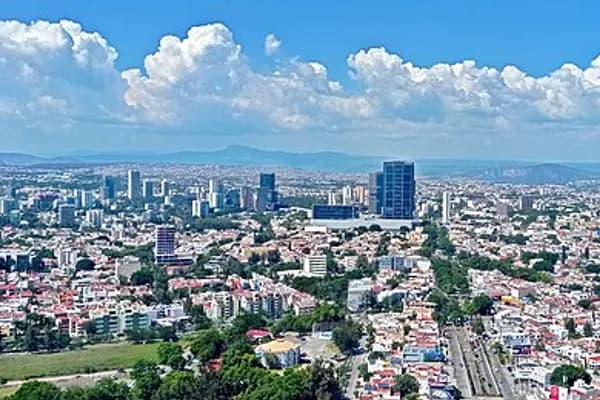
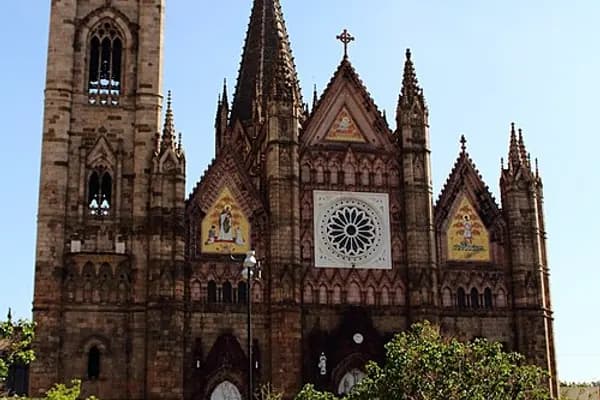
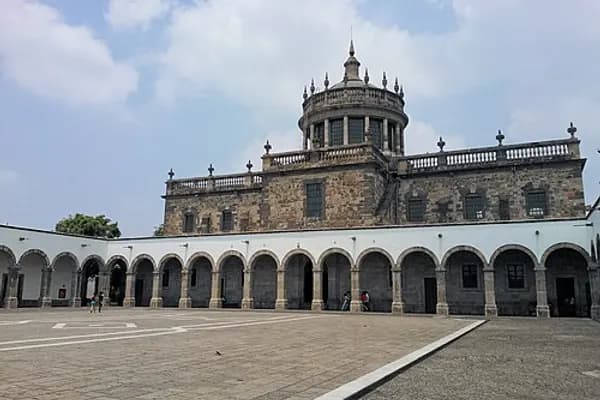
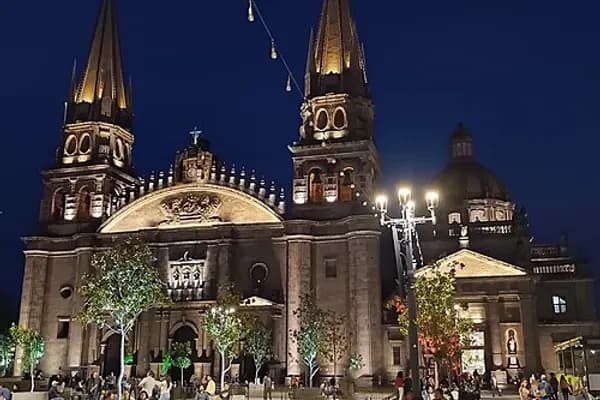
Guadalajara (/ˌɡwɑːdələˈhɑːrə/ GWAH-də-lə-HAR-ə, Spanish: ɡwaðalaˈxaɾa ) is the capital and the most populous city in the western Mexican state of Jalisco, as well as the most densely populated municipality in Jalisco. According to the 2020 census, the city has a population of 1,385,629 people, making it the 8th most populous city in Mexico, while the Guadalajara metropolitan area has a population of 5,268,642, making it the third-largest metropolitan area in the country and the twenty-second largest metropolitan area in the Americas. Guadalajara has the second-highest population density in Mexico with over 10,361 people per km, surpassed only by Mexico City. Within Mexico, Guadalajara is a center of business, arts and culture, technology and tourism; as well as the economic center of the Bajío region. It usually ranks among the 100 most productive and globally competitive cities in the world. It is home to numerous landmarks, including the Guadalajara Cathedral, Degollado Theatre, the Templo Expiatorio, the UNESCO World Heritage site Hospicio Cabañas, and the San Juan de Dios Market—the largest indoor market in Latin America.
A settlement was established in the region of Guadalajara in early 1532 by Cristóbal de Oñate, a Basque conquistador in the expedition of Nuño Beltrán de Guzmán. The settlement was renamed and moved several times before assuming the name Guadalajara after the birthplace of Guzmán and ending up at its current location in the Atemajac Valley in 1542. On November 8, 1539, the Holy Roman Emperor Charles V had granted a coat of arms and the title of city to the new town and established it as the capital of the Kingdom of Nueva Galicia, part of the Viceroyalty of New Spain. After 1572, the Royal Audiencia of Guadalajara, previously subordinate to Mexico City, became the only authority in New Spain with autonomy over Nueva Galicia, owing to rapidly growing wealth in the kingdom following the discovery of silver. By the 18th century, Guadalajara had taken its place as Mexico's second largest city, following mass colonial migrations in the 1720s and 1760s. During the Mexican War of Independence, independence leader Miguel Hidalgo y Costilla established Mexico's first revolutionary government in Guadalajara in 1810. The city flourished during the Porfiriato (1876–1911), with the advent of the Industrial Revolution, but its growth was hampered significantly during the Mexican Revolution (1910–1920). In 1929, the Cristero War ended within the confines of the city, when President Plutarco Elías Calles proclaimed the Grito de Guadalajara. The city saw continuous growth throughout the rest of the 20th century, attaining a metro population of 1million in the 1960s and surpassing 3million in the 1990s.
Guadalajara is a Gamma+ global city, and one of Mexico's most important cultural centers. It is home to numerous mainstays of Mexican culture, including Mariachi, Tequila, and Birria and hosts numerous notable events, including the Guadalajara International Film Festival, one of the most important film festivals in Latin America, and the Guadalajara International Book Fair, the largest book fair in the Americas. The city was the American Capital of Culture in 2005 and has hosted numerous global events, including the 1970 FIFA World Cup, the 1986 FIFA World Cup, the 1st Ibero-American Summit in 1991, and the 2011 Pan American Games. The city is home to numerous universities and research institutions, including the University of Guadalajara and the Universidad Autónoma de Guadalajara, two of the highest-ranked universities in Mexico.
Etymology
The conquistador Cristóbal de Oñate named the city in honor of the conqueror of western Mexico, Nuño de Guzmán, who was born in Guadalajara, Spain, which is derived from Moorish Arabic وادي الحجارة (wādī al-ḥajārah), which means 'Valley of the Stones', or 'Fortress Valley'.
History
Pre-Hispanic era
Unlike the surrounding areas, the central Atemajac Valley (where Guadalajara is located) contained no human settlements. To the east of the Atemajac Valley were the Tonallan and Tetlán peoples. At the extremes were the Zapopan, Atemajac, Zoquipan, Tesistan, Coyula, and Huentitán.
The historic city center encompasses what was once four population centers, as the villages of the Mezquitán, Analco, and Mexicaltzingo were annexed to the Atemajac site in 1669.
Foundation
Guadalajara was originally founded at three other sites before moving to its current location. The first colonial settlement in 1532 was in Mesa del Cerro, now known as Nochistlán, Zacatecas. This site was colonized by Cristóbal de Oñate as commissioned by Nuño de Guzmán, with the purpose of securing recent conquests and "defending" them from the "still-hostile natives". This colonized settlement did not last long due to its lack of usable water sources. In 1533 it was moved to a site near Tonalá. Four years later, Guzmán ordered that the village be moved to Tlacotán. During this time, the Spanish king Charles I granted the city the coat of arms which it retains to this day.
During the Mixtón War (1540–1542), the Caxcan, Portecuex, and Zacateco peoples, fought back against colonizers under the command of Tenamaxtli. The war was initiated in response to the heinous treatment of indigenous peoples by Nuño de Guzmán, in particular the enslavement of captured natives. After multiple defeats, Viceroy Antonio de Mendoza took control of the Spanish campaign to suppress the revolt. The conflict ended after Mendoza made concessions such as freeing enslaved indigenous peoples and granting amnesty. The village of Guadalajara barely survived the war, and the villagers attributed their survival to the Archangel Michael, who remains the patron of the city to this day.
After the war, the city was moved once again—this time to a more defensible location. This final relocation would prove permanent. In 1542, records indicate that 126 people were living in Guadalajara. That same year, it was granted cityhood by the king of Spain. Guadalajara was officially founded on February 14, 1542, in the Atemajac Valley. The colonized settlement was named for Nuño de Guzmán's Spanish hometown.
In 1559, royal and bishopric offices for the province of Nueva Galicia were moved from Compostela to Guadalajara and, in 1560, Guadalajara became the province's new capital. Construction of the cathedral began in 1563. In 1575, religious orders such as the Augustinians and Dominicans arrived, eventually making the city a center for evangelization efforts.
While capital of the Kingdom of Nueva Galicia, the city's inhabitants achieved a high standard of living, due to flourishing industry, agriculture, commerce, mining, and trade. The Guadalajara of the 16th century was a rather small and often overlooked community. It was mainly frequented by traveling merchants. Several epidemics drastically reduced the city's indigenous population, leading to the construction of its first hospital in 1557.
Guadalajara's economy during the 18th century was based on agriculture and the production of non-durable goods such as textiles, shoes and food products.
Despite epidemics, plagues, and earthquakes, Guadalajara would become one of the most important population centers in New Spain. The city's heyday attracted numerous architects, philosophers, lawyers, scientists, poets, writers, and speakers; Francisco Javier Clavijero and Matías Ángel de la Mota Padillaes were among the most prominent. In 1771, Bishop Fray Antonio Alcalde arrived in the city and founded the Civil Hospital and the University of Guadalajara. In 1791, the University of Guadalajara was established. The dedication was held in 1792 at the site of the old Santo Tomas College. While the institution was founded during the 18th century, it would not be fully developed until the 20th century, starting in 1925. In 1794, the Hospital Real de San Miguel de Belénes, or simply the Hospital de Belén, was opened. In 1793, Mariano Valdés Téllez Giron ran the city's first printing press, whose first publication was a funeral eulogy for Fray Antonio Alcalde.
Independence
Guadalajara remained the capital of Nueva Galicia with some modifications until the Mexican War of Independence. Miguel Hidalgo entered San Pedro (now Tlaquepaque) on November 25, 1810, and the next day he was greeted effusively in Guadalajara. The city's workers had experienced poor living conditions and were swayed by promises of lower taxes and the abolition of slavery. Despite a soured welcome, due to the rebel army's violence toward city residents, especially royalists, Hidalgo kept his promise and, on December 6, 1810, slavery was abolished in Guadalajara, a proclamation which has been honored since the end of the war. During this time, he founded the newspaper El Despertador Americano, dedicated to the insurgent cause.
Royalist forces marched to Guadalajara, arriving in January 1811 with nearly 6,000men. Insurgents Ignacio Allende and Mariano Abasolo wanted to concentrate their forces in the city and plan an escape route should they be defeated, but Hidalgo rejected this idea. Their second choice was to make a stand at the Puente de Calderon just outside the city. Hidalgo had between 80,000 and 100,000men and 95cannons, but the better-trained royalists won, decimating the insurgent army and forcing Hidalgo to flee toward Aguascalientes. Guadalajara remained in royalist hands until near the end of the war.
On January 17, 1817, the insurgent army was again defeated on the outskirts of Guadalajara in the Battle of Calderón Bridge. New Galicia, now Jalisco, adhered to the Plan de Iguala on June 13, 1821.
In 1823, Guadalajara became the capital of the newly founded state of Jalisco. In 1844, General Mariano Paredes y Arrillaga initiated a revolt against the government of President Antonio López de Santa Anna. Santa Anna personally ensured that the revolt was quelled. However, while Santa Anna was in Guadalajara, a revolt called the Three Hour Revolution brought José Joaquín Herrera to the presidency and put Santa Anna into exile.
President Benito Juárez made Guadalajara the seat of his government in 1856, during the Reform War. French troops entered the city during the French Intervention in 1864, and it was retaken by Mexican troops in 1866.
Despite the violence, the 19th century was a period of economic, technological and social growth for the city. After Independence, small-scale industries developed, many of which were owned by European immigrants. Rail lines connecting the city to the Pacific coast and north to the United States intensified trade and allowed the shipment of products from rural areas of Jalisco. Ranch Culture became a very important aspect of Jalisco and Guadalajara's identities during this time. From 1884 to 1890, electrical and railroad services, as well as the Guadalajara Observatory were established.
20th century
Throughout the twentieth century, seeing growth in its industrial, tourist, and service industries, Guadalajara began a period of rapid transformation into the metropolis it is today. The city would gain the second largest economy in Mexico, following only by Mexico City. After the Mexican Revolution of 1910, Guadalajara became the second most populous city in the country. However, the decades that followed brought a number of regional wars in the states of Jalisco, Michoacán, and Guanajuato. The aftermath of the Great Depression took a further toll on the city. Fortunately, by the 1940s the city would experience industrial, demographic, and trade growth.
In 1910, the Mexican Revolution began, bringing an end to the Porfiriato. With conflict concentrated in the capital, Guadalajara experienced relative calm. After the Cristero Conflict, peace returned to Guadalajara and the city flourished, outgrowing its colonial roots. This period saw the birth of new schools of architecture that would decorate the city from the 1920s to the 1980s.
Guadalajara again experienced substantial growth after the 1930s, and the first industrial park was established in 1947. Its population surpassed one million in 1964, and by the 1970s it was Mexico's second-largest city and the largest in western Mexico. Most of the modern city's urbanization took place between the 1940s and the 1980s, with the population doubling every ten years until it stood at 2.5 million in 1980. The population of the municipality has stagnated, and even declined, slowly but steadily, since the early 1990s.
The increase in population brought with it an increase in the size of what is now called Greater Guadalajara, rather than an increase in the population density of the city. Migrants coming into Guadalajara from the 1940s to the 1980s were mostly from rural areas and lived in the city center until they had enough money to buy property. This property was generally bought in the edges of the city, which were urbanizing into fraccionamientos, or residential areas. In the 1980s, it was described as a "divided city" east to west based on socioeconomic class. Since then, the city has evolved into four sectors, which are still more or less class-centered. The upper classes tend to live in Hidalgo and Juárez in the northwest and southwest, while the lower classes tend to live in the city center, Libertad in the northeast, and southeast in Reforma. However, lower class development has expanded on the city's periphery and upper and middle classes are migrating toward Zapopan, making the situation less neatly divided.
Since 1996, the activity of multinational corporations has had a significant effect on the economic and social development of the city. The presence of companies such as Kodak, Hewlett-Packard, Motorola and IBM has been based on production facilities built outside the city proper, bringing in foreign labor and capital. This was made possible in the 1980s by surplus labor, infrastructure improvements, and government incentives. These companies focus on electrical and electronic items, which is now one of Guadalajara's two main products (the other being beer). This has internationalized the economy, steering it away from manufacturing and toward services, dependent on technology and foreign investment. This has not been favorable for the unskilled working class and traditional labor sectors.
The 1992 Guadalajara explosions occurred on April 22, 1992, when gasoline explosions in the sewer system over four hours destroyed 8km (5mi) of streets in the downtown district of Analco. Gante Street was the most damaged. Officially, 206 people were killed, nearly 500 injured and 15,000 were left homeless. The estimated monetary damage ranges between $300 million and $1 billion. The affected areas can be recognized by their more modern architecture.
Encyclopedic content adapted from the Wikipedia article on Chapultepec, used under CC BY-SA 4.0.