About the neighborhood
Electoral ward in Bath, United Kingdom
Widcombe is a district of Bath, England, immediately south-east of the city centre, across the River Avon.
The electoral ward was merged with Lyncombe at the boundary changes effected at the elections held on 2 May 2019; the two places have historically been connected (refer to the Lyncombe article).
History
Widcombe was part of the hundred of Bath Forum.
In 1877 Halfpenny Bridge, a pedestrian toll bridge, across the River Avon from Bath Spa railway station to Widcombe collapsed with the loss of about 10 lives amongst a large crowd going to the Bath and West Agricultural show.
Architecture
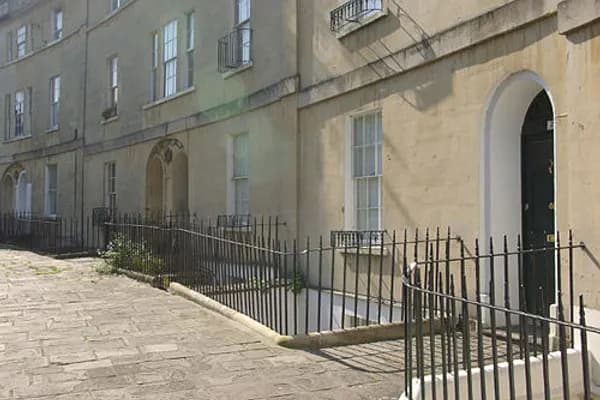
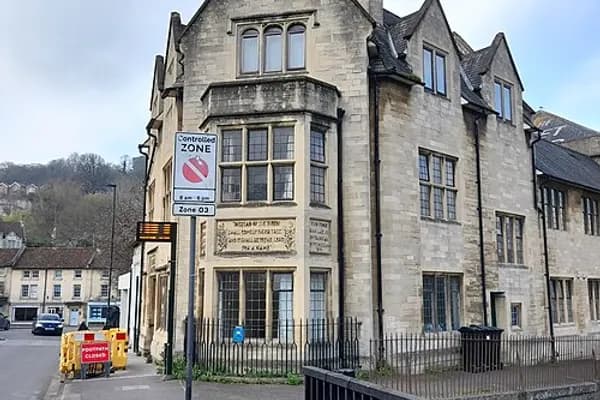
Widcombe Parade is a commercial street lined with a mix of Georgian and Victorian buildings located near the Halfpenny Bridge, with buildings dating back as far as 1750. The area has been through many changes over the years, altered to improve traffic movement, removing an entire row of terraced houses at the west end of Widcombe Parade with the development of Rossiter Road as part of the main thoroughfare skirting the city centre of Bath.
St. Matthew's Church, built 1846–1847, with one of the tallest spires in Bath, is positioned to be viewed at the east end of Widcombe Parade.
Widcombe Manor House is a grade I listed manor house built in 1656. It is located on Church Street adjacent to St Thomas à Beckett Church.
Crowe Hall is a Georgian house. It is a Grade II listed building, and the gardens are on the Register of Historic Parks and Gardens of special historic interest in England. It was built around 1780 for Brigadier Crowe. It has had a succession of owners since who each adapted and renovated the building. A serious fire in 1926 destroyed a lot of the fabric of the building and further restoration was required. The house is surrounded by several hectares of sloping gardens, below Prior Park, which are terraced and include a rock garden and grotto.
Widcombe Crescent is a terrace of 14 Georgian houses built in 1808 by Thomas Baldwin, and designated a Grade I listed building.
Canal
Widcombe is where the Kennet and Avon Canal meets the River Avon. Bath Locks are a series of locks, just south of Pulteney Bridge, which climb through Widcombe. Alongside the bottom lock is a side pond and pumping station which pumps water up the locks to replace that used each time the lock is opened. The next stage of Bath Deep Lock is numbered 8/9 as two locks were combined when the canal was restored in May, 1976. A road bridge carrying the A36, constructed while the canal was in a state of disrepair passes over the original site of the lower lock. The new chamber has a depth of 19ft 5ins, making it Britain's second deepest canal lock. Just above the 'deep lock' is an area of water enabling the lock to refill and above this is Wash House Lock (number 10), and soon after by Abbey View Lock (number 11), a grade II listed building by which there is another pumping station and in quick succession Pulteney Lock (12) and Bath top Lock (13). Above the top lock the canal passes through Sydney Gardens where it passes through two tunnels and under two cast iron footbridges dating from 1800. Cleveland Tunnel is 173 feet long and runs under Cleveland House, the former headquarters of the Kennet and Avon Canal Company. This is now a grade II* listed building. Many of the bridges over the canal are also listed buildings.
Southcot
Southcot Burial Ground is a small former cemetery, now owned by the Bath Preservation Trust, who manage it for its wildlife and heritage.
Geography
References
Encyclopedic content adapted from the Wikipedia article on Widcombe, used under CC BY-SA 4.0.
What makes Widcombe special
Widcombe stands out among Bath’s neighborhoods for its distinctive character: bath's village south of the river. Ranked #3 in Bath, it offers the kind of experience that defines a great city trip — a place where the streets themselves tell a story and every block rewards curiosity.
Best for
Our take on Widcombe
Widcombe is one of the strongest neighborhoods in Bath, and it consistently appears in our editors' personal favorites lists. It may not always get the same attention as the city's most famous district, but among travelers who know Bath well, Widcombe is often the first recommendation.
What makes Widcombe worth the visit is the texture of daily life here. It is a neighborhood that functions for the people who live in it — not just for the visitors who pass through. The shops serve local needs, the restaurants feed local appetites, and the streets have a rhythm that reflects genuine community rather than tourism infrastructure. That is the quality our editors prize most, and Widcombe has it in abundance.
Our editors recommend budgeting at least half a day here — enough time to walk the main streets, sit down for coffee, and discover the side streets where Widcombe's real character lives.
Living in Widcombe
Widcombe is connected to the rest of Bath by public transit, and most visitors find it straightforward to reach from the city center or airport. Once you arrive, the neighborhood is best explored on foot — the scale is human and the streets reward wandering.
Day-to-day life in Widcombe has the rhythm of a genuine residential neighborhood. You will find grocery stores, pharmacies, cafés with morning regulars, and the kind of small independent shops that only survive where locals support them. For visitors, this means the infrastructure you need — good coffee, a decent meal, a quiet place to sit — is always within a short walk.
Accommodation in Widcombe ranges from boutique hotels to short-term rentals. We generally recommend staying within the neighborhood itself rather than commuting from a hotel elsewhere in Bath — the experience of waking up inside a great neighborhood is fundamentally different from visiting one as a day trip.
What locals say about Widcombe
Long-term residents of Widcombe tend to describe their neighborhood with a mix of pride and protectiveness. Like any district with genuine character, Widcombe inspires loyalty — the kind of place people move to and never quite leave, or leave and spend years trying to get back to.
What locals appreciate most about Widcombe is its consistency — the feeling that the neighborhood works the same way on a Tuesday morning as it does on a Saturday night. It is not a place that performs for visitors and then goes quiet. The rhythm is genuine, the community is real, and the daily experience of living here is what draws people and keeps them.
Compared to the more famous districts in Bath, Widcombe has maintained a lower profile, which many residents consider an advantage. The neighborhood evolves gradually rather than being reshaped by sudden attention, and the result is a community that still feels organic rather than curated.
Visitor tips
- Widcombe is located in Bath, United Kingdom. The neighborhood is accessible by public transport, taxi, or rideshare from most parts of the city.
- Morning is often the best time to explore — the streets are quieter, the light is better for photography, and cafes are at their most welcoming.
- Wear comfortable walking shoes — the best way to experience Widcombe is on foot, wandering the side streets and discovering what lies around each corner.
- Save the neighborhood's location on your phone before you arrive. Offline maps are especially useful for navigating the smaller side streets.