About the neighborhood
Firefighting authority of Munich, Germany
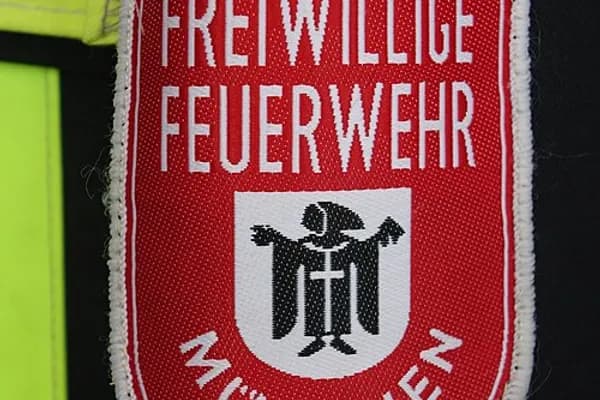
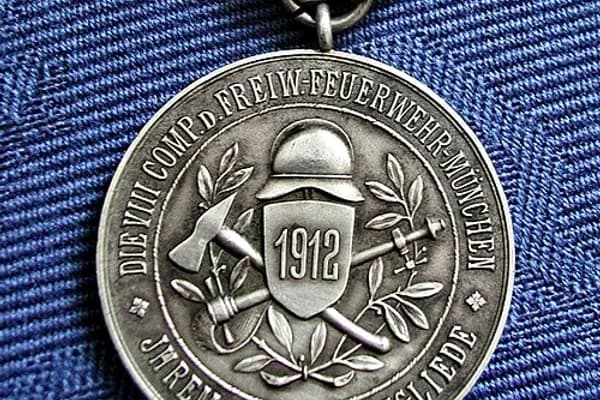
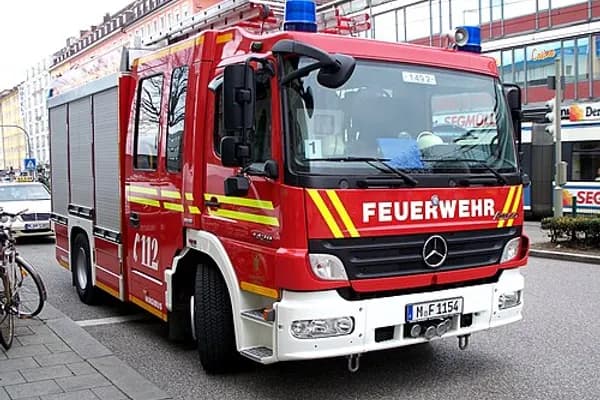
The Munich Fire Department (German: Feuerwehr München) is the firefighting authority (called Branddirektion) of the City of Munich. The Munich fire department is divided into a professional department with approximately 1500 fire fighters staffing a total of 10 fire stations (German: Feuerwache) located strategically throughout the city to meet the legal aid period of 10 Minutes, and a volunteer fire department, whose approximately 1,050 members are organized in 22 companies. Each year, the Munich Fire Department responds to about 80,000 calls (of which are about 70% medical calls). The volunteers respond to about 3,500 calls annually. This makes the Munich Fire Department the third largest fire department as well as the largest municipal fire department in Germany.
History
Precursor
As with most fire departments in Germany, the first units were founded by gymnastics clubs. In 1848, a gymnastics club volunteered itself as gymnastics fire department to serve the city. Due to the overall political situation (revolution 1848) and the generally prevailing reservations against clubs, this dissolved again in 1850.
Founding
After several attempts, especially in the 1860s, which failed mainly due to financial reasons, the volunteer fire department Munich was founded on 10 September 1866 through the work of Julius Knorr, J. B. Sartorius and city architect Arnold Zenetti. A major fire accident on 9 July 1866 in house No. 10 on the Schützenstraße (today Dachauer Straße 40) and the noted lack of necessary push ladders were the most serious argument that forced the city to action. The first commander was the master builder, Reinhold Hirschberg. At that time, seven fire stations were available within the city.
To 1900
Through the incorporation of neighboring communities (today's districts), Munich grew steadily, and with it the fire brigade. To which, for example, in 1877 Sendling became part of the state capital. The already existing fire brigades were integrated into the Munich fire department as so-called companies (Sendling VI Company) (see also the section Sendling, below). As early as 1870, due to the rapidly growing population, a permanent night watch was set up in Munich and assigned to the volunteer fire department. Eight years later, the city of Munich decided to set up a permanent guard watch. Therefore, the Munich professional fire brigade was founded on 1 July 1879, their former main watch station was housed at Heumarkt (later St.-Jakobs-Platz).
1900 to 1945
In 1904, the professional fire department moved into the new and still existing main fire station on Blumenstraße (today An der Hauptfeuerwache). By the end of 1913, all horse teams were abolished at the Munich Fire Department and it completely switched to vehicles with gasoline engines. This made Munich the first city to fully automate its fire department fleet. In the course of the motorization, thirteen companies of the volunteer fire brigade were merged into 6 sections. By the end of 1921, the volunteer fire department had 471 active members.
Between the war years, other communities around Munich were incorporated and their fire brigades were incorporated into the Munich volunteer fire department. Creating only one volunteer fire department in Munich, which maintained several locations. Before the Second World War, the volunteer fire department had a staff of 1300 man.
After 1945
The dense network of firefighting squads of the volunteer fire department, which was created in the city center before the Second World War, was dissolved by the occupying powers, for example the Firefighting squad 3 / company 6 (Firefighting Squad Laim). It was not until 1947 that the reconstruction of the professional fire brigade was possible. As a result, some departments were directly re-established (more or less continued) others, for example, the abbot Waldtrudering (1957) was rebuilt much later. Also new departments emerged such as Sendling (see below) or the Department Center (1967 founded as the firefighting squad city center), which replaced existing units from before the war or restructured them.
In 1972, through the course of the 1972 Summer Olympics in Munich, the silent alarm was introduced, until that time the volunteer fire department was alerted through a siren on the roofs of the fire stations. Since the 1990s, the volunteer fire department is alerted to all emergency operations (in which the statutory auxiliary period applies) simultaneously with the professional fire department.
In the late 1970s, a novel type of aerial ladder was developed in a cooperation between the Munich Fire Department and the fire engine manufacturer Magirus-Deutz, the so-called low-profile design. The series of vehicles built and ordered by the Munich Fire Department in 1980, in 12 different styles, had a height of only 2.85 meters and was therefore significantly lower than conventional turntable ladders with heights between 3.20 and 3.30 meters. As a result, it was possible to reach low gateways and backyards, for which conventional turntable ladders were too high. A vehicle width of only 2.40 meters also provided for more maneuverability.
At the end of the 1980s, all firefighting squads and half-firefighting squads of the Munich volunteer fire department were renamed into departments, such as firefighting squad Michaeliburg into Michaeliburg Department. With the procurement of the 21 LF 16/12, a separate vehicle was procured for the FF for the first time, which could also be used alone for a first strike by fire or THL missions. In 2010, a total of 58 uniform aid firefighting vehicles 20/16 were procured for the volunteer and professional fire departments in Munich.
Future
The partly from the 1970s originating fire stations and fire department houses are to be overtaken in the course of an extensive renovation program. In addition, urgently needed new buildings, for example, Fire Station 4 (see also Fire Station 4, below) will be built. Due to the fast-growing areas to the west of Munich and the unfavorable situation of several stations, there will be a total of five new fire stations built in Munich. Since two existing stations are to be decided, it is expected that as of 2020, there will be a total of 12 sites of the professional fire department in the city area.
Professional fire department
The main burden of the missions is taken over by the Munich professional fire department. This consists of about 1,700 fire department officials. Every day, 300 officials at the ten fires and nine emergency medical watch stations are on 24-hour shifts and in constant alert. They attend to almost 5,000 firefighting missions, 21,000 technical assistance missions and more than 55,000 rescue operations per year. In addition, numerous missions and work from special groups, who are also recruited by the professional fire department. These groups come, for example, from the areas of water rescue, environmental protection, altitude rescue, emergency medical services, civil and disaster control, and the prevention of danger. In addition, the professional fire department operates an emergency pressure chamber and has also equipped each of its rescue fire trucks for use as a first-responder vehicle.
In Munich, the professional fire department maintains ten fire stations, which are spread over the entire city and in which the special units are housed. In addition to the tasks of defensive fire protection, the remaining approximately 600 officials who do not work in shifts (so-called day service officials), in addition to administrative service and working in their own workshops, meet the tasks and activities of preventive fire protection.
Standard Firefighting-Convoy
The firefighting-platoon of the Munich fire department consists of a command vehicle (German: Einsatzleitwagen), two Munich fire and rescue engines (German: Hilfeleistungslöschfahrzeug), an aerial ladder (German: Drehleiter mit Korb), and an ambulance (German: Rettungswagen). Each firefighting-platoon is staffed with minimum 18 firefighters (1 platoon chief, 1 chief assistant, 2 captains, 3 engine operators and 11 firefighters). This Firefighting-platoon forms the basic unit for fighting structural fires in Munich.
Fire Station 1 - Main Fire Station /Fire Department
Main fire station (48°07′58″N 11°34′10″E / 48.13270°N 11.56950°E / 48.13270; 11.56950 (Feuerwehr München: Feuerwache 1 – Hauptfeuerwache/Branddirektion)) was inaugurated on 11 July 1904 as a replacement for the too small central fire houses, which were used for 25 years by the professional fire department. Their appearance was, apart from minor renovations, not changed to this date. The main fire station is also the home of the fire department of the county administrative department and also the fire station (FW) 1. This is the responsibility of the professional fire department, the volunteer fire department, the disaster and civil defense in the city of Munich. In addition, the fire department also works out deployment plans and release order, distributes resources to the stations in the city, manages the integrated control center (ILSt), decides on hiring, procurement of input material and the maintenance of the fire stations. Furthermore, it is active in preventive fire and danger protection and does the administrative work.
At the main fire station, a special extinguishing agent vehicle (SLF) is stationed next to the fire engine. Here are also the leading vehicles of the inspection service, including the service of the directorate as well as the head of the organization and the emergency response service. Also, the children's NEF, and the newborn ambulance are housed here. The station is also assigned to an ambulance, which is not stationed at the fire station, but in the inner-city hospital.
Since 1979, the public fire department museum Munich has been located in the service building.
Fire Station 2 – Sendling
Fire station 2 (48°06′02″N 11°31′31″E / 48.10050°N 11.52520°E / 48.10050; 11.52520 (Feuerwehr München: Feuerwache 2 – Sendling)) was put into operation in the fall of 1967, after the old fire station 2 on Boschetsrieder Straße had become too small and could no longer meet the growing demands. The fire station is attached to a respiratory protection and a hoses repair shop as well as the fire department school. In particular, the inspection and maintenance of respiratory protective equipment, hoses, jump rescue equipment, fire department fabric and protective clothing is carried out by this fire station. The fire department school has its own fleet, an exercise hall and a fire simulation system (gas-fired).
Currently in Sendling in addition to a fire engine, a device car respiratory/radiation protection, an environment rescue vehicle, a hoses truck 2000, a tank fire engine 24/48, an aerial ladder 37 and two hookloaders are stationed. The vehicles of the Analytical Task Force are also located here. The station is also assigned an emergency ambulance vehicle, which is not stationed at the fire station, but at Klinikum Großhadern.
Fire Station 3 – Westend
Fire station 3 in Westend (48°09′24″N 11°33′21″E / 48.15667°N 11.55596°E / 48.15667; 11.55596 (Feuerwehr München: Zentrum für Katastrophenschutz)) opened on 28 October 1983, replacing the old fire stations 3 and 8, which were each occupied by a group, as a new fire station 3, in which an engine is housed. The fire station 3 is located in the immediate vicinity of Theresienhöhe and Theresienwiese and offers the possibility to strengthen their station at any time. In addition, this station has a large sports hall and a practice tower, and since 1997 an integrated control center. Since then it has been a group station with special vehicles. In 2017, the control center moved to the new FW 4, so that the FW 3 can be "moved" in the long term more in the western direction ([[Pasing ]]).
At present, a Half-platoon (nominal staffing 1/1/10/12), consisting of a command vehicle 1, an aerial ladder with basket 23-12, a rescue fire engine 20/16 and a tank fire engine 24/48 are housed at the fire station. Furthermore, a special extinguisher vehicle, a small alert car and the emergency response vehicle, as well as an ambulance are stationed here. The station is also assigned an emergency ambulance vehicle, which is not stationed at the fire station, but at the Surgical Clinic Munich South (see below: emergency medical service). Furthermore, an ambulance is occupied together with the fire station 7 at the Klinikum Dritter Orden.
Fire Station 4 – Schwabing
Fire station 4 Schwabing (48°09′24″N 11°33′21″E / 48.15667°N 11.55596°E / 48.15667; 11.55596 (Feuerwehr München: Zentrum für Katastrophenschutz)) was put into service after two years of construction in May 2016. It is located at the Heßstraße 120, on the site of the former Civil Protection Center, in the Munich district of Schwabing-West, but still carries the nickname Schwabing. Construction costs for the new station amounted to 85 million euros and was planned and set up as a large security base in accordance with the "Fire Department Final Plan 2020" (see "future" section). In 2017, the dispatch and control center of fire station 3 moved into the new building. The area of service of fire station 4 includes the city districts Schwabing, Maxvorstadt, Neuhausen, the Englischer Garten, Freimann and parts of the Lehel. In addition to the professional fire department, which is stationed here with two Munich fire and rescue engines, a ladder, an ambulance and a command car, the KLAF and in the future also with the disaster response center, the department City Center (Downtown) of the volunteer fire department Munich and units of civil protection are housed on the site.
The former fire station 4 (48°09′21″N 11°34′30″E / 48.15580°N 11.57502°E / 48.15580; 11.57502 (Feuerwehr München: Feuerwache 4 – Schwabing)) was put into operation in 1970. The six-storey building housed until 1984, the garment workshop, which was relocated to Neuperlach due to a lack of space. Since then, the premises have been used as a station and continue to serve as service quarters for the officers. In addition, the station is to serve as an interim location for the fire engine 1 during the renovation work on the fire station 1.
Fire Station 5 – Ramersdorf
Fire station 5 (48°07′17″N 11°36′44″E / 48.12151°N 11.61223°E / 48.12151; 11.61223 (Feuerwehr München: Feuerwache 5 – Ramersdorf)) of Ramersdorf in the east of Munich was inaugurated in December 1951 and two years later an extension was added to house the vehicle repair shop, which was moved during the construction to Neuperlach. Also, in 1953, an exercise diving tank was built and in 1964 a respiratory workshop was established in Ramersdorf.
Encyclopedic content adapted from the Wikipedia article on Westend, used under CC BY-SA 4.0.