About the neighborhood
Area in Doha, Qatar
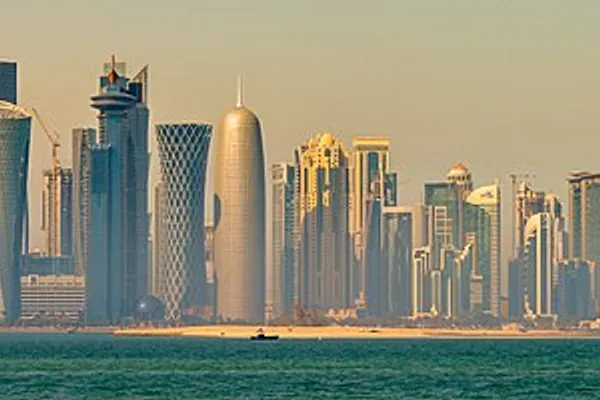
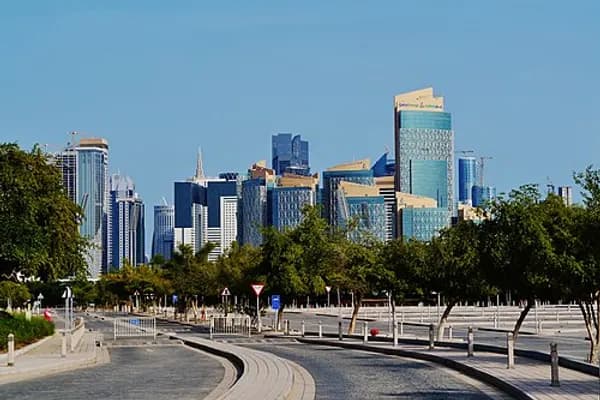
West Bay (Arabic: الخليج الغربي) is an area in Doha, Qatar that encompasses the city's east coast districts, namely, Al Qassar, Al Dafna, West Bay Lagoon, and Onaiza. West Bay includes many modern buildings unlike other, older districts of Doha. Most of the tallest skyscrapers in Qatar are found in this area.
History
American architect William Pereira was tasked by the Qatari government with envisioning a transformative urban development project in the 1980s, colloquially referred to as the 'New Doha', situated directly north of the pre-existing city. Unlike the prior Llewelyn-Davies plan, Pereira's proposal did not seek to overhaul the existing urban fabric of Doha. Instead, it focused primarily on establishing new development areas in areas dredged in the late 1970s, with only incidental overlap with the old city.
Pereira's plan introduced several key elements aimed at reshaping the urban landscape. Firstly, it advocated for the extension of the ringroad system to the north, facilitating connectivity between the historic center of Doha and the emerging development zones in the northern reaches. Secondly, Pereira proposed the creation of cul-de-sac residential neighborhoods, reminiscent of Western suburban models, to accommodate the burgeoning population. Additionally, he endorsed the earlier proposal by Llewelyn-Davies to enhance the waterfront Doha Corniche by undertaking extensive dredging of the low-lying sand deposits north of Doha Port.
The reclaimed land resulting from these dredging activities, supplemented by other excavations, formed the foundation for what is now known as 'West Bay'. Despite its transformation, some residents still colloquially refer to this area as dafna, a term derived from Arabic meaning landfill, reflecting its origins. West Bay was earmarked to host Qatar University, the first national university, along with a new central business district, residential accommodations for senior Qatari executives, and a designated hotel and resort area. Notably, the iconic Sheraton Grand Doha Resort & Convention Hotel, which would dominate Doha's skyline for years, first emerged in this area in 1978, before being completed in 1981. Connectivity between West Bay and old Doha was facilitated by a network of primary north-south roads and secondary transverse connectors.
In Qatar's first census conducted in 1986, West Bay was the tentative name for seven newly established zones of Doha along the coastline: Zone 60 and Zone 62 to Zone 67. Contemporary usage of the term refers to all the districts currently occupying these zones, which currently includes Al Qassar, Al Dafna, West Bay Lagoon (official name Leqtaifiya), Onaiza, and Hazm Al Markhiya.
Transport
Mowasalat manages a shuttle service for the West Bay Area under the auspices of the Ministry of Transport and Communication. The sole route is circular, running through 36 stops at 12-minute intervals from 6 AM to 9 PM on all days of the week. It passes through most of the hotel and business districts in West Bay.
The underground West Bay Metro Station began operation on 8 May, 2019. It was launched during Phase 1 of Doha Metro's Red Line North.
Education
One of Lycée Franco-Qatarien Voltaire's branches, Qatar's French international school, is located in West Bay. Schools in West Bay include:
Gallery
See also
List of tallest buildings in Qatar
References
Geography Al Safliya Island
Banana Island
Doha Bay
Doha Corniche
Halul Island
The Pearl Island
Economy and transport Al Dafna Financial District
Barwa Financial District
Doha International Airport
Doha Metro Gold Line
Hamad International Airport
Orbital Highway
Demographics and culture Abdulla Bin Zaid Al Mahmoud Islamic Cultural Center
Doha Tribeca Film Festival
Imam Muhammad ibn Abd al-Wahhab Mosque
Katara Cultural Village
Mathaf: Arab Museum of Modern Art
Museum of Islamic Art
Qatar National Museum
Qatar National Theater
National Museum of Qatar
Souq Waqif
Education Carnegie Mellon University in Qatar
Georgetown University School of Foreign Service in Qatar
Hamad Bin Khalifa University
Cornell University in Qatar
HEC Paris in Qatar
Northwestern University in Qatar
Texas A&M University at Qatar
UCL Qatar
Virginia Commonwealth University in Qatar
Weill Cornell Medical College in Qatar
Stenden University Qatar
College of the North Atlantic in Qatar
Qatar University in Qatar
University of Calgary in Qatar
See also Education City
Sports
Encyclopedic content adapted from the Wikipedia article on West Bay, used under CC BY-SA 4.0.
What makes West Bay special
West Bay stands out among Doha’s neighborhoods for its distinctive character: doha's skyscraper waterfront. Ranked #2 in Doha, it offers the kind of experience that defines a great city trip — a place where the streets themselves tell a story and every block rewards curiosity.
Best for
Our take on West Bay
West Bay is one of the strongest neighborhoods in Doha, and it consistently appears in our editors' personal favorites lists. It may not always get the same attention as the city's most famous district, but among travelers who know Doha well, West Bay is often the first recommendation.
The waterfront presence in West Bay shapes everything about the neighborhood's character — the light, the air, the pace of life, the kind of restaurants that thrive here. But what elevates it beyond a simple beach district is the depth of the neighborhood behind the waterfront: the residential streets, the local markets, the café culture that exists independent of the views.
Our editors recommend budgeting at least half a day here — enough time to walk the main streets, sit down for coffee, and discover the side streets where West Bay's real character lives.
Living in West Bay
West Bay is connected to the rest of Doha by public transit, and most visitors find it straightforward to reach from the city center or airport. Once you arrive, the neighborhood is best explored on foot — the scale is human and the streets reward wandering.
Day-to-day life in West Bay has the rhythm of a genuine residential neighborhood. You will find grocery stores, pharmacies, cafés with morning regulars, and the kind of small independent shops that only survive where locals support them. For visitors, this means the infrastructure you need — good coffee, a decent meal, a quiet place to sit — is always within a short walk.
Accommodation in West Bay ranges from boutique hotels to short-term rentals. We generally recommend staying within the neighborhood itself rather than commuting from a hotel elsewhere in Doha — the experience of waking up inside a great neighborhood is fundamentally different from visiting one as a day trip.
What locals say about West Bay
Long-term residents of West Bay tend to describe their neighborhood with a mix of pride and protectiveness. Like any district with genuine character, West Bay inspires loyalty — the kind of place people move to and never quite leave, or leave and spend years trying to get back to.
What locals appreciate most about West Bay is its consistency — the feeling that the neighborhood works the same way on a Tuesday morning as it does on a Saturday night. It is not a place that performs for visitors and then goes quiet. The rhythm is genuine, the community is real, and the daily experience of living here is what draws people and keeps them.
Like any neighborhood that has earned attention, West Bay is navigating the tension between popularity and preservation. Rents have risen, new businesses have arrived, and long-time residents occasionally grumble that the neighborhood is not what it was. But the fundamentals — the walkability, the food, the community — remain strong, and most locals we speak to believe the neighborhood is still gaining more than it is losing.
Visitor tips
- West Bay is located in Doha, Qatar. The neighborhood is accessible by public transport, taxi, or rideshare from most parts of the city.
- Morning is often the best time to explore — the streets are quieter, the light is better for photography, and cafes are at their most welcoming.
- Wear comfortable walking shoes — the best way to experience West Bay is on foot, wandering the side streets and discovering what lies around each corner.
- Save the neighborhood's location on your phone before you arrive. Offline maps are especially useful for navigating the smaller side streets.