About the neighborhood
Souq in Doha, Qatar
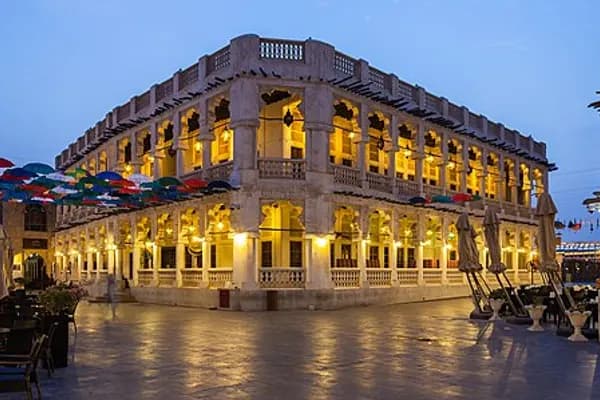
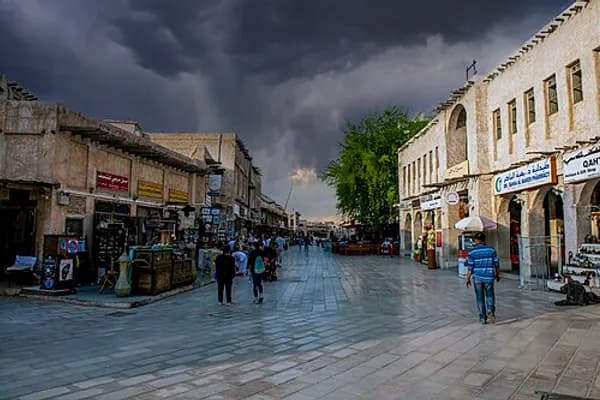
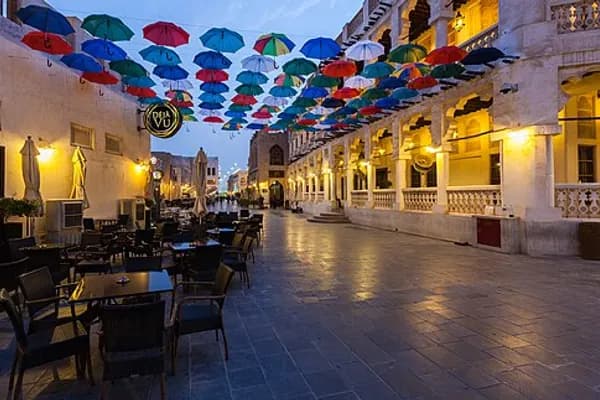
Souq Waqif (Arabic: سوق واقف, romanized:Sūq Wāqif, lit.'the standing market') is a marketplace (souq) in Doha, the capital of Qatar. The souq sells traditional garments, spices, handicrafts, and souvenirs. It is also home to restaurants and shisha lounges. The original building is an example of traditional Qatari architecture and dates back to the late 19th or early 20th centuries. It was renovated in 2006.
Location
It is located in the district of Al Souq, which is situated in the centre of Doha. As it was a market used for trading activities, the area used to be located immediately on the shore to allow for boats to access it from Doha Bay. Souq Waqif's position relative to the bay was significantly altered throughout the late 1950s and early 1960s due to land reclamation for the Doha Corniche, which shifted the coastline approximately 335 metres (1,099ft) northward.
As of the 2020s, the area between the souq and the coast comprises a northern expansion of the market itself, Abdullah Bin Jassim Street, and Souq Waqif Park. The current distance from the northern edge of Souq Waqif to the coast is about 215 metres (705ft). This space encompasses two major roadways: Abdullah Bin Jassim Street, a 20 metres (66ft) wide four-lane road, and Al Corniche Road, a 35 metres (115ft) wide eight-lane thoroughfare. These roads account for over a quarter of the distance between the souq and the coast; however, pedestrian access is hindered by traffic infrastructure.
History
The souq was founded at least a century ago in proximity to the dry river bed known as Wadi Musheireb. The name "Souq Waqif" stems from the fact that traders used to set up shop at the gates to show off their wares. It was a gathering place where Bedouins and locals would trade a variety of goods, primarily livestock goods.
However, with the boom in prosperity in the 1990s, the souq fell into decline and in 2003, most of it was destroyed in a fire. This event initiated a restoration program by the government in 2006, with the purpose of preserving its architectural and historical identity. The first phase of restoration was funded by the Emir Sheikh Hamad bin Khalifa Al Thani and his wife Sheikha Moza bint Nasser. Buildings constructed after the 1950s were demolished whereas older structures were refurbished. The restoration was completed in 2008. Traditional heating methods are employed by utilizing wood and bamboo imported from various areas of Asia.
Tourism and attractions
The Souq is a major tourist attraction in Doha.
A yearly spring festival around April hosts many theatricals, acrobatics and musical performances. An event featuring WWE wrestlers, called Souq Waqif Storm, attracted the most spectators. There was discussion over the possibility of a repeat festival.
A sharp spike in tourism took place in Souq Waqif during football events such as the 2022 FIFA World Cup and the 2023 Asian Cup. During the Asian Cup, Souq Waqif attracted many individuals from different backgrounds and nationalities, where they gathered with their countries flag and sang chants to show their support. The World Cup saw approximately double the number of visitors, with fans representing their country by bringing billboards and structures. During these events the number of tourists increased significantly, as it was the prime gathering place of fans, with celebrations running late into the night.
Shops
The Souq has the first hotel that opened in Qatar named Bismillah, which was opened in the early 1900s, by a wealthy businessman named Abdullah Al Thani. They have tiled balconies overlooking the Souq. These apartments' kitchenettes and living rooms are in the modern Arabesque style.
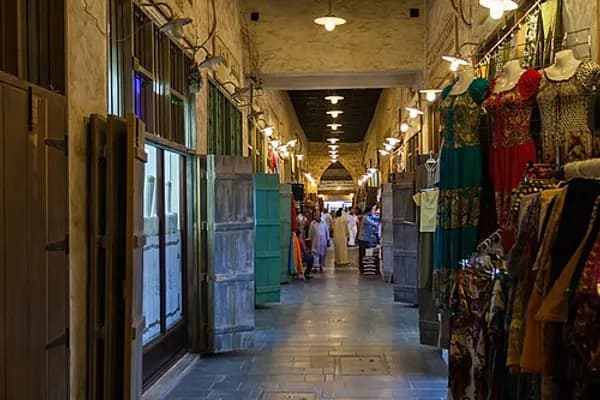
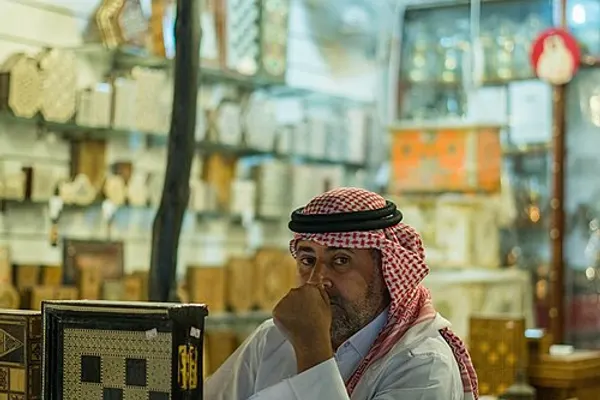
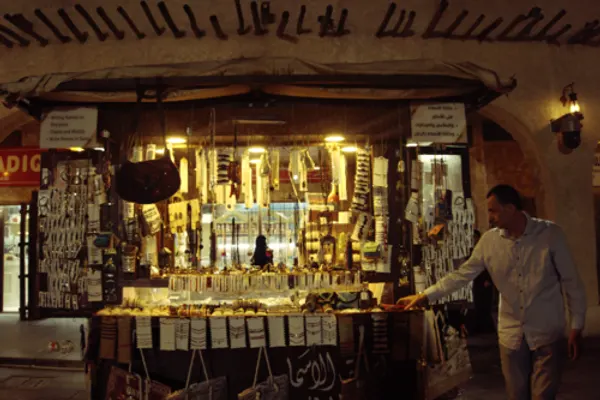
Alongside the boutique hotel, there are many shops around the Souq. There is a section for women, which sell traditional women clothing, perfumes and various Arabic fragrances, as well as jewellery shops which sell gold. Other than the women section the Souq has shops for men clothing, souvenirs, small supermarkets, and many family owned shops that sell traditional Qatari souvenirs. There are also many different restaurants that serve different cuisine, mostly Qatari and Middle Eastern.
Pet area
There are pet stalls in Souq Waqif which sell a variety of domestic pets, including dogs, cats, rabbits, turtles and birds. The sub-par living conditions of the pets has been the subject of advocacy campaigns in recent years, with proponents arguing that the animals suffer from a lack of proper healthcare and exposure to adverse weather conditions. Furthermore, some customers allege that stall owners falsify vaccination records. There is also a separate area in the souq reserved for falcon handling. The falcon souq, as it is called, sells not only falcons but also the needed accessories such as landing pads and GPS guidance systems for the birds.
Al Rayyan Theatre
A 980-seat indoor theatre known as Al Rayyan Theatre is located in the souq.
See also
Souq Al Wakrah
References
External links
Wikimedia Commons has media related to Souq Waqif.
The official Website of Souq Waqif Art Center
Geography Al Safliya Island
Banana Island
Doha Bay
Doha Corniche
Halul Island
The Pearl Island
Economy and transport Al Dafna Financial District
Barwa Financial District
Doha International Airport
Doha Metro Gold Line
Hamad International Airport
Orbital Highway
Demographics and culture Abdulla Bin Zaid Al Mahmoud Islamic Cultural Center
Doha Tribeca Film Festival
Imam Muhammad ibn Abd al-Wahhab Mosque
Katara Cultural Village
Mathaf: Arab Museum of Modern Art
Museum of Islamic Art
Qatar National Museum
Qatar National Theater
National Museum of Qatar
Souq Waqif
Education Carnegie Mellon University in Qatar
Georgetown University School of Foreign Service in Qatar
Hamad Bin Khalifa University
Cornell University in Qatar
HEC Paris in Qatar
Northwestern University in Qatar
Texas A&M University at Qatar
UCL Qatar
Virginia Commonwealth University in Qatar
Weill Cornell Medical College in Qatar
Stenden University Qatar
College of the North Atlantic in Qatar
Qatar University in Qatar
University of Calgary in Qatar
See also Education City
Sports
Encyclopedic content adapted from the Wikipedia article on Souq Waqif, used under CC BY-SA 4.0.
What makes Souq Waqif special
Souq Waqif stands out among Doha’s neighborhoods for its distinctive character: doha's restored historic souq. It tops our ranking of the best neighborhoods in Doha, it offers the kind of experience that defines a great city trip — a place where the streets themselves tell a story and every block rewards curiosity.
Best for
Our take on Souq Waqif
Souq Waqif is the neighborhood we send friends to first when they visit Doha. It earns the top spot in our ranking not because it is the most famous district in the city, but because it delivers the most complete neighborhood experience — the kind of place where every block rewards curiosity and every return visit reveals something new.
Walking through Souq Waqif is like reading a history book with your feet. The architecture tells the story of decades — sometimes centuries — of evolution, and the neighborhood has managed to preserve its historical character without becoming a museum piece. People still live here, still run businesses here, still argue about parking here. That living quality is what separates a great historic neighborhood from a pretty but lifeless one.
Our editors recommend budgeting at least half a day here — enough time to walk the main streets, sit down for coffee, and discover the side streets where Souq Waqif's real character lives.
Living in Souq Waqif
Souq Waqif is connected to the rest of Doha by public transit, and most visitors find it straightforward to reach from the city center or airport. Once you arrive, the neighborhood is best explored on foot — the scale is human and the streets reward wandering.
Day-to-day life in Souq Waqif has the rhythm of a genuine residential neighborhood. You will find grocery stores, pharmacies, cafés with morning regulars, and the kind of small independent shops that only survive where locals support them. For visitors, this means the infrastructure you need — good coffee, a decent meal, a quiet place to sit — is always within a short walk.
Accommodation in Souq Waqif ranges from boutique hotels to short-term rentals. We generally recommend staying within the neighborhood itself rather than commuting from a hotel elsewhere in Doha — the experience of waking up inside a great neighborhood is fundamentally different from visiting one as a day trip.
What locals say about Souq Waqif
Long-term residents of Souq Waqif tend to describe their neighborhood with a mix of pride and protectiveness. Like any district with genuine character, Souq Waqif inspires loyalty — the kind of place people move to and never quite leave, or leave and spend years trying to get back to.
Long-time residents speak about Souq Waqif with a historian's eye — they know which buildings are original, which streets have been renamed, which family has run the corner shop for decades. This accumulated knowledge gives the neighborhood a depth that guidebooks cannot replicate. The best way to access it is simply to talk to people.
Like any neighborhood that has earned attention, Souq Waqif is navigating the tension between popularity and preservation. Rents have risen, new businesses have arrived, and long-time residents occasionally grumble that the neighborhood is not what it was. But the fundamentals — the walkability, the food, the community — remain strong, and most locals we speak to believe the neighborhood is still gaining more than it is losing.
Visitor tips
- Souq Waqif is located in Doha, Qatar. The neighborhood is accessible by public transport, taxi, or rideshare from most parts of the city.
- Morning is often the best time to explore — the streets are quieter, the light is better for photography, and cafes are at their most welcoming.
- Wear comfortable walking shoes — the best way to experience Souq Waqif is on foot, wandering the side streets and discovering what lies around each corner.