About the neighborhood
Tourism industry in Chengdu, China
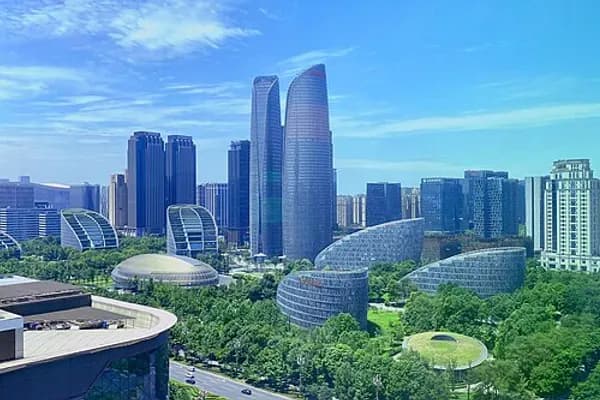
Tourism in Chengdu focuses on Chengdu's status as a major city located in southwestern China and being the capital of Sichuan Province. It serves as a major economical and transportation hub in the region. As of 2020, Chengdu has a population of approximately 21 million people. Many of its tourist attractions revolve around its history, culture, and cuisine.
Overview
Chengdu is a popular destination within China and receives approximately 200 million domestic visitors annually. Visitor numbers are increasing due to rapid economic growth. Domestically, Chengdu is connected by high-speed rail, namely the Xi'an–Chengdu high-speed railway. There is also a high speed railway connecting Chengdu to Chongqing. By air, Chengdu is served by two airports: Chengdu Shuangliu International Airport and Chengdu Tianfu International Airport. Chengdu Shuangliu International Airport is located approximately 18km from the city's downtown and in 2019, was the fourth busiest airport in mainland China. Opened in 2021, Chengdu Tianfu International Airport is approximately 65km southeast to the city center and now handles most of the international flights to Chengdu.
One of the major draws to Chengdu is its cuisine and it is listed as a UNESCO City of Gastronomy. Chengdu is often described as the heart of Sichuan cuisine. Notable dishes include mapo tofu, dandan noodles, and Kung Pao chicken. As of 2026, eleven restaurants in Chengdu possess one Michelin star, while two possess two. Chengdu is also known for its Sichuan hot pot scene.
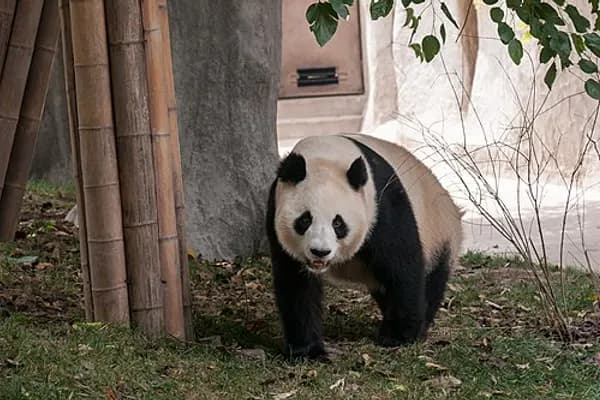
Giant pandas are native to Sichuan province and another major tourist draw for the city. The Chengdu Research Base of Giant Panda Breeding is the world's largest giant panda research base and is home to more than 150 giant pandas. In addition to giant pandas, the facility also houses and provides care for other endangered species such as red pandas and black-necked crane. The research base receives more than 20 million visitors annually.
Another draw for Chengdu is its local culture. Teahouses are a crucial part of the local culture and they are abundant in the city. These teahouses offer services to business travelers such as meeting spaces, ear cleaning, massages, and fingernail cutting. They also provide food and drinks to clients. Chengdu is home to the oldest teahouse in China, the Guanyin Pavilion which has been operating for more than 300 years. Sichuan opera is another tourist draw in the city, with notable locations for live performances being Shufengyan Sichuan Opera House and Furongguocui Sichuan Opera House.
Notable attractions
Chengdu is home to a variety of attractions including 150 museums and two World Heritage Sites. With a recorded history of over 2300 years, Chengdu is the earliest settlement in what is now southwest China. Thus, Chengdu possesses a number of historical landmarks, including the following:
Wenshu Temple: A Buddhist monastery that is over 1400 years old. It contains over 300 statues made of different materials such as bronze, clay, and stone.
Du Fu Thatched Cottage: A former residence of the Tang Dynasty poet Du Fu, which was established in 759.
Wuhou Temple: A temple dedicated to two key figures of the Three Kingdoms Period, Zhuge Liang and Liu Bei.
Jinli: An ancient street that is called the First Street of the Shu Kingdom, dating to the Three Kingdoms Period.
Qingyang Temple: A Taoist temple that dates back to the Zhou dynasty.
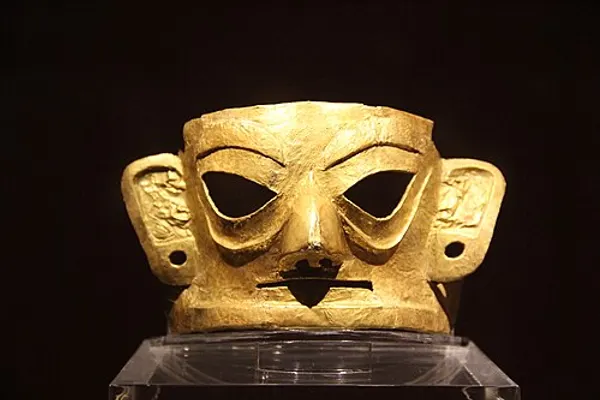
Jinsha Site: A museum dedicated to an ancient Shu civilization and houses important artifacts such as the Gold Sun, Gold Mask, and Immortal Bird
Dujiangyan: A 2000-year-old irrigation system that is still in use today. It is a UNESCO World Heritage Site.
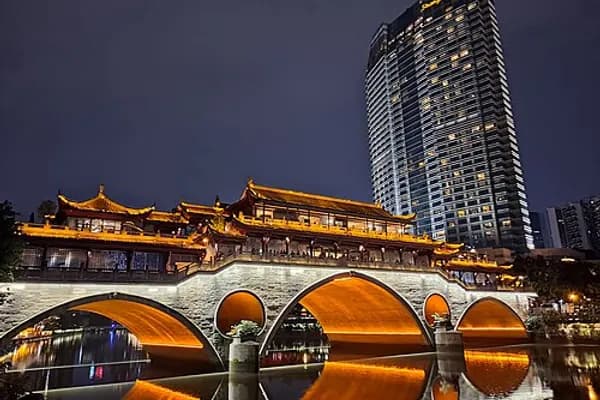
Chengdu also has a number of modern attractions, including Anshun Bridge which is a modern 2003 reconstruction of an ancient bridge that dates back to the Yuan dynasty. The West Pearl Tower is the tallest tower in western China and has a height of 339 meters. People's Park is a large urban park located in downtown Chengdu and features an artificial lake and teahouses. Chunxi Road is a popular commercial district and is home to international luxury brands. Chengdu also has an amusement park, Happy Valley Chengdu, with Legoland Sichuan under construction and will be located approximately 60 km from Chengdu's city center in the Tianfu New Area. The world's largest building by total floor area, New Century Global Center, is also located in Chengdu and contains conference rooms, a water park, an IMAX theater, hotel, and commercial centers. Another attraction is the Sichuan Museum, which is southwest China's largest museum.
Other sites of interest include the Chengdu Zoo, which is the largest zoo in southwest China and exhibits more than 300 species, including giant pandas, ring-tailed lemurs, clouded leopards, and golden snub-nosed monkeys. The Haichang Polar Ocean World is a marine mammal park, similar to SeaWorld, and features exhibits including Steller sea lions, walruses, polar bears, and sand tiger sharks.
References
Encyclopedic content adapted from the Wikipedia article on Wenshu Monastery, used under CC BY-SA 4.0.
What makes Wenshu Monastery special
Wenshu Monastery stands out among Chengdu’s neighborhoods for its distinctive character: chengdu's buddhist historic quarter. Ranked #4 in Chengdu, it offers the kind of experience that defines a great city trip — a place where the streets themselves tell a story and every block rewards curiosity.
Best for
Our take on Wenshu Monastery
Wenshu Monastery occupies a distinctive place in Chengdu's neighborhood landscape. It is the kind of district that rewards travelers who venture beyond the obvious choices — quieter than the tourist-facing areas, richer in local character, and full of the small details that make a city trip memorable.
What makes Wenshu Monastery exceptional is the density of its cultural life. Art galleries, independent bookshops, small theaters, and creative studios are woven into the fabric of the neighborhood rather than clustered in a single zone. You encounter culture here by accident, which is how the best cultural experiences always happen.
Our editors recommend budgeting at least half a day here — enough time to walk the main streets, sit down for coffee, and discover the side streets where Wenshu Monastery's real character lives.
Living in Wenshu Monastery
Wenshu Monastery is connected to the rest of Chengdu by public transit, and most visitors find it straightforward to reach from the city center or airport. Once you arrive, the neighborhood is best explored on foot — the scale is human and the streets reward wandering.
Day-to-day life in Wenshu Monastery has the rhythm of a genuine residential neighborhood. You will find grocery stores, pharmacies, cafés with morning regulars, and the kind of small independent shops that only survive where locals support them. For visitors, this means the infrastructure you need — good coffee, a decent meal, a quiet place to sit — is always within a short walk.
Accommodation in Wenshu Monastery ranges from boutique hotels to short-term rentals. We generally recommend staying within the neighborhood itself rather than commuting from a hotel elsewhere in Chengdu — the experience of waking up inside a great neighborhood is fundamentally different from visiting one as a day trip.
What locals say about Wenshu Monastery
Long-term residents of Wenshu Monastery tend to describe their neighborhood with a mix of pride and protectiveness. Like any district with genuine character, Wenshu Monastery inspires loyalty — the kind of place people move to and never quite leave, or leave and spend years trying to get back to.
The creative community in Wenshu Monastery is genuine, not aspirational. Residents include working artists, writers, musicians, and designers who chose the neighborhood because it supported their work — affordable studio space, a community that values craft, and enough foot traffic to sustain independent galleries and shops.
Compared to the more famous districts in Chengdu, Wenshu Monastery has maintained a lower profile, which many residents consider an advantage. The neighborhood evolves gradually rather than being reshaped by sudden attention, and the result is a community that still feels organic rather than curated.
Visitor tips
- Wenshu Monastery is located in Chengdu, China. The neighborhood is accessible by public transport, taxi, or rideshare from most parts of the city.
- Morning is often the best time to explore — the streets are quieter, the light is better for photography, and cafes are at their most welcoming.
- Wear comfortable walking shoes — the best way to experience Wenshu Monastery is on foot, wandering the side streets and discovering what lies around each corner.