About the neighborhood
Cadastral Area of Prague in Czech Republic
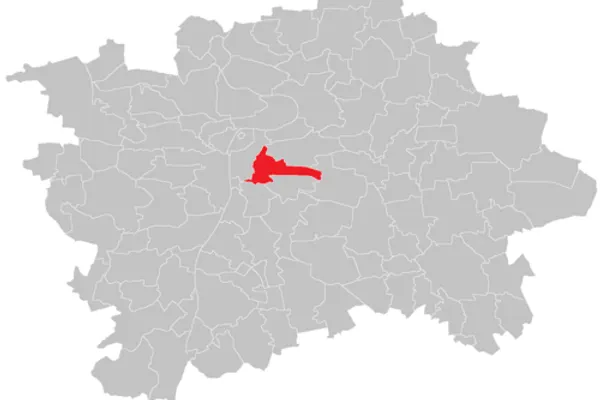
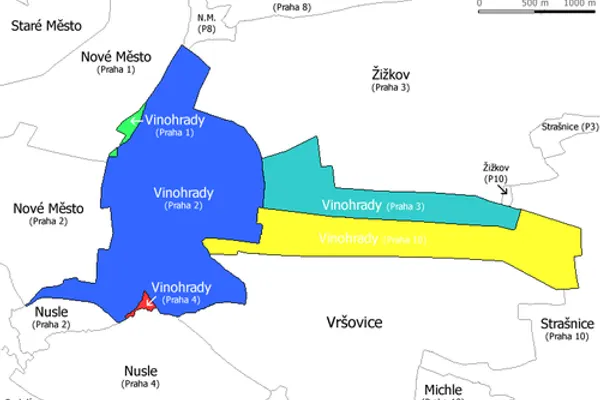
Vinohrady (until 1960 Královské Vinohrady, in English literally "Royal Vineyards" German: Königliche Weinberge) is a cadastral district in Prague. It is so named because the area was once covered in vineyards dating from the 14th century. Vinohrady lies in the municipal and administrative districts of Prague 2 (west part), Prague 3 (north-east part) and Prague 10 (south-east part), little parts also of Prague 1 (Prague State Opera and Federal Assembly of Czechoslovakia) and Prague 4 (near Nusle).
Between 1788–1867 it was called Viničné Hory (Vineyard Mountains). From 1867 to 1968 it was called Královské Vinohrady ("Royal Vineyards"). In 1875, Královské Vinohrady was divided into two parts, Královské Vinohrady I and Královské Vinohrady II, the part I was renamed to Žižkov and the part II to Královské Vinohrady in 1877. In 1922 Královské Vinohrady was made part of Prague as district XII. In 1949, the west part was conjoined with Prague 2 and the east part remain separate district Prague 12. In 1960, when Prague's divisions were reduced from 16 to 10 administrative districts, the north part of Prague 12 was conjoined with Žižkov into Prague 3 and the south part was joined to Prague 10. Local patriots say that the real reason was that Královské Vinohrady was known as a "bourgeois" district and thus politically unreliable for the then-ruling Communist Party of Czechoslovakia.
The historic part of Prague Main Railway Station (open 1871 as Franz Joseph I Station) is situated at the margin of Vinohrady. City Electric Tramway of Královské Vinohrady (1897) were a base of the Prague net of municipal electric tramway.
Description
The main east-west avenue of Vinohrady is Vinohradská Avenue leading from Wenceslas Square to Žižkov and Strašnice. Along this street stand headquarter building of Czech Radio, old Vinohrady Market Hall and Vinohrady Water Tower and several stations of Prague Metro Line A (Náměstí Míru, Jiřího z Poděbrad, Flora, Želivského). Parallel to Vinohradská street, there is Slezská street, Korunní street (from Peace Square to Flora) and Francouzská street (from Peace Square to Vršovice]. In the east part of Vinohrady near Strašnice are situated the large Královské Vinohrady Teaching Hospital and Vinohrady Cemeteries.
In the south-north direction, Legerova street as a part of North-South Artery leads at the west margin of Vinohrady, which is a boundary of New Town, along C metro line from Nusle Bridge to the main railway station (Praha hlavní nádraží). Next south-north streets (Bělehradská with Tyl's Square, Italská and many others) are narrower and surmount broken relief crosswise valleys.
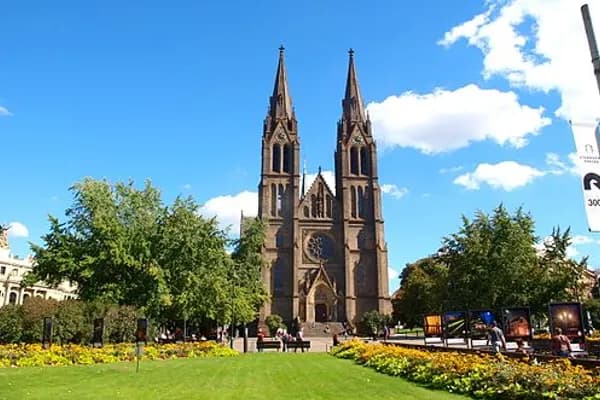
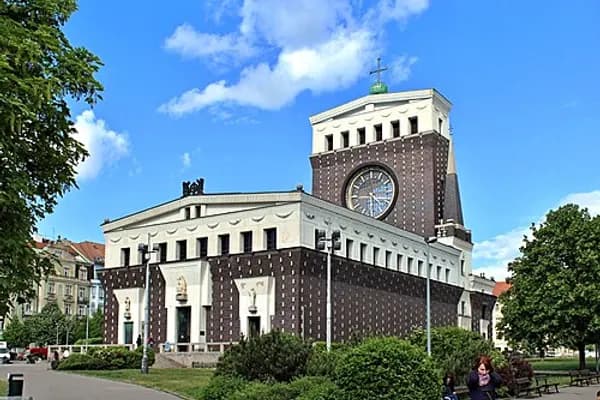
The main square of west Vinohrady is "náměstí Míru" (Peace Square) with Prague 2 town hall, Vinohrady Theatre, Gothic Revival Saint Ludmila Church (Josef Mocker, 1892) and a station of A metro line. In the central part of Vinohrady near Vinohradská street, there lies "náměstí Jiřího z Poděbrad" (George of Poděbrady Square) with a modern "Church of the Most Sacred Heart of Our Lord" by Jože Plečnik built in 1932. In Vinohrady is also situated center of the Czech gay scene, including a number of gay-friendly bars.
Famous Czech artists such as Jakub Schikaneder, Otto Gutfreund, Hugo Boettinger and Karel Špillar are buried in Vinohrady Cemetery.
Parks
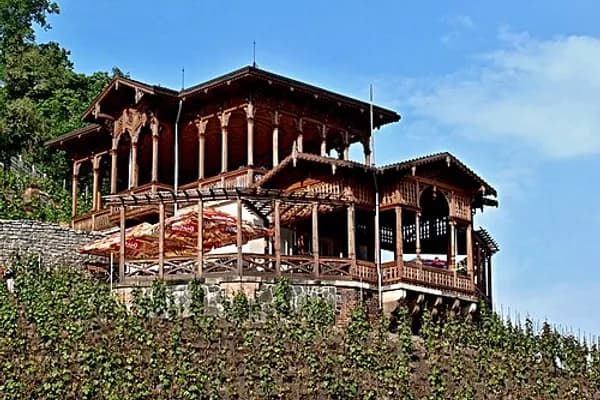
There are several parks in Vinohrady. Havlíčkovy sady (Havlíček's Orchards) is Prague's second-largest park. Villa Gröbe served as summerhouse of the nobility, it is inspired by Italian Renaissance suburban villas and is surrounded by vineyards still in production, founded by Charles IV in the second half of the 14th century. The vineyards and the house deteriorated towards the end of the 20th century, but were renewed. The vineyards now have an area of 1.7 ha and annually produce 4000 liters of wine. There are grown varieties of Müller Thurgau, Rhine Riesling, Dornfelder, Pinot Gris and Pinot Noir, and since 1997 there are annual "Vinohrady vintage celebrations", usually in September.
In the north-west part of Vinohrady, near Italská street, are the Riegrovy sady (Rieger's Orchards) with a great view over Prague, Vinohrady Sokol House and a large beer garden. Folimanka Park is situated at the Vinohrady side of Nusle Valley under the large Nusle Bridge. Smaller parks are situated in central Vinohrady: sady Svatopluka Čecha (Svatopluk Čech's Orchards) near Vinohradská street, Bezručovy sady (Petr Bezruč's Orchards) between Slezská and Francouzská street and parks at all main Vinohrady squares.
Demographics
Source: Censuses Gallery
External links
Wikimedia Commons has media related to Vinohrady (Prague).
vinohrady.cz -- Historical and cultural information (in Czech) Archived 2007-08-10 at the Wayback Machine
References
Encyclopedic content adapted from the Wikipedia article on Vinohrady, used under CC BY-SA 4.0.
What makes Vinohrady special
Vinohrady stands out among Prague’s neighborhoods for its distinctive character: leafy parks, cafés and art nouveau. Ranked #2 in Prague, it offers the kind of experience that defines a great city trip — a place where the streets themselves tell a story and every block rewards curiosity.
Best for
Our take on Vinohrady
Vinohrady is one of the strongest neighborhoods in Prague, and it consistently appears in our editors' personal favorites lists. It may not always get the same attention as the city's most famous district, but among travelers who know Prague well, Vinohrady is often the first recommendation.
What makes Vinohrady exceptional is the density of its cultural life. Art galleries, independent bookshops, small theaters, and creative studios are woven into the fabric of the neighborhood rather than clustered in a single zone. You encounter culture here by accident, which is how the best cultural experiences always happen.
Our editors recommend budgeting at least half a day here — enough time to walk the main streets, sit down for coffee, and discover the side streets where Vinohrady's real character lives.
Living in Vinohrady
Vinohrady is connected to the rest of Prague by public transit, and most visitors find it straightforward to reach from the city center or airport. Once you arrive, the neighborhood is best explored on foot — the scale is human and the streets reward wandering.
Day-to-day life in Vinohrady has the rhythm of a genuine residential neighborhood. You will find grocery stores, pharmacies, cafés with morning regulars, and the kind of small independent shops that only survive where locals support them. For visitors, this means the infrastructure you need — good coffee, a decent meal, a quiet place to sit — is always within a short walk.
Accommodation in Vinohrady ranges from boutique hotels to short-term rentals. We generally recommend staying within the neighborhood itself rather than commuting from a hotel elsewhere in Prague — the experience of waking up inside a great neighborhood is fundamentally different from visiting one as a day trip.
What locals say about Vinohrady
Long-term residents of Vinohrady tend to describe their neighborhood with a mix of pride and protectiveness. Like any district with genuine character, Vinohrady inspires loyalty — the kind of place people move to and never quite leave, or leave and spend years trying to get back to.
The creative community in Vinohrady is genuine, not aspirational. Residents include working artists, writers, musicians, and designers who chose the neighborhood because it supported their work — affordable studio space, a community that values craft, and enough foot traffic to sustain independent galleries and shops.
Like any neighborhood that has earned attention, Vinohrady is navigating the tension between popularity and preservation. Rents have risen, new businesses have arrived, and long-time residents occasionally grumble that the neighborhood is not what it was. But the fundamentals — the walkability, the food, the community — remain strong, and most locals we speak to believe the neighborhood is still gaining more than it is losing.
Visitor tips
- Vinohrady is located in Prague, Czechia. The neighborhood is accessible by public transport, taxi, or rideshare from most parts of the city.
- Morning is often the best time to explore — the streets are quieter, the light is better for photography, and cafes are at their most welcoming.
- Wear comfortable walking shoes — the best way to experience Vinohrady is on foot, wandering the side streets and discovering what lies around each corner.
- Save the neighborhood's location on your phone before you arrive. Offline maps are especially useful for navigating the smaller side streets.