About the neighborhood
Port in France
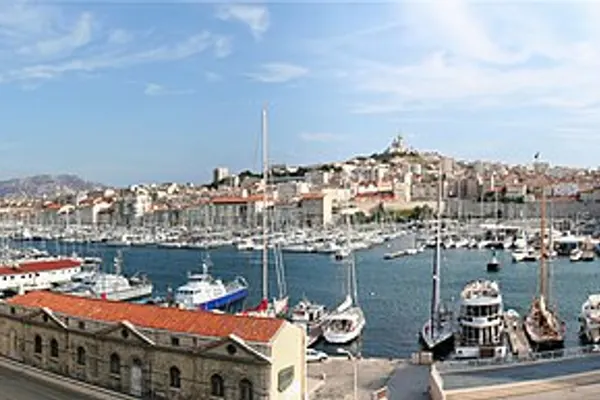
The Old Port of Marseille (French: Vieux-Port de Marseille, vjøpɔʁ də maʁsɛj; Occitan: Vieu Port de Marselha) is at the end of the Canebière, the major street of Marseille. It has been the natural harbour of the city since antiquity and is now the main popular place in Marseille. It became mainly pedestrian in 2013.
History
In 600 BC, Greek settlers from Phocaea landed in the Lacydon, a rocky Mediterranean cove, now the site of the Old Port of Marseille. They set up a trading post or emporion in the hills on the northern shore. Until the nineteenth century the Old Port remained the centre of maritime activity in Marseille. In the Middle Ages the land at the far end of the port was used to cultivate hemp for the local manufacture of rope for mariners, which is the origin of the name of the main thoroughfare of Marseille, the Canebière.
The great St. Victor's Abbey was gradually built between the third and ninth centuries on the hills to the south of the Old Port, on the site of a Hellenic burial ground.
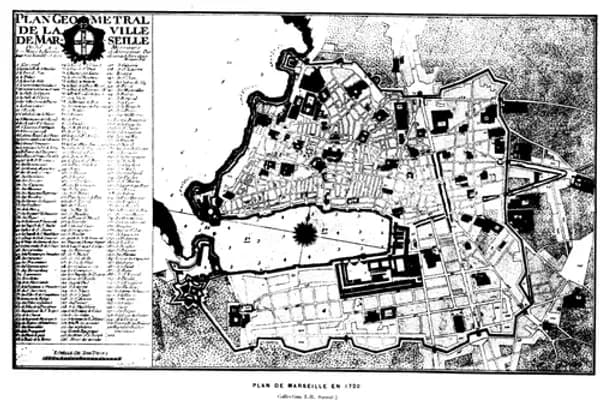
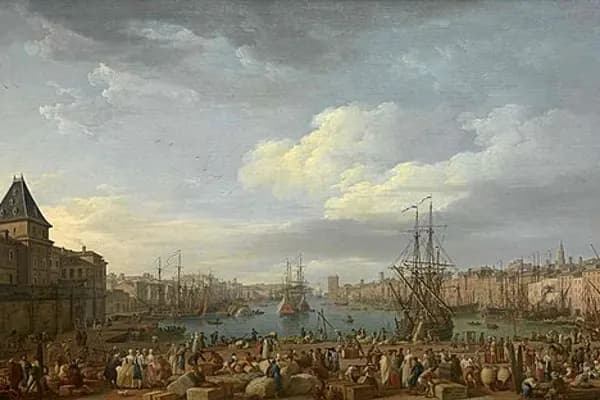
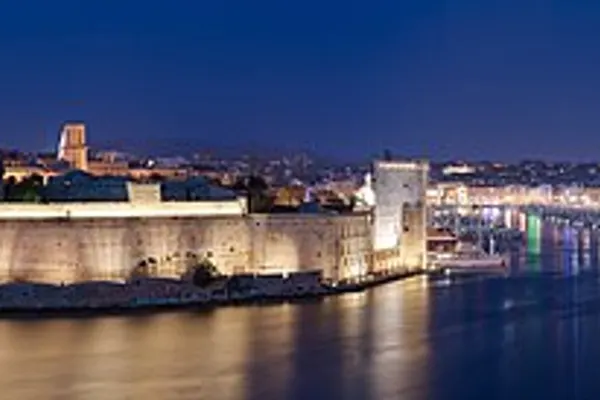
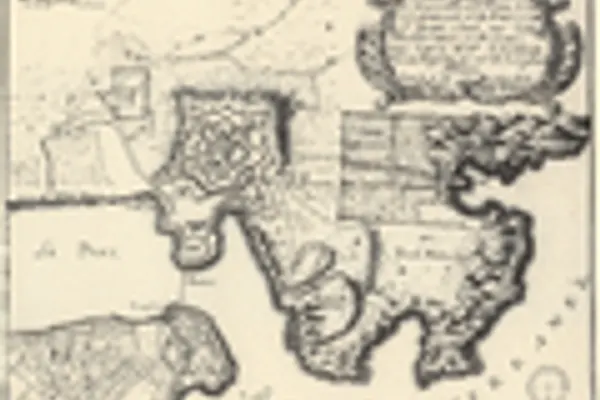
Between the fifteenth and seventeenth centuries, quays were constructed under Louis XII and Louis XIII and an important shipyard for galleons put in place. Following a revolt against their governor by the citizens of Marseille, Louis XIV ordered the erection of the forts of St Jean and St Nicolas at the entrance to the harbour and established an arsenal and fleet in the Old Port itself. The notorious arsenal des galères was situated on the left side of the Old Port between the Cours Jean-Balard and the Cours Estienne-d'Orves: those condemned to be galley slaves in the royal war fleet were branded with the letters GAL.
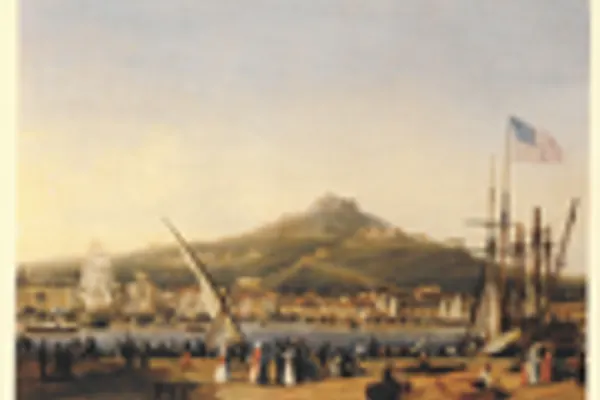
According to John Murray, in 1854 the Old Port had a capacity of between 1,000 and 1,200 ships. Roughly 18,000 merchant ships passed through the port each year, carrying about 20 million barrels worth of freight; this represented a quarter of the trade in Liverpool at the time. The 6 metre depth of the harbour, however, proved problematic for steamships later in the century; much deeper docks had to be constructed at La Joliette. In World War II the Old Port was left in complete ruins. According to eye-witness accounts, in January 1943, the Nazis, aided by the French police, dynamited much of the historic old town and demolished the gigantic aerial ferry or "transbordeur", an engineering tour de force that had become a major landmark of Marseille, comparable to the Eiffel Tower in Paris. This became known as the "Battle of Marseille". In 1948 Fernand Pouillon was put in charge of the reconstruction of the devastated old quarter.
When, beginning in the 1840s, new harbour moles, quays and the Docks were built along the coast of the La Joliette quarter to the north-west, many port activities were moved out of the Old Port. Over time, new harbour installations were built further north-west, resulting in what is today the Grand Port Maritime de Marseille: continuous harbour installations as far as L'Estaque and the southern entrance to the Rove Tunnel, and "satellite" extensions around Fos-sur-Mer and along the shore of the Étang de Berre. The Old Port is used today as a marina, as a terminal for local boat trips, and hosts a local fish market. In 2013, for the European Capital of Culture, the Old Port was largely pedestrianized. It has been renovated as a large public square following an international competition won by Michel Desvigne Paysagistes, with Foster and Partners. The project is also to have a second phase with parks to be built around the port in 2020 for a sum of €64 million.
The Old Port in popular culture
The Count of Monte Cristo by Alexandre Dumas is set in the Old Port and on the Château d'If.
Marius, Fanny and César, by Marcel Pagnol.
Love Actually was partly filmed in the Bar de la Marine on the Old Port.
Many of the bars and cafés around the Old Port are mentioned in the detective novels of Jean-Claude Izzo.
Ian Fleming sets scenes in his James Bond novel On Her Majesty's Secret Service in and near the Old Port.
Claude McKay in his 1929 novel "Banjo" follows the lives of expatriate Americans in La Joliette and explores perceptions of race and culture in Europe and the US.
The Old Port is featured on film in both The French Connection and French Connection 2, starring Gene Hackman.
Seven Thunders (US title: The Beasts of Marseilles), the 1957 black and white British film regarding Marseille in the Second World War, is set in the Old Port Quarter, and ends with the demolition of the quarter.
Points of interest around the Old Port
St. Victor's Abbey, on the south side of the Old Port, one of the oldest sites of Christian worship in France.
the Phare de Sainte Marie, a lighthouse.
the Canebière, situated at the far end of the Old Port on the Quai des Belges.
the Hôtel de Ville (town hall).
the historic ferry, plying between opposite sides of the Old Port.
the Roman Dock Museum.
the Musée des civilisations de l'Europe et de la Méditerranée, MUCEM (Museum of European and Mediterranean civilizations)
Gallery
References
Wikimedia Commons has media related to Old Port of Marseille.
43°17′41″N 5°22′15″E / 43.29472°N 5.37083°E / 43.29472; 5.37083
Encyclopedic content adapted from the Wikipedia article on Vieux-Port, used under CC BY-SA 4.0.
What makes Vieux-Port special
Vieux-Port stands out among Marseille’s neighborhoods for its distinctive character: the ancient harbor, still working. Ranked #4 in Marseille, it offers the kind of experience that defines a great city trip — a place where the streets themselves tell a story and every block rewards curiosity.
Best for
Our take on Vieux-Port
Vieux-Port occupies a distinctive place in Marseille's neighborhood landscape. It is the kind of district that rewards travelers who venture beyond the obvious choices — quieter than the tourist-facing areas, richer in local character, and full of the small details that make a city trip memorable.
Walking through Vieux-Port is like reading a history book with your feet. The architecture tells the story of decades — sometimes centuries — of evolution, and the neighborhood has managed to preserve its historical character without becoming a museum piece. People still live here, still run businesses here, still argue about parking here. That living quality is what separates a great historic neighborhood from a pretty but lifeless one.
Our editors recommend budgeting at least half a day here — enough time to walk the main streets, sit down for coffee, and discover the side streets where Vieux-Port's real character lives.
Living in Vieux-Port
Vieux-Port is connected to the rest of Marseille by public transit, and most visitors find it straightforward to reach from the city center or airport. Once you arrive, the neighborhood is best explored on foot — the scale is human and the streets reward wandering.
Day-to-day life in Vieux-Port has the rhythm of a genuine residential neighborhood. You will find grocery stores, pharmacies, cafés with morning regulars, and the kind of small independent shops that only survive where locals support them. For visitors, this means the infrastructure you need — good coffee, a decent meal, a quiet place to sit — is always within a short walk.
Accommodation in Vieux-Port ranges from boutique hotels to short-term rentals. We generally recommend staying within the neighborhood itself rather than commuting from a hotel elsewhere in Marseille — the experience of waking up inside a great neighborhood is fundamentally different from visiting one as a day trip.
What locals say about Vieux-Port
Long-term residents of Vieux-Port tend to describe their neighborhood with a mix of pride and protectiveness. Like any district with genuine character, Vieux-Port inspires loyalty — the kind of place people move to and never quite leave, or leave and spend years trying to get back to.
What locals appreciate most about Vieux-Port is its consistency — the feeling that the neighborhood works the same way on a Tuesday morning as it does on a Saturday night. It is not a place that performs for visitors and then goes quiet. The rhythm is genuine, the community is real, and the daily experience of living here is what draws people and keeps them.
Compared to the more famous districts in Marseille, Vieux-Port has maintained a lower profile, which many residents consider an advantage. The neighborhood evolves gradually rather than being reshaped by sudden attention, and the result is a community that still feels organic rather than curated.
Visitor tips
- Vieux-Port is located in Marseille, France. The neighborhood is accessible by public transport, taxi, or rideshare from most parts of the city.
- Morning is often the best time to explore — the streets are quieter, the light is better for photography, and cafes are at their most welcoming.
- Wear comfortable walking shoes — the best way to experience Vieux-Port is on foot, wandering the side streets and discovering what lies around each corner.
- Save the neighborhood's location on your phone before you arrive. Offline maps are especially useful for navigating the smaller side streets.