About the neighborhood
District of Budapest in Central Hungary, Hungary
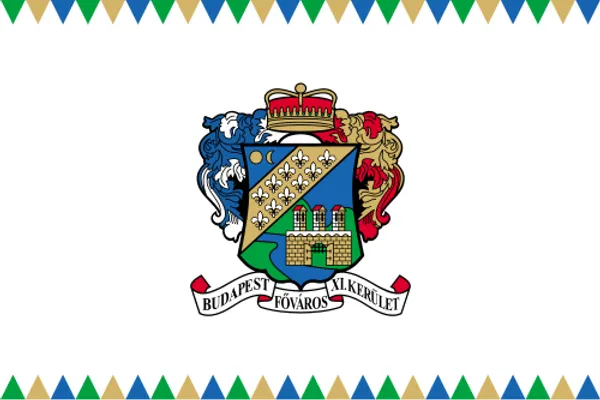
Újbuda (lit. New Buda) is the 11th district of Budapest (Hungarian: Budapest XI. kerület), Hungary. It is the most populous district of Budapest with 137,426 inhabitants (2008). Until the 1890s, Újbuda's present territory was a field south of the historical town of Buda. The construction of a new residential area started in the 1900s, the present district was formed in 1930. From 1880 to 1980, Újbuda's population increased from 1,180 to 178,960. There are boulevards, avenues with tram lines, and communist-era housing estates in the district. Line 4 of the Budapest metro passes through Újbuda.
Neighborhoods
Albertfalva
Dobogó
Gazdagrét
Gellérthegy (partially)
Hosszúrét
Infopark
Kamaraerdő
Kelenföld
Kelenvölgy
Kőérberek
Lágymányos
Madárhegy
Nádorkert
Őrmező
Örsöd
Péterhegy
Pösingermajor
Sasad
Sashegy (partially)
Szentimreváros
Spanyolrét
Tabán (partially)
Population
Ethnic groups (2001 census)
Magyars - 91.4%
Germans - 1.2%
Others - 1.8%
No answer - 5.6%
Religions (2001 census)
Roman Catholic - 47.1%
Calvinist - 12%
Lutheran - 2.8%
Greek Catholic - 1.4%
Jewish - 0.45%
Other (Christian) - 1%
Other (non-Christian) - 0.5%
Atheists - 18%
No answer, unknown - 16.6%
Transport
Traffic to Budapest from Western Hungary enters the city in this district; a main road, Budaörsi út is the direct continuation of motorways M1 and M7. Three bridges on the Danube are located in the district; the bridges Liberty, Petőfi and Rákóczi/Lágymányosi connect the district to the neighboring 5th and 9th districts on the Pest side.
Kelenföld Railway Station, the fourth largest railway station of Budapest is in the district. Most of the trains heading to Western Hungary and Western Europe pass through the station (including commuter trains to the agglomeration). The district also has a smaller station, the Albertfalva station.
Kelenföld Railway Station is also the terminus for Metro Line M4; the line, opened in 2014, is the first of the Budapest Metro to serve the district, where it has 5 of its 10 stations. It connects the district with Keleti Railway Station, the largest railway station in Hungary. Next to the Kelenföld Railway Station there is also a major bus station for local buses and another for buses serving the nearby towns.
The district has 46 bus lines, 9 night bus lines and 11 tram lines (among them Lines 4 and 6, two of the most important tram lines of the city, both of which have their terminus in the district).
There are no airports with scheduled flights within the district, however, it is home to Budaörs Airport, the pre-1950 main airport of Hungary. This was the second international airport in Budapest (after Mátyásföld Airfield), and the oldest still existing one, although today it serves general aviation only. During World War I one of the first military airfields, Albertfalva Military Airfield was located in the district, next to the first Hungarian airplane factory.
List of mayors
International relations
Twin towns – Sister cities
Újbuda is twinned with:
Ruse, Bulgaria
Prague 5 - Czech Republic
Trogir - Croatia
Vienna – Döbling – Austria
Ustroń - Poland
Bad Cannstatt Stuttgart – Germany
Sânzieni (Kézdiszentlélek) – Romania
Târgu Mureş (Marosvásárhely) – Romania
Trstice (Nádszeg) – Slovakia
Ada – Serbia
Cortona – Italy
Berehove Raion – Ukraine
See also
Újpest
Újpalota
Újlipótváros
Gallery
Notes
References
Wikimedia Commons has media related to Budapest_District_XI.
Wikivoyage has a travel guide for Újbuda.
External links
Photographs
Districts I. Várkerület
II. 2nd district
III. Óbuda-Békásmegyer
IV. Újpest
V. Belváros-Lipótváros
VI. Terézváros
VII. Erzsébetváros
VIII. Józsefváros
IX. Ferencváros
X. Kőbánya
XI. Újbuda
XII. Hegyvidék
XIII. 13th district
XIV. Zugló
XV. 15th district
XVI. 16th district
XVII. Rákosmente
XVIII. Pestszentlőrinc-Pestszentimre
XIX. Kispest
XX. Pesterzsébet
XXI. Csepel
XXII. Budafok-Tétény
XXIII. Soroksár
Events and traditions Budapest Fashion Week
Budapest Fringe Festival
Budapest Spring Festival
Budapest Opera Ball
Café Budapest Contemporary Arts Festival
Hungarian Cuisine
Hungarian National Ballet
LOW Festival
Sziget Festival
Universities Budapest Business School
Budapest University of Technology
Corvinus University
Eötvös Loránd University
Hungarian University of Fine Arts
Liszt Ferenc Academy of Music
Moholy-Nagy University of Art and Design
National University of Public Service
Óbuda University
Semmelweis University
University of Physical Education
Academy of Drama and Film
Andrássy University
Aquincum Institute of Technology
Budapest Metropolitan University
Budapest University of Jewish Studies
Central European University
International Business School
Károli Gáspár University of Reformed Church
Pázmány Péter Catholic University
Economy Budapest Stock Exchange
Economy of Budapest
List of companies based in Budapest
Budapest Metropolitan Area
Transport Budapest Ferenc Liszt International Airport
Budapest Metro
Budapest Tram Network
Budapest Commuter Railway
BuBi Bicycle
M0 Ring Road
Eastern railway station
Western railway station
Southern railway station
History of Budapest
Category
Encyclopedic content adapted from the Wikipedia article on Újbuda, used under CC BY-SA 4.0.
What makes Újbuda special
Újbuda stands out among Budapest’s neighborhoods for its distinctive character: student budapest on the buda side. Ranked #5 in Budapest, it offers the kind of experience that defines a great city trip — a place where the streets themselves tell a story and every block rewards curiosity.
Best for
Our take on Újbuda
Újbuda occupies a distinctive place in Budapest's neighborhood landscape. It is the kind of district that rewards travelers who venture beyond the obvious choices — quieter than the tourist-facing areas, richer in local character, and full of the small details that make a city trip memorable.
What makes Újbuda worth the visit is the texture of daily life here. It is a neighborhood that functions for the people who live in it — not just for the visitors who pass through. The shops serve local needs, the restaurants feed local appetites, and the streets have a rhythm that reflects genuine community rather than tourism infrastructure. That is the quality our editors prize most, and Újbuda has it in abundance.
Our editors recommend budgeting at least half a day here — enough time to walk the main streets, sit down for coffee, and discover the side streets where Újbuda's real character lives.
Living in Újbuda
Újbuda is connected to the rest of Budapest by public transit, and most visitors find it straightforward to reach from the city center or airport. Once you arrive, the neighborhood is best explored on foot — the scale is human and the streets reward wandering.
Day-to-day life in Újbuda has the rhythm of a genuine residential neighborhood. You will find grocery stores, pharmacies, cafés with morning regulars, and the kind of small independent shops that only survive where locals support them. For visitors, this means the infrastructure you need — good coffee, a decent meal, a quiet place to sit — is always within a short walk.
Accommodation in Újbuda ranges from boutique hotels to short-term rentals. We generally recommend staying within the neighborhood itself rather than commuting from a hotel elsewhere in Budapest — the experience of waking up inside a great neighborhood is fundamentally different from visiting one as a day trip.
What locals say about Újbuda
Long-term residents of Újbuda tend to describe their neighborhood with a mix of pride and protectiveness. Like any district with genuine character, Újbuda inspires loyalty — the kind of place people move to and never quite leave, or leave and spend years trying to get back to.
What locals appreciate most about Újbuda is its consistency — the feeling that the neighborhood works the same way on a Tuesday morning as it does on a Saturday night. It is not a place that performs for visitors and then goes quiet. The rhythm is genuine, the community is real, and the daily experience of living here is what draws people and keeps them.
Compared to the more famous districts in Budapest, Újbuda has maintained a lower profile, which many residents consider an advantage. The neighborhood evolves gradually rather than being reshaped by sudden attention, and the result is a community that still feels organic rather than curated.
Visitor tips
- Újbuda is located in Budapest, Hungary. The neighborhood is accessible by public transport, taxi, or rideshare from most parts of the city.
- Morning is often the best time to explore — the streets are quieter, the light is better for photography, and cafes are at their most welcoming.
- Wear comfortable walking shoes — the best way to experience Újbuda is on foot, wandering the side streets and discovering what lies around each corner.
- Save the neighborhood's location on your phone before you arrive. Offline maps are especially useful for navigating the smaller side streets.