About the neighborhood
Neighborhoods of Pittsburgh in Allegheny, Pennsylvania, United States
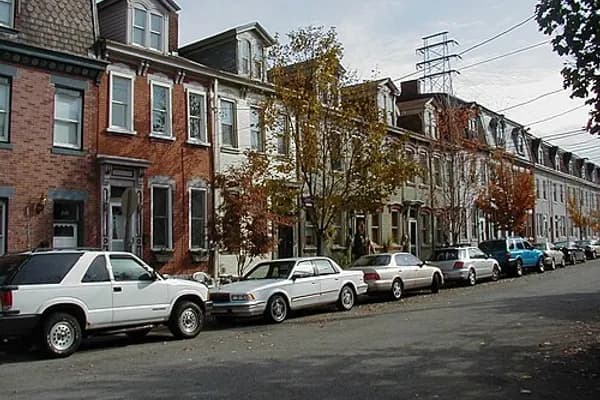
South Side (or "Southside") is an area in Pittsburgh, Pennsylvania, United States, located along the Monongahela River across from Downtown Pittsburgh. The South Side is officially divided into two neighborhoods, South Side Flats and South Side Slopes. Both the Flats and the Slopes are represented on Pittsburgh City Council by Bob Charland. The business district stretches along East Carson Street, which is home to many small shops, restaurants and bars. In 2006, more than 80 bars and pubs operated in the South Side Flats. The neighborhood has an urban fabric with rowhouses.
The South Side is well-connected with public transit. Its proximity and public transit connections also have attracted professionals who work downtown. Pittsburgh Fire Station #24 is located on Mary Street in the neighborhood.
History
The South Side, most of which was originally the village of Birmingham that was annexed to the city in 1872, was settled primarily by German then later Eastern European immigrants who came to Pittsburgh to work in heavy industry. Dr. Nathaniel Bedford planned a large part of Birmingham and named many streets after his friends and family, thus the predominance of streets named after people such as Jane, Sarah, and Carson.
For many years, much of the South Side was dominated by heavy industry and associated service businesses. The Jones and Laughlin Steel Company was located on the South Side but closed in the 1980s and has since been redeveloped. The Pittsburgh Terminal Properties building is located on the west end of Carson Street, next to the Liberty Bridge. When construction finished in 1906, it was the largest warehouse between New York and Chicago. Connections to river, rail, and road transport made it an ideal facility for merchants who sold goods and needed temporary storage. It has since been redeveloped into River Walk Corporate Centre and houses a mix of office and service businesses including Paper Products Company and City Center Self Storage.
In more recent years, the South Side has become home to a larger student population. Many students at Duquesne University, University of Pittsburgh, and Carnegie Mellon University either live in the South Side or spend a portion of their nightlife there. A walk over the South Tenth Street Bridge that crosses the Monongahela River takes students to Duquesne University. Due to the large number of college students and young professionals, in addition to the thriving bar scene, South Side has developed into a nightlife destination for young people in Pittsburgh.
Economy
Important streets in South Side are E. Carson Street, Josephine Street, and S. 18th street. The business district is located along E. Carson Street, which runs the length of South Side. The Birmingham Bridge makes South Side easily accessible from Oakland, which is around 2 miles away from South Side. Station Square is about 1.5 miles west of South Side, and Mt. Washington is 2.5 miles away. The average South Side family income in 2003 was $41,353.
East Carson St. has restaurants, bars, and shops that help support the economy of the South Side. The large variety of shopping along E. Carson Street and SouthSide Works is also a factor in the South Side's economy. There are a variety of locally owned stores and other retailers. The Urban Redevelopment Authority started the SouthSide Works project hoping to create over 6,000 jobs. Today, SouthSide Works has over 10 shopping stores and over 10 restaurants & bars. The restoration of the business district has improved South Sides economy dramatically and house sales have jumped $75,000 in the past 10 years along with vacancy dropping below 10%.
The South Side is also home to a variety of service businesses and reconverted office buildings. Many businesses locate here because rents are less than in Downtown Pittsburgh. The Pittsburgh Terminal Properties building has been converted into River Walk Corporate Center. Tenants are a mix of light industrial (The Paper Company), professional (LDA Architects), and storage for Pittsburgh businesses and residents (City Center Self Storage).
South Side Local Development Company (LDC) helps the economic development in the neighborhood. Under LDC, the Neighborhood Assistance Program was created. The NAP is partners with PNC bank and able to fund programs to create jobs and housing production with their $2.5 million grant. Since 1982, LDC has created over 250 new businesses, renovated over 200 stores, and built over 700 new homes. South Sides redeveloped downtown has increased apartment sales and attracted a lot of nightlife in the neighborhood.
South Side Flats
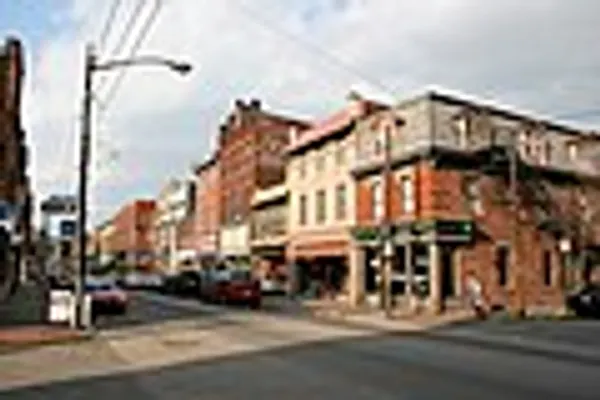
The Flats has one of the largest Victorian main streets in the United States. The entire length of East Carson Street is designated as a historic district. Strict rules dictate what the exterior of the buildings can look like. This neighborhood is a prime example of adaptive reuse of historic structures to spur community revitalization. One of the famous steel mills of Pittsburgh, the Jones and Laughlin Steel Company was located on the South Side but closed in the 1980s and today the land is home to the SouthSide Works shopping and entertainment complex. In the 1980s, this neighborhood was rapidly declining but historic preservation propelled it to a new and bright future. Today, the South Side is a desirable city neighborhood and is known for its multitude of bars and restaurants. The South Side is a popular destination for Pittsburgh residents who seek an entertaining nightlife.
The popularity of the neighborhood has costs. Older, lifelong residents often clash with the values of the young urban professionals and students moving in. Also, parking in the South Side is among the tightest in the city, as narrow streets and high density of buildings leave little empty street space. Nuisance crime has also been a growing issue, but in mid-2018, city leaders announced that crime in the South Side bar district dropped by roughly 30 percent from the previous year, possibly because of the addition of new outdoor security cameras and a larger police patrol presence.
South Side Slopes
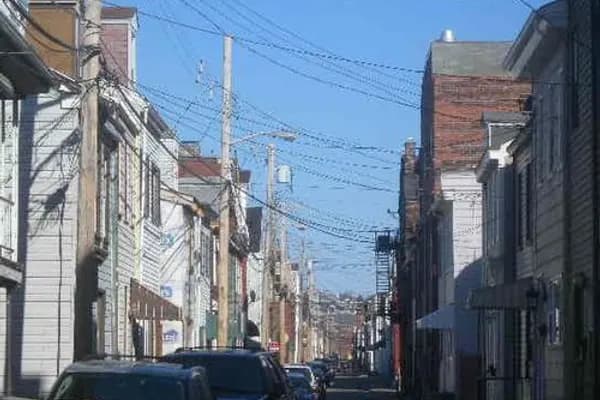
The South Side Slopes is the very steep neighborhood located just south of what is traditionally thought of as the South Side but is more appropriately the South Side Flats. Sections of the Slopes are so steep that special fire trucks have to be used to navigate the zigzagging maze of narrow streets. Some spots are so steep that public staircases actually serve as the street. These public steps have street signs and houses located along them.
Public steps are not rare in the hilly city of Pittsburgh. The city has over 700 sets of steps providing access to otherwise unreachable neighborhoods.
Gallery
A panoramic view of the South Side (from the Birmingham Bridge on the far left to the Tenth Street Bridge on the right). The photograph was taken from Bluff Street on the campus of Duquesne University in February 2010. See also
List of Pittsburgh neighborhoods
History of Pittsburgh's South Side
References
External links
Wikivoyage has a travel guide for South Side.
Media related to South Side (Pittsburgh) at Wikimedia Commons
Former municipalities
Encyclopedic content adapted from the Wikipedia article on Southside, used under CC BY-SA 4.0.
What makes Southside special
Southside stands out among Pittsburgh’s neighborhoods for its distinctive character: pittsburgh's riverside nightlife. Ranked #4 in Pittsburgh, it offers the kind of experience that defines a great city trip — a place where the streets themselves tell a story and every block rewards curiosity.
Best for
Our take on Southside
Southside occupies a distinctive place in Pittsburgh's neighborhood landscape. It is the kind of district that rewards travelers who venture beyond the obvious choices — quieter than the tourist-facing areas, richer in local character, and full of the small details that make a city trip memorable.
The energy of Southside builds as the day goes on, peaking in the evening when the streets fill with locals heading to their regular spots. This is a neighborhood where the nightlife feels organic rather than manufactured — bars that have regulars, music venues where the crowd actually listens, late-night spots where the kitchen stays open because the community demands it.
Our editors recommend budgeting at least half a day here — enough time to walk the main streets, sit down for coffee, and discover the side streets where Southside's real character lives.
Living in Southside
Southside is connected to the rest of Pittsburgh by public transit, and most visitors find it straightforward to reach from the city center or airport. Once you arrive, the neighborhood is best explored on foot — the scale is human and the streets reward wandering.
The neighborhood transitions through distinct phases during the day. Mornings are quiet — coffee shops and bakeries set the pace. Afternoons bring more energy as the retail and café scene picks up. Evenings are when Southside truly comes alive, with restaurants and bars filling steadily from around 7 PM onward. If you are staying in the neighborhood, embrace the rhythm rather than fighting it.
Accommodation in Southside ranges from boutique hotels to short-term rentals. We generally recommend staying within the neighborhood itself rather than commuting from a hotel elsewhere in Pittsburgh — the experience of waking up inside a great neighborhood is fundamentally different from visiting one as a day trip.
What locals say about Southside
Long-term residents of Southside tend to describe their neighborhood with a mix of pride and protectiveness. Like any district with genuine character, Southside inspires loyalty — the kind of place people move to and never quite leave, or leave and spend years trying to get back to.
Residents value the neighborhood's evening energy but will quickly tell you that Southside is more than its bars. The nightlife is an expression of the community, not a tourist attraction — locals know the bartenders by name, have their preferred corners, and treat the neighborhood's bars and restaurants as extensions of their living rooms.
Compared to the more famous districts in Pittsburgh, Southside has maintained a lower profile, which many residents consider an advantage. The neighborhood evolves gradually rather than being reshaped by sudden attention, and the result is a community that still feels organic rather than curated.
Visitor tips
- Southside is located in Pittsburgh, United States. The neighborhood is accessible by public transport, taxi, or rideshare from most parts of the city.
- The neighborhood comes alive in the evening. Plan to arrive after sunset to experience the best of the local bar and dining scene.
- Wear comfortable walking shoes — the best way to experience Southside is on foot, wandering the side streets and discovering what lies around each corner.
- Save the neighborhood's location on your phone before you arrive. Offline maps are especially useful for navigating the smaller side streets.