About the neighborhood
Urban neighbourhood in Savski Venac/Stari Grad, Belgrade, Serbia
Savamala (Serbian Cyrillic: Савамала) is an urban neighborhood of Belgrade, the capital of Serbia. It is located in Belgrade's municipalities of Savski Venac and Stari Grad.
Location
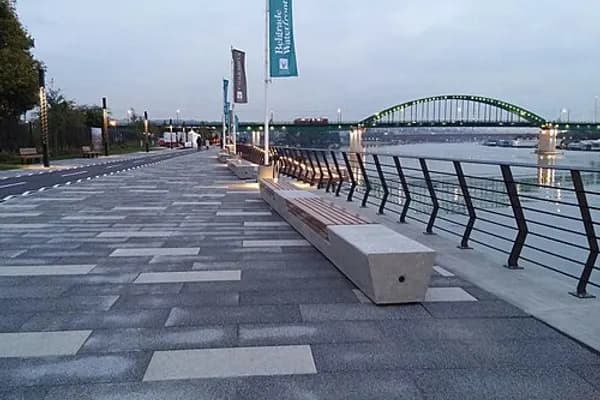
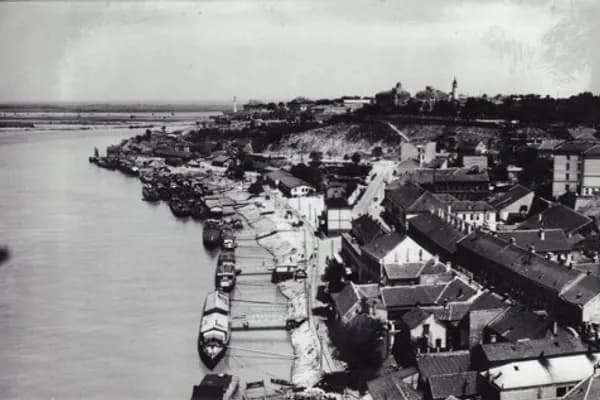
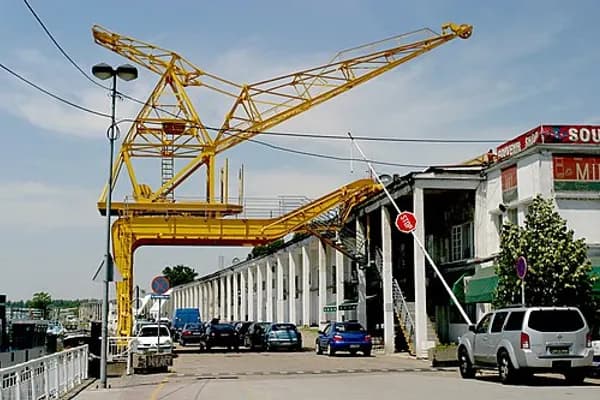
Savamala is located south of the Kalemegdan fortress and the neighborhood of Kosančićev Venac, and stretches along the right bank of the Sava river. Its northern section belongs to the municipality of Stari Grad, while central and southern sections belong to the municipality of Savski Venac. The central street in the neighborhood is Karađorđeva.
Originally, the entire western section (Terazije slopes) of today's city center was called Savamala, roughly bounded by the modern streets and squares of Terazije, King Milan's, Slavija, Nemanjina and Prince Miloš's. The entire area was known as Zapadni Vračar, but that name completely disappeared from usage, while as Savamala today is considered only a section along the Karađorđeva street.
Today, the zone of "preventive protection Savamala" is bounded by the streets: Brankova, Kraljice Natalije, Dobrinjska, Admirala Geprata, Balkanska, Hajduk Veljkov venac, Sarajevska, Vojvode Milenka, Savska, Karađorđeva, Zemunski put and the Branko's bridge. That means it encompasses the neighborhoods of Zeleni Venac and Terazijska Terasa.
History
17th century
On his voyage from Constantinople to London, English traveler Peter Mundy visited Belgrade in 1620. He noted that the bank of the Sava below Belgrade was filled with gristmills and counted 35 of them. Mundy described the watermills as "nice looking", both inside and outside. They appeared as regular houses, except for the boat-shaped bows. Windmills were placed on large barges. The ropes which tied them to the bank were made of intertwined wicker, while the buckets filled with stones served as anchors. The barges were aptly made from dressed timber held together only by wooden stakes, without any iron parts. Next to the barges were small boats which held the other side of the axle which was spinning the mill wheel. The watermills were constructed in the interior and then rafted downstream to Belgrade.
18th century
First inhabitants were settled in the early 18th century, during the 1717-1739 Austrian occupation of northern Serbia, when Austrians moved Christian population out of the Belgrade Fortress. In this period, Belgrade was divided by the governing Austrian authorities on 6 districts: Fortress, (Upper) Serbian Town (modern Kosančićev Venac), German Town (modern Dorćol), Lower Serbian Town (Savamala), Karlstadt (Palilula) and the Great Military Hospital (Terazije-Tašmajdan). Central street in the settlement was the Tefderdarska Street, after the Tefder Mosque. In the early 20th century, with several other streets, it will be transformed into the Karađorđeva Street, which remains the central thoroughfare of the modern neighborhood. Several distinct neighborhoods developed in Lower Serbian Town, with names like "Preka Mahala", section "Kraj Save" ("at Sava", where the poorest population dwelled) or "Pokraj Bare" ("next to the pond"), where the boatmen and street musicians resided.
The area was originally a bog called Ciganska bara (Serbian for "Gypsy pond"). The bog was charted for the first time in an Austrian map from 1789. It was a marsh which covered a wide area from modern Karađorđeva street to the mouth of the Topčiderska Reka into the Sava, across the northern tip of Ada Ciganlija. Marshy area covered modern location of the Belgrade Main railway station and parts of the Sarajevska and Hajduk-Veljkov venac streets. Ciganska bara drained two other bogs. One was located on Slavija, which drained through the creek which flew down the area of the modern Nemanjina street. Other pond whose water drained into the Ciganska bara was Zeleni Venac. Romanies who lived in the area, used the mud from the bog to make roof tiles. They lived in small huts or caravans (called "čerge"), between the high grass and rush, with their horses and water buffaloes grazing freely in the area. As most of the huts were actually stilt houses, built on piles due to the marshy land, the area was gradually named Bara Venecija ("Venice pond"). By 1884 the bog was drained and buried under the rubble from all parts of the city and especially from Prokop, because of the construction of the Belgrade Main railway station.
19th century
Road to the Sava Gate passed through this area, which was one of the gates for entering the Belgrade Fortress. During the First Serbian Uprising, through this gate Karađorđe, the leader of the uprising, entered Belgrade, liberated from the Ottomans in December 1806. The gate, also called Šabac Gate, was located where the Velike Stepenice ("Great Stairs") descended into Savamala. The troops were headed by Konda Bimbaša and they stormed into the fortress on 12 December 1806. In January 1807, Austrian and French press reported on the raid, which was the first international mention of Savamala.
When the Ottomans regained Belgrade in October 1813, their vanguards burned wooden hovels in Savamala, engulfing the city in smoke. When the main Ottoman army landed, a large number of Serbs got stranded on the bank in Savamala, trying to flee across the river into Austria. Men were massacred, while women and children were enslaved. All over the city heads on a spike appeared, and people were impaled on stakes along all city roads. When Ottoman Grand Vizier Hurshid Pasha arrived in Belgrade, he declared the full amnesty. However, he soon left, and Sulejman Pasha Skopljak took over Belgrade, even intensifying the terror. He issued an order that "people of Savamala can rebuild their houses, but of such size, that man has to stoop when entering". Things changed only in 1815 when Marashli Ali Pasha arrived in Belgrade.
Marashli Ali Pasha, Ottoman vizier of Belgrade from 1815 to 1821, in 1817 by the verbal agreement donated the entire patch of land along the river, stretching from the Fortress to the modern Mostar interchange to Serbian ruling prince Miloš Obrenović. The area was known as Savska Jalija (Sava bank in Turkish). It included tumbledown houses of the boatmen, taverns and the Emperor (or Sherif) Mosque. The pasha gave the land to prince as the spahiluk, which means that the prince wasn't the owner, but had right to collect rent.
Savamala was the first new settlement constructed outside the fortress walls. In time, migrants from Bulgaria and Hungary also settled in the neighborhood, so as the boatmen from Bosnia who operated river trade. The settlement was separated from the central city area by the trench, which had embankment and palisade. The structure was maintained by the residents through the corvée. The palisades were removed in 1827, and the poor used it as firewood. The only survived part of the fortification was the Sava Gate. In the late 1820s, a popular Cannoneer's Greenmarket (Tobdžijska pijaca) was established, when Prince Miloš partially resettled inhabitants of Savamala to Palilula. It was located where the park on Hajduk Veljkov Venac is today, above the Savska Jalija. A building of the Ministry of Transportation was later built next to it. For the most part it had no permanent market stalls and the goods were sold directly of the carts.
Construction began in the 1830s as ordered by the prince Miloš Obrenović, after a popular pressure to build a Serbian settlement outside the fortress and the Turkish settlement. Prince Miloš ordered for the entire Savamala population to be relocated to the village of Palilula, outside of the city. The order was issued on 13 February 1834 and Cvetko Rajović was appointed to oversee it. The residents refused to move. Irritated by the dragging on of his project, the prince gathered his henchmen and thugs and sent them to Savamala in 1835. As the settlement was still just a shanty town, with houses made of rotten wood and mud, all the houses were demolished in one day, without any demolition equipment. The demolished neighborhood was then burned to the ground, either on the order of the prince, or on the request of the residents so that they wouldn't have to pay for the clearing of the locality.
Prince Miloš relocated the city's port from the Danube to the Sava river and the customs house, called Đumrukana was built around 1835. The prince issued a decree that "merchants and trade agents must settle along the Sava". Rajović tried to hire Joseph Felber, an architect from Zemun, to design the new neighborhood, but he failed, and Nikola Živković, known as Hadži-Neimar, took over. Next to the Đumrukana, the Consulate Building was built. All consuls residing in Belgrade at the time were seated there. The 60m (200ft) elongated building later became Hotel Kragujevac. Both buildings domineered the scenic view of the neighborhood seen from the river, towered by the tall Cathedral Church above, in Kosančićev Venac. Both buildings were damaged in World War II and demolished after the war. On 12 June 1841, the first steamboat ever in Serbia docked in Sava port. It was Count István Széchenyi's ship Erzherzog Ludwig, who ported to visit Prince Miloš and Belgrade's Ottoman pasha. It was the main event in the city, with a "ton of people flocking down at the Sava". Even members of pasha's harem came down to the river. Count Széchenyi allowed for some of the spectators to visit and inspect the ship.
By 1841, when Đumrukana was adapted into the first regular theatre house in Belgrade, the commerce blossomed and the "Kovačević Han" was built where the modern Hotel Bristol is. "Beogradski mali pijac" (Belgrade's Little Farmers Market) was established at the center of Savamala and with the Karađorđeva street, became the focal point of city's commerce. The market was conceived by the prince as the proper Serbian farmers market (upper Cannoneer's Greenmarket was not regulated), as opposed to the Great Market in downtown where the majority of sellers were Turks. Founded in 1834, it was located between the modern buildings of Hotel Bristol and Belgrade Cooperative. Little market was only the wholesale market, receiving goods mostly via the rivers, from the regions of Syrmia and Mačva. Main goods included grains, beans, prunes, leather, plum pekmez, etc. The goods were then transported to downtown and sold to the consumers at the Great Market. As many goods arrived across the river, held by Austria at the time, the Little Market evolved into the city's major barter exchange.
Storages and shops were abundant and the most esteemed merchants in Belgrade began buying lots and building houses: the Krsmanović brothers, Rista Paranos, Konstantin Antul, Luka Ćelović and Đorđe Vučo. State financially supported the construction of 46 shops, administrative building of the State Council (future "Odeon" cinema), building of the Ministry of Finance with the Financial Park (since 2017 Park Gavrilo Princip) and the Asencion Church. The first foreign consulate in Belgrade was opened in Savamala. It is recorded that in 1854, at the Liman section of Savamala (where the pillars of the Branko's Bridge are today), a trading caravan arrived with 550 big and 105 small camels. It was the last camel caravan to reach Belgrade, bringing tobacco from town of Serres to Belgrade merchant Anastas Hiristodulo. By the late 19th century, a tram line connected the peer with the Slavija Square. The fortress' outer Sava Gate at the western end of the neighborhood was demolished in 1862.
The first avenue in Belgrade was planted in Savamala. It was planted from 1845 to 1850 along the Abadžijska Čaršija, modern Kraljice Natalije Street. It was the project of Atanasije Nikolić, educator and agriculturist, who developed seedlings in the nursery garden he established in Topčider. The trees were cut in 1889.
Hadži-Neimar designed in 1840 an elongated, large, ground floor house, built from hard materials at the corner of modern Balkanska, Gavrila Principa and Admirala Geprata streets. It was called Princely or Great Brewery, or, because it was owned by princess Ljubica Obrenović, Ljubica's Brewery. It was the second brewery in Belgrade, after the Vajnhapl's Brewery from 1839, which precise location is unknown today (Vračar, Skadarlija). It also hosted kafana and large yard. The building later hosted the Saint Andrew's Day Assembly in 1858-1859 and served as the temporary theatrical scene from 1857 to 1862 after the demolition of Đumrukana. It was later acquired by the Vajfert family, until the building was demolished in 1935.
Interior minister Nikola Hristić ordered demolition of the Sava Gate in June 1862 during the Čukur Fountain incident with the Ottomans. Later that year, the remaining Ottomans from the Savamala, who lived in the area of Liman and around the Sherif Mosque. moved into the fortress, and the mosque, as the last remaining Ottoman object in the neighborhood, was demolished. Also in 1862, contractor Joseph Steinlechner was summoned by the prince to build the stairs ("Great Stairs"), which connected Savamala with Kosančičev Venac.
Merchant Rista Paranos purchased the "Kovačević Han" in 1867 and reconstructed it into the "Paranos Han". It was a city within the city, with shops, kafanas, rooms for rent, storages and stables. Next to it, a modern "Evropa" hotel was built. By 1862, economic output of Savamala overtook the economy in the old, "within the trench" section of Belgrade. That year, the marble cross dedicated the fallen soldier during the 1806 liberation of Belgrade from the Ottomans in the First Serbian Uprising was built at Little Market. It was built by the merchant Ćira Hristić. Popular name, Little Market, was changed with the official one, the Saint Nicholas Market.
Encyclopedic content adapted from the Wikipedia article on Savamala, used under CC BY-SA 4.0.