About the neighborhood
Airport in Sandviken, Bergen
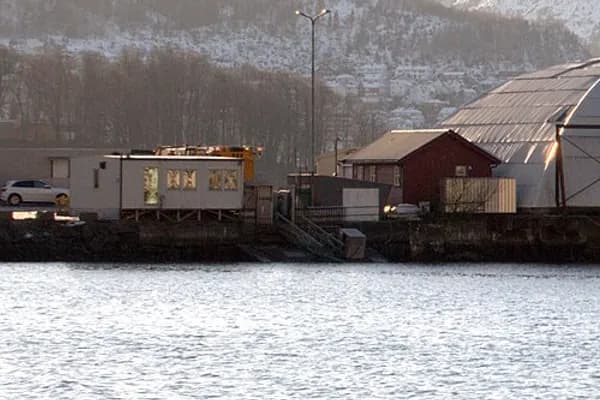
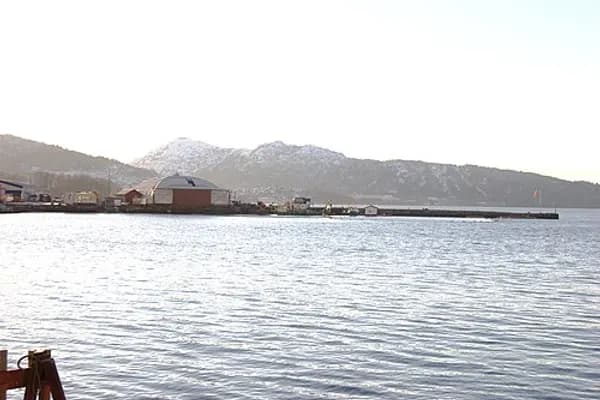
Bergen Airport, Sandviken (Norwegian: Bergen sjøflyplass, Sandviken) is a water airport and heliport situated in the Sandviken neighborhood of Bergen, Norway. The aerodrome is located on the artificial peninsula of Kristiansholm. It is currently serving seaplanes and helicopters operated by Fonnafly aimed at air taxi services at cruise ship tourists. The airport is owned by Bergen Municipality through Bergen Port Authority and is part of the Bergen Port. Operations are carried out by Fonnafly.
The airport opened in 1935, although it was not connected to land until 1938. Services were first carried out by Norwegian Air Lines on a coastal route to Oslo. From 1936 also a north-bound service was introduced. Sandviken was taken over by Luftwaffe during the World War II, but little used. Norwegian Air Lines resumed services in 1946 and the following year West Norway Airlines was established with their base at Sandviken. The airlines moved their scheduled flights to Bergen Airport, Hjellestad from 1948 to 1951. West Norway Airlines resumed scheduled flights from Sandviken in 1952, until they ceased operations in 1957. Bergen Airport, Flesland opened in 1955, thus removing most of the traffic from Sandviken.
History
The first air route in Norway was established in 1920 by Det Norske Luftfartsrederi. Using a Supermarine Channel, it received state subsidies to operate a route from Bergen via Haugesund to Stavanger. The service lasted from 16 August to 15 September. In Bergen the airline used a water airport in Sandviken.
Norwegian Air Lines announced the establishment of a seaplane route from Oslo and around the coast to Bergen ahead of the 1935 season. The city selected Breiviken as its preferred location, situated further out than the ultimate location. However, this site would require much work and a temporary location was needed. For this Kristiansholm was selected. A breakwater had been built there in 1920; this created difficulties for ship traffic in the area, but was a suitable location to anchor up a seaplane. The location was also suitable due to the vicinity of the city. Funding was granted from Bergen Municipality and a burned down lot at Sandvikstorget was selected.
The route commenced on 11 June 1935, using a Junkers Ju 52. Flights were only flown during summer and they relied on visual flight rules and could not fly in the dark or in poor weather. Bergen was the terminus during the first season, but from 1936 a second leg was introduced, extending services northwards to Tromsø. The airport's location was popular due to its central location and the municipality therefore decided to make it permanent. Holmsundet, a shallow sound, was covered with a 100-meter (330ft) breakwater, making the airport fixed to land. This hindered ship traffic in the area and caused several docks and companies to have to relocate to still handle sea traffic.
The airport at Sandviken was taken over by Luftwaffe, the German air force, during the German occupation of Norway between 9 April 1940 and 8 May 1945. They were primarily interested in using Herdla Airport which they constructed on Askøy, and Sandviken was little used. In 1942 and 1944 it saw use by a few detachments of Arado Ar 196 reconnaissance aircraft.
After the war, air services commenced in 1946. The first year it consisted of a route to Oslo and to Stavanger, operated by Norwegian Air Lines using Junkers Ju 52. Herdla Airport became the site of the air traffic control for the Bergen after the war. West Norway Airlines was established at Sandviken in 1947. Operating a fleet dominated by the Republic RC-3 Seabee, they operated mostly air taxi and air ambulance services.
From 1948 Norwegian Air Lines introduced the 37-seat Short Sandringham on their Oslo routes. This required a much long runway, which was not possible without interfering with ship traffic in the port. Bergen Municipality therefore started looking for a suitable site further away from town. Both Herdla and Flatøy were discarded due to distances and the need for ferry transport, and Hjellestad was found the most suitable site. Bergen Airport, Hjellestad therefore served as Bergen's main airport from 23 August 1948 to the end of the 1951 season.
By then Norway Air Lines' successor Scandinavian Airlines had dropped the direct route to Oslo and the sole airline serving Bergen was West Norway Airlines operating its Short Sealands. From the 1952 season it operated two routes out of Bergen. One was southwards to Haugesund and Stavanger, and one northwards, to Ålesund, Molde, Kristiansund and Trondheim.
The 1955 opening of Bergen Airport, Flesland caused the airline to terminate its Stavanger route. However, flights to Haugesund continued until 29 September 1956. Northward the route lasted until the end of the 1957 summer season. The need for a coastal seaplane route fell away the following year with the opening of Ålesund Airport, Vigra.
During a storm in October 2003 one of the piers at the airport sank. It took with it two aircraft, which were subject to severe damages, but remained. The damage amounted to NOK2 million. A debate arose in 2006 concerning the construction of a helipad at Sandviken. Belma AS, which owns two of Fonnafly's aircraft, intended to anchor a barge and use it as a helipad. The proposal was met by opposition from neighbors, who wished to keep down noise pollution the mixed commercial and residential area of Sandviken. Belma stated that vicinity to cruise ships was necessary to conduct their business. The helipad was however given permission to operate.
In the last half of the 2000s there was a political discussion about converting the Kristiansholm to either a cruise ship terminal, or a recreational area. The latter position was argued due to it being the only site in the part of Sandviken which could grant seaside access to the public. However, nothing came of the plans.
Facilities
The airport is located on Kristiansholm in the Sandviken neighborhood of Bergen, situated X km from the city center. Legally the site consists of two aerodromes, a water airport and a heliport. Both are owned by Bergen Municipality through Bergen Port Authority, although the airport is operated by Fonnafly. Kristiansholm is a peninsula sticking into Byfjorden. The water airport has two runways, aligned 03/21 and 14/32, respectively.
Operations are mostly targeted at cruise ship tourists visiting Bergen. The proximity to the cruise ship port is an advantage for Fonnafly. However, the airport is located in a mixed commercial and residential area and there is a high degree of noise pollution impact due to this. Fonnafly operates about 250 annual aircraft movements at the water airport and 450 for the heliport. However, the concession permits 900 and 800, respectively.
References
Bibliography
Wikimedia Commons has media related to Bergen Airport, Sandviken.
Aarsand, Knut; Bakka, Dag. Hjellestad sjøflyhavn 1948–1952 (in Norwegian). Fana Historielag. pp.38–42. ISSN0809-5256. {{cite book}}: work= ignored (help)
Hafsten, Bjørn; Larsstuvold, Ulf; Olsen, Bjørn; Stenersen, Sten (1991). Flyalarm: Luftkrigen over Norge 1939–1945 (in Norwegian). Oslo: Sem & Stenersen. ISBN82-7046-058-3.
Haaland, Anders (2005). Bergen havn gjennom 900 år – II: Perioden 1900–1945 Knutepunkthavnen (in Norwegian). Bergen: Bergen Port Authority. ISBN82-7128-387-1.
Hjelle, Bjørn Owe (2007). Ålesund lufthavn Vigra (in Norwegian). Valderøya. ISBN978-82-92055-28-1.{{cite book}}: CS1 maint: location missing publisher (link)
Nerdrum, Johan (1986). Fugl fønix: En beretning om Det Norske Luftfartselskap (in Norwegian). Oslo: Gyldendal Norsk Forlag. ISBN82-05-16663-3.
Østerbø, Kjell (2005). Da Bergen tok av (in Norwegian). Avinor. ISBN82-303-0495-5.
Reitan, Sverre Utne (2003). Luftfarten på Haugalandet fra 1914 til 2004 (in Norwegian). Karmøy: Eget Forlag.
Vik, Knut L. (2003). "Trondheim lufthavn Jonsvatnet 1935–1939". Strinda den gang da (PDF) (in Norwegian). Trondheim: Strinda historielag. pp.85–107. ISBN82-92357-02-5. ISSN1502-2315. Archived from the original (PDF) on 18 December 2013. Retrieved 18 December 2013.
Encyclopedic content adapted from the Wikipedia article on Sandviken, used under CC BY-SA 4.0.
What makes Sandviken special
Sandviken stands out among Bergen’s neighborhoods for its distinctive character: bergen's old fishing harbour district. Ranked #3 in Bergen, it offers the kind of experience that defines a great city trip — a place where the streets themselves tell a story and every block rewards curiosity.
Best for
Our take on Sandviken
Sandviken is one of the strongest neighborhoods in Bergen, and it consistently appears in our editors' personal favorites lists. It may not always get the same attention as the city's most famous district, but among travelers who know Bergen well, Sandviken is often the first recommendation.
The waterfront presence in Sandviken shapes everything about the neighborhood's character — the light, the air, the pace of life, the kind of restaurants that thrive here. But what elevates it beyond a simple beach district is the depth of the neighborhood behind the waterfront: the residential streets, the local markets, the café culture that exists independent of the views.
Our editors recommend budgeting at least half a day here — enough time to walk the main streets, sit down for coffee, and discover the side streets where Sandviken's real character lives.
Living in Sandviken
Sandviken is connected to the rest of Bergen by public transit, and most visitors find it straightforward to reach from the city center or airport. Once you arrive, the neighborhood is best explored on foot — the scale is human and the streets reward wandering.
Day-to-day life in Sandviken has the rhythm of a genuine residential neighborhood. You will find grocery stores, pharmacies, cafés with morning regulars, and the kind of small independent shops that only survive where locals support them. For visitors, this means the infrastructure you need — good coffee, a decent meal, a quiet place to sit — is always within a short walk.
Accommodation in Sandviken ranges from boutique hotels to short-term rentals. We generally recommend staying within the neighborhood itself rather than commuting from a hotel elsewhere in Bergen — the experience of waking up inside a great neighborhood is fundamentally different from visiting one as a day trip.
What locals say about Sandviken
Long-term residents of Sandviken tend to describe their neighborhood with a mix of pride and protectiveness. Like any district with genuine character, Sandviken inspires loyalty — the kind of place people move to and never quite leave, or leave and spend years trying to get back to.
What locals appreciate most about Sandviken is its consistency — the feeling that the neighborhood works the same way on a Tuesday morning as it does on a Saturday night. It is not a place that performs for visitors and then goes quiet. The rhythm is genuine, the community is real, and the daily experience of living here is what draws people and keeps them.
Compared to the more famous districts in Bergen, Sandviken has maintained a lower profile, which many residents consider an advantage. The neighborhood evolves gradually rather than being reshaped by sudden attention, and the result is a community that still feels organic rather than curated.
Visitor tips
- Sandviken is located in Bergen, Norway. The neighborhood is accessible by public transport, taxi, or rideshare from most parts of the city.
- Morning is often the best time to explore — the streets are quieter, the light is better for photography, and cafes are at their most welcoming.
- Wear comfortable walking shoes — the best way to experience Sandviken is on foot, wandering the side streets and discovering what lies around each corner.
- Save the neighborhood's location on your phone before you arrive. Offline maps are especially useful for navigating the smaller side streets.