About the neighborhood
UNESCO World Heritage Site in Bergen, Norway
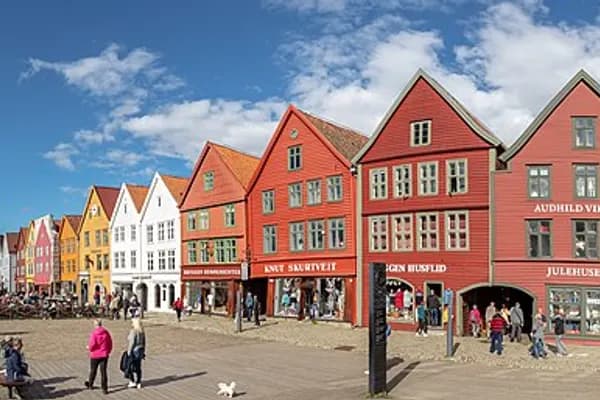
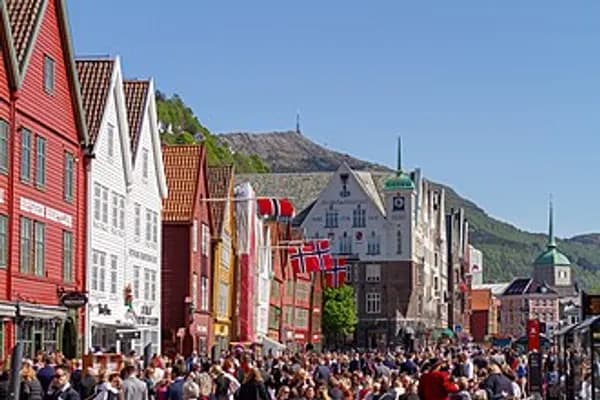
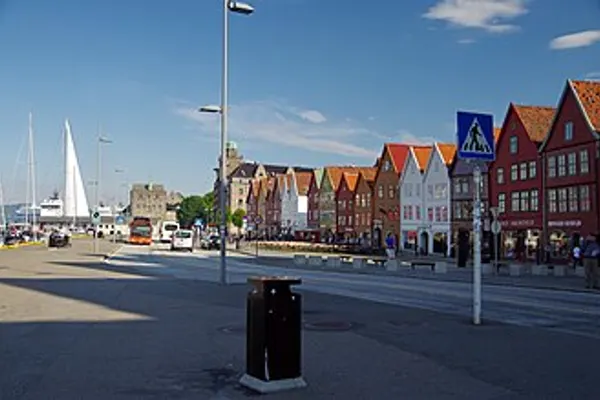
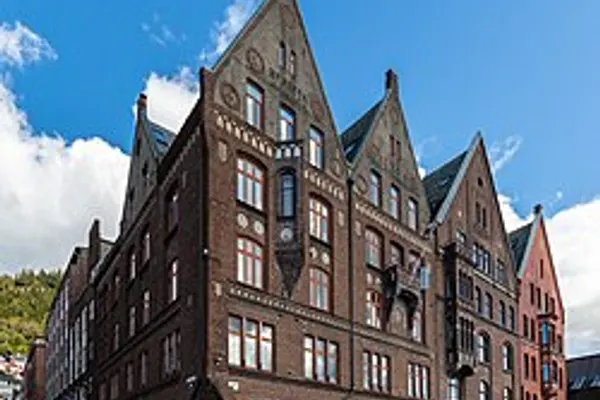
Bryggen (the dock), also known as Tyskebryggen (Norwegian: ˈtʏ̀skəˌbrʏɡːn̩, the German dock), is a series of Hanseatic heritage commercial buildings lining up the eastern side of the Vågen harbour in the city of Bergen, Norway. Bryggen has been on the UNESCO list for World Cultural Heritage sites since 1979.
The city of Bergen was founded around 1070 within the boundaries of Tyskebryggen. Around 1350 a Kontor of the Hanseatic League was established there, and Tyskebryggen became the centre of the Hanseatic commercial activities in Norway. Today, Bryggen houses museums, shops, restaurants and pubs.
History
Bergen was established before 1070 AD. In the Middle Ages, the Bryggen area encompassed all buildings between the sea and the Stretet (Øvregaten) road, from Holmen in the north to Vågsbunnen in the south. According to the Sagas, the city was founded within this area.
One of the earliest pier constructions has been dated to around 1100, and the existing buildings are of a much later date, with only Schøtstuene and some buildings towards Julehuset being originals from 1702.
Around 1350, a Kontor of the Hanseatic League was established in Bryggen. As the town developed into an important trading centre, the wharfs were improved and the buildings of Bryggen were gradually taken over by the Hanseatic merchants. The warehouses were used to store goods, particularly stockfish from northern Norway, and cereal from Europe.
In 1702, the buildings belonging to the Hanseatic League were damaged by fire. They were rebuilt, and some of these were later demolished, and some were destroyed by fire. In 1754, the operations of the office at Bryggen ended, when all the properties were transferred to Norwegian citizens.
Throughout history, Bergen has experienced many fires, since most of its houses were traditionally made from wood. This was also the case for Bryggen, and as of today around a quarter were built after 1702, when the older wharfside warehouses and administrative buildings burned down. The rest predominantly consists of younger structures, although there are some stone cellars that date back to the 15th century.
Parts of Bryggen were again destroyed in a fire in 1955. A thirteen-year archaeological excavation followed, revealing the day-to-day runic inscriptions known as the Bryggen inscriptions. The Bryggen museum was built in 1976 on part of the site cleared by the fire.
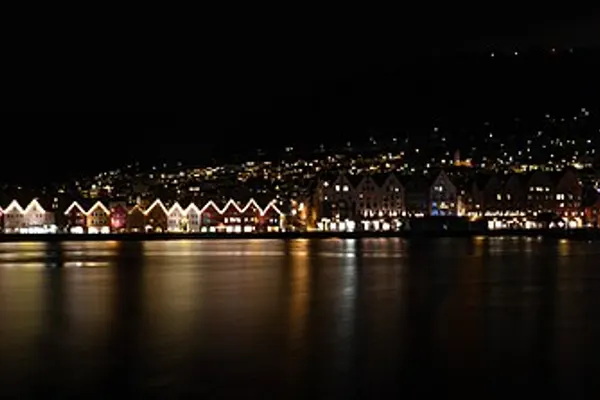
Panoramic view of Bryggen Architectural heritage
Bryggen was listed as a UNESCO World Heritage Site in 1979, by Criterion (iii):
Bryggen bears the traces of social organization and illustrates the use of space in a quarter of Hanseatic merchants that dates back to the 14th century. It is a type of northern "fondaco", unequalled in the world, where the structures have remained within the cityscape and perpetuate the memory of one of the oldest large trading ports of Northern Europe.
Notable houses at Bryggen include Bellgården (a 300-year-old building), Svensgården, Enhjørningsgården, Bredsgården, Bugården, Engelgården. The oldest and tallest building in the area is St Mary's Church. Streets include Jacobsfjorden. Museums include Bryggens Museum and Hanseatic Museum and Schøtstuene.
Gallery
References
SaxonBalticWestphalianKontore Bryggen (Bergen)
Kontor of Bruges Bruges
Antwerp
Steelyard (London)
Peterhof (Novgorod)
Vitten Falsterbo
Malmö
Factories Bishop's Lynn
Bristol
Boston
Ipswich
Kaunas
Leith
Herford
Hull
Newcastle
Polotsk
Pskov
Yarmouth
York
Cologne and Dortmund were both chief city of the Westphalian Quarter at different times.
The kontor was moved to Antwerp once Bruges became inaccessible due to the silting of the Zwin channel.
Encyclopedic content adapted from the Wikipedia article on Bryggen, used under CC BY-SA 4.0.
What makes Bryggen special
Bryggen stands out among Bergen’s neighborhoods for its distinctive character: unesco hanseatic bergen. It tops our ranking of the best neighborhoods in Bergen, it offers the kind of experience that defines a great city trip — a place where the streets themselves tell a story and every block rewards curiosity.
Best for
Our take on Bryggen
Bryggen is the neighborhood we send friends to first when they visit Bergen. It earns the top spot in our ranking not because it is the most famous district in the city, but because it delivers the most complete neighborhood experience — the kind of place where every block rewards curiosity and every return visit reveals something new.
What strikes us most about Bryggen is the depth of its food culture. This is not a neighborhood with a few good restaurants — it is a neighborhood where eating well is woven into daily life, where the corner places are as good as the destination spots, and where you could eat every meal for a week without repeating yourself or being disappointed.
Our editors recommend budgeting at least half a day here — enough time to walk the main streets, sit down for coffee, and discover the side streets where Bryggen's real character lives.
Living in Bryggen
Bryggen is connected to the rest of Bergen by public transit, and most visitors find it straightforward to reach from the city center or airport. Once you arrive, the neighborhood is best explored on foot — the scale is human and the streets reward wandering.
Day-to-day life in Bryggen has the rhythm of a genuine residential neighborhood. You will find grocery stores, pharmacies, cafés with morning regulars, and the kind of small independent shops that only survive where locals support them. For visitors, this means the infrastructure you need — good coffee, a decent meal, a quiet place to sit — is always within a short walk.
Accommodation in Bryggen ranges from boutique hotels to short-term rentals. We generally recommend staying within the neighborhood itself rather than commuting from a hotel elsewhere in Bergen — the experience of waking up inside a great neighborhood is fundamentally different from visiting one as a day trip.
What locals say about Bryggen
Long-term residents of Bryggen tend to describe their neighborhood with a mix of pride and protectiveness. Like any district with genuine character, Bryggen inspires loyalty — the kind of place people move to and never quite leave, or leave and spend years trying to get back to.
What locals appreciate most about Bryggen is its consistency — the feeling that the neighborhood works the same way on a Tuesday morning as it does on a Saturday night. It is not a place that performs for visitors and then goes quiet. The rhythm is genuine, the community is real, and the daily experience of living here is what draws people and keeps them.
Like any neighborhood that has earned attention, Bryggen is navigating the tension between popularity and preservation. Rents have risen, new businesses have arrived, and long-time residents occasionally grumble that the neighborhood is not what it was. But the fundamentals — the walkability, the food, the community — remain strong, and most locals we speak to believe the neighborhood is still gaining more than it is losing.
Visitor tips
- Bryggen is located in Bergen, Norway. The neighborhood is accessible by public transport, taxi, or rideshare from most parts of the city.
- Morning is often the best time to explore — the streets are quieter, the light is better for photography, and cafes are at their most welcoming.
- Wear comfortable walking shoes — the best way to experience Bryggen is on foot, wandering the side streets and discovering what lies around each corner.
- Save the neighborhood's location on your phone before you arrive. Offline maps are especially useful for navigating the smaller side streets.