About the neighborhood
City and county in California, US
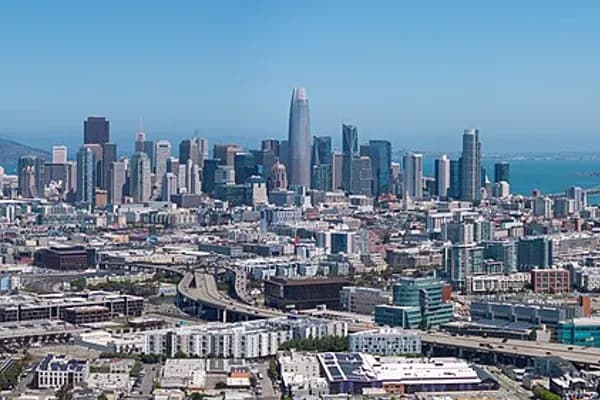
San Francisco, officially the City and County of San Francisco, is the fourth-most populous city in California and the 17th-most populous in the United States, with a population of 826,079 in 2025. Among U.S. cities with a population of 300,000 or more, San Francisco is ranked first by per capita income, second by population density, and sixth by aggregate income as of 2023. Some 4.6 million residents live in the city's metropolitan statistical area, which is the 13th-largest in the United States. Around 9.2 million live in the San Jose–San Francisco–Oakland combined statistical area, the fifth-largest in the United States.
Prior to European settlement, San Francisco was inhabited by the Yelamu Ohlone. On June 29, 1776, settlers from New Spain established the Presidio of San Francisco at the Golden Gate, and the Mission San Francisco de Asís a few miles away, both named for Francis of Assisi. The California gold rush of 1849 brought rapid growth, making it the largest city on the West Coast at the time. In 1856, San Francisco became a consolidated city-county. After three-quarters of the city was destroyed by the 1906 earthquake and fire, it was quickly rebuilt, hosting the Panama–Pacific International Exposition nine years later. In World War II, it was a major port of embarkation for naval service members shipping out to the Pacific Theater. After the war, the confluence of returning servicemen, significant immigration, liberalizing attitudes, the rise of the beatnik and hippie countercultures, the sexual revolution, opposition to U.S. involvement in the Vietnam War, and other factors led to the Summer of Love and the gay rights movement, cementing San Francisco as a center of liberal activism.
The San Francisco Bay Area is among the most economically productive large urban areas in the United States and the world, with a GDP of $1.332 trillion in 2024, higher than all but 17 countries. As of 2020, the OECD-defined metropolitan area, with 6.7 million residents, ranked 5th by GDP ($874 billion) and 2nd by GDP per capita ($131,082) across all metropolitan areas in the OECD countries. In 2024, San Francisco proper had a GDP of $268 billion and a GDP per capita of $324,000. This productivity is spurred by its leading universities, high-tech, healthcare, finance, insurance, real estate, and professional services sectors. The city is home to numerous companies—many in the technology sector—including Salesforce, Uber, Airbnb, Levi's, Gap, OpenAI, Chime, Anthropic, Databricks, Dropbox, and Lyft.
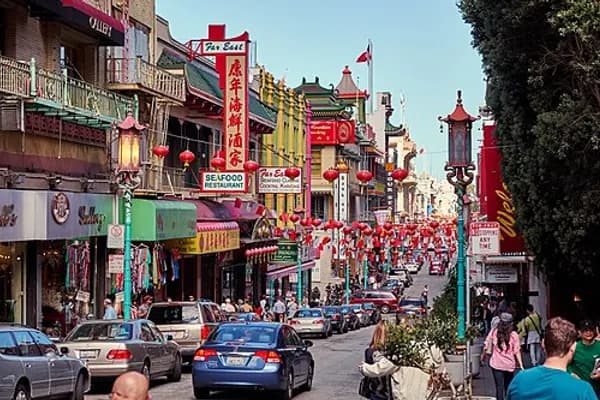
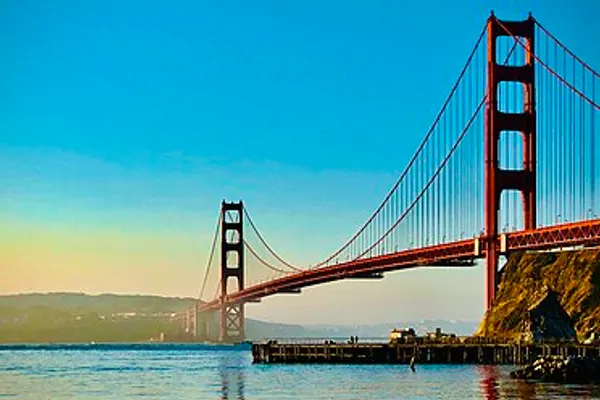
In 2022, San Francisco had more than 1.7 million international visitors and approximately 20 million domestic visitors. It is known for its steep rolling hills and eclectic mix of architecture across varied neighborhoods; its Chinatown and Mission districts; mild climate; and landmarks including the Golden Gate Bridge, cable cars, and Alcatraz. The city is home to educational and cultural institutions such as the University of California, San Francisco, the University of San Francisco, San Francisco State University, the San Francisco Conservatory of Music, the Legion of Honor, the de Young Museum, the San Francisco Museum of Modern Art, the San Francisco Symphony, the San Francisco Ballet, the San Francisco Opera, the SFJAZZ Center, and the California Academy of Sciences. Two major league sports teams, the San Francisco Giants and the Golden State Warriors, play their home games within San Francisco. San Francisco International Airport (SFO) is one of the world's busiest airports, while a light rail and bus network, in tandem with the BART and Caltrain systems, connects nearly every part of San Francisco with the wider region.
Etymology
San Francisco, which is Spanish for "Saint Francis", takes its name from Mission San Francisco de Asís, which in turn was named after Saint Francis of Assisi. The mission received its name in 1776, when it was founded by the Spanish under the leadership of Padre Francisco Palóu. The city has officially been known as San Francisco since 1847, when Washington Allon Bartlett, then serving as the city's alcalde, renamed it from Yerba Buena (Spanish for "Good Herb"), which had been the name of the first civilian pueblo in San Francisco. Earlier in San Francisco's history, the uninhabited area on the northeastern side of San Francisco was called El Paraje de Yerba Buena, after the herb that was growing abundantly there. The name Yerba Buena continues to be used in locations in the city, such as on Yerba Buena Island.
When using a nickname or abbreviation, local residents most commonlyrefer to San Francisco as "the City" or "SF." Although the nickname "Frisco" has a local pedigree dating at least to 1850 and has been used by some local residents in every generation since then, the uses of both "Frisco" and the historically more recent "San Fran" tend to elicit sharp divisions among residents.
The California Cantonese who came for the California Gold Rush named California and specifically San Francisco 金山, Gāmsāan, "Gold Mountain". When gold was discovered in Bendigo, Victoria, Australia, it was named "New Gold Mountain" (Yue Chinese: 新金山, Sān Gāmsāan) and California and San Francisco as "Old Gold Mountain" (舊金山, Gāu Gāmsāan).
History
Indigenous history
The earliest archeological evidence of human habitation in the area dates to 3000BCE. The Ohlone name for San Francisco was Ahwaste, meaning "place at the bay". The Yelamu group of the Ramaytush people lived in a few small villages when an overland Spanish exploration party arrived on November 2, 1769, the first documented European visit to San Francisco Bay. The arrival of Spanish colonists, and the establishment of the Mission system, marked the beginning of the assimilation of the Ramaytush people and the decline of their language and culture.
Spanish era (1769–1821)
The Spanish Empire claimed San Francisco as part of Las Californias, a province of the Viceroyalty of New Spain. The Spanish first arrived in what is now San Francisco on November 2, 1769, when the Portolá expedition, led by Don Gaspar de Portolá and Juan Crespí, arrived at San Francisco Bay. Having noted the strategic benefits of the area due to its large natural harbor, the Spanish dispatched Pedro Fages in 1770 to find a more direct route to the San Francisco Peninsula from Monterey, which would become part of the El Camino Real route.
In 1774, Juan Bautista de Anza arrived in the area to select sites for a mission and presidio. The first European maritime presence in San Francisco Bay occurred on August 5, 1775, when the Spanish ship San Carlos, commanded by Juan Manuel de Ayala, became the first ship to anchor in the bay.
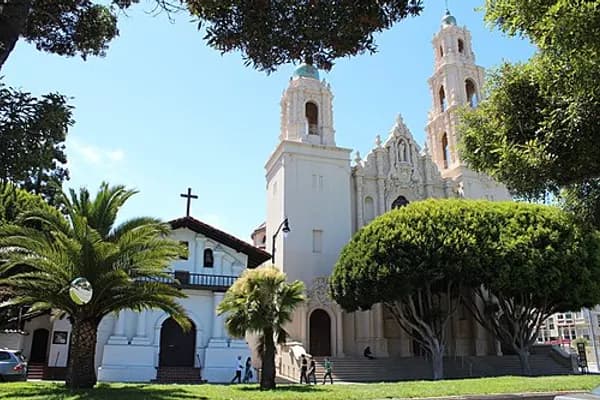
Soon after, on March 28, 1776, Anza established the Presidio of San Francisco and on October 9, Mission San Francisco de Asís, also known as Mission Dolores, was founded by Padre Francisco Palóu. In 1794, the Presidio established the Castillo de San Joaquín, a fortification on the southern side of the Golden Gate, which later came to be known as Fort Point.
In 1804, the province of Alta California was created, which included San Francisco. At its peak in 1810–1820, the average population at the Mission Dolores settlement was about 1,100 people.
Mexican era (1821–1848)
In 1821, the Californias were ceded to Mexico by Spain. The extensive California mission system gradually lost its influence during the period of Mexican rule, although it was not until 1833 that the missions would be secularized. Agricultural land became largely privatized as ranchos, as was occurring in other parts of California. Coastal trade increased, including a half-dozen barques from various Atlantic ports which regularly sailed in California waters.
With the enactment of the Mexican Secularization Act of 1833, the missions were required to divest themselves of their extensive landholdings and emancipate the indigenous people under their control. As part of the process of secularization, Governor José Figueroa opened up San Francisco to civilian settlement. Prior to secularization, the only settlements in San Francisco had been the military settlement at the Presidio and the religious settlement at Mission Dolores. In 1835, the Presidio garrison, commanded by Mariano Vallejo, relocated to the Presidio of Sonoma, which was regarded as needing a greater military presence due to the proximity of the Russian settlement at Fort Ross. Only a small detachment remained at the Presidio of San Francisco. Mission Dolores sold most of its property in 1836, retaining only the church and related structures.
In 1833, Juana Briones de Miranda was granted a small rancho at El Polín Spring, near the Presidio, founding the first non-indigenous civilian household in San Francisco. In 1834, the pueblo of Yerba Buena was founded. Yerba Buena Cove (named after a native herb) was already a favored anchorage spot and the new settlement and trading post was founded by its shores. Yerba Buena was located in what is now the city's Chinatown and Financial District and was centered on a plaza that is now Portsmouth Square. A land survey of Yerba Buena was made by the Swiss immigrant Jean Jacques Vioget as prelude to the city plan.
Francisco de Haro became the first alcalde of Yerba Buena. In 1835, the second alcalde, José Joaquín Estudillo, approved the first land grant in Yerba Buena: to William Richardson. Yerba Buena began to attract American and European settlers; an 1842 census listed 21 residents (11%) born in the United States or Europe, as well as one Filipino merchant. Following the Bear Flag Revolt in Sonoma and the beginning of the U.S. Conquest of California, American forces from the USS Portsmouth under the command of John B. Montgomery captured Yerba Buena on July 9, 1846, with little resistance from the local Californio population, raising the American flag over Yerba Buena plaza (later renamed Portsmouth Square in commemoration of this event).
Following the capture, U.S. forces appointed both José de Jesús Noé and Washington Allon Bartlett to serve as co-alcaldes (mayors), while the conquest continued on in the rest of California. On January 30, 1847, Mayor Bartlett ordained that the city should officially change its name from "Yerba Buena" to "San Francisco", as the former name was only locally recognized and the latter name was in use on international maps. There was also concern that a new town being planned by General Vallejo on the Carquinez Strait was to be called "Francisca", after the first name of his wife. After the name change to "San Francisco", the name of Vallejo's town was changed to Benicia, after his wife's middle name. Following the Treaty of Guadalupe Hidalgo in 1848, Alta California was ceded from Mexico to the United States.
Early American era (1848–1906)
Despite its attractive location as a port and naval base, San Francisco under American sovereignty was still a small settlement with inhospitable geography, lacking most of the basic facilities for a proper settlement. Its 1847 population was said to be 459.
The California gold rush brought a flood of treasure seekers. Prospectors accumulated in San Francisco over rival Benicia, raising the population from 1,000 in 1848 to 25,000 by December 1849. The promise of wealth was so strong that crews on arriving vessels deserted and rushed off to the gold fields, leaving behind a forest of masts in San Francisco harbor. Some of these approximately 500 abandoned ships were used at times as storeships, saloons, and hotels; many were left to rot, and some were sunk to establish title to the underwater lot. By 1851, the harbor was extended out into the bay by wharves while buildings were erected on piles among the ships. By 1870, Yerba Buena Cove had been filled to create new land. Buried ships are occasionally exposed when foundations are dug for new buildings.
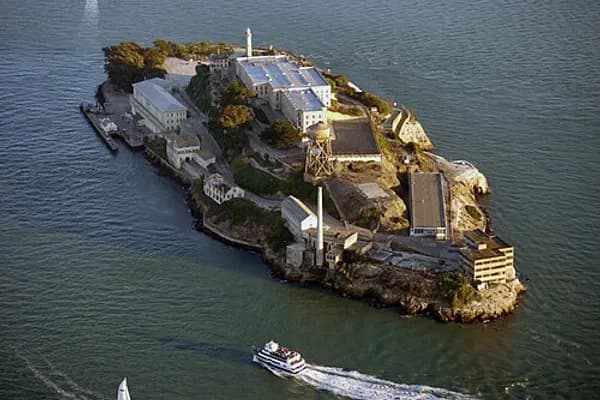
California was quickly granted statehood in 1850, and the U.S. Army built Fort Point at the Golden Gate and a fort on Alcatraz Island to secure the bay. San Francisco County was one of the state's 18 original counties established at California statehood in 1850. San Francisco's city limits originally extended west to Divisadero Street and Castro Street, and south to 20th Street, but in 1856, the California state government divided the county. A straight line was then drawn across the tip of the San Francisco Peninsula just north of San Bruno Mountain. Everything south of the line became the new San Mateo County, while everything north of the line became the new consolidated City and County of San Francisco.
In addition to triggering a sharp growth in population, The California gold rush also triggered a wave of entrepreneurial activity as individuals sought to capitalize on the newfound wealth. The discovery of silver deposits, notably the Comstock Lode in Nevada in 1859, further fueled rapid population growth and economic expansion.
The influx of fortune seekers and surge in population also brought challenges, including heightened criminal activity and poverty. Lawlessness became rampant, and the Barbary Coast district became synonymous with vice, attracting criminals, prostitutes, and illicit activities, including but not limited to prostitution, bootlegging, and gambling. The rapidly growing population, with its lawlessness, gambling and other vices, and the fact that there were no churches to be found, prompted missionaries like William Taylor to come to San Francisco where he began preaching in the streets, using an upright barrel as his pulpit. Taylor garnered enough generous donations from successful gold miners to build a church.
One of the most influential figures of this era was William Chapman Ralston. A shrewd banker and investor, Ralston amassed considerable wealth and influence in San Francisco. He gained control over a significant portion of the Comstock Lode's gold and silver mines, establishing a virtual monopoly. Using his incredible clout, Ralston was able to generate millions of dollars for San Francisco during its heady boom years. He founded the Bank of California, the first bank in the Western United States, and built the opulent Palace Hotel, a symbol of San Francisco's newfound prosperity and the largest hotel in the country at the time. His financial empire, however, collapsed in 1875 as a result of the Panic of 1873, triggering a major economic crisis in San Francisco.
Encyclopedic content adapted from the Wikipedia article on San Francisco, used under CC BY-SA 4.0.