About the neighborhood
Flamboyant Gothic church in Bordeaux, France
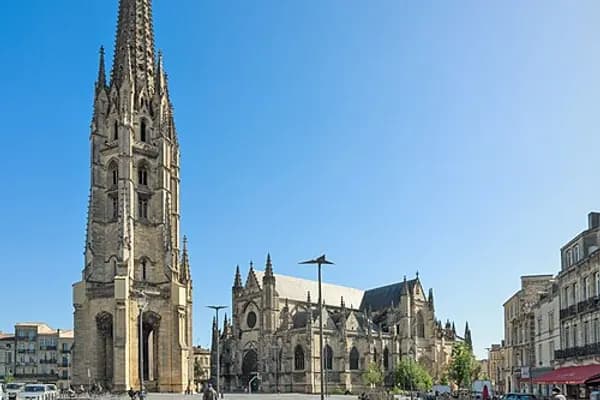
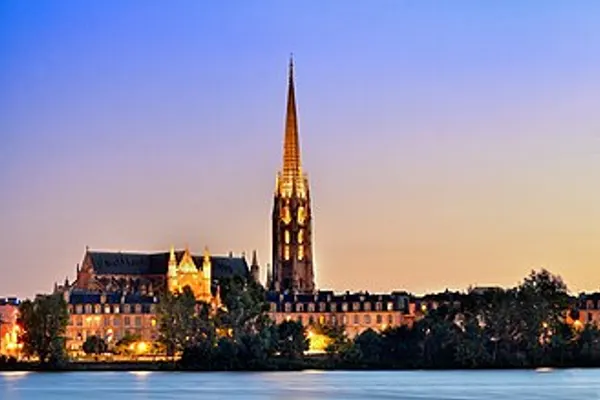
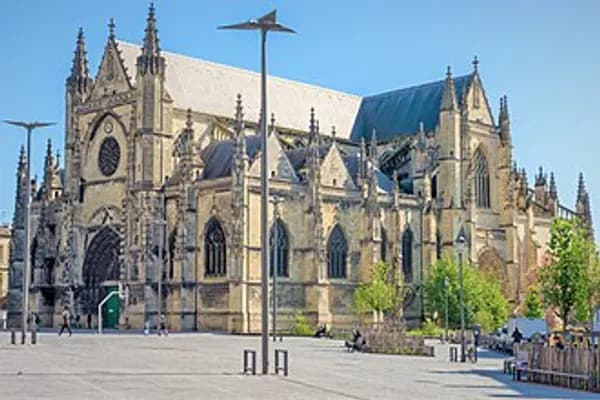
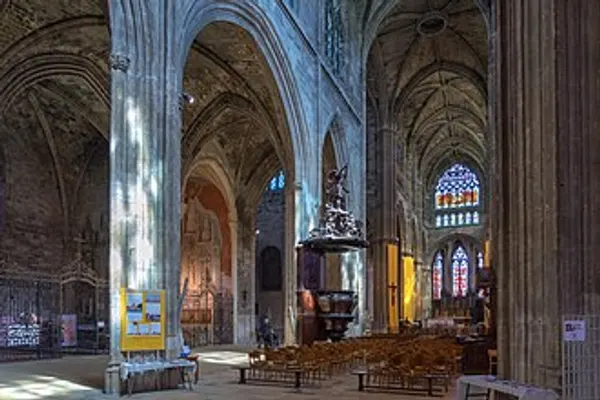
The Basilica of St Michael (Basilique Saint-Michel, in French), is a Flamboyant Gothic church in Bordeaux, France.
In 1998, UNESCO designated the Routes of Santiago de Compostela in France as a World Heritage Site, including the three main churches of Bordeaux: the basilica of St Severinus, the basilica of St Michael and the cathedral of St Andrew.
History
The basilica was built between the end of 14th century and the 16th century. It is at the heart of the ancient quarter of Saint-Michel.
The church has been listed in the Inventory of Historic Monuments since 1846, minor basilica since 1903, and World Heritage Site since 1998.
Description
The pulpit represents Saint Michael slaying the dragon. The stained-glass windows were destroyed during the bombardment of 1940.
The separate bell tower, which is 114 meters tall, was built in the 15th century. The tower can be visited every day from April to October.
Legend of the mummies
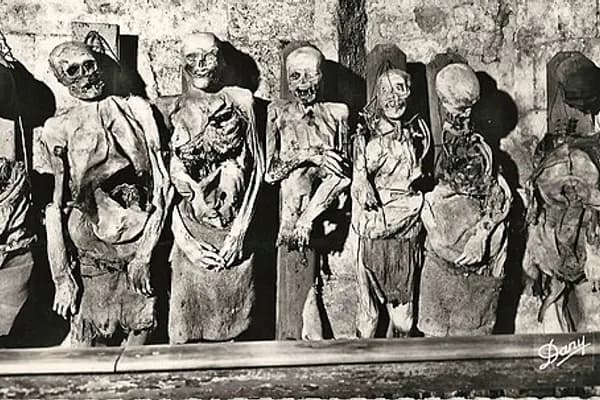
From the late eighteenth century until 1979, over 60 of the mummified bodies were exhibited in the crypt.
In 1881 a Gallo-Roman cemetery and catacombs were discovered under the tower, with several naturally mummified bodies (see note). The church is a listed historical monument.
The mummies were found in 1791 according to other sources, in the adjacent parish graveyard which, having become full, was being cleared, with remains being transferred to catacombs; they further state that the bodies were removed to the cimetière de la Chartreuse in 1979.
Gallery
References
External links
L'église Saint-Michel
Webcam opposite Saint Michel
Arles Route or Via Tolasana Pont du Diable (Aniane)
Hospice of the Plan and chapel of Notre-Dame-de-l'Assomption (Aragnouet)
Church of St Honorat (Arles)
Cathedral of Sainte-Marie (Auch)
Church of Notre-Dame de Tramesaygues (Audressein)
Parochial church of Saint-Jean-Baptiste (Gavarnie-Gèdre)
Church of Saint-Jacques (Gazost)
Church of Saint-Laurent (Jézeau)
Church of Sainte-Marie (Oloron-Sainte-Marie)
Church of Notre-Dame-du-Bourg (Rabastens)
Former cathedral of Notre-Dame (Saint-Bertrand-de-Comminges)
Early Christian basilica, Chapel of Saint-Julien (Saint-Bertrand-de-Comminges)
Former abbatial church (Saint-Gilles)
Former abbey of Gellone (Saint-Guilhem-le-Désert)
Former cathedral and cloister, cathedral of Notre-Dame-de-la-Sède, episcopal palace, rempart (Saint-Lizier)
Basilica of Saint-Sernin (Toulouse)
Hospital of Saint-Jacques (Toulouse)
Basilica of Saint-Just (Valcabrère)
Encyclopedic content adapted from the Wikipedia article on Saint-Michel, used under CC BY-SA 4.0.
What makes Saint-Michel special
Saint-Michel stands out among Bordeaux’s neighborhoods for its distinctive character: bordeaux's multicultural quarter. Ranked #3 in Bordeaux, it offers the kind of experience that defines a great city trip — a place where the streets themselves tell a story and every block rewards curiosity.
Best for
Our take on Saint-Michel
Saint-Michel is one of the strongest neighborhoods in Bordeaux, and it consistently appears in our editors' personal favorites lists. It may not always get the same attention as the city's most famous district, but among travelers who know Bordeaux well, Saint-Michel is often the first recommendation.
What makes Saint-Michel exceptional is the density of its cultural life. Art galleries, independent bookshops, small theaters, and creative studios are woven into the fabric of the neighborhood rather than clustered in a single zone. You encounter culture here by accident, which is how the best cultural experiences always happen.
Our editors recommend budgeting at least half a day here — enough time to walk the main streets, sit down for coffee, and discover the side streets where Saint-Michel's real character lives.
Living in Saint-Michel
Saint-Michel is connected to the rest of Bordeaux by public transit, and most visitors find it straightforward to reach from the city center or airport. Once you arrive, the neighborhood is best explored on foot — the scale is human and the streets reward wandering.
Day-to-day life in Saint-Michel has the rhythm of a genuine residential neighborhood. You will find grocery stores, pharmacies, cafés with morning regulars, and the kind of small independent shops that only survive where locals support them. For visitors, this means the infrastructure you need — good coffee, a decent meal, a quiet place to sit — is always within a short walk.
Accommodation in Saint-Michel ranges from boutique hotels to short-term rentals. We generally recommend staying within the neighborhood itself rather than commuting from a hotel elsewhere in Bordeaux — the experience of waking up inside a great neighborhood is fundamentally different from visiting one as a day trip.
What locals say about Saint-Michel
Long-term residents of Saint-Michel tend to describe their neighborhood with a mix of pride and protectiveness. Like any district with genuine character, Saint-Michel inspires loyalty — the kind of place people move to and never quite leave, or leave and spend years trying to get back to.
The creative community in Saint-Michel is genuine, not aspirational. Residents include working artists, writers, musicians, and designers who chose the neighborhood because it supported their work — affordable studio space, a community that values craft, and enough foot traffic to sustain independent galleries and shops.
Compared to the more famous districts in Bordeaux, Saint-Michel has maintained a lower profile, which many residents consider an advantage. The neighborhood evolves gradually rather than being reshaped by sudden attention, and the result is a community that still feels organic rather than curated.
Visitor tips
- Saint-Michel is located in Bordeaux, France. The neighborhood is accessible by public transport, taxi, or rideshare from most parts of the city.
- Morning is often the best time to explore — the streets are quieter, the light is better for photography, and cafes are at their most welcoming.
- Wear comfortable walking shoes — the best way to experience Saint-Michel is on foot, wandering the side streets and discovering what lies around each corner.
- Save the neighborhood's location on your phone before you arrive. Offline maps are especially useful for navigating the smaller side streets.