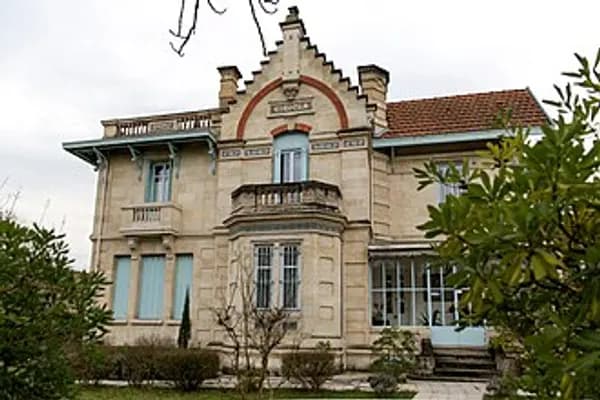
About the neighborhood
Commune in Nouvelle-Aquitaine, France
Pessac (French pronunciation: pɛsak ; Occitan: Peçac) is a commune in the Gironde department in Nouvelle-Aquitaine in southwestern France. It is a member of the metropolis of Bordeaux, being the second-largest suburb of Bordeaux and located just southwest of it.
Pessac is home to Bordeaux Montaigne University, the Institut d'études politiques de Bordeaux, and the main production facility of the Monnaie de Paris. It is also in the Pessac-Léognan wine region.
Geography
Pessac is located in the south of the Bordeaux metro area and is surrounded by Bordeaux, Talence, Gradignan, Canéjan, Cestas, Saint-Jean-d'Illac and Mérignac.
The western part of the commune is part of the Landes de Bordeaux.
History
The Hôtel de Ville was established in 1868.
Early in World War II (June 22, 1940), the town was the scene of a quadruple execution on the firing range of Verthamon. Four communist militants, one of whom, Roger Rambaud, was 17-years-old, were among the escapees from the military prison in Paris, were killed secretly by soldiers of the Third Republic. This case, classified "Secret Defense" for 70 years, was revealed by historian Jacky Tronel, in a 2010 article in the history journal Arkheia, which focuses on the history of the French Great South-West region.
In 1973, the main production facility of the Monnaie de Paris moved to Pessac.
Neighborhoods
Neighborhoods of Pessac:
Verthamon
Les échoppes
Brivazac - Candau
Noës
Pessac-bourg
Casino
Sardine
Chiquet
Compostelle - La Paillère
Le Monteil
CCLAPS - La Chataigneraie
Saige - Formanoir
3 M (Macédo, Mirante, Monbalon)
France - L'Alouette
Cap de Bos
Magonty - Romainville
Toctoucau
Heritage
Wineries
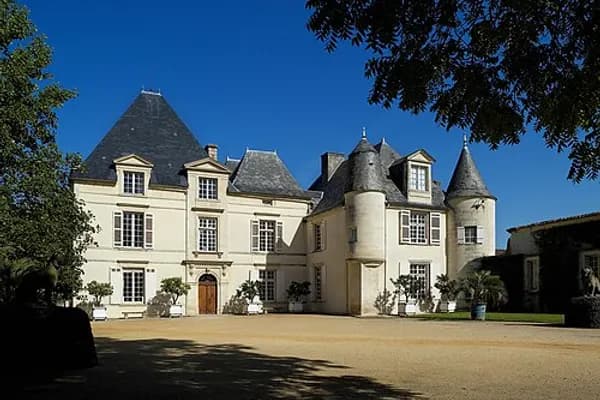
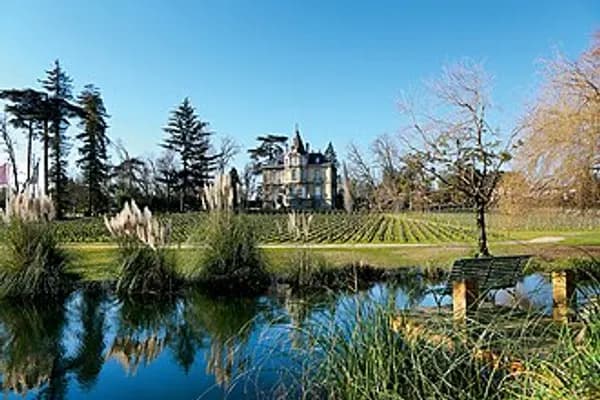
Located on the Pessac-Léognan appellation, there are several wineries, including Château Haut-Brion.
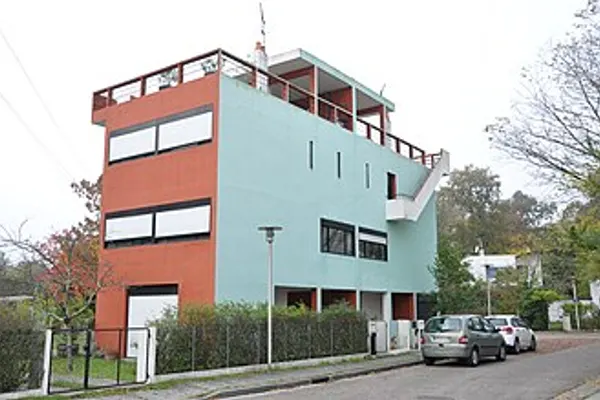
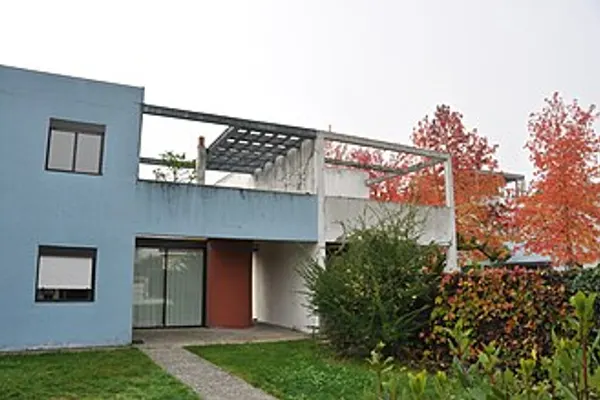
Cité Frugès
Built by Le Corbusier in 1926, the district is an experimental housing for workers. This is one of the 17 architectural works of Le Corbusier listed as a UNESCO World Heritage Site since 2016.
Casino district
Quarter built in the 1900s with a resort city architecture.
Others
Population
Source: EHESS and INSEE (1968-2023) Education
9 Kindergartens
École maternelle Alouette
École maternelle Cap de Bos
École maternelle François Mauriac
École maternelle Joliot-Curie
École maternelle Le Colombier
École maternelle Le Monteil
École maternelle Le Pontet
École maternelle Montesquieu
École maternelle Pape Clément
15 Grade schools
École primaire Cap de Bos
École primaire Édouard Herriot
École primaire Jacques Cartier
École primaire Joliot-Curie
École primaire Montesquieu
École primaire Pierre Castaing
École primaire Toctoucau
École Aristide Briand
École de Magonty
École Georges Leygues
École Jean Cordier
École Jeanne d'Arc Assomption
École Jules Ferry
École Roland Dorgelès
École Saint Exupéry
5 Middle schools
Collège Alouette
Collège François Mitterrand (Ladonne)
Collège Gérard Philipe
Collège Pessac (Noès)
Collège Sainte-Jeanne d'Arc Assomption
3 High schools
Lycée Pape-Clément: financed by the French government, "Région Nouvelle-Aquitaine" and "Bordeaux Métropole"; was presented as the high school of the year 2000. It was inaugurated on 9 July 1987 by Jacques Chirac, then Prime Minister. Its initial capacity was 1,100 students including 900 "demi-pensionnaires". It was expanded in 1990 and now holds 1,475 students.
Lycée Sans Frontière
Lycée professionnel Philadelphe de Gerde
Transportation
Pessac has a railway station on the westbound line from Bordeaux, Gare de Pessac. Pessac is also served by the urban transport network of the Bordeaux agglomeration, Transports Bordeaux Métropole (TBM).
Pessac is located on line B of the Tramway de Bordeaux.
Personalities
1929: Yvette Roudy, socialist minister
1938: Jean Eustache, film actor and director (d. 1981)
1953: Patrice Brun, historian
1979: Myriam Korfanty, handball player, Olympian
Twin towns - sister cities
Pessac is twinned with:
Banfora, Burkina Faso
Burgos, Spain
Galați, Romania
Göppingen, Germany
Viana do Castelo, Portugal
See also
Château Haut-Brion
Pessac-Léognan, wine appellation
Communes of the Gironde department
Operation Josephine B, a 1941 attack on an electricity substation.
References
External links
Wikimedia Commons has media related to Pessac.
Official website (in French)
Encyclopedic content adapted from the Wikipedia article on Saint-Pierre, used under CC BY-SA 4.0.
What makes Saint-Pierre special
Saint-Pierre stands out among Bordeaux’s neighborhoods for its distinctive character: bordeaux's historic quarter. It tops our ranking of the best neighborhoods in Bordeaux, it offers the kind of experience that defines a great city trip — a place where the streets themselves tell a story and every block rewards curiosity.
Best for
Our take on Saint-Pierre
Saint-Pierre is the neighborhood we send friends to first when they visit Bordeaux. It earns the top spot in our ranking not because it is the most famous district in the city, but because it delivers the most complete neighborhood experience — the kind of place where every block rewards curiosity and every return visit reveals something new.
What makes Saint-Pierre exceptional is the density of its cultural life. Art galleries, independent bookshops, small theaters, and creative studios are woven into the fabric of the neighborhood rather than clustered in a single zone. You encounter culture here by accident, which is how the best cultural experiences always happen.
Our editors recommend budgeting at least half a day here — enough time to walk the main streets, sit down for coffee, and discover the side streets where Saint-Pierre's real character lives.
Living in Saint-Pierre
Saint-Pierre is connected to the rest of Bordeaux by public transit, and most visitors find it straightforward to reach from the city center or airport. Once you arrive, the neighborhood is best explored on foot — the scale is human and the streets reward wandering.
Day-to-day life in Saint-Pierre has the rhythm of a genuine residential neighborhood. You will find grocery stores, pharmacies, cafés with morning regulars, and the kind of small independent shops that only survive where locals support them. For visitors, this means the infrastructure you need — good coffee, a decent meal, a quiet place to sit — is always within a short walk.
Accommodation in Saint-Pierre ranges from boutique hotels to short-term rentals. We generally recommend staying within the neighborhood itself rather than commuting from a hotel elsewhere in Bordeaux — the experience of waking up inside a great neighborhood is fundamentally different from visiting one as a day trip.
What locals say about Saint-Pierre
Long-term residents of Saint-Pierre tend to describe their neighborhood with a mix of pride and protectiveness. Like any district with genuine character, Saint-Pierre inspires loyalty — the kind of place people move to and never quite leave, or leave and spend years trying to get back to.
The creative community in Saint-Pierre is genuine, not aspirational. Residents include working artists, writers, musicians, and designers who chose the neighborhood because it supported their work — affordable studio space, a community that values craft, and enough foot traffic to sustain independent galleries and shops.
Like any neighborhood that has earned attention, Saint-Pierre is navigating the tension between popularity and preservation. Rents have risen, new businesses have arrived, and long-time residents occasionally grumble that the neighborhood is not what it was. But the fundamentals — the walkability, the food, the community — remain strong, and most locals we speak to believe the neighborhood is still gaining more than it is losing.
Visitor tips
- Saint-Pierre is located in Bordeaux, France. The neighborhood is accessible by public transport, taxi, or rideshare from most parts of the city.
- Morning is often the best time to explore — the streets are quieter, the light is better for photography, and cafes are at their most welcoming.
- Wear comfortable walking shoes — the best way to experience Saint-Pierre is on foot, wandering the side streets and discovering what lies around each corner.
- Save the neighborhood's location on your phone before you arrive. Offline maps are especially useful for navigating the smaller side streets.