About the neighborhood
Neighborhood in Kyoto, Japan
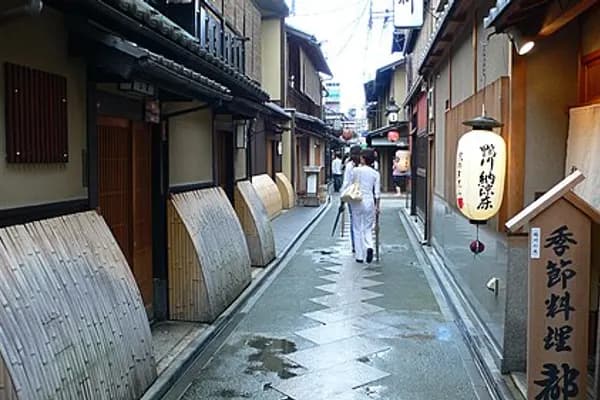
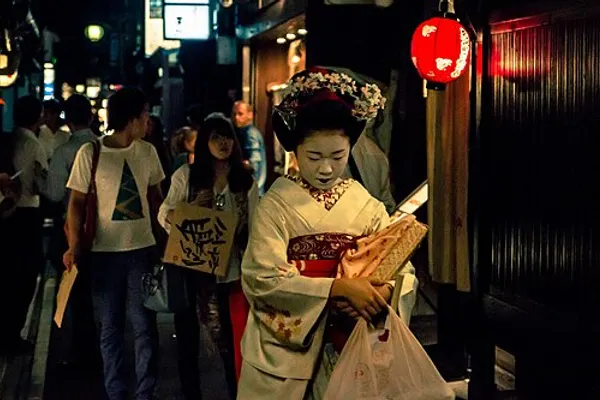
Ponto-chō (先斗町) is a hanamachi district in Kyoto, Japan, known for its geiko and maiko, and is home to many of the city's okiya and traditional tea houses. Like Gion, Ponto-chō is famous for the preservation of forms of traditional architecture and entertainment.
Etymology
The name "Ponto" is believed to come from the Portuguese word "ponte" (bridge), and is written in kanji used for their sound only (ateji). The Japanese word "-chō" means town, block or street.
District
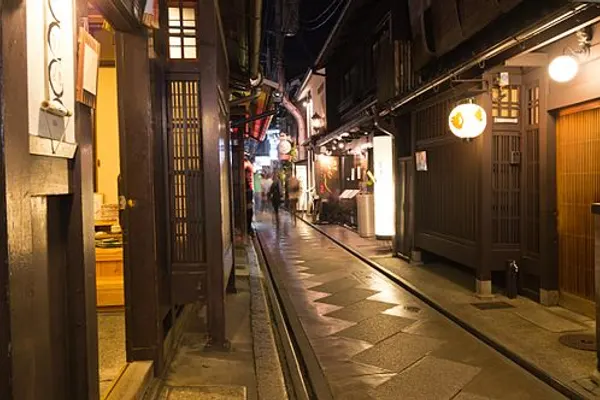
Ponto-chō as a district is for the most part constructed around a long, narrow alleyway, running from Shijō-dōri to Sanjō-dōri, one block west of the Kamo River. This location is also known as the traditional location for the beginning of kabuki as an art form, and a statue of kabuki's founder, Izumo no Okuni, stands on the opposite side of the river. The district's crest is a stylized water plover, or chidori.
Cultural features
Geiko and maiko have existed in Ponto-chō since at least the 16th century, as have prostitution and other forms of entertainment. Today, the area, lit by traditional lanterns at night, contains a mix of exclusive restaurants — often featuring outdoor riverside dining on wooden patios — geisha houses and tea houses, bars, and cheap eateries.
The area is also home to the Ponto-chō Kaburenjō Theatre at the Sanjō-dōri end of the street. This theatre functions as a practice hall for geisha and maiko, and has functioned as the location for the annual Kamogawa Odori — a combination performance of traditional dance, kabuki-like theatre, singing and the playing of traditional instruments — since the 1870s.
In the 1970s, American anthropologist Liza Dalby visited Kyoto for a year as part of her doctoral studies into the institution of geisha in modern Japanese society, eventually unofficially becoming a geisha as part of her research. Dalby later wrote a well-received book, Geisha, about the experience.
See also
Gion
Kamishichiken
Miyagawacho
Shimabara
References
External links
Wikimedia Commons has media related to Pontocho.
Ponto-cho Noren-kai(in Japanese)
Kamogawa Odori (Pontochō Kaburenjō Theater)
35°00′29″N 135°46′16″E / 35.007969°N 135.771111°E / 35.007969; 135.771111 (Pontochō Kaburenjō Theater)
Encyclopedic content adapted from the Wikipedia article on Pontocho, used under CC BY-SA 4.0.
What makes Pontocho special
Pontocho stands out among Kyoto’s neighborhoods for its distinctive character: kyoto's riverside dining alley. Ranked #4 in Kyoto, it offers the kind of experience that defines a great city trip — a place where the streets themselves tell a story and every block rewards curiosity.
Best for
Our take on Pontocho
Pontocho occupies a distinctive place in Kyoto's neighborhood landscape. It is the kind of district that rewards travelers who venture beyond the obvious choices — quieter than the tourist-facing areas, richer in local character, and full of the small details that make a city trip memorable.
What strikes us most about Pontocho is the depth of its food culture. This is not a neighborhood with a few good restaurants — it is a neighborhood where eating well is woven into daily life, where the corner places are as good as the destination spots, and where you could eat every meal for a week without repeating yourself or being disappointed.
Our editors recommend budgeting at least half a day here — enough time to walk the main streets, sit down for coffee, and discover the side streets where Pontocho's real character lives.
Living in Pontocho
Pontocho is connected to the rest of Kyoto by public transit, and most visitors find it straightforward to reach from the city center or airport. Once you arrive, the neighborhood is best explored on foot — the scale is human and the streets reward wandering.
Day-to-day life in Pontocho has the rhythm of a genuine residential neighborhood. You will find grocery stores, pharmacies, cafés with morning regulars, and the kind of small independent shops that only survive where locals support them. For visitors, this means the infrastructure you need — good coffee, a decent meal, a quiet place to sit — is always within a short walk.
Accommodation in Pontocho ranges from boutique hotels to short-term rentals. We generally recommend staying within the neighborhood itself rather than commuting from a hotel elsewhere in Kyoto — the experience of waking up inside a great neighborhood is fundamentally different from visiting one as a day trip.
What locals say about Pontocho
Long-term residents of Pontocho tend to describe their neighborhood with a mix of pride and protectiveness. Like any district with genuine character, Pontocho inspires loyalty — the kind of place people move to and never quite leave, or leave and spend years trying to get back to.
What locals appreciate most about Pontocho is its consistency — the feeling that the neighborhood works the same way on a Tuesday morning as it does on a Saturday night. It is not a place that performs for visitors and then goes quiet. The rhythm is genuine, the community is real, and the daily experience of living here is what draws people and keeps them.
Compared to the more famous districts in Kyoto, Pontocho has maintained a lower profile, which many residents consider an advantage. The neighborhood evolves gradually rather than being reshaped by sudden attention, and the result is a community that still feels organic rather than curated.
Visitor tips
- Pontocho is located in Kyoto, Japan. The neighborhood is accessible by public transport, taxi, or rideshare from most parts of the city.
- Morning is often the best time to explore — the streets are quieter, the light is better for photography, and cafes are at their most welcoming.
- Wear comfortable walking shoes — the best way to experience Pontocho is on foot, wandering the side streets and discovering what lies around each corner.
- Save the neighborhood's location on your phone before you arrive. Offline maps are especially useful for navigating the smaller side streets.