About the neighborhood
Region of Senegal
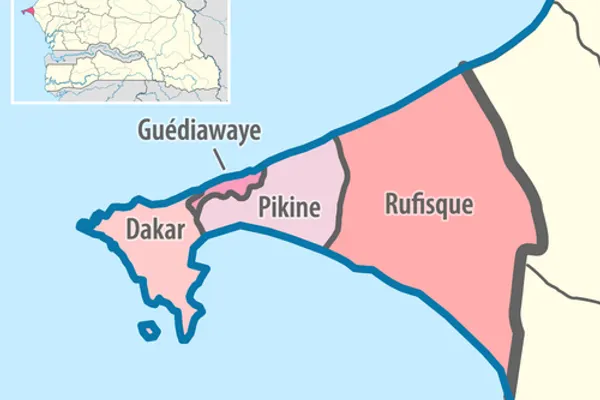
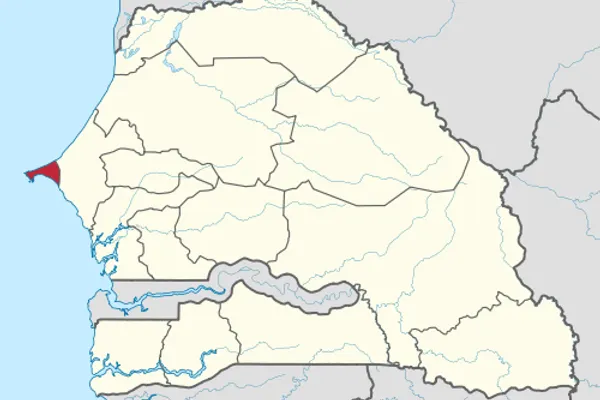
Dakar region (French: Région de Dakar) is the smallest and most populated region of Senegal, encompassing the capital city of the country, Dakar, and all its suburbs along the Cap Vert peninsula, Africa's most westerly point.
Administration
The Dakar region is divided into five départements (administrative structures without political power, unlike the French départements). The départements had the following areas and populations at the Census of 2023:
Keur Massar department was formed in May 2021.
Dakar department
Dakar department is also a commune (city). This is a situation comparable to Paris which is both a department and a commune. The department/commune of Dakar is further divided into:
4 arrondissements, which are administrative structures without much power. The arrondissements are further divided into: 19 communes d'arrondissement (i.e. "communes of arrondissement"). The communes d'arrondissement have a lot of power, unlike the arrondissements of Paris, and are more comparable to the London boroughs.
Guédiawaye department
Guédiawaye department is also a commune (city). This department has only one arrondissement, so that Guédiawaye is both a department and an arrondissement. The department /arrondissement/commune of Guédiawaye is further divided into:
5 communes d'arrondissement
Pikine department
Pikine department is also a commune (city). The department /commune of Pikine is further divided into:
3 arrondissements, which are further divided into: 16 communes d'arrondissement
Rufisque department
Rufisque department is made up of two arrondissements and six urban communes:
Rufisque arrondissement, which is also a commune (city). The arrondissement/commune of Rufisque is divided into 3 communes d'arrondissement: Rufisque Centre (Nord)
Rufisque Est
Rufisque Ouest
Bambylor arrondissement, which, administratively speaking, is the only rural part of the Dakar region. The Bambylor arrondissement is divided into 3 communautés rurales (i.e. "rural communities"): Yène
Bambylor
Tivaouane Peulh-Niaga
The six communes of Bargny, Sébikotane, Diamniadio, Jaxaay-Parcelle-Niakoul Rap, Sangalkam and Sendou
Demographics
Table of administrative sub-divisions
Within the Dakar region, the politically significant units (i.e. those who have elected officials and wield a significant power) are: the 7 communes, the 2 communautés rurales, and the 43 communes d'arrondissement.
References
External links
(in French)Regional Council of Dakar official website Archived 2005-03-11 at the Wayback Machine
(in French)Collectivités locales de Dakar from Republic of Senegal Government site, l'Agence de l'informatique de l'État (ADIE). Archived 2012-02-08 at the Wayback Machine
(in French)Décret fixant le ressort territorial et le chef lieu des régions et des départements Archived 2013-05-12 at the Wayback Machine, décret n°2002-166 du 21 février 2002.
(in French)Code des collectivités locales Archived 2011-05-11 at the Wayback Machine, Loi n° 96-06 du 22 mars 1996.
Encyclopedic content adapted from the Wikipedia article on Point E, used under CC BY-SA 4.0.
What makes Point E special
Point E stands out among Dakar’s neighborhoods for its distinctive character: dakar's diplomatic and residential quarter. Ranked #5 in Dakar, it offers the kind of experience that defines a great city trip — a place where the streets themselves tell a story and every block rewards curiosity.
Best for
Our take on Point E
Point E occupies a distinctive place in Dakar's neighborhood landscape. It is the kind of district that rewards travelers who venture beyond the obvious choices — quieter than the tourist-facing areas, richer in local character, and full of the small details that make a city trip memorable.
What makes Point E exceptional is the density of its cultural life. Art galleries, independent bookshops, small theaters, and creative studios are woven into the fabric of the neighborhood rather than clustered in a single zone. You encounter culture here by accident, which is how the best cultural experiences always happen.
Our editors recommend budgeting at least half a day here — enough time to walk the main streets, sit down for coffee, and discover the side streets where Point E's real character lives.
Living in Point E
Point E is connected to the rest of Dakar by public transit, and most visitors find it straightforward to reach from the city center or airport. Once you arrive, the neighborhood is best explored on foot — the scale is human and the streets reward wandering.
This is a neighborhood with strong residential roots, which means the infrastructure of daily life is well-established: grocery stores, pharmacies, parks, playgrounds, and the kind of quiet side streets where children play and neighbors greet each other. For visitors, this translates into a feeling of safety and belonging that more tourist-oriented districts rarely provide.
Accommodation in Point E ranges from boutique hotels to short-term rentals. We generally recommend staying within the neighborhood itself rather than commuting from a hotel elsewhere in Dakar — the experience of waking up inside a great neighborhood is fundamentally different from visiting one as a day trip.
What locals say about Point E
Long-term residents of Point E tend to describe their neighborhood with a mix of pride and protectiveness. Like any district with genuine character, Point E inspires loyalty — the kind of place people move to and never quite leave, or leave and spend years trying to get back to.
The creative community in Point E is genuine, not aspirational. Residents include working artists, writers, musicians, and designers who chose the neighborhood because it supported their work — affordable studio space, a community that values craft, and enough foot traffic to sustain independent galleries and shops.
Compared to the more famous districts in Dakar, Point E has maintained a lower profile, which many residents consider an advantage. The neighborhood evolves gradually rather than being reshaped by sudden attention, and the result is a community that still feels organic rather than curated.
Visitor tips
- Point E is located in Dakar, Senegal. The neighborhood is accessible by public transport, taxi, or rideshare from most parts of the city.
- Morning is often the best time to explore — the streets are quieter, the light is better for photography, and cafes are at their most welcoming.
- Wear comfortable walking shoes — the best way to experience Point E is on foot, wandering the side streets and discovering what lies around each corner.
- Save the neighborhood's location on your phone before you arrive. Offline maps are especially useful for navigating the smaller side streets.