About the neighborhood
Neighborhood in Kyiv
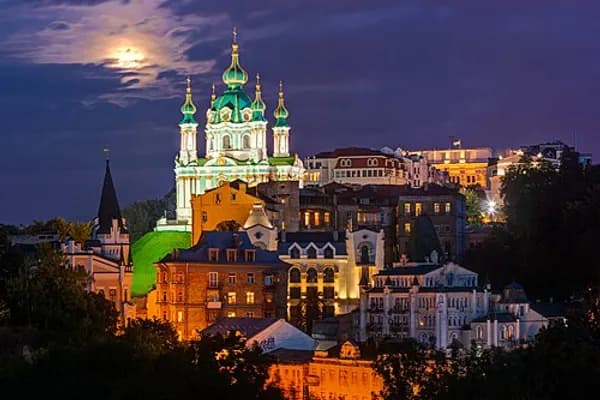
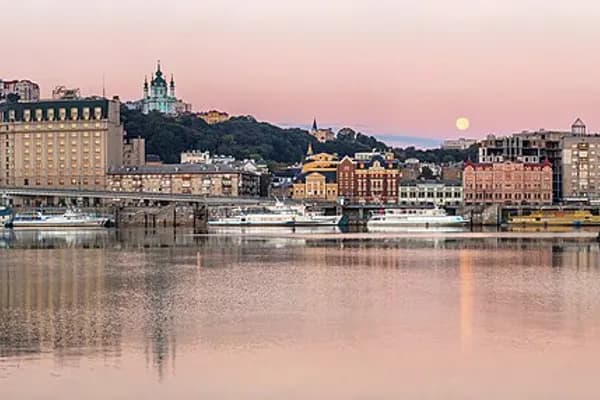
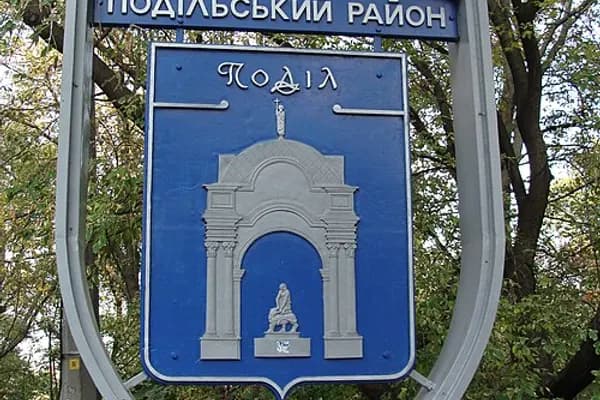
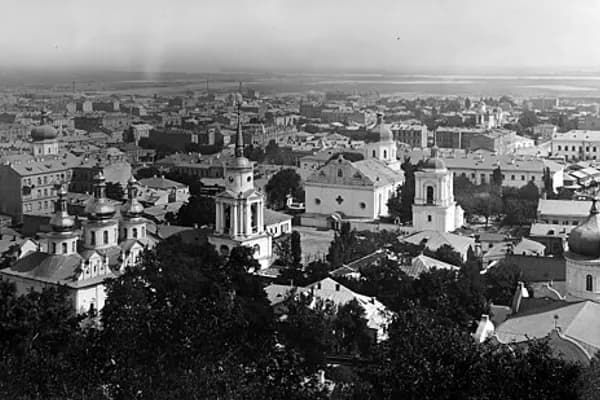
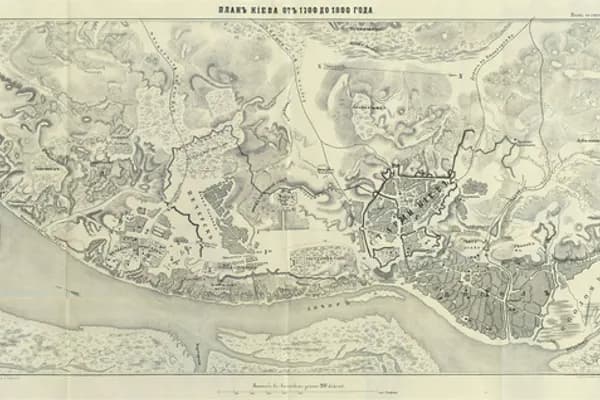
Podil (Ukrainian: Поділ poˈd⁽ʲ⁾il ) or Podol (Russian: Подол pɐˈdol ), also known in English as the Lower City, is a historic neighborhood in Kyiv, the capital of Ukraine. It is located on a floodplain terrace over the Dnieper between the Kyiv Hills and the lower stream of Pochaina River. Podil is one of the oldest neighborhoods of Kyiv, and the birthplace of the city's trade, commerce and industry. After the Mongol invasion of Rus' and destruction of Kyiv, it served as a city center until the 19th century. Here the city administration (magistrate) and the main university were located, and later the city's port and shipyard were established here.
Podil contains many architectural and historical landmarks, and new archaeological sites are still being revealed. It is a part of the city's larger administrative Podilskyi District.
History
The name “Podil” means something that is situated downwards. This area used to be the trading and crafting center of Kyiv. The names of some Podil neighborhoods reflect this fact: "Dehtyari" (those who work with tar), "Honchari" (potters), "Kozhemyaki" (craftsmen working with leather). On the territory of Podil ancient constructions were found. Some of them date back to the first half of the first millennium BC. It is first mentioned, however, in chronicles around 945. At times of Ancient Rus, Podil served as the main city's posad which was connected with the Upper city (Old Kyiv Hill) by Borychiv Descent. According to archaeological data, Podil appeared at the end of the 9th century. In 12-13th centuries its total area was reaching 200ha (490 acres). In documentary sources there is mention of "Stolpiye" (wooden fortifications) that protected Podil from northwest, Fairgrounds (later Zhytniy Fairgrounds, main city market), Church of Saint Elijah (the oldest Christian temple mentioned in 945), and Pyrohoshcha Church. Probably, the legendary churches of Turov and Novgorod also existed at Podil. The Soviet "Outline of Ancient History of the Ukrainian SSR" of 1957 (Ukrainian: Нариси стародавньої історії УРСР) mentions that the Novgorod traders had own church in Kyiv. The Pochaina River served the city's harbour.
Podil has accumulated a cultural layer built up of 6–12 metres (20–39 feet) saturated with a great abundance of artefacts of 9–18th centuries. Its uniqueness consists of the fact that in its lower strata due to high soil moisture are well-preserved objects of organic matter such as wooden structures. There were researched residential and commercial buildings (predominantly above-ground blockhouses), craftsman shops, port warehouses, burial grounds, segments of streets. There were discovered remnants of five masonry temples of the 12th century. It was established that Podil had built-up manors with consistent courtyard limits. Each resident's manor that had area of 300–400m (3,200–4,300sqft) consisted of 2-3 buildings.
After the Mongol invasion of Rus' and destruction of Kyiv, Podil transformed into the main and the most populated part of the city. However, the area of Podil shrank, in 16-17th centuries its northwestern border served the Hlybochytsia River that used to drain into Pochaina (today Hlybochytsia in the underground collector).
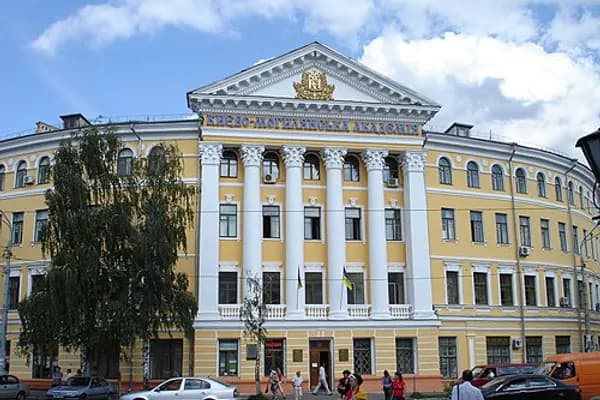
Upon obtaining its Magdeburg rights in the 15th century, in Kyiv was built a rathaus, later Kyiv magistrate. The center of Podil became the market square later known as Mahistratska and Konstraktova where stood a rathaus and the city's cathedral Pyrohoshcha Church. The first "hostynnyi dvir" (trading courtyard) is known as early as the mid 16th century. In the 15th century there was established the Convent of St Florus. At the beginning of the 17th century, there was established Epiphany Monastery of the Kyiv Orthodox Brotherhood, which also later contained the Kyiv Mohyla Academy. Until middle of the 17th century there was an Armenian community in Podil with its own Church of the Nativity of the Virgin. Also during the first half of the 17th century two Roman Catholic places of worship were built in stone, the cathedral church that was destroyed in the 1660s and its remnants found during archaeological excavations and a cathedral of the Dominican Monastery of St Nicholas that existed in 1400s-1649 and at end of the 17th century became the Orthodox cathedral of the Monastery of Sts Peter and Paul.
In 1667 under the Truce of Andrusovo, Kyiv was officially ceded to the Tsardom of Muscovy. Intensive building within Podil took place in the 17th century. An annual fair was held from 1797 to 1929 at the Kontraktova Square (Square of Contracts). Before the building of the Contract House, the Kontraktova Square was known as Mahistratska Square. At the western end of the square was the Pyrohoshcha Church mentioned in the 12th century epic poem The Tale of Igor's Campaign. Following traditions of medieval cities, in the 18th century a rotunda was built along with a fountain of the Roman goddess Felicitas in front of the magistracy was built. In 19th century the fountain was reattributed to Samson. The fountain became the first hydro-engineering structure at Podil. Not far from Kontraktova Square at Podil were the Zhytniy (Rye) Fairgrounds that existed at least since the 15th century where the main Roman Catholic cathedral Kosciol of Virgin Mary was located.
Before the Great Podil fire of 1811 it was the most populous neighborhood of the city with 2,068 houses out of 3,672 dwellings in all of Kyiv. The fire damaged the neighborhood extensively and changed the appearance of Podil dramatically. After the fire, Podil was reconstructed and a large number of new streets appeared, planned by Scottish architect William Heste and Russian architect Andrey Melensky, which still exist today. At this time such buildings as the Contract's House (1817), the Hostynnyi Dvir covered market and other buildings were constructed. The Contracts House was built in 1817. Contracts and treaties were signed on the ground floor; on the floor above there was a concert hall.
In 1835 the Kyiv magistracy was demolished and the bricks were used to finish building the Hostynnyi Dvir and Contracts House. A small park was established on the magistracy site. In 1938 a British Mark V tank was put in the park. It had been taken as a trophy from the Russian White Guards during the Russian Civil War. The tank remained in the park for a few years after World War II. In 1977 the Hryhoriy Skovoroda monument was built in the park.
The Kyiv tramway was among the first in the Russian Empire. The tram commuting started at Podil among the first in Kyiv in 1896. It originally was connecting Kontraktova Square and Poshtova Square and later stretched to Kurenivka and then Pushcha-Vodytsia.
Until World War II, the section just north of Nyzhniy Val street was called Ploska chast or Ploskaya sloboda. It was home to many poor Jews who lived there in wretched conditions. The Great Choral Synagogue, built in the 19th century, still functions in the area.
Landmarks (attractions)
Numerous tourist attractions (also officially designated as landmarks) of Podil particularly include:
Frolivsky Convent
National University of Kyiv-Mohyla Academy
House of Ivan Mazepa
House of Peter the Great
Fountain of Samson
Zamkova Hora hill (Castle Hill)
Hostynnyi Dvir (Hosting courtyard)
Pyrohoshcha Church
Lost landmarks
House of the Kyiv magistrate (the Kyiv Rathaus)
Kyiv Brotherhood Monastery Epiphany Cathedral
Church of Nicholas the Good
Church of the Resurrection
Church of the Saint Boris and Gleb (Borys and Hlib)
Church of the Apostles Peter and Paul
Church of the Saint Constantine and Yelena (Kostiantyn and Olena)
Greek Church of the Saint Catherine
Transport
Podil is connected to the city's metro system by the following three stations on the Obolonsko–Teremkivska line: Tarasa Shevchenka, Kontraktova Ploshcha (named after the Kontraktova Square) and Poshtova Ploshcha (named after the Poshtova Square).
The Kyiv Funicular provides passenger traffic between Podil and the city's historic Uppertown neighborhood, today it is mostly used by tourists. Some time ago, the Kyiv River Port served passenger traffic on the Dnipro River, but only tourists' excursion boats are available there nowadays.
Streets and squares
Andriyivskyy Descent
Borychiv Descent
Poshtova Square
Kontraktova Square
See also
Monument to the Magdeburg Rights (Kyiv)
Further reading
Malikenaite, Ruta (2003). Touring Kyiv. Baltia Druk. pp.146–147. ISBN966-96041-3-3.
References
External links
Wikimedia Commons has media related to Podil.
podilr.gov.ua - Administration website of the Podilskyi District (in Ukrainian)
Поділ in Wiki-Encyclopedia Kyiv (in Ukrainian)
klymenko.in.ua - Photo gallery and information about Podil and its attractions (in Ukrainian)
Historical photos of Podil (in Russian)
Unofficial designation
Category:Urban districts of Kyiv
Category:Neighbourhoods in Kyiv
Encyclopedic content adapted from the Wikipedia article on Podil, used under CC BY-SA 4.0.
What makes Podil special
Podil stands out among Kyiv’s neighborhoods for its distinctive character: kyiv's historic dnipro-side district. It tops our ranking of the best neighborhoods in Kyiv, it offers the kind of experience that defines a great city trip — a place where the streets themselves tell a story and every block rewards curiosity.
Best for
Our take on Podil
Podil is the neighborhood we send friends to first when they visit Kyiv. It earns the top spot in our ranking not because it is the most famous district in the city, but because it delivers the most complete neighborhood experience — the kind of place where every block rewards curiosity and every return visit reveals something new.
Walking through Podil is like reading a history book with your feet. The architecture tells the story of decades — sometimes centuries — of evolution, and the neighborhood has managed to preserve its historical character without becoming a museum piece. People still live here, still run businesses here, still argue about parking here. That living quality is what separates a great historic neighborhood from a pretty but lifeless one.
Our editors recommend budgeting at least half a day here — enough time to walk the main streets, sit down for coffee, and discover the side streets where Podil's real character lives.
Living in Podil
Podil is connected to the rest of Kyiv by public transit, and most visitors find it straightforward to reach from the city center or airport. Once you arrive, the neighborhood is best explored on foot — the scale is human and the streets reward wandering.
Day-to-day life in Podil has the rhythm of a genuine residential neighborhood. You will find grocery stores, pharmacies, cafés with morning regulars, and the kind of small independent shops that only survive where locals support them. For visitors, this means the infrastructure you need — good coffee, a decent meal, a quiet place to sit — is always within a short walk.
Accommodation in Podil ranges from boutique hotels to short-term rentals. We generally recommend staying within the neighborhood itself rather than commuting from a hotel elsewhere in Kyiv — the experience of waking up inside a great neighborhood is fundamentally different from visiting one as a day trip.
What locals say about Podil
Long-term residents of Podil tend to describe their neighborhood with a mix of pride and protectiveness. Like any district with genuine character, Podil inspires loyalty — the kind of place people move to and never quite leave, or leave and spend years trying to get back to.
Long-time residents speak about Podil with a historian's eye — they know which buildings are original, which streets have been renamed, which family has run the corner shop for decades. This accumulated knowledge gives the neighborhood a depth that guidebooks cannot replicate. The best way to access it is simply to talk to people.
Like any neighborhood that has earned attention, Podil is navigating the tension between popularity and preservation. Rents have risen, new businesses have arrived, and long-time residents occasionally grumble that the neighborhood is not what it was. But the fundamentals — the walkability, the food, the community — remain strong, and most locals we speak to believe the neighborhood is still gaining more than it is losing.
Visitor tips
- Podil is located in Kyiv, Ukraine. The neighborhood is accessible by public transport, taxi, or rideshare from most parts of the city.
- Morning is often the best time to explore — the streets are quieter, the light is better for photography, and cafes are at their most welcoming.
- Wear comfortable walking shoes — the best way to experience Podil is on foot, wandering the side streets and discovering what lies around each corner.