About the neighborhood
UNESCO World Heritage Site in Bahia, Brazil
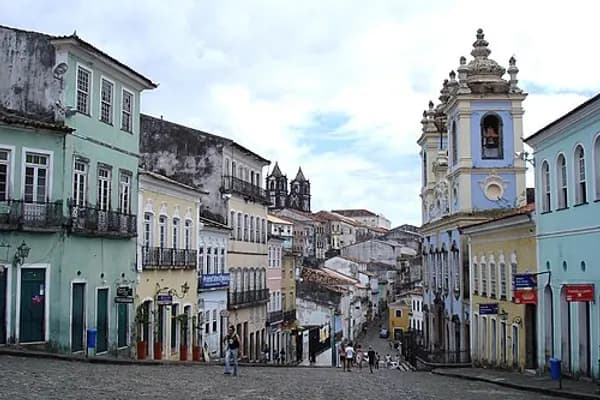
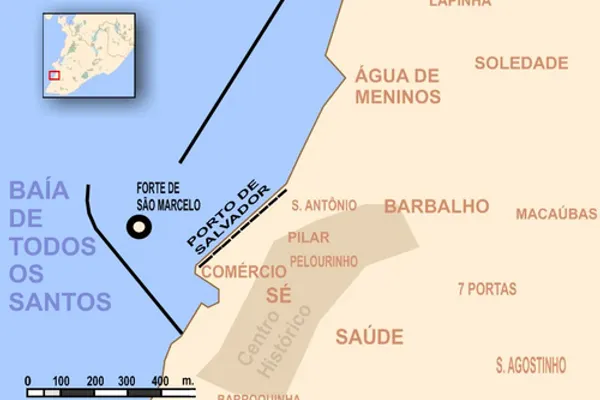
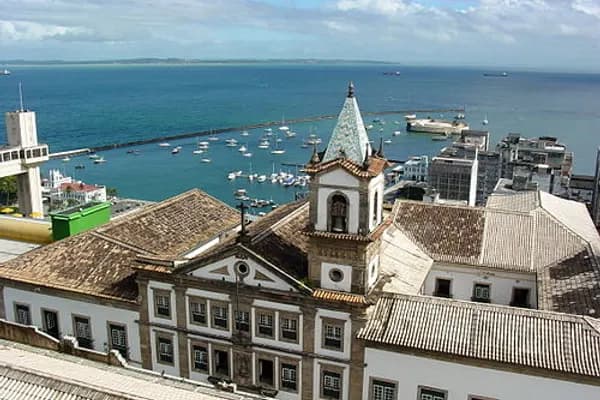
The Historic Center (US) or Centre (UK) (Portuguese: Centro Histórico) of Salvador de Bahia in Brazil, also known as the Pelourinho (Portuguese for "Pillory") or Pelo, is a historic neighborhood in western Salvador, Bahia. It was the city's center during the Portuguese colonial period and was named for the whipping post in its central plaza where enslaved people from Africa were publicly beaten as punishment for alleged infractions. The Historic Center is extremely rich in historical monuments dating from the 17th through the 19th centuries.
Designated a UNESCO World Heritage Site, the Pelourinho retains a vibrant repertoire of colonial Portuguese architecture, exemplified by the Mannerist decoration of the Cathedral of Salvador, the Baroque intricacy of the Church and Convent of São Francisco and the Church of the Third Order of Our Lady of the Rosary of the Black People. In addition, the Pelourinho remains a cultural hub for the Afro-Brazilian community, whose cuisine, architecture, religion and music exert a salient influence on the neighborhood and testify to the "empowerment and influence of Afro cultures" in the New World. Although historical preservation efforts initiated in the 1990s enhanced safety, promoted tourism and facilitated greater economic development, they also resulted in the dislocation of Afro-Brazilian residents in the enclave and contributed to gentrification. As such, the development of the Pelourinho continues to attract attention in the gubernatorial politics of Bahia.
History
The Church of the Holy See (Igreja da Sé), an integral part of the architectural set of the Historic Center, was demolished in 1933 along with four other blocks of buildings from the colonial and imperial periods. The Archbishop's Palace, connected to the church, remains. Debates over the destruction of historic sites in Salvador and elsewhere in Brazil led to the first attempts at federal-level protection of historic assets and eventually to the establishment of the National Institute of Historic and Artistic Heritage.
The Terreiro de Jesus, just north of Praça Municipal, is home to structures from the 17th to 19th century constructions. Catedral Basilica, former Igreja dos Jesuítas (Jesuit Church), and churches Ordem Terceira de São Domingos and Church of Saint Peter of the Clergymen (São Pedro dos Clérigos) stand out in Terreiro de Jesus, with its water fountain in the center.
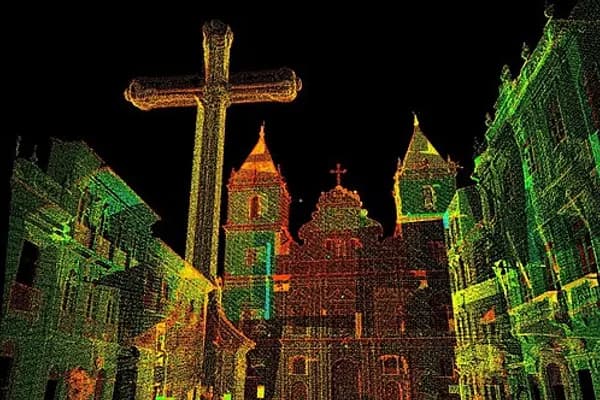
The former Medical School Building, originally occupied by the Jesuit School, is now the Memorial da Medicina (Medicine Memorial), Arqueologia e Etnologia (Archeology and Ethnology), and Afro-Brasileiro (Afro-Brazilian) museums. The House of the Seven Lamps (Casa dos Sete Candeeiros), now a museum, is nearby. Largo do Cruzeiro de São Francisco (Cruzeiro de São Francisco Largo), practically an extension of Terreiro de Jesus, has an old cross in the center, and, on the back, the monumental religious set made up of São Franscisco Church and Convent, and Church of the Third Order of Saint Francis (Ordem Terceira de São Franscisco Church). The Church of the Third Order of Our Lady of the Rosary of the Black People (Igreja da Ordem Terceira de Nossa Senhora do Rosário dos Pretos), Church of the Blessed Sacrament at Rua do Passo, and Church of the Third Order of Mount Carmel are located further north in the district. Numerous colonial-period historic residences, including the Palace of Saldanha and House of the Seven Deaths, are located on streets outside of the main plazas.
Many buildings of the Historic Center have been renovated since the initial survey of Salvador by the National Institute of Historic and Artistic Heritage in the 1930s. This work extended to the revitalization of whole blocks of historic houses, convents, and churches from the beginning of the 1990s. There are more than 800 buildings with restored façades and interiors; many were adapted to function as small museums and cultural centers.
Protected status
The Historic Center of Salvador as a whole was listed as a national heritage site by the National Institute of Historic and Artistic Heritage in 1984. It was named a UNESCO World Heritage Site by UNESCO in 1985.
See also
São Pedro Clock
Dom Pedro II Home
References
External links
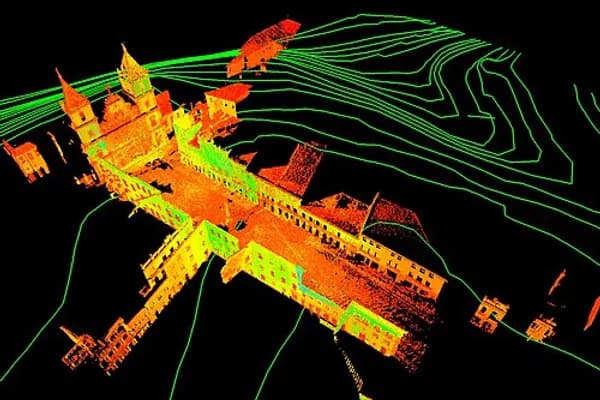
Pelourinho digital media archive (Creative Commons-licensed photos, laser scans, panoramas) from a CyArk/UNESCO research partnership.
(in English, French, and Dutch) Discovering Salvador and Bahia in multiple languages.
Historic Centre of Salvador de Bahia UNESCO property on Google Arts and Culture
Encyclopedic content adapted from the Wikipedia article on Pelourinho, used under CC BY-SA 4.0.
What makes Pelourinho special
Pelourinho stands out among Salvador’s neighborhoods for its distinctive character: unesco colonial salvador. It tops our ranking of the best neighborhoods in Salvador, it offers the kind of experience that defines a great city trip — a place where the streets themselves tell a story and every block rewards curiosity.
Best for
Our take on Pelourinho
Pelourinho is the neighborhood we send friends to first when they visit Salvador. It earns the top spot in our ranking not because it is the most famous district in the city, but because it delivers the most complete neighborhood experience — the kind of place where every block rewards curiosity and every return visit reveals something new.
What makes Pelourinho worth the visit is the texture of daily life here. It is a neighborhood that functions for the people who live in it — not just for the visitors who pass through. The shops serve local needs, the restaurants feed local appetites, and the streets have a rhythm that reflects genuine community rather than tourism infrastructure. That is the quality our editors prize most, and Pelourinho has it in abundance.
Our editors recommend budgeting at least half a day here — enough time to walk the main streets, sit down for coffee, and discover the side streets where Pelourinho's real character lives.
Living in Pelourinho
Pelourinho is connected to the rest of Salvador by public transit, and most visitors find it straightforward to reach from the city center or airport. Once you arrive, the neighborhood is best explored on foot — the scale is human and the streets reward wandering.
Day-to-day life in Pelourinho has the rhythm of a genuine residential neighborhood. You will find grocery stores, pharmacies, cafés with morning regulars, and the kind of small independent shops that only survive where locals support them. For visitors, this means the infrastructure you need — good coffee, a decent meal, a quiet place to sit — is always within a short walk.
Accommodation in Pelourinho ranges from boutique hotels to short-term rentals. We generally recommend staying within the neighborhood itself rather than commuting from a hotel elsewhere in Salvador — the experience of waking up inside a great neighborhood is fundamentally different from visiting one as a day trip.
What locals say about Pelourinho
Long-term residents of Pelourinho tend to describe their neighborhood with a mix of pride and protectiveness. Like any district with genuine character, Pelourinho inspires loyalty — the kind of place people move to and never quite leave, or leave and spend years trying to get back to.
What locals appreciate most about Pelourinho is its consistency — the feeling that the neighborhood works the same way on a Tuesday morning as it does on a Saturday night. It is not a place that performs for visitors and then goes quiet. The rhythm is genuine, the community is real, and the daily experience of living here is what draws people and keeps them.
Like any neighborhood that has earned attention, Pelourinho is navigating the tension between popularity and preservation. Rents have risen, new businesses have arrived, and long-time residents occasionally grumble that the neighborhood is not what it was. But the fundamentals — the walkability, the food, the community — remain strong, and most locals we speak to believe the neighborhood is still gaining more than it is losing.
Visitor tips
- Pelourinho is located in Salvador, Brazil. The neighborhood is accessible by public transport, taxi, or rideshare from most parts of the city.
- Morning is often the best time to explore — the streets are quieter, the light is better for photography, and cafes are at their most welcoming.
- Wear comfortable walking shoes — the best way to experience Pelourinho is on foot, wandering the side streets and discovering what lies around each corner.
- Save the neighborhood's location on your phone before you arrive. Offline maps are especially useful for navigating the smaller side streets.